
Medical Waste Pyrolysis Plant
Medical Waste Pyrolysis Plant is an alternative medical waste treatment system designed for hospitals, waste management companies, and environmental authorities seeking a safer option than incineration.
By processing infectious medical plastics and rubber waste in an oxygen-free environment, the system destroys pathogens while avoiding dioxin formation — a major regulatory concern with traditional incinerators.
It is suitable for on-site or centralized treatment of medical waste such as gloves, masks, tubing, and protective clothing, with daily capacities ranging from 1 to 30 tons.
What Types of Medical Waste Can Be Treated?
Our medical waste pyrolysis plant is specifically designed for plastic and rubber-based medical waste, with clear boundaries on treatable and non-recommended materials—ensuring safe, compliant, and efficient treatment.
Suitable Medical Waste
- Disposable gloves & masks (latex, nitrile, non-woven fabric materials)
- Medical plastic packaging (PP, PE, PET packaging for drugs, medical devices)
- Infusion tubes, catheters (plastic and rubber composite medical devices)
- Protective clothing (PPE, including isolation gowns, shoe covers, surgical caps)
- Rubber-based medical supplies (rubber stoppers, medical hoses, gaskets)
Not Recommended Waste
- Pathological waste (human/animal organs, tissues, blood and its products—highly infectious and difficult to completely detoxify via pyrolysis)
- Radioactive medical waste (contains radioactive isotopes, requiring professional nuclear waste treatment equipment)
- High-heavy-metal pharmaceutical residues (heavy metals cannot be decomposed, leading to secondary pollution of residues)
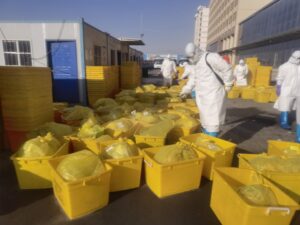
Why Medical Waste Requires Specialized Treatment
Infectious & Pathogen Risks
Medical waste contains a large number of bacteria, viruses, and other biohazards (e.g., COVID-19, hepatitis B, HIV pathogens). Improper treatment can lead to secondary infection through air, water, or soil, posing serious threats to public health and medical staff safety. Specialized treatment must ensure complete destruction of pathogens.
Environmental & Regulatory Pressure
Traditional treatment methods are prone to generating dioxins, furans, and other highly toxic pollutants—substances with strong carcinogenicity and long-term environmental persistence. Public opposition to polluting treatment methods is growing globally, and governments are increasingly restricting incineration (the traditional mainstream method) with stricter emission standards, forcing the industry to adopt greener technologies.
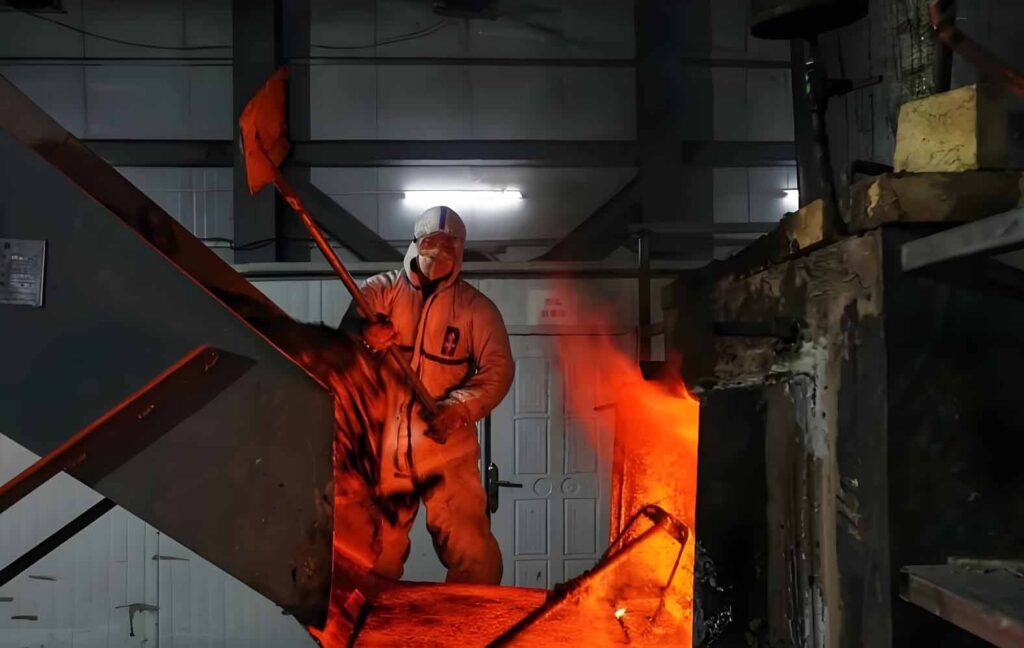
Limitations of Traditional Disposal Methods
- Incineration: Faces severe emission pressure, with high risks of dioxin and heavy metal emissions; strict approval procedures and high operating costs for pollution control.
- Landfill: Easily causes groundwater and soil contamination by leachate; low volume reduction rate, wasting land resources, and prohibited in many regions for medical waste.
- Autoclave: Only achieves pathogen inactivation but no volume reduction; the treated waste still needs secondary disposal (landfill/incineration), failing to solve the root problem of waste reduction.
Medical Waste Pyrolysis vs Incineration
Pyrolysis technology has become the preferred alternative to incineration for medical waste treatment due to its environmental and efficiency advantages. The following comparison clarifies the core differences:
Item | Pyrolysis | Incineration |
Oxygen | No (oxygen-free thermal decomposition) | Yes (combustion in oxygen-rich environment) |
Dioxin Formation | Extremely Low (oxygen-free environment inhibits dioxin synthesis; equipped with dedicated dechlorination module) | High Risk (incomplete combustion and chlorine-containing substances easily generate dioxins) |
Energy Recovery | Yes (recovers syngas and pyrolysis oil for reuse as fuel, realizing energy self-sufficiency) | Limited (only recovers partial heat, with low energy utilization rate) |
Volume Reduction | 80–95% (significantly reduces waste volume, reducing subsequent disposal pressure) | 70–80% (lower than pyrolysis, with more residual ash) |
Community Acceptance | Higher (sealed operation, no odor or visible smoke; low pollutant emissions) | Lower (prone to odor and smoke emissions; public concern about dioxin pollution) |
Approval Difficulty | Medium (complies with global environmental standards; simpler approval than incineration) | High (strict emission limits; complex approval procedures and long cycles) |
How Medical Waste Pyrolysis Works (Step-by-Step)
Our medical waste pyrolysis plant adopts a closed-loop, fully automated process, ensuring complete pathogen destruction and pollution-free treatment. The core steps are as follows:
Step 1: Pre-treatment
First, manually or automatically sort the medical waste to remove non-treatable materials (e.g., metal needles, glass). Then, shred the waste into 5–20 mm fragments to increase the heating area; finally, reduce moisture content to ≤10% through low-temperature drying, improving pyrolysis efficiency and avoiding energy waste.
Step 2: Oxygen-Free Pyrolysis
The pre-treated waste is fed into a sealed, oxygen-free reactor and heated to 400–800°C. Under oxygen-free conditions, the waste undergoes thermal decomposition, and pathogens (bacteria, viruses) are completely destroyed (pathogen inactivation rate ≥99.99%). The process generates pyrolysis gas (hydrocarbons + syngas) and solid residue (inert char).
Step 3: Gas Cooling & Purification
The pyrolysis gas is first passed through a tar removal device to remove impurities, then cooled by a multi-stage condenser (water-cooled + air-cooled) to condense liquid hydrocarbons into pyrolysis oil. The remaining non-condensable syngas is further purified (removing sulfur and chlorine) to meet fuel standards.
Step 4: Energy & Residue Handling
The purified syngas is recycled to the reactor’s heating system as fuel, reducing external fuel consumption by 30–40%. The solid residue (inert char) is detoxified and can be safely landfilled or used as a building material additive after further treatment, achieving harmless disposal.
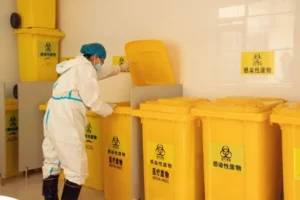
Main Outputs & Their Handling
Output | Description | Handling |
Syngas | Clean fuel gas composed of methane, propane, etc., with high calorific value | Reused for heating the pyrolysis reactor; excess gas can be stored for standby use |
Pyrolysis Oil | Liquid fuel with stable performance, suitable for industrial use | Industrial boiler fuel; or further refined into qualified fuel oil |
Solid Residue | Inert char with no pathogens or toxic substances, stable chemical properties | Safe landfill; or processed into building material additives (e.g., brick-making materials) |
Is Medical Waste Pyrolysis Suitable for Your Project?
Recommended If:
- Plastic-based medical waste accounts for more than 60% of your waste stream (matches the core treatment capacity of the equipment)
- Incinerator approval is difficult (pyrolysis has simpler approval procedures and lower environmental pressure)
- Energy recovery is required (syngas and pyrolysis oil can reduce operating costs)
- The project is located in urban areas or adjacent to hospitals (sealed operation and low emissions ensure community acceptance)
Not Recommended If:
- Pathological waste dominates your waste stream (pyrolysis cannot completely eliminate the risks of pathological waste)
- Radioactive waste is involved (requires professional nuclear waste treatment equipment, not our product’s scope)
- Local policies enforce zero-emission-only requirements (pyrolysis generates trace emissions that meet global standards but not absolute zero emissions)
Typical Application Scenarios
- Hospital clusters: Suitable for centralized treatment of medical waste from multiple hospitals, with scalable processing capacity to match the total waste volume of the cluster.
- Medical waste collection centers: Ideal for professional waste collection and disposal enterprises, realizing centralized treatment of scattered medical waste and improving treatment efficiency.
- Emergency infectious waste treatment: Used for temporary or mobile treatment of infectious medical waste during public health emergencies, with fast deployment and safe detoxification capabilities.
- Remote areas without incinerators: Adaptable to remote regions with underdeveloped infrastructure, the self-sufficient energy system and sealed design avoid the need for complex supporting facilities.
Specific Parameters
| Name | Unit | Quantity | Specifications |
|---|---|---|---|
| Pyrolysis Kettle | Piece | 1 | Size: Φ2800×8000×δ18, 45.3m³ |
| Material: Q345R | |||
| Pressure Reduction Dust Collector | Piece | 1 | Size: Φ900×1500×δ6.0 |
| Shell Material: Q235 | |||
| Residue Oil Tank | Piece | 1 | Size: Φ600×750×δ5.0 |
| Shell Material: Q235 | |||
| Damping Sedimentation Tank | Piece | 1 | Shell Size: Φ500×1000×δ5 |
| Shell Material: Q235 | |||
| Pipe Condenser | Set | 1 | Size: Φ6600*3000*3000*δ5 |
| Shell Material: Q235 | |||
| Oil Storage Tank | Piece | 1 | Size: Φ1500×4500×δ5 |
| Material: Q235 | |||
| Water Seal | Piece | 2 | Size: Φ900×1900×δ5 |
| Shell Material: Q235 | |||
| Raw Material Bin | Piece | 1 | Size: 1500×1500×2000×δ2.5 |
| Shell Material: Q235 | |||
| Raw Material Conveyor | Piece | 1 | Size: 3200×600×2500 |
| Power: 2.2kw, Capacity 15m³/h | |||
| High Temperature Automatic Feeder | Piece | 1 | Size: Φ425×3500 |
| Power: 7.5kw, Feeding Capacity 15m³/h | |||
| High Temperature Sealed Slag Discharger | Piece | 1 | Size: Φ425×2900×δ10.0 |
| Power: 7.5kw, Slag Discharge Capacity 3m³/h | |||
| High Temperature Carbon Residue Auger | Piece | 1 | Size: Φ325×6000 |
| Power: 15kw, Conveying Capacity 3m³/h | |||
| Carbon Residue Storage Tank | Piece | 1 | Size: Φ1500×2500×δ5 |
| Material: Q235 | |||
| Natural Gas Burner | Piece | 4 | Flow Rate: 30~50m³/h |
| Desulfurization Dust Removal Tower | Piece | 2 | Size: Φ900×4500×δ5.0 |
| Material: 304 Stainless Steel | |||
| Activated Carbon Adsorption Box | Piece | 1 | Size: 4300*1200*1300 |
| Material: Q235B Spray Plastic | |||
| Features: 12 Drawers | |||
| Flue Gas Cooler | Piece | 1 | Size: 6600*1200*1300*5mm |
| Material: Q235B | |||
| Electrical Control Cabinet | Piece | 1 | Power Parameters: Determined by equipment location |
| Intelligent Digital Display Alarm, Manual Alarm Reset |
FAQ about Medical Waste Pyrolysis Plant
What are the main differences between pyrolysis and plasma gasification, and when should each be used?
Technology Difference
Pyrolysis
Heats waste in an oxygen-free environment (400–800°C).
Produces pyrolysis oil, syngas, and char.
Lower energy consumption.
Suitable for rubber, plastics, biomass, and medical waste.
Plasma Gasification
Uses plasma torches at extremely high temperatures (2,000–10,000°C).
Converts waste into syngas and vitrified slag.
Very high energy consumption.
Can destroy hazardous, toxic, and complex waste completely.
Cost Difference
Pyrolysis:
✔ Lower investment
✔ Lower operating cost
✔ Generates sellable oil and char → higher profitabilityPlasma Gasification:
✘ Very high investment
✘ Very high electricity cost
✔ Suitable where safety and zero-toxicity treatment is critical
Environmental Difference
Pyrolysis: Low emissions when using gas purification systems.
Plasma: Almost zero dioxins because extreme heat breaks all toxic compounds.
When to Use Pyrolysis
Choose pyrolysis when:
The goal is resource recovery (oil, gas, carbon black).
Treating tires, plastics, medical waste, biomass.
You want lower cost and high economic return.
Electricity is expensive or limited.
When to Use Plasma Gasification
Choose plasma gasification when:
Treating highly hazardous waste:
Chemical waste
Toxic medical waste
Radioactive-contaminated waste
The priority is complete destruction, not resource recovery.
Budget is high and strict environmental rules apply.
Which method is more energy-efficient and cost-effective for treating plastic waste at scale?
Pyrolysis
Energy Efficiency:
Requires moderate temperatures (400–600°C).
Non-condensable gases produced can be used to heat the reactor, reducing external energy consumption.
Overall, relatively low electricity/fuel demand.
Cost-Effectiveness:
Lower initial investment and operating costs.
Produces multiple sellable products: pyrolysis oil, carbon black, and sometimes syngas.
Suitable for large-scale treatment with a positive ROI in 6–18 months.
Plasma Gasification
Energy Efficiency:
Extremely high temperatures (3,000–10,000°C) require significant electricity.
Net energy output depends on efficient syngas recovery, often less favorable than pyrolysis.
Cost-Effectiveness:
High capital investment and high operational cost.
Main goal is complete destruction of hazardous materials rather than resource recovery.
Less economically viable for ordinary plastic waste unless hazardous or highly toxic.
Recommendation
Pyrolysis → Best choice for large-scale plastic waste treatment when the goal is resource recovery, energy efficiency, and profitability.
Plasma Gasification → Suitable only for hazardous or mixed toxic plastics, where destruction is more important than cost.
What are the key steps in the pyrolysis process and how do they differ for biomass vs solid waste?
Pyrolysis is the thermal decomposition of organic material in an oxygen-free environment. The main steps are:
Feedstock Preparation
Shredding or drying the material to uniform size and moisture content.
Biomass often requires drying to <15% moisture.
Solid waste may require sorting and shredding, especially plastics, tires, or municipal solid waste.
Feeding into Reactor
Material is loaded into a sealed pyrolysis reactor.
Continuous or batch feeding depends on the plant design.
Heating / Thermal Decomposition
Reactor is heated to optimal temperature:
Biomass: 400–500°C
Tires / plastics / solid waste: 450–550°C
Organic molecules break down into vapors, syngas, and char.
Condensation of Vapors
Vapors pass through condensers to collect liquid pyrolysis oil.
Non-condensable gases are often recycled as reactor fuel.
Collection of Solid Residues
Biomass → biochar
Tires / plastics → carbon black or char
Steel or metals are separated from solid residues in solid waste pyrolysis.
Gas Handling
Non-condensable gases (CO, H₂, CH₄) are captured and can be used for heating the reactor or generating electricity.
Differences Between Biomass vs Solid Waste Pyrolysis
| Feature | Biomass | Solid Waste / Tires / Plastics |
|---|---|---|
| Moisture Content | Often high → needs drying | Usually low, may need shredding |
| Temperature | 400–500°C | 450–550°C |
| Main Products | Bio-oil, syngas, biochar | Pyrolysis oil, syngas, carbon black, steel |
| Contaminants / Sorting | Usually low, minimal metals | Requires sorting to remove metals, stones, PVC |
| End Use | Biofuel, soil amendment, energy | Industrial fuel, carbon black, metal recycling |
What are the key advantages and drawbacks of pyrolysis versus plasma gasification for waste-to-energy applications?
Pyrolysis
Advantages:
Lower cost: Lower capital and operating expenses than plasma gasification.
Energy-efficient: Moderate operating temperatures (400–600°C); non-condensable gas can heat the reactor.
Multiple products: Produces pyrolysis oil, carbon black/biochar, and syngas → potential revenue streams.
Scalable: Suitable for small to medium plants, flexible feedstock (biomass, tires, plastics, medical waste).
Simpler technology: Easier to operate and maintain.
Drawbacks:
Incomplete destruction: May not fully eliminate toxic or hazardous compounds.
Emissions control required: Need gas purification systems to meet environmental standards.
Feedstock quality-sensitive: Contaminated or mixed waste can reduce oil yield and quality.
Plasma Gasification
Advantages:
Complete destruction of hazardous waste: Extremely high temperatures (3,000–10,000°C) destroy pathogens, toxins, and dioxins.
Clean emissions: Very low formation of dioxins and furans.
Stable inert by-products: Vitrified slag can be safely disposed or used in construction.
Handles difficult waste: Can process medical, chemical, or radioactive waste.
Drawbacks:
High energy consumption: Plasma torches require large amounts of electricity.
High capital and operational costs: Expensive to build and run.
Limited revenue from products: Main goal is waste destruction, not resource recovery.
Complex technology: Requires skilled operators and advanced maintenance.
Summary Table
| Feature | Pyrolysis | Plasma Gasification |
|---|---|---|
| Temperature | 400–600°C | 3,000–10,000°C |
| Energy Consumption | Moderate | Very high |
| Product Recovery | Oil, char, syngas | Mainly syngas, vitrified slag |
| Waste Types | Biomass, tires, plastics | Hazardous, medical, toxic waste |
| Environmental Impact | Low if gas cleaning used | Extremely low emissions |
| Cost | Lower | Very high |
| Complexity | Moderate | High |