Biochar Market Strategy Guide and Wood Pyrolysis Equipment>>
Chapter 1: Biochar Manufacturing Core Components
(I) Raw Material Supply System
1. Raw Material Types and Potential
The mainstream biomass feedstock includes agricultural and forestry residues, such as crop residues, non-commercial wood and wood waste, animal manure, and solid waste. Sustainable global biochar production typically utilizes excess biomass that is not required for maintaining forest and agricultural cropland health.
Geographic Distribution and Strategic Sourcing: The Asia Pacific region dominated the global biochar market in 2024 with an 82.47% share, driven by strong agricultural innovation, soil remediation efforts, and governmental support.
Differentiated Advantage of Wood Feedstock: Among all biomass sources, wood-based materials produce biochar with the highest average carbon content (60%–85%) and the lowest ash content (0%–10%). This low-ash, high-carbon profile naturally positions wood-based biochar for high-end industrial and environmental markets.
2. Supply Chain Pain Points and Solutions
The dispersion of raw materials is a critical pain point affecting the scale and efficiency of biomass utilization.
Solution: Leading companies are addressing dispersion by exploring a three-tier collection model (e.g., village-level collection – regional transfer – centralized processing). This structured approach effectively transforms otherwise low-value or waste materials into a valuable resource, mitigating the costs and pollution associated with landfilling and open burning.
(II) Core Manufacturing Conditions
1. Process Technology and Pyrolysis Parameter Control
Pyrolysis (thermal decomposition in the absence of oxygen) is the most widely adopted and mature method for biochar production. Precise control over pyrolysis parameters is essential to tailor the biochar for specific market demands.
The optimal operating temperature for pyrolysis generally ranges from . Temperature is the primary factor influencing biochar properties, showing a positive correlation with carbon content, ash content, Specific Surface Area (SSA), and pH value.
Table 1: Analysis of Mainstream Biochar Process Technology Pathways
| Technology Type | Market Share | Applicable Scenario | Representative Equipment | Strategic Value |
| Slow Pyrolysis | 62% | Small/medium char plants, bulk soil amendment | Fixed-bed carbonization furnace | Low cost, suitable for high-volume agricultural use |
| Fast Pyrolysis | 27% | Bio-oil/Biochar co-production systems | Fluidized-bed reactor | High yield, suitable for co-production of energy products |
| Flash Pyrolysis | <5% | High-end material preparation (R&D stage) | Special pyrolysis reactor | Precision control, precursor for high-value materials |
The penetration rate of continuous automated production lines has reached 38.5%, making them key to enhancing global production efficiency.
2. Post-Production Enhancement: Necessity for High-End Specifications
Even biochar derived from wood feedstock often exhibits weak initial adsorption performance due to small total pore volume, insufficient SSA, and limited surface functional groups. To convert commodity-grade biochar into specialized, high-profit adsorbent materials, modification is necessary.
Physical activation and chemical activation (acid/alkali) are common methods used to significantly boost, enabling selective adsorption of trace contaminants, such as organophosphorus and triazole pesticides in fruits, vegetables, and aquatic environments.
3. Policy and Environmental Requirements
Policy Support: Global policy support primarily stems from national renewable energy mandates and greenhouse gas (GHG) reduction targets. For instance, the European Union’s revision requires renewable energy to account for 32% of overall energy consumption by 2030.
Environmental Compliance and Carbon Trading: Equipment must meet low emission standards. In the global carbon market, projects can secure additional carbon credit revenue through certification standards such as Puro.earth or Verra.
Chapter 2: Biochar Application Industries and Product Matrix
(I) Agricultural Sector (Dominant Global Market Share)
1. Core Products and Function
Core products include char-based fertilizers and soil conditioners. The agricultural segment held the largest share of the global biochar market in 2024. Biochar application improves soil conditions by lowering bulk density and increasing cation adsorption, thus enhancing soil fertility. It also effectively consumes soil protons, raising the pH value of acidic soils and increasing the availability of certain nutrients.
2. Application Scenarios and Case Studies
Applications include boosting soil fertility, improving crop yield, and enhancing water retention.
Global Cases: In India, government agencies and seed companies have supplied farmers with biochar to improve soil aeration and moisture retention. In Africa, NetZero and the are collaborating to scale the execution of biochar within tropical agricultural supply chains.
(II) Environmental Sector (15.2% Growth Rate)
1. Core Products and Function
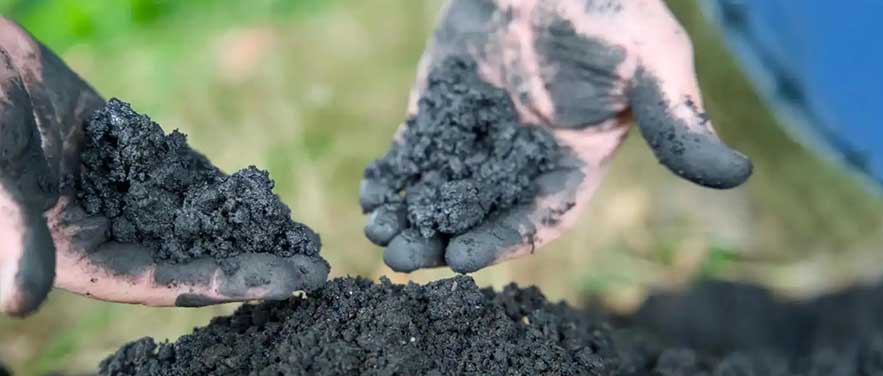
Core products are water purification char and heavy metal adsorbents. Biochar’s pore structure and surface chemistry enable the effective removal of heavy metals from solutions and the passivation of metals in soil.2 It acts as an adsorbent in pre-treatment processes for pesticide residue analysis, selectively adsorbing various pesticide classes.
2. Technology and Specification Requirements
Environmental remediation demands significantly higher, often requiring activated biochar for high-efficiency adsorption of trace pollutants.
Predictive Design: Research into adsorption mechanisms increasingly relies on computational simulations, such as Density Functional Theory and Molecular Dynamics.These theoretical results not only support experimental findings but also pave the way for predictive design of custom-tailored biochar surfaces with targeted adsorption performance.
(III) Energy and Industrial Sector
1. Clean Fuel
Power generation is a significant segment for biochar application.Governments worldwide encourage the use of biochar as a clean fuel to reduce carbon emissions from the agricultural and forestry sectors. For example, the Indian government has established a task force to explore the utilization of biochar to replace coke in steel manufacturing as part of its decarbonization efforts.
2. High-Value Materials
Energy Storage: Used as an electrode additive for supercapacitors.
Construction: Concrete carbon sequestration material, which can reduce carbon emissions from building materials by 12%. This application has also secured verified removal credits in Europe.
Chemical Industry: Functional fillers for rubber and plastics, replacing traditional recovered carbon black.

Table 2: Biochar Product Requirements for Core Market Applications
Chapter 3: Wood Pyrolysis Machine (WPM) Core Value
(I) Technical Value: Cornerstone of Industry Efficiency
WPMs are designed specifically to handle lignocellulosic materials, serving as core equipment for efficient multi-product co-generation.
Multi-Product Co-generation Capability: The equipment simultaneously produces biochar (30-40%), bio-oil (39.7% to 49.5% for fast pyrolysis), and syngas (10-20% or more), with a wide range of adjustable pyrolysis temperatures .
Evolution and Capacity: The industry is evolving from fixed-bed to continuous flow technologies like fluidized-bed and moving-bed reactors. Major global manufacturers, such as Beston Group, have sold over 1,800 pyrolysis units globally, and Niutech has over 260 installations across 42 countries.
Clean Feedstock Advantage: WPMs produce clean, low-ash carbon feedstock, which is the ideal precursor for efficient, high-yield post-processing and activation.
(II) Economic Value: Triple Revenue Engine
The value of a WPM investment extends far beyond physical product sales; it is fundamentally an environmental credit generation asset, enabling a dual revenue model of product sales and credit sales.
1. Voluntary Carbon Market (VCM) Driver: Credit Revenue
The VCM was valued at USD 1.7 billion in 2024 and is projected to maintain a high Compound Annual Growth Rate . Biochar Carbon Removal is one of the few physical technologies offering measurable, permanent carbon removal, thus commanding a premium in the VCM (e.g., certified BCR credits have been priced above .
Policy Dividend Revenue: Carbon credit trading (such as Puro.earth certification) can increase the project’s Internal Rate of Return by 8-12 percentage points.
Quality Assurance: WPM’s precise temperature control and focus on high-purity wood feedstock result in high carbon stability (fixed carbon content typically over 75%) , ensuring compliance with strict carbon accounting standards from bodies like Puro.earth or Verra.
2. Direct Product Revenue and Circular Economy Gains
Direct Product Revenue: The global biochar market was valued at USD 763.48 million in 2024, projected to grow to USD 859.04 million in 2025. High market growth (projected 13.60% $\text{CAGR}$ from 2025–2032) ensures market viability. For example, the total capital investment for a 1,000 dry tons per day (TPD) wood feedstock plant was estimated at $37 million.
Circular Economy Gains: The reduction in waste disposal fees, coupled with the reuse of by-products (bio-oil/syngas), can lower overall Operating Expenses by 30%. The syngas and bio-oil generated can be used to power the equipment or sold as energy by-products, significantly offsetting operational costs.
(III) Ecological Value: Key Carrier for Carbon Neutrality
WPM investment represents a long-term commitment to sustainable waste management and climate mitigation infrastructure.
Permanent Carbon Sequestration: Every 1 tonne of biochar produced can sequester 0.8-1.2 tonnes. Global biochar production removed at least 650,000 tonnes in 2023.
Substitution Effect: Replacing fossil fuels can reduce emissions by over 60%, supporting the low-carbon transition of industrial enterprises.
Chapter 4: Market Trends and Equipment Selection Recommendations
1. Industry Trends and Strategic Positioning
Trends: The global pyrolysis equipment market is expected to double by 2025, with continuous flow and smart/automated equipment becoming the mainstream. The Asia Pacific region is the fastest-growing market globally.
WPM Strategic Positioning: The primary value of WPM should be assessed as a Carbon Removal Facility (CRF), with biochar being its co-product. This shift in perception justifies the higher capital expenditure (CAPEX) required for the precision temperature and quality control features necessary to obtain high-value carbon credits.
2. Core Equipment Selection Criteria
To maximize economic returns, WPM selection should focus on the following core criteria:
Feedstock Adaptability: Prioritize multi-feedstock equipment compatible with both wood waste and agricultural residues to ensure flexibility and stability of supply.
Automation Level: Utilizing PLC control systems can reduce manual labor costs by 40% while ensuring the precision of pyrolysis parameters. This precision is critical for producing the high-stability biochar required for high carbon credit value.
Environmental Compliance: Equipment must meet local Volatile Organic Compounds (VOCs) emission limits to avoid fines and operational risks.
Vertical Integration Capability: Strategic planning must include accompanying activation/modification units. To unlock high profits from the environmental remediation market, WPM investment should be coupled with post-processing equipment to convert commodity-grade char into customized specialty adsorbents.
3. Strategic Recommendations and Outlook
Prioritize Certification: Any WPM investment decision must be premised on the equipment’s ability to reliably meet carbon sequestration protocol requirements (high fixed carbon content, precise temperature control).
Systemic R&D Investment: To maintain a competitive edge in the filtration and remediation markets, continued investment in using computational models (DFT and MD) for product performance prediction is vital. This facilitates the rapid development of “designer” biochar targeting emerging contaminant issues.
Geographic Strategy Optimization: Given the superior IRR potential from the VCM , location analysis should prioritize stable, low-cost wood feedstock supply over proximity merely to bulk agricultural buyers. High-value carbon credits can absorb relatively higher logistical costs.