
At Pyrolysis Unit, we start from where every practical purchaser starts – with materials they have and goals that must be achieved through those materials. Asking whether pyrolysis can apply to all plastics is not a chemistry exam but a question about practical issues of capital deployment, operation management, environmental issues, and markets that can accept your product.
It is important for a customer to understand exactly what materials they have and what will happen to their products after they go through a process of transformation. The key questions a customer needs an answer to are: What kind of polymers do I have? What plastics in my stream cannot be processed due to equipment damage and emission of dangerous substances? What capital investments will need to be made in order to separate such plastic fractions?
It should be noted that there are different kinds of plastics. Polymers differ in the type of backbone, in additives applied to ensure stabilization or coloring, in the nature of combination of polymers in multilayer packaging. This is what will determine reactions between heat and polymers in the reactor. Answering a customer’s question is first of all based on knowing his feedstock.
For turning this practical approach into a business model, clients require an organized assessment process involving lab testing, mass balance calculation, and pilot plant studies. In the right kind of feedstock audit, samples are taken from all seasons, origins, and ways of collection to ensure that any variance within the supply stream is identified. Such an audit determines the amount of polyethylene, polypropylene, polystyrene, PET, PVC, nylon, and other forms of plastics; it assesses contaminants like food, adhesives, inks, metal, and wet organics; and it determines any blend or multilayered content that needs to be separated.
Through a thorough feedstock audit, it becomes possible to determine yield estimates for oil, gas, char, and contaminants that will determine scrubber needs. This information allows one to make conservative models and plan equipment life cycles without basing anything on assumptions. Feedstock determines process; hence, repeat it again, know your feedstock, as well as include sample pictures and chain of custody documentation to show provenance. Moreover, look out for insurance plans covering unexpected contamination incidents that can lead to shutdowns in the reactor.
Technically and commercially, there are some polymers that behave reliably in pyrolysis processes. For example, polyolefins (low density and high density polyethylene, as well as polypropylene), and polystyrene are considered to be the safest in terms of performance for pyrolysis operations. In this case, due to their hydrocarbon composition and absence of heteroatoms in the structure, they will yield liquid hydrocarbons and gases during thermal decomposition, which can easily be processed, used as industrial fuels, or transformed into petrochemical feedstock.
Polystyrene, depending on the parameters, will even be able to depolymerize and yield relatively pure styrenes that can be utilized through further monomer isolation. Reliable performance will provide reliable mass balance, maintenance schedule, and output product utilization options. Most of the customers who seek feedstock supplies buy those streams that consist mostly of film scrap, industrial trim, as well as PP/PE scrap to avoid any risks of impurities.
In other words, if you have plenty of polyolefin or polystyrene scraps with low levels of contamination, this process is very profitable and convenient to implement. Repeat again: clean polyolefins and polystyrene scraps are the most suitable raw materials for the process. The following information is based on this premise.
Customers will usually contract with industrial converters for a consistent supply of sorted clean film, sorted clean trim, and sorted off-spec material, because the supply reduces capital expenditures necessary to sort and clean. Vertical integration, in some cases, allows the operator to buy large quantities from film producers or packaging manufacturers, securing supplies and ensuring quality.
In situations where post-consumer material cannot be avoided, the sorting techniques should be such that fractions rich in polyolefin content are recovered while fractions containing significant amounts of PVC and high PET should not pass through the system. Technical due diligence involves bench-scale pyrolysis testing that demonstrates the nature of the oil at various temperatures and the amount of gas and residue formation.
Operational planning should consider maintenance cycles, fouling characteristics, design of the condensing and separation equipment, and storage as well as transportation of the oil being produced. Repeat: Ensure you get reliable and clean feedstocks to ensure stable operations; Repeat: Ensure you get reliable and clean feedstocks to ensure stable operations. Keep track of the suppliers’ performance on a monthly basis and employ incentives or penalties to gradually improve the quality of materials supplied.
First off, the customer needs to know that not all polymers can be treated with equal practicality. Polyethylene terephthalate or PET, and polyvinyl chloride or PVC bring up some serious practical issues. PET contains oxygen in its repeat unit; therefore, in pyrolysis, PET tends to form oxygen-containing molecules, as well as wax-like substances and char, reducing liquid production and contaminating equipment. Catalytic processing or coprocessing of PET, as well as the use of hybrid technologies, is often necessary and adds to capex and opex costs. PVC has chlorine in it, producing hydrogen chloride and chlorinated organic compounds in pyrolysis. These substances are highly corrosive and hazardous and need to be removed from the process and equipment.
Multi-layer packaging, adhesive, ink, food residue, and plasticizers create tars, accelerate deactivation of catalysts, and make further processing of the produced liquids difficult. And, from an economic point of view, these factors cannot be overlooked. They directly affect the business model and make it economically unprofitable to implement certain technologies. As a result, even though there may exist various options for polymer conversion chemically possible, what matters is that they can be implemented in practice.
Repeat: be aware of the polymers that are acceptable; be aware of the polymers that are acceptable. If any plastics have to be managed and recycled using complicated methods then it will be essential that such an exercise is economically justifiable. If PET exists in significant volumes then use chemical recycling processes suitable for depolymerization or integrate a process of hydrogenation or hydroprocessing in order to lower the volume of oxygenates and produce high-quality liquids.
For PVCs pre-classification and separation to eliminate the chlorinated fractions could be the best method; in case of small PVC fractions then make sure that the gases and other waste products are captured and neutralized properly since there would be the need for special plant linings as well as systems for capturing and neutralizing the HCl.
Repeat: know your acceptable polymers and cost them carefully; know your acceptable polymers and cost them carefully. Make sure that you get the chemical profile of your polymers using lab test on pyrolysis and factor in the char and wax contents with a margin of error.
It is often the case that success or failure lies at the beginning stage of projects. Proper feed preparation, including mechanical segregation, near-infrared optical sorting, density separation, washing, and manual quality control, minimizes variance going into the reactor while lowering operation costs. Industrial streams are generally preferred by many companies since they are cleaner and more uniform than mixed consumer waste. In municipal streams, one might find PET bottles, PVC parts, multi-layer sachets, and even organic waste, which requires significant sorting and washing.
It is vital that the buyers conduct sample-based auditing, accounting for any seasonal or supplier variations, and establish standards for incoming shipments. Testing using actual material must be done since laboratory samples often fail to represent issues with handling, fouling, and maintenance.
Again: front end preparations represent investment, not costs; again: front end preparations represent investment, not costs. From an operational perspective, front end represents where risk management occurs, along with protection of margins. Front end design includes technology mix, redundancies, buffer capacity, and inspection points. Automatic sampling devices coupled with real-time sensors can spot contaminants, thus ensuring that suspect loads get diverted before fouling up the reactor. Optical sorting, ballistic separation, eddy current separation for metals, and density separation washers are some of the technologies used on today’s sorting lines. Washing processes reduce organic matter and adhesives responsible for tar formation, while dryers reduce energy costs inside the reactor.
Also, supplier contracts may include acceptable load limits as well as penalty clauses when these limits are exceeded. Such arrangements will create incentives to properly separate waste streams at the origin of supplies.
Once the feedstock selection is made, the type of reactor system will define the product profile. The various types of reactors have different characteristics: continuous screw systems have consistent throughput and solids handling; fluidized bed reactors have high heat transfer capabilities but sensitivity to fines and contamination issues; rotary kilns tolerate mixed solids well but do not achieve high efficiency thermally. Reaction temperature and time govern yields: slow, low-temperature processes tend to make more liquids; faster high-temperature processes result in gas generation.
Catalysis can improve the desired product yields and also reduce required process temperatures, although there are capital costs involved along with regeneration requirements and sensitivity to contamination for most catalysts. Polyolefins respond well to slow processes producing good liquid yields, while polystyrenes can be processed with monomer yields under suitable pyrolysis conditions. PETs and PVC, along with highly contaminated feeds, benefit from catalytic assistance.
Maintenance and contingency planning includes provision for scheduled maintenance periods, inventorying of spares, and strategies for dealing with contamination events such as an accidental mix of PVC into the mix. Selection of a catalyst, where applicable, will take into consideration local availability and how the regeneration can be managed. The downstream processes, which include the process flow from the primary condensation stage to the fractional distillation, hydrotreating, and finally blending of the final product, help determine your place in the market.
As a customer assessing an investment in pyrolysis, you have to consider product specifications and customers. Pyrolysis oil can vary greatly in its chemical makeup. Some will be suitable as fuel for industrial boilers that are highly tolerant while others will need to be refined through hydrotreating or fractionation in order to make transportation fuels or even petrochemical feedstocks. Buyers will consider factors such as calorific value, distillation curve, chlorine and sulfur contents, moisture and particulates.
Impurities are likely to limit potential buyers and reduce pricing. Specifications and consistency lead to wider markets and better pricing. Increasingly, regulators and large buyers want transparency about mass balances, emissions and chain of custody. You will need emissions measurement, emissions scrubbers and chain of custody tracking. Make financial projections conservatively by including sorting, gas treatment, pilot runs and processing costs.
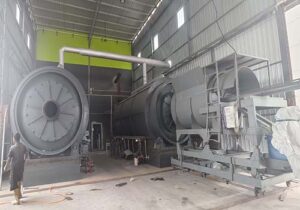
Identify early buyers for lower-spec industrial fuel as well as potential partners for upgraded products so you have pathways across price bands. Consider long-term contracts for feedstock where possible to reduce volatility in input composition and to secure throughput guarantees. Factor in permitting timelines and community engagement; early stakeholder communication reduces the risk of delays at the local level. Financial diligence includes lifecycle analysis, energy balances, and an understanding of subsidy or fiscal regimes in your jurisdiction that may affect project viability.
Then, is it possible to use pyrolysis on all plastics? In a commercial sense, it means the following: many plastics would decompose thermally using pyrolysis, however, commercially speaking one cannot hope for a plant that would accept all types of plastics and produce saleable oils without some degree of sorting, preparation, or special upgrading lines.
Best results should be achieved by accepting streams of a mono-material type such as clean polyolefinics and polystyrene into standard lines; treating PET and PVC independently or installing dechlorination, upgrading equipment, and efficient gas treatment; and regarding mixed municipal waste as a project that requires considerable initial investments to turn it into an economical feedstock.
The first step in planning any pyrolysis facility would be the audit of the feedstock stream: characterizing it, determining the content of contaminants, running pilot trials that take into account variability. Then choosing the reactor, upgrading, and emissions treatment facilities according to the audited feedstock stream, and securing off-take agreement before installation. Repeating the above statement, since customers that proceed along the line produce consistent results: characterizing the stream, designing to the material, and securing the sales before building.
Start with a balanced audit of your feedstock, sampled through time and place of origin; test bench and pilot plants with typical samples of each batch and measure the expected outputs, contamination levels, and frequency of maintenance cycles; then structure your feedstock and offtake contracts based on your products’ realistic specifications. Account for your emissions regulations and residue management in your cost model, and document everything for regulators and customers. Pilots will require proper maintenance and sampling so that you know how often you need to clean your plant, service your condensers, and change your catalysts.
When your pilots reach specification, scale your plant thoughtfully, phased out equipment purchases, and get your off-take agreements secured prior to commissioning. Reapply the same practical approach to the next phase by characterizing, piloting, designing, securing off-take, etc. Designate an internal project manager who is responsible for keeping a dynamic list of assumptions in your projects, and conduct quarterly project reviews.