Top Manufacturer of Pyrolysis Machines/Units

Coconut Shell Charcoal Making Machine

coconut shell charcoal making machine adopts high-temperature pyrolysis technology to turn biomass waste into premium charcoal.

  • Finished charcoal: fixed carbon 70%-80%, ash content 1.99%-4.63%
  • Hourly processing capacity: 1.5t-5t(Customization supported)
  • Compatible raw materials: coconut shells, rice husks, bamboo, etc.

It features automated operation, high efficiency and strong material adaptability, ideal for commercial charcoal production.

The role of coconut shell charcoal>>

Coconut shells are turned into coconut shell charcoal using a continuous carbonization furnace.

Coconut shell charcoal, known for its high fixed carbon content, low ash, and strong adsorption capacity, is widely used across daily life, industry, environmental protection, and agriculture. In household applications, it serves as clean, long-lasting fuel for BBQs and heating, and as an effective deodorizing and air-purifying material thanks to its dense microporous structure. In industrial fields, it functions as a high-quality carburizing and reducing agent in metallurgy, and is the preferred raw material for activated carbon production, commonly used in solvent recovery, gas purification, and chemical processing. In environmental protection, it plays a key role in wastewater treatment, exhaust gas adsorption, and soil remediation due to its ability to capture organic pollutants, heavy metals, and harmful gases. In agriculture, coconut shell charcoal improves soil aeration, water retention, and nutrient stability, and can also act as a carrier for beneficial microorganisms. With excellent performance, low emissions, and wide applicability, coconut shell charcoal is a versatile, eco-friendly material valued across multiple industries.

Features of the Coconut Shell Charcoal Making Machine>>

  • High Processing Efficiency & Stable CapacityThe machine achieves an hourly processing capacity of 1.5t–5t, supporting continuous large-scale production. It is equipped with a high-temperature pyrolysis furnace and optimized heat circulation system, which shortens carbonization time and ensures consistent output efficiency for long-term operation.
  • Superior Product Quality with Precise Index ControlThe finished charcoal produced has a fixed carbon content of 70%–80% and an ash content of only 1.99%–4.63%, meeting high standards for industrial and civilian use. The oxygen-depleted carbonization process retains the natural pore structure of charcoal, enhancing its combustion performance and adsorption capacity.
  • Strong Raw Material AdaptabilityBeyond the core raw material of coconut shells, the machine can process a wide range of biomass wastes including rice husks, bamboo chips, wood sawdust, peanut shells and crop straws. It is equipped with a matching pretreatment system (crusher + dryer) to handle raw materials of different sizes and moisture levels, maximizing the utilization of local waste resources.
  • Automated Operation & Low Labor CostThe integrated production line realizes full-process automation from raw material feeding, drying, carbonization to finished product discharge. It is fitted with an intelligent control panel, allowing one-key start, parameter setting and real-time monitoring. This reduces manual intervention and lowers overall labor costs.
  • Energy-Saving & Environmentally Friendly DesignThe machine recycles waste heat generated during carbonization for raw material drying, cutting down energy consumption by 30% compared to traditional equipment. It is equipped with a professional dust removal and desulfurization system, which effectively reduces exhaust emissions and meets strict environmental protection standards.
  • Durable & Easy to MaintainThe key components of the carbonization furnace are made of high-temperature resistant alloy steel, featuring corrosion resistance and long service life. The modular design simplifies disassembly and maintenance, reducing downtime and maintenance costs for users.

Related machines for Coconut Shell Charcoal Making Machine>>

Horizontal Carbonization Furnace

The carbonization furnace has a small output (0.5-3T/h) and is designed for small-scale raw charcoal production by small processing plants, startup teams, etc., with low start-up costs.

Hanging Type Carbonizing Furnace

The equipment is a vertically sealed carbonization system designed for small-scale production (0.5–2 tons per day). It focuses on high product quality and easy operation, making it especially suitable for small and medium workshops or production environments that require high charcoal purity.

Introduction on Coconut Shell Charcoal Making Machine>>

Ⅰ.Introduction

Against the backdrop of global carbon neutrality and circular economy development, the biomass waste recycling industry has emerged as a key focus of green transformation. Coconut shell charcoal making machines, as core equipment for converting agricultural and forestry wastes (such as coconut shells, rice husks, and bamboo) into high-value charcoal products, play a pivotal role in bridging waste disposal and resource utilization.
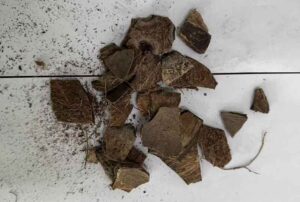
Coconut shell

Ⅱ.Core Working Principle of Coconut Shell Charcoal Making Machine

The core technology of coconut shell charcoal making machines is oxygen-free high-temperature pyrolysis (dry distillation), which involves four key stages of physical and chemical reactions. Each stage is precisely controlled to ensure the quality of finished charcoal and the efficiency of the production process:

1. Pretreatment Stage (Foundation of Qualified Charcoal)

Before entering the carbonization furnace, raw materials (coconut shells, rice husks, bamboo, etc.) must go through two key steps:
Crushing: Raw materials are crushed into particles of 1-5cm by a crusher. This increases the specific surface area of the raw materials, shortens the heat transfer distance during carbonization, and ensures uniform carbonization.
Drying: The crushed raw materials are sent to a dryer, where the moisture content is reduced from 30%-50% (natural moisture) to 8%-12%. Excess moisture will prolong the carbonization time, reduce the fixed carbon content of the finished product, and even cause incomplete carbonization. The dryer usually recycles waste heat from the carbonization furnace, realizing energy saving.
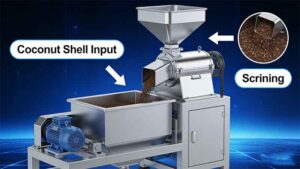
Coconut Shell input

2. Carbonization Stage (Core Reaction Process)

The pretreated raw materials are fed into a sealed carbonization furnace, and the furnace is heated to 450-600℃ in an oxygen-depleted environment (oxygen content three sub-reactions:
Dehydration (100-200℃): Free water and bound water in the raw materials are evaporated, and the raw materials gradually dry and shrink, preparing for subsequent pyrolysis.
Pyrolysis (200-400℃): Hemicellulose, cellulose, and lignin in the raw materials begin to decompose, producing volatile substances (methane, carbon monoxide, wood vinegar, tar, etc.). These substances are either recycled as by-products or burned to provide heat for the furnace.
Carbonization (400-600℃): The remaining solid matter after pyrolysis undergoes condensation and aromatization reactions, forming a porous carbon structure. The fixed carbon content gradually increases to 70%-80%, and the ash content is concentrated to 1.99%-4.63%, finally forming high-quality coconut shell charcoal.
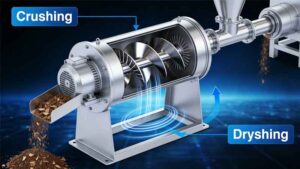
Crushing

3. Cooling Stage (Guarantee of Product Stability)

After carbonization, the temperature of the charcoal is as high as 400-500℃. Direct contact with air will cause combustion and oxidation, reducing product quality. Therefore, the cooling stage is crucial:
The charcoal is transferred to a sealed cooler, and cooled to below 50℃ through water cooling or air cooling. The sealed environment prevents oxidation, ensuring the fixed carbon content and adsorption performance of the charcoal.
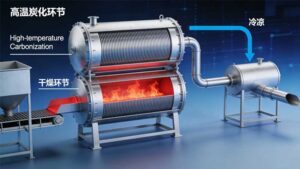
High-temperatureCarbonization

4. By-Product Recovery Stage (Improvement of Resource Utilization)

Advanced coconut shell charcoal making machines are equipped with by-product recovery systems. The volatile substances generated during pyrolysis are processed through dust removal, desulfurization, and condensation:
Wood Vinegar: Can be used as a plant growth regulator, pesticide additive, or preservative.
Tar: Can be refined into industrial fuels, lubricants, or chemical raw materials.
Non-condensable Gas (Biogas): Mainly composed of methane and carbon monoxide, which can be burned in the furnace as fuel, realizing energy self-sufficiency in the production process.
Key Technical Advantages of Modern Equipment (Linked to Industry Needs)
Precise Oxygen Control: Adopts sealed furnace body and intelligent air intake control system to maintain the oxygen content in the furnace at an optimal level, avoiding incomplete carbonization or over-burning.
Waste Heat Recycling: The heat generated during carbonization is recycled for raw material drying and furnace heating, reducing external energy input and lowering production costs.
Environmental Protection Treatment: Equipped with dust removal, desulfurization, and deodorization devices, the exhaust gas meets the emission standards of EU CE and US EPA, solving the pollution problem of traditional charcoal making.
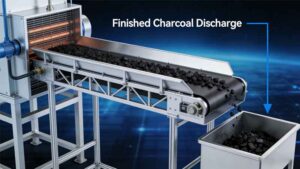

Finished Charcoal Discharge

How to Choose the Right Coconut Shell Charcoal Making Machine >>

Want to turn abundant, low-cost biomass (coconut shells, rice husks, bamboo) into high-demand charcoal—and build a sustainable, profitable business? The secret lies in selecting a machine that aligns with your production goals, local resources, and global market standards. No vague jargon, just actionable insights tailored to international buyers—helping you avoid costly mistakes and maximize ROI.

1. Start with Your Production Goals: Scale Smart, Avoid Overinvestment

Your daily output target is the foundation of your decision—choose a machine that matches your business size, not just your budget:
  • Startup/Small-Scale (Daily Output ≤ 5 Tons): Opt for a Vertical Hanging Carbonization Furnace. It’s cost-effective (low upfront investment), space-saving (fits compact workshops or rural setups), and user-friendly (operated by 1 person with minimal training). Perfect for testing market demand, local sales, or farmers’ cooperatives. Low risk, quick to launch—start generating income without heavy financial pressure.
  • Mid-Scale (Daily Output 5–20 Tons): Go for a Horizontal Fixed Carbonization Furnace. It balances efficiency and affordability with semi-continuous operation, ensuring stable output to fulfill regular orders. Pair it with a compact crusher and dryer for a streamlined workflow—keep labor costs low while meeting growing market needs (ideal for regional distributors or catering suppliers).
  • Large-Scale/Export-Oriented (Daily Output ≥ 20 Tons): Invest in a Rotary Continuous Carbonization Furnace. Fully automated (from feeding to discharging), high-capacity, and designed for 24/7 operation—this is your “profit workhorse” for bulk orders or global exports. Its low unit cost and consistent quality make it competitive in international markets (e.g., Europe, North America, Southeast Asia).

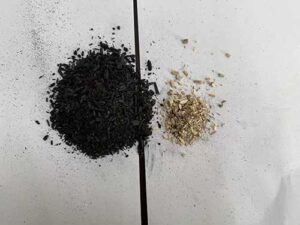
Carbonized rice husks

2. Match the Machine to Your Local Raw Materials: Maximize Resource Value

Why spend extra on sourcing raw materials? The best machine adapts to what’s readily available in your region:
  • Hard Biomass (Coconut Shells, Walnut Shells, Palm Kernels): Prioritize a machine with a heavy-duty crusher (capable of reducing hard shells to 1–5cm particles) and a wear-resistant furnace lining. These features ensure uniform carbonization and extend equipment lifespan—critical for processing tough, abrasive materials without frequent breakdowns.
  • Light Biomass (Rice Husks, Bamboo Chips, Sawdust): Focus on the drying system. Look for a dryer with adjustable temperature control (to reduce moisture to 8%–12%)—excess moisture leads to low-quality charcoal (low fixed carbon, high ash) that’s hard to sell. A reliable dryer eliminates the need for time-consuming sun-drying and ensures consistent results.
  • Mixed Raw Materials: Choose a modular integrated line. It allows flexible switching between hard and light biomass processing—no need to purchase separate equipment. Confirm with the manufacturer that carbonization parameters (temperature, time) are adjustable to suit different materials.

3. Prioritize Charcoal Quality: Meet Global Market Standards

High-quality charcoal sells faster and at a premium. Ensure your machine delivers consistent results that meet international buyer expectations:
  • Key Quality Metrics: Insist on a machine that produces charcoal with 70%–80% fixed carbon (long burning time, high heat output—perfect for barbecues, restaurants, and industrial use) and 1.99%–4.63% ash content (minimal residue, clean combustion). Ask for third-party test reports or sample charcoal to verify these specs—they’re non-negotiable for global competitiveness.
  • Energy Efficiency: Opt for equipment with a waste heat recovery system. It recycles heat from carbonization to dry raw materials, cutting energy costs by 25%–35% compared to traditional machines. Over 12 months, this translates to significant savings—boosting your profit margin.
  • Consistency: Look for PLC intelligent control (standard in mid-to-large machines) for one-touch operation, real-time temperature monitoring, and automatic fault alerts. Consistent quality builds trust with buyers—no more rejected orders due to uneven charcoal.

4. Ensure Environmental Compliance: Avoid Penalties & Protect Your Brand

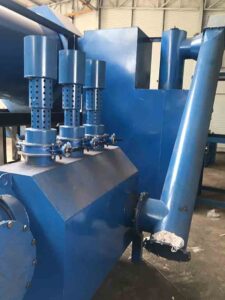
Continuous biomass pyrolysis machine flue gas purification system
Global markets (especially EU, US, Australia) have strict environmental regulations. Non-compliant machines risk shutdowns, fines, or banned exports:
  • Emission Control: The machine must be equipped with a complete exhaust treatment system (dust removal, desulfurization, deodorization) that meets international standards (EU CE, US EPA, ISO 14001). Ask for emission test certificates—no visible smoke, no toxic fumes, and low noise.
  • By-Product Recovery: Advanced machines recover wood vinegar (used as organic plant growth regulators, pesticides) and tar (refined into industrial fuels or chemicals). These by-products add extra revenue streams and demonstrate your commitment to circular economy—an attractive selling point for eco-conscious buyers.

5. Choose a Reliable Manufacturer: Mitigate Risks for Long-Term Success

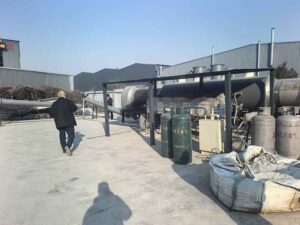
Installation site of continuous biomass pyrolysis machine
Overseas purchases involve logistics and after-sales challenges—partner with a manufacturer you can trust:
  • Credentials & Track Record: Verify ISO certifications, CE marking (for European markets), and past projects in your region. Ask for customer references or case studies—reputable manufacturers will share success stories from similar buyers.
  • After-Sales Support: Confirm:
  • on-site installation and operator training (critical for smooth setup).
  • A warranty of at least 12mor (covers core components like the furnace and control system).
  • Fast spare parts supply (global shipping options to minimize downtime).
  • 24/7 technical support (via phone, video call, or on-site visits if needed).

6. Calculate ROI: Make a Data-Driven Decision

Don’t just focus on the purchase price—evaluate the total cost of ownership (TCO) and payback period:
  • Upfront vs. Running Costs: A cheaper machine may have higher energy consumption, frequent repairs, and lower-quality output (reducing your selling price). Invest in a cost-effective option with reliable performance—lower energy bills, fewer maintenance costs, and premium charcoal prices will shorten your payback period.
  • Realistic Payback: Most small-scale machines pay for themselves in 6–12 months; mid-to-large machines in 12–24 months. Avoid manufacturers promising unrealistic short paybacks—but a transparent ROI calculation (based on your raw material costs, local charcoal prices, and production capacity) is a sign of honesty.
Final Tip: Test Before You Buy
Request a trial run with your own raw materials. Visit the manufacturer’s factory (or ask for a live video demo) to see the machine in action, check charcoal quality, and assess operation ease. Firsthand experience eliminates guesswork and ensures the machine fits your needs.
Choosing the right coconut shell charcoal making machine is your first step to tapping into the $XX billion global biomass charcoal market. Focus on scale, raw material adaptability, quality, compliance, and manufacturer reliability—and you’ll build a profitable, sustainable business that thrives in international markets.

Specific Parameters>>

Continuous Carbonization Furnace

Professional biomass processing equipment specifications

Model PU-05 PU-10 PU-30
Processing Capacity 0.5-1 T/H 1-2 T/H 3-5 T/H
Host Φ800mm Φ1000mm Φ1600mm
Use Raw Materials Sawdust, coconut shell, rice husk, straw, fruit shell (peel), biogas residue and other biomass materials
Additional Materials Sludge, domestic waste, papermaking residue and other organic materials
Structure Continuous type, drum type
Power 26.5 kW 32.5 kW 41.7 kW

Equipment work Video>>

Please see the video for the complete processing flow from coconut shell to coconut shell charcoal.

    FAQ about Coconut Shell Charcoal Making Machine>>

    1. Prepare shells – Clean, remove fiber, reduce moisture below 15%.

    2. Crush & dry (optional) – If shells are large or too wet.

    3. Carbonize – Heat shells at 380–600°C in a low-oxygen furnace until volatile gases are released.

    4. Cool – Let charcoal cool in a sealed chamber to prevent burning.

    5. Process – Crush, screen, or briquette as needed.

    Yield: About 28–32% charcoal with 70–80% fixed carbon.

    Coconut shell activated carbon is produced through two main steps:

    1. Carbonization
      Coconut shells are heated at 400–600°C in a low-oxygen chamber to remove moisture and volatile components, forming high-density coconut shell charcoal.

    2. Activation
      The charcoal is further heated to 800–1000°C with steam or CO₂.
      This process develops millions of micropores, greatly increasing surface area (900–1200 m²/g) and adsorption capacity.

    After activation, the material is crushed, washed, dried, and graded into different mesh sizes for water treatment, air purification, gold recovery, and industrial applications.

    Yes. Coconut shell charcoal is generally safe because it is 100% natural, contains low ash, low sulfur, and produces little smoke or odor when burned. It does not release harmful chemicals and is commonly used for cooking, grilling, indoor air purification, and water filtration.

    As long as it is produced under proper carbonization conditions and used in a well-ventilated area, it is considered a clean and safe fuel and filtration material.

    Yes. All our machines are equipped with a complete exhaust treatment system, including dust removal, desulfurization, and deodorization modules. We provide official test reports and certifications to ensure compliance with EU CE, US EPA, and ISO 14001 standards. You will not face fines or shutdown risks due to pollution issues.

    Our machines are highly versatile. They can efficiently carbonize a wide range of biomass wastes, including rice husks, bamboo chips, walnut shells, palm kernels, wood sawdust, peanut shells, and crop straws. You just need to adjust the crushing and drying parameters based on the material type.

    No. The machine is designed for user-friendliness:
    • Small-scale models: One person can master the operation after 1–2 days of training.
    • Mid-to-large scale models: Equipped with PLC intelligent control systems, supporting one-key start and automatic monitoring. Only 2–3 operators are needed for the entire production line.
       
      We provide free on-site training and detailed operation manuals in multiple languages.
    The machine can recover valuable by-products:
    • Wood vinegar: Used as organic plant growth regulators, pesticide additives, or preservatives.
    • Tar: Refined into industrial fuels, lubricants, or chemical raw materials.
    • Biogas: Burned as fuel to heat the carbonization furnace, reducing external energy costs by 30%.
       
      These by-products can create additional revenue streams for your business.

    Absolutely. We can customize the power supply (e.g., 220V/380V/440V, 50Hz/60Hz) according to the electrical standards of your country or region. We can also adjust the machine’s capacity, raw material adaptability, and accessory configurations to meet your specific needs.

    The payback period depends on your production scale and local market conditions:
    • Small-scale machines (≤5 tons/day): 6–12 months
    • Mid-scale machines (5–20 tons/day): 12–18 months
    • Large-scale machines (≥20 tons/day): 18–24 months
       
      This timeline assumes you use low-cost local biomass and sell charcoal at market competitive prices.
    Scroll to Top