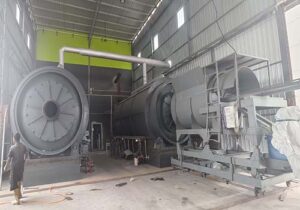

In searching for a pyrolysis plant, customers seek transparent criteria. They need to learn which vendors manufacture equipment with high reliability, durability, and quick payback periods. This paper presents guidelines on ranking oil pyrolysis plant suppliers in an unbiased, concise manner. It targets the sales and engineering departments who can effectively promote our products and services to customers.
This work focuses on describing the critical criteria for ranking oil pyrolysis plant suppliers, including potential pitfalls to be avoided, and the unique features of our equipment, Pyrolysis Unit. The writing style is clear and straightforward. We will present a concise list of criteria applicable for phone calls, meetings, and manufacturing facilities tours.
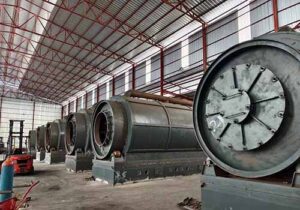
Customers need an objective way to assess manufacturers. The following factors are those which impact a consumer’s experience and financial bottom line in reality:
Technical performance (oil yield and throughput)
Oil yield is the most debated parameter. Higher yield is beneficial in terms of volume produced but must be realistic and proven on actual material.
The throughput (tons/day) should correspond to waste availability and customer’s strategy.
Energy consumption and efficiency
An inefficient plant consumes more energy. Proper heat exchange and insulation are required.
Simple technologies for thermal efficiency and preheating of feedstock will lower costs and shorten payback period.
Emission levels and environmental protection systems
The customer is interested in clean exhaust gases, dust removal and odor control. Machines must be equipped with high-quality filters and scrubbers.
Standards may vary regionally; therefore, the manufacturer shall assist with compliance.
Plant build quality and component usage
Use of reliable components (quality bearings, materials, reliable pumps and motors).
Good welding, precise mounting, effective sealing prevent breakdowns.
Customization and scalability
While some require a basic system, others will require customization in terms of feed preparation, conveyors, or pre-shredders.
Flexibility to adapt and expand as customers’ needs change will benefit customers since they won’t have to replace the entire system.
Price and total cost of ownership (TCO)
Purchase price is only one aspect. Buyers should factor in installation costs, training, permits, spares, and minor modifications.
A cheap purchase but expensive after-sales service is a poor deal.
After-sale service, spare parts, and training
Quick delivery of spares and practical training are very important.
A manufacturer that offers pilot runs, technical assistance through remote channels, and maintenance programs gives buyers peace of mind.
Reputation and proven case studies
Buyers rely more on real-life experiences and successful runs than promotional material. Pictures, oil testing, and references count.
In ranking manufacturers, consider how much each weighs on your buyer. If your buyer is worried about emissions, environmental control systems weigh more. If price is the issue, then TCO is the main concern.
Certain companies will offer marketing statistics which appear impressive. The following tips can help differentiate between actual statistics and marketing statistics.
Caution signs in claims
Yield percentage figures without mentioning the type of feedstock used and testing conditions are meaningless. Request the composition of the feedstock.
“Up to” statistics tend to be maximum statistics. Ask for average statistics instead.
Claims such as zero emission and 100% automation are rare and highly conditional.
Questions for the manufacturer
What feedstock did you use to attain that level of oil yield? Request laboratory testing or sample analysis.
Do you have data on continuous running over a week or a month? Individual run data is insufficient.
What replacement parts do you supply alongside your machine? What is the delivery period for replacements?
Installation services. Do you offer operator training on site?
Verifying performance statistics
Ask for references and get in touch with the clients. Ask them about the plant’s performance six months from installation and one year after.
If possible, go and see the plant operating. It is better than all brochures combined.
Ask for a trial plant. If the company does not give you the trial or tries to dodge showing you their work, be wary of such a manufacturer.
These are questions that our sales people must ask during every demonstration.
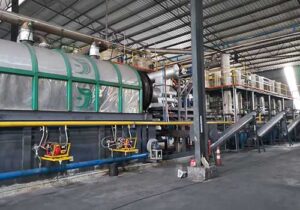
This is the core. When we rank manufacturers, we must explain why Pyrolysis Unit deserves a top spot. The focus is on practical benefits customers will feel every day.
Stable oil yield and sensible testing
We publish yield numbers tied to clear feedstock definitions. That means customers know what to expect.
Our engineering focuses on steady runs, not flashy peaks. Stable oil yield saves time and reduces risk.
Modular, scalable design
Our lines are modular. Customers can start with a mid-size unit and add modules as supply grows.
Modular layout cuts installation time and makes future expansion cheaper.
Energy recovery that lowers running cost
We design for sensible heat recovery. Preheating feedstock and reusing flue heat reduces fuel use.
Lower energy use means faster payback, and makes a difference in tight margins.
Practical emission controls and compliance support
Our standard scope includes flue gas treatment and dust collection. We document the systems and help with local permit packs.
We do not promise miracle numbers. We help customers meet local rules with proven equipment.
Durable components and easy maintenance
We choose parts that are easy to source and straightforward to replace. That keeps downtime low.
Our machines are designed for workshop-level maintenance so customers can fix things quickly on site.
Hands-on training and spare parts guarantee
We train operators at the factory and onsite. Training is practical and focused on routine tasks and problem solving.
We maintain an organized spare parts stock and clear lead times. Customers know how to order and when to expect parts.
Transparent pricing and total cost guidance
We offer clear quotes that show equipment cost, installation estimates, training, and recommended spare parts.
For customers, this makes budgeting simple and reduces surprises.
Proven case results (real runs, simple numbers)
We collect simple, auditable data: daily throughput, average oil yield, uptime. Those numbers are easy for customers to check.
We encourage pilot tests and we support start-up runs until the customer is confident.
Sales team talking points (short bullets for calls)
“You’ll get realistic yield numbers based on your feedstock.”
“Start small and expand—our modules fit together.”
“We design for lower fuel use and easier maintenance.”
“Training is included—operators leave confident.”
“Spare parts are organized and shipped fast.”
These are strong, honest claims. They are simple to verify. Use them in proposals and on factory tours.
Customers ask: “How fast will this pay back?” We need a simple way to show them.
Steps to choose the right model
Estimate daily waste supply in tons.
Choose a throughput that matches or slightly exceeds supply. Running near capacity is normal, but avoid a machine that’s too small.
Ask for yield numbers for your feedstock. If the manufacturer doesn’t have them, plan a pilot test.
Check site needs: footprint, power, water, and permit basics.
Simple ROI method (easy numbers)
Get three numbers: expected oil yield per ton (liters or kg), daily throughput (tons/day), and expected oil price per liter/kg.
Calculate daily oil value: oil yield × throughput × oil price.
Subtract daily running costs (fuel, labor, maintenance). That gives daily gross profit.
Divide the total project cost (equipment + installation + training) by the daily gross profit to estimate days to payback.
Example (simple, round numbers)
Throughput: 10 t/day. Yield: 400 liters per ton → 4,000 liters/day. Oil price: $0.40/l → $1,600/day revenue. Running cost: $600/day → $1,000/day gross. Project cost: $400,000 → 400 days to payback (just over a year).
This is a simplified method. Real projects should include taxes, logistics, and seasonal variance. Still, simple math helps customers decide quickly.
Permits, site needs, and operator checklist
Confirm local emissions rules and waste permits. Ask the manufacturer for a documentation pack.
Confirm site utilities: electricity, water, compressed air, and gas if needed.
Arrange operator training and a spare parts kit for the first year.
Plan for regular maintenance days—preventive care reduces breakdowns.