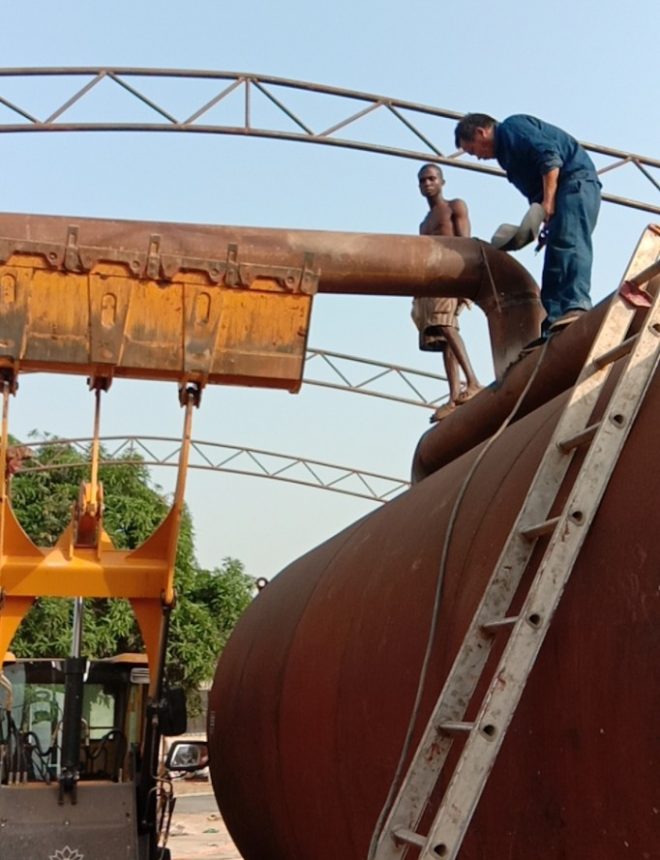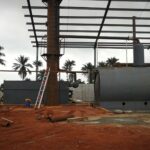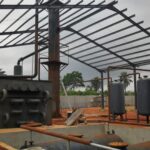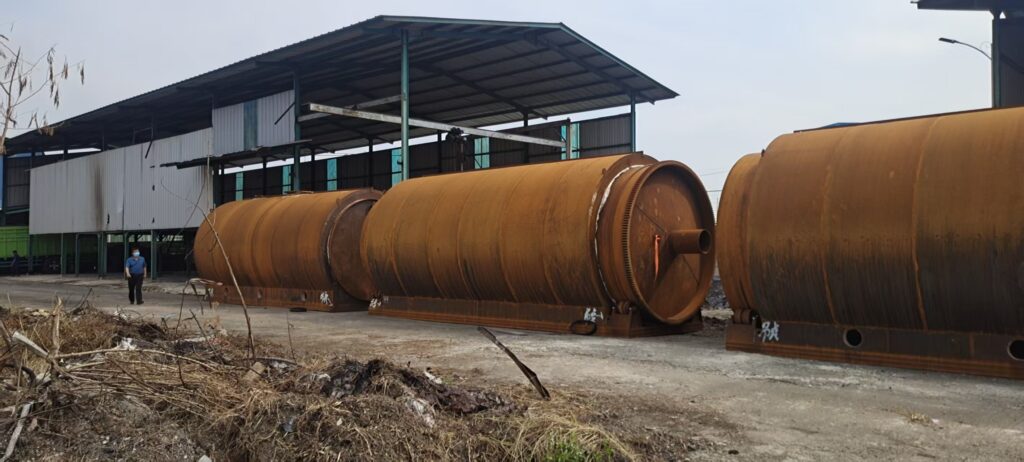

Distillation Equipment Project in Malaysia In February 2026, a waste-tire
2 Pyrolysis and 1 Waste Oil Distillation Plant
August 2021: Three sets of equipment for Indonesia – 2 pyrolysis units and 1 waste oil distillation unit
Project Background: Addressing the Waste Tire Crisis
In early 2021, the waste management company in West Java, Indonesia, was confronted with an increasing problem – that is, the disposal of the rubber waste produced by the logistics fleet of the area. Industrialization in Indonesia had resulted in the accumulation of huge amounts of rubber waste, which were usually discarded in landfills or burned directly.
To solve this issue and generate revenue by producing industrial heating fuels, the client needed a viable business approach. In August 2021, the client decided to team up with us and purchased the appropriate processing line.


Configuring Solutions For Clients
Development of a Standard Solution
Taking into account the requirements for the solution’s purity and the amount of output, we developed a two-stage thermal conversion installation.
Equipment Design:
Two batch pyrolysis units: Their choice is based on their reliability and ability to process up to 10 tons of used tires per batch. Using two units ensured continuous operation.
One distillation plant for processing waste oil: Although the pyrolysis yields oil, a distillation unit is required to upgrade it to standard non-diesel (distillate fuel), which can be used in furnaces, engines, and other equipment.
Process Description:
Pyrolysis: In an oxygen-free environment, tires are heated, resulting in the decomposition of rubber into oil gas, carbon black, and steel wires.
Condensation: Oil gas is cooled, yielding liquid oil.
Distillation: Crude oil is supplied to the distillation unit where it is heated, de-colored, and de-odorized.
Project Results

ISO CE Approved
The equipment quality has passed IAF, CNAS, ISO, CE certifications, Certified by international professional organizations, the equipment is safe and reliable.

AAA Credit Audited Enterprise
One of the top refining equipment manufacturers in China, The government Audited Superb as AAA credit company (top level).

Solutions for Pyrolysis And Distillation
We will provide you with the latest industry solutions, and provide you with a one-year after-sales warranty to ensure stable operation of the equipment.

24-hour service
We have professional engineers to solve various problems for you, including equipment, process, material problems, etc.

Professional R&D team
We have obtained a number of utility model patents, including distillation production equipment and pyrolysis module equipment.

Fast Delivery
We have sufficient stock of pyrolysis and distillation equipment to ensure efficient logistics and fast delivery.
Following the commissioning of the plant in late 2021, the facility achieved the following performance metrics based on a standard 300-day operating year.
Performance Results
| Metric | Value |
| Annual Waste Tire Capacity | 6,000 Tons (20 tons/day) |
| Average Pyrolysis Oil Yield | 45% (2,700 Tons/Year) |
| Final Distilled Fuel Production | ~2,295 Tons/Year (85% distillation yield) |
| By-products (Carbon Black/Steel) | ~2,100 Tons of Carbon Black; 720 Tons of Steel |
Financial Estimate for One Year
Remark: This is estimated considering the market prices during 2021 and 2022 in Indonesia.
Capital Expenditure (Total): $450,000 (Machine purchase, transportation, and setup)
Operational Expenditure: $350,000 (Wage, electricity, purchasing tires, and maintenance costs).
Revenue: $1,100,000 (Based on the total earnings from selling the fuel, carbon black, and scrap iron).
Return on Investment (ROI)
Net Profit: $1,100,000 (Revenue) – $350,000 (Operating Costs) = $750,000
Payback Time Period: It is observed that the investor was able to recover the entire amount within 8 months at maximum capacity operations
Waste Plastic-to-Fuel Refining Equipment Two Sets of Waste Plastic-to-Fuel Refining
Conclusion
One such project which was carried out in August 2021 in Indonesia can be considered a case study that shows how the principles of circular economy can be used in dealing with waste from industrial production. By implementing the addition of distillation into the traditional pyrolysis procedure, the customer managed to get an upgraded product with a much higher market price compared to crude tire oil.
Currently, not only is this plant able to deal with waste tires, but it also functions as a reliable source of energy for the adjacent factories.