
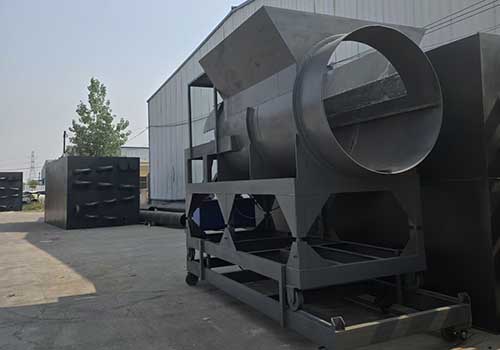
Using variable-frequency quantitative feeding, the amount of raw material fed per unit time can be easily controlled, ensuring that under a constant heat input, the materials can be fully pyrolyzed.
Continuous Pyrolysis Plant
A Continuous Pyrolysis Plant with a daily processing capacity of 30 tons is a 24-hour non-stop organic waste treatment system. Through automated feeding, pyrolysis, and slag discharge processes, it converts waste tires, plastics, oil sludge, and other materials into fuel oil, carbon black, and combustible gas.
Features of Continuous Pyrolysis Plant>>
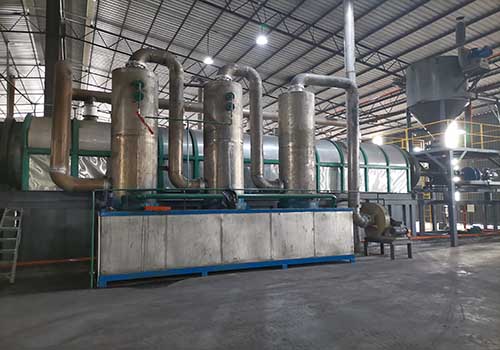
This system separates the liquid fuel oil obtained from pyrolyzing rubber powder into gasoline fractions, diesel fractions, and residual oil, significantly improving the quality of the final product and thereby increasing the market value of the fuel oil.
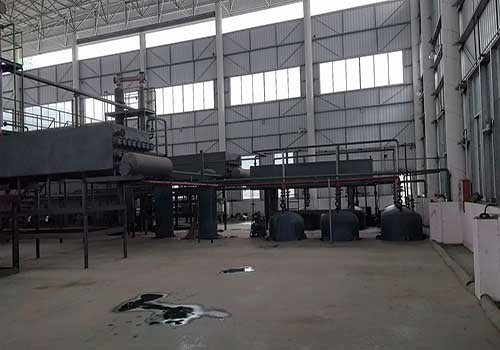
This system adopts dual-stage, multi-line sealing. The carbon black conveying system is designed to ensure absolute sealing during high-temperature transportation, guaranteeing the safe and stable operation of carbon black transfer.
About Continuous Pyrolysis Plant Guide>>
What is Continuous Pyrolysis Plant
Unlike batch pyrolysis systems, the Continuous Pyrolysis Plant operates without the need for shutdowns. It is equipped with automatic feeding and discharging systems, enabling around-the-clock production with higher efficiency and lower labor costs.
Key Features & Benefits:
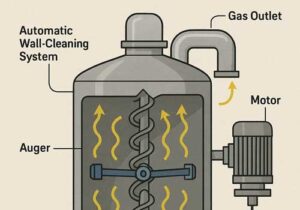
Automatic Wall-Clean Pyrolysis Reactor
The spiral blade layout inside the pyrolysis reactor is specially designed based on the required temperature at each stage and the material's form after decomposition. Unlike traditional continuous pyrolysis systems, our design prevents wall-sticking issues that commonly reduce processing capacity over time. The built-in automatic wall-cleaning system removes the need for manual cleaning, cutting down on labor, downtime, and maintenance costs.
Dual-Point Constant Temperature Heating System
The heating system plays a crucial role in maintaining processing efficiency. Our unit features a dual-point heating design combined with multi-point temperature control, ensuring that heat is evenly distributed throughout the pyrolysis reactor. This setup significantly enhances thermal efficiency and ensures stable and effective raw material conversion.

Eco-Friendly Design
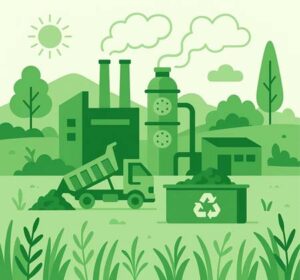
The system introduces non-condensable gas into the combustion chamber through safety water seals and gas nozzles, effectively eliminating gas emissions while saving significant fuel. For smoke and dust emissions, it utilizes a proprietary national patented high-efficiency atomized desulfurization and dust removal system. Emissions fully comply with the GB 13271—2001 national environmental standard.
Defining Continuous Pyrolysis
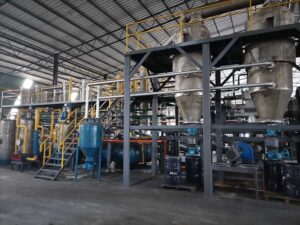
Continuous pyrolysis is an advanced thermochemical process designed for the uninterrupted conversion of various waste materials into valuable products such as fuel oil, carbon black, and syngas. Continuous pyrolysis systems are engineered for 24/7 operation, significantly enhancing efficiency, throughput, and automation. This technology involves feeding prepared waste feedstock into a reactor where it is thermally decomposed in an oxygen-free environment at high temperatures. The resulting products are then continuously separated and collected.
Why Choose Continuous Pyrolysis?
Continuous pyrolysis is an advanced thermochemical process designed for the uninterrupted conversion of various waste materials into valuable products such as fuel oil, carbon black, and syngas. Continuous pyrolysis systems are engineered for 24/7 operation, significantly enhancing efficiency, throughput, and automation. This technology involves feeding prepared waste feedstock into a reactor where it is thermally decomposed in an oxygen-free environment at high temperatures. The resulting products are then continuously separated and collected.
For Investors
- High processing capacity with 24/7 operation
- Multiple revenue streams from valuable products
- Reduced operational costs through automation
- Strong ROI potential with 2-5 year payback
For Operators
- Fully automated PLC control systems
- Minimal manual intervention required
- Advanced safety and environmental compliance
- Consistent product quality and yields
| Feature | Continuous Pyrolysis | Batch Pyrolysis | Analysis |
|---|---|---|---|
| Feeding Method | Continuous feeding without cooling; sealed system prevents oxygen entry | Feeding only when unheated; reactor must cool between batches | Continuous systems offer superior operational continuity and safety through sealed oxygen-free environment |
| Production Efficiency | No heating/cooling cycle interruptions; continuous oil output; higher efficiency | Frequent heating/cooling cycles; lower operational efficiency; downtime between batches | Continuous operation eliminates energy wastage from repeated heating cycles, optimizing resource utilization |
| Automation Level | Fully automated, PLC control system; minimal manual intervention required | Manual operation or lower automation; requires more skilled operators | High automation reduces labor costs and ensures consistent product quality through precise process control |
| Processing Capacity | Higher capacities, suitable for large-scale processing (30–50 tons per day) | Limited by reactor size; smaller batches (few tons per reactor per day) | Continuous plants ideal for centralized waste management; capacity easily scaled through multiple lines |
| Environmental Performance | Steady-state operation improves gas treatment efficiency; easier to meet emission standards | Initial gas burst harder to treat; more variable emissions | Continuous operation allows pollution control systems to function more effectively and consistently |
| Economic Model | Lower operational cost per unit processed; higher initial investment | Lower initial cost; higher operational cost per unit | Higher upfront investment offset by long-term operational savings and greater throughput efficiency |
What Types of Materials Can a Continuous Pyrolysis Plant Process?
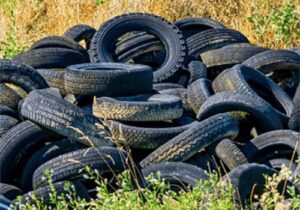
Waste tires
Fuel Oil: 35%–45%
Carbon Black: 30%–35%
Steel Wire: 10%–15%
Non-condensable Gas: 5%–10%
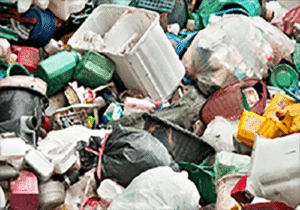
Waste Plastics
Fuel Oil: 45%–75%
Carbon Black (if applicable): 10%–15%
Non-condensable Gas: 10%–20%
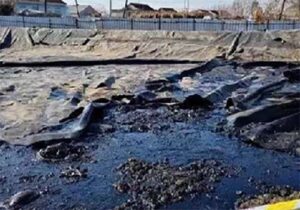
Oil Sludge / Oil Residue:
Fuel Oil: 20%–40%
Solid Residue (slag): 60%–80%
Non-condensable Gas: Trace
Rubber Products
Fuel Oil: 35%–45%
Carbon Black: 30%–35%
Steel Wire (if applicable): 10%–15%
Gas: 5%–10%
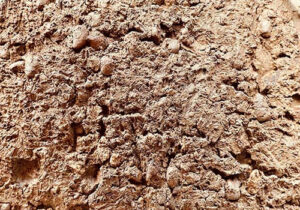
Agricultural waste
Biochar: 25%–35%
Wood Vinegar: 10%–15%
Wood Tar: 5%–10%
Combustible Gas: 30%–50%
Which customers are suitable for using a Continuous Pyrolysis Plant?
- High Waste Processing Volume: These companies typically handle large quantities of waste materials (such as waste tires, plastics, or oil sludge) on a daily basis, and continuous pyrolysis systems are designed for 24/7 large-scale processing.
- Stable Supply Chain: They usually have a stable and long-term supply of raw materials, ensuring the plant runs efficiently without frequent stops.
- Environmental Compliance: Such companies often operate under strict environmental regulations. Continuous pyrolysis systems offer closed-loop, low-emission processes that align well with regulatory requirements.
- Advanced Technical Capabilities: These companies are better equipped to manage the technical aspects of running and maintaining a continuous system, including automation, temperature control, and emission treatment.
- Economic Benefits from By-products: They can make full use of the output (e.g., pyrolysis oil, carbon black, and steel wire), either selling them or further processing them, thus maximizing profitability.
- Long-Term Investment Capacity: Continuous systems require higher initial investment, but these companies have the capital and long-term strategy to benefit from the lower operational cost per ton.
Local government cooperation projects are well-suited for continuous pyrolysis plants because these projects often focus on long-term, large-scale waste reduction and environmental sustainability. The continuous pyrolysis plant ensures stable, 24/7 operation with high efficiency and automation, making it ideal for meeting government requirements for consistent waste processing capacity, reduced labor dependency, and eco-friendly waste-to-energy solutions.
Factory by-product processing departments are suitable for continuous pyrolysis plants because they often need to handle large volumes of industrial waste or by-products on a regular basis. The continuous pyrolysis system offers high efficiency, automation, and stable performance, allowing factories to convert waste into valuable resources like fuel oil, carbon black, and gas, while also reducing disposal costs and environmental impact.
Energy recovery companies and oil recycling companies are suitable for continuous pyrolysis plants because these systems can efficiently convert waste materials—such as used tires, plastics, and oil sludge—into usable energy products like pyrolysis oil and syngas. The continuous design ensures uninterrupted production, maximizing output and profitability, while aligning with the companies’ goals of resource recovery and circular economy practices.
Users' pain points and concerns about continuous pyrolysis machines
Traditional Disposal Methods Are Highly Polluting and Costly
Our Solution:
The continuous pyrolysis plant operates in a fully sealed system with:
Gas purification (meeting GB13271-2001)
Wastewater neutralization and evaporation using waste heat
Solid residue (carbon black) reuse
C1–C4 combustible gases are safely burned after passing multiple safety devices (water seal, flame arrestor), with emissions under control.
Seeking a Profitable and Sustainable Waste-to-Resource Solution
Our Solution:
1 ton of tire can produce:
40–45% fuel oil (usable in boilers, diesel engines, etc.)
30–35% carb (can meet or exceed N660 specs after activation)
10% steel
10% combustible gas
Products can
Oil refineries
Carbon black processors
Rubber factories (as filler in tires, mats, asphalt, etc.)
The system is aligned with China’s National Demonstration Projects, supporting long-term viability.
Desire for Automation and Low-Maintenance Operation
Our Solution:
Equipped with:
Variable-frequency quantitative feeding
Automatic slag discharge and sealing
Self-cleaning rotary reactor (avoids sticking/coking)
Dual-point constant temperature heating
PLC control system for intelligent, real-time monitoring
No need for manual wall cleaning or shutdowns.
Designed for 24/7 operation, ideal for industrial-scale processing.
Compliance with Emission Standards and Eligibility for Green Subsidies
Our Solution:
Built-in environmental protection systems:
Flue gas desulfurization and dust removal
Zero-wastewater discharge via evaporation
Carbon black reuse
Fully compliant with Chinese national standards (GB13271–2001)
Eligible for:
MOIIT (Ministry of Industry and Information Technology) demonstration projects
Green manufacturing subsidies
Local waste management policy incentives
We can provide:
Environmental compliance data
Technical documentation
Case studies from government-backed projects
What is the cost and benefit of Continuous Pyrolysis Plant
A 1-ton/day capacity small pyrolysis machine requires approximately $25,000 capital investment but can generate $58,000 annual net profit, achieving ROI in 6-10 months.
CONTINUOUS PYROLYSIS PLANT ECONOMICS (30 TONS/DAY)
🛠️ COSTS
- ✅ Equipment: $1,500,000
- ✅ Installation: $250,000
- ✅ Daily Ops: $1,100/day
- (Power: $600 | Labor: $200 | Maintenance: $300)
💵 BENEFITS
- 🛢️ Fuel Oil (45%): $10,125/day
- ⚫ Carbon Black (30%): $2,250/day
- 🧵 Steel Wire (15%): $810/day
📊 DAILY PROFIT: $12,085 |
💰 ANNUAL NET*: $3,625,500
*Based on 300 operating days/year | ROI: 5 months
🌍 Regional Adjustment Guide:
USA +15% Profit | India -18% | Germany +25%
Cost Components
Equipment: $1,500,000 (includes full emission control – RTO+SCR systems)
Installation: $250,000 (requires industrial foundation + 480V power)
Operational Costs:
Electricity: $600/day (100kW×24h operation)
Labor: $200/day (2 technicians)
Maintenance: $300/day
Revenue Streams (Tire Pyrolysis Example)
| Output | Yield | Market Price | Daily Revenue |
|---|---|---|---|
| Pyrolysis Oil | 45% | $0.75/kg | $10,125 |
| Carbon Black | 30% | $0.25/kg | $2,250 |
| Steel Wire | 15% | $0.18/kg | $810 |
| TOTAL | $13,185/day |
Payback Period
Daily Net Profit: $13,185 (revenue) – $1,100 (costs) = $12,085
Break-even: $1,750,000 ÷ $12,085 ≈ 145 days (~5 months theoretical, 7-9 months in practice)
Regional Variations
| Country | Machine Cost | Oil Price | Payback Period |
|---|---|---|---|
| USA | $1,800,000 | $0.85/kg | 4 months |
| India | $1,200,000 | $0.60/kg | 6.5 months |
| Germany | $2,500,000 | $1.10/kg | 3.5 months |
Key Notes:
All values based on 300 operating days/year
Includes 10% downtime contingency
Oil prices fluctuate regionally (±20%)
Specific Parameters>>
| Item | Specification | |
| Equipment Model | PUHB-30 Type | |
| Structure Type | Horizontal Rotation | |
| Daily Processing Capacity | 30 tons raw material | |
| Working Pressure | Slight Negative Pressure | |
| Main Unit Rotation Speed | 0.8~1.0 rpm | |
| Pyrolysis Reactor Drive Power | 15kw | |
| Cooling Method | Water Cooling | |
| Transmission Method | Chain Drive | |
| Noise Level | ≤85 dB(A) | |
| Main Unit Dimensions | 1800*16000 (mm) | |
| Operation Mode | Fully Automatic Continuous | |
| Main Unit Weight | 40t | |
| Maintenance Cycle | 30~75 days | |
| Total Power | 55kw | |
| Power Parameters | 380v 3-phase 4-wire | |
| Floor Area | 45m*18m | |
| Staffing Requirement | 2 persons/shift | |
| Heating Fuel | Oil, Natural Gas | |
| Component Name | Parameters | Quantity |
| 1. Feeding System | ||
| Supporting Platform | Size: Matched with screw feeder | 2 Sets |
| Screw Feeder | Capacity: 0~1.5t/h | 2 Sets |
| Horizontal Size: 325*5900mm | ||
| Drive: Cycloidal reducer | ||
| Motor Power: 11KW, frequency control | ||
| Accessories: Frame, adjustment pad, ball valve, flange | ||
| High Temperature Valve | 2 Sets | |
Equipment work Video>>
Our Continuous Pyrolysis Plant is engineered for mid-to-large enterprises and waste management hubs that require a high-capacity, 24/7 solution to convert materials like plastic, rubber, tires, oil sludge, and biomass into valuable products. Whether you operate a dedicated recycling facility, a municipal waste center, or an industrial processing plant, our fully automated system delivers uninterrupted feeding, pyrolysis, and slag discharge—turning up to 30 tons of feedstock per day into fuel oil, carbon black, and combustible gas. Backed by clients worldwide and supported by our expert after-sales team, we’ll tailor a continuous pyrolysis solution to fit your exact operational needs. Contact us today to get started!
About Continuous Pyrolysis Plant FAQ>>
What is the output of a continuous pyrolysis plant?
The daily output of continuous pyrolysis equipment is usually in the range of 10 tons to 100 tons, and the specific production capacity depends on the equipment size, model, raw material type and processing technology.
What raw materials can be processed?
Applicable raw materials: Waste tires, oil sludge, biomass (straw/rice husks), waste plastics, oily sludge, etc.
What is the moisture content requirement?
Moisture content control: Pretreatment is required to ≤40% (for oil sludge) or ≤20% (for biomass). High moisture content significantly increases energy consumption (e.g., heating 1kg of water to 450°C requires 2984kJ of heat).
What are the key differences between continuous pyrolysis and traditional batch-type equipment?
Continuous pyrolysis: Materials are fed, pyrolyzed, and discharged continuously 24 hours a day, using a sealed screw conveyor system for continuous operation. This increases processing efficiency by 3-5 times and reduces energy consumption by approximately 30%.
Batch pyrolysis: Each batch requires cooling and restarting, resulting in long cycles and high heat loss, making it suitable for small-scale experiments.
What is the energy consumption?
Processing one ton of waste tires consumes approximately 80 kWh of electricity, plus supplemental heating using natural gas or biogas. This saves 40% more energy than incineration.
Does Emission Control meet the standards?
Continuous pyrolysis plants often incorporate advanced, multi-stage dedusting and gas cleaning systems to treat the flue gases and process emissions. These systems can include components like smoke condensers, atomizing towers, scrubbers, electrostatic precipitators, bag filters, and activated carbon adsorption units to remove particulate matter, acidic gases, and volatile organic compounds .