

Top Manufacturer of Pyrolysis Machines/Units

Can A Pyrolysis Machine Convert Asphalt Roof Tiles Into Diesel

1.Short answer — summary

Yes — asphalt roof tiles (commonly called asphalt shingles) can be thermally broken down by pyrolysis to produce an oil-like liquid. However, the raw liquid from pyrolysis is not the same as commercial diesel. To make a diesel-grade fuel you must further refine and clean that oil with distillation and upgrading (for example catalytic processing or hydrotreating). The basic chemistry works, but the practical route requires additional equipment, quality controls, and attention to contaminants.
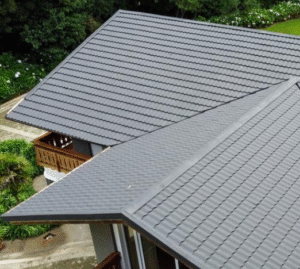
asphalt roof tiles

2.What asphalt roof tiles (shingles) are made of

Most modern asphalt roof tiles are a composite product. The typical layers are:

A mineral or kraft-fiber backing (often fiberglass mat or organic felt).

A layer of asphalt or bitumen that coats the mat.

Mineral granules or fillers on the surface (sand, slate dust, ceramic-coated granules).

The asphalt/bitumen is the petroleum-derived fraction that can thermally decompose into lighter hydrocarbons. The backing and mineral fillers remain as solids or ash after pyrolysis and must be separated or handled as residue. Because shingles are a mixed material, their composition varies with manufacturer, age, and whether the shingle is a tear-off (weathered) or manufacturer scrap. That variability matters for processing and yields.

3.How pyrolysis would treat asphalt roof tiles

Pyrolysis is heating in the absence (or near-absence) of oxygen so large, complex molecules break into smaller molecules: vapors, gases, and solid char/residue. For asphalt-containing wastes like shingles, the bitumen fraction cracks into condensable vapors (which condense into an oil fraction) plus permanent gases and a solid residue made up mostly of mineral and fiberglass. Key points for shingles:

The process temperature and heating rate control the product split (oils vs gas vs char).

Shingle mineral fillers and fiberglass do not become oil; they remain as non-combustible residue that must be removed.

Some additives in shingles (adhesives, fire retardants, coatings) can change vapor composition and add impurities.

In practice, pyrolysis plants handling shingles either process separated asphalt-rich fractions or accept whole shingles and handle larger solid residues in the reactor and handling system. Bench and pilot work shows high conversion of the asphalt fraction to oil is possible, but plant design must manage solids and heterogeneous feedstock.
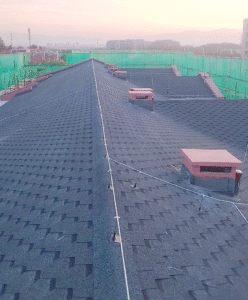
asphalt roof tiles

4.What kind of oil comes from that pyrolysis and whether it can become diesel

What the raw pyrolysis oil is like

The liquid condensed from shingle pyrolysis is a heavy, complex hydrocarbon mix. It behaves more like a crude or heavy fuel oil than finished diesel. Typical traits:

High viscosity compared with diesel.

Elevated sulfur and oxygenated compounds compared with refinery diesel, depending on shingle chemistry.

Aromatic and heavy fractions that may need cracking or reforming to reach diesel range.

Studies and commercial reports indicate that a large share of the asphalt mass can be recovered as oil under proper conditions, but the oil needs treatment.

Steps needed to make diesel-grade fuel

Turning that pyrolysis oil into something usable in a diesel engine requires one or more refining steps:

Fractional distillation to separate light naphtha, diesel-range fractions, and heavy residues.

Hydrotreating / catalytic upgrading to remove sulfur, nitrogen and oxygen and to saturate aromatics so the product meets cetane, stability, and emission specs. Some companies talk about catalytic vapor upgrading during pyrolysis to shift product to diesel-range molecules.

Polishing & blending — filtration, additive dosing, and blending with refinery diesel to meet standards and engine tolerances.

Without these refinement steps, the raw pyrolysis oil is generally only suitable as a burner fuel for boilers or industrial furnaces, not directly as vehicle diesel. Several commercial efforts refine shingle-derived oil into useful fractions, but they require distillation columns and catalytic units similar to refinery processes.

5.Technical challenges and contaminants to watch for

If you plan to process asphalt roof tiles into diesel-like fuel, these are the main technical risks and issues:

Feedstock variability. Tear-off shingles have dirt, nails, sealants, and variable asphalt content. Yield and composition will vary by lot. This affects product quality and process control.

Fiberglass, fillers and ash. These remain as solids after pyrolysis and can abrade or block equipment if not handled correctly. They also lower the mass fraction convertible to oil.

Sulfur and oxygenates. Asphalt/bitumen can contain sulfur and oxygen-containing compounds; the resulting oil often needs hydrotreatment to meet low-sulfur diesel specs.

Chlorine and metals (if present). Some roofing products or contaminant debris can introduce chlorinated compounds or trace metals. These can poison catalysts and create corrosive off-gases. Pre-sorting and guard beds in upgrading units help manage this.

Smell, emissions and condensables. Uncontrolled vapors can create odour and local air quality problems. Condenser and scrubber systems are required to capture and treat volatile organics and acidic gases.

Engine compatibility. Even after distillation, the fuel must meet cetane number, cold-flow, stability, and sulphur specs for on-road diesel applications. Meeting all of those often requires hydrotreating under hydrogen pressure — an added capital and operating cost.

These technical issues mean the project is more than a simple “pyrolysis unit plus condenser.” If the goal is vehicle diesel, the plant needs integrated upgrading and quality control. If the goal is industrial fuel oil, the requirements are fewer but still non-trivial.
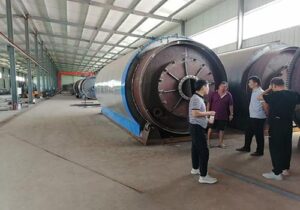
pyrolysis machine

6.Environmental, regulatory, and economic points

Environmental and regulatory

Landfill diversion is a benefit. Shingles make up a large tonnage of construction waste; recovering their hydrocarbons lowers landfill volumes. Agencies and states have programs encouraging shingle recycling.

Air permits and emissions control. Pyrolysis and upgrading units that produce and refine hydrocarbons will need permits for VOCs, SOx/NOx, particulates, and waste management. Scrubbers, thermal oxidizers, and flare/gas-handling systems are often required.

Product classification. Refined output intended for road use will be regulated as a fuel and must meet fuel standards; unrefined pyrolysis oil used for combustion may still be regulated as an industrial fuel with limits on sulfur and heavy metals.

Economics

Feedstock cost and logistics. Torn-off shingles are bulky and contaminated with nails and debris. Sorting, cleaning, and transport costs can be high. Manufacturer scrap is cleaner and more attractive but less abundant.

Capital cost. A pyrolysis reactor alone is only part of the investment. To obtain diesel-range product that meets specs you need distillation, catalytic/hydrotreating units, hydrogen supply or alternative catalytic processes, and pollution control. That increases capex and opex.

Market value. Untreated pyrolysis oil is mainly a low-value fuel for burners. Upgraded diesel-range products can command higher prices but must compete with refinery diesel and meet regulations. Commercial projects have explored solvent-based separation and upgrading routes to increase value.

In short, economics depend on feedstock source and cleaning cost, how much upgrading you do, local fuel prices, and permitting costs.
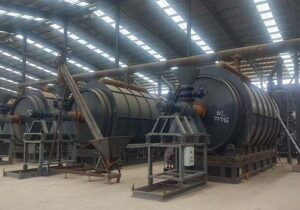
pyrolysis machine

7.Practical recommendations and conclusion

If your goal is to produce diesel-grade fuel from asphalt roof tiles, here are practical steps and considerations to include in planning and design:

Decide the product target up front.

If you want industrial burner fuel, a simpler pyrolysis + basic cleanup may be enough.

If you want highway diesel, plan for distillation, hydrotreating/catalytic upgrading, and fuel testing.

Control feedstock quality.

Prefer manufacturer shingle scrap or pre-sorted asphalt-rich fractions.

Implement incoming inspection to remove nails, sticks, and non-shingle debris. Feed variability is the main yield/quality driver.

Design for solid handling.

Expect 5–20% by mass of non-oil residue (fiberglass mat, mineral fillers). Provide robust residue discharge and abrasion-resistant internals.

Plan for refining/upgrading.

Install fractional distillation capacities sized to split diesel-range fractions.

Use catalytic upgrading or hydrotreating to reduce sulfur and improve stability if diesel specs are required. Consider catalyst guard beds to protect catalysts from metals and chlorides.

Include emissions control and testing.

Add condensers, scrubbers, thermal oxidizers or VOC capture, and continuous product testing. Permitting authorities will expect monitoring data.

Run pilot tests before committing to full scale.

Small-scale trials give real yield and impurity numbers for local feedstock and reveal handling problems before major capital expenditure. Several published pilot studies and commercial pilots report good conversion of the asphalt fraction to oil, but results depend on feed and scale.

Final take-away

Pyrolysis can convert the asphalt portion of roof tiles into a liquid hydrocarbon that is convertible into diesel-range fractions. That conversion is not automatic — it requires downstream refining, contamination controls, and regulatory compliance. For an operator, the realistic choices are: sell raw pyrolysis oil as industrial fuel (lower capex, lower product value), or invest in distillation and upgrading to make diesel-like products (higher capex and operating complexity). Both routes are technically feasible; the right path depends on feedstock quality, local regulation, and economics.


    Scroll to Top