

15 Ton/Day Waste Tire Pyrolysis Plant Project in Malaysia A
Skid-Mounted Waste Oil Distillation Unit Delivery
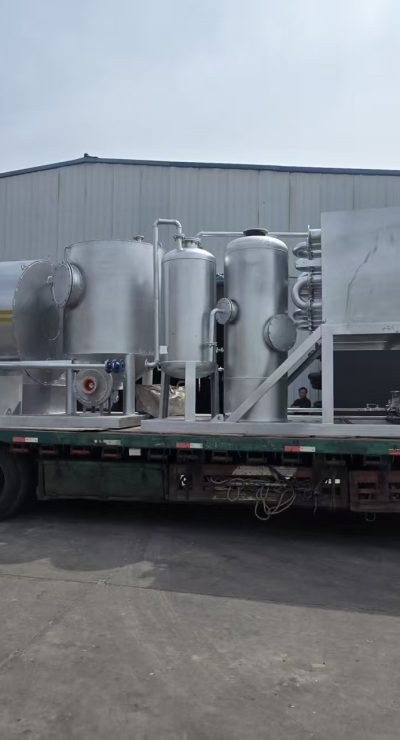
In March 2025, a prominent mining services company based in Kinshasa, Democratic Republic of the Congo (DRC), partnered with our engineering team to deploy a skid-mounted waste oil distillation unit at their industrial facility in the CIP Kin-Malebo Special Economic Zone.
Introduction and Project Background
The client, being a vital player in the regional booming mining industry centered around copper-cobalt mining operations, was experiencing increasing difficulty in waste handling and high costs of energy production.
Indeed, mining operations in DRC, especially in the copperbelt region, produce large amounts of used lubricating oils, hydraulic fluids, and fuel oils. Given the expected high CAGR growth rate of 6.21% projected for the DRC till 2030 (based on the growing number of Chinese infrastructure projects and copper-cobalt mining operations), waste management became a significant operational challenge.
Moreover, with rising costs for industrial fuel ($460–$520 per ton in 2025, increasing by 13% Y-o-Y), the client needed to find ways to both resolve waste management issues and lessen dependency on imported fossil fuels.
The CIP Kin-Malebo SEZ, conveniently located 40 km from Kinshasa, and having rail connections to the Port of Kinshasa and the Port of Matadi, appeared to be an optimal choice. 100% customs duty and VAT tax exemption for importation of equipment for ten years, guaranteed continuous electricity supply, and advanced logistics made the project possible.
Professional Solution Tailored for the Client
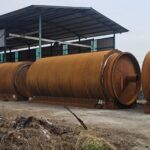
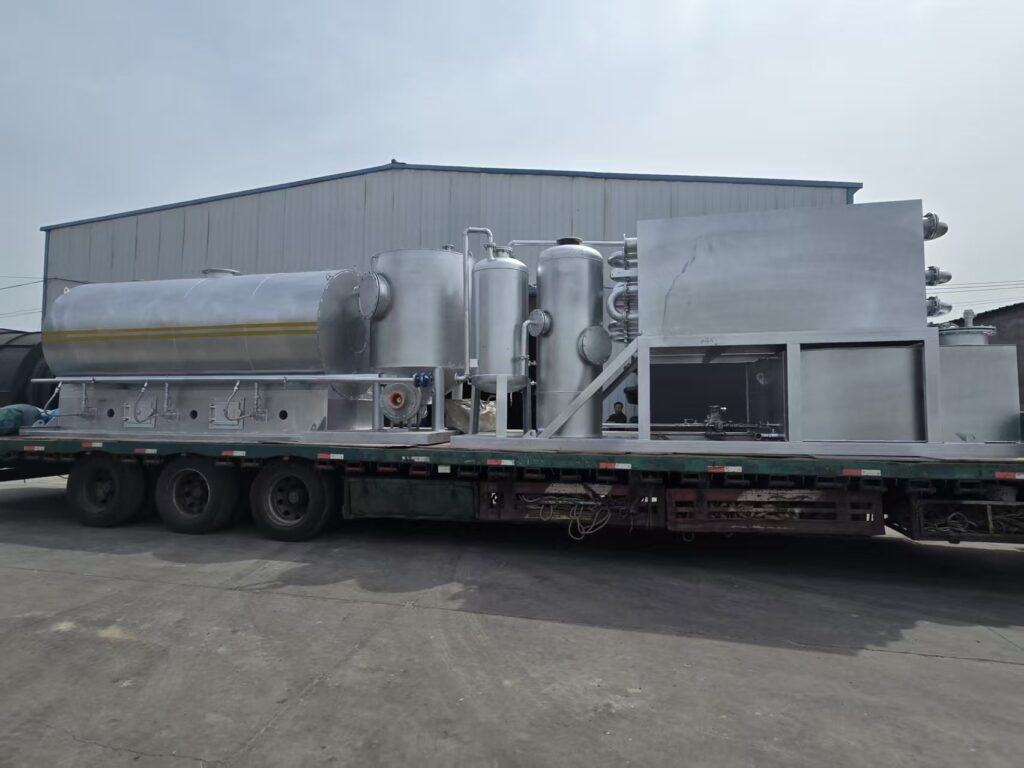
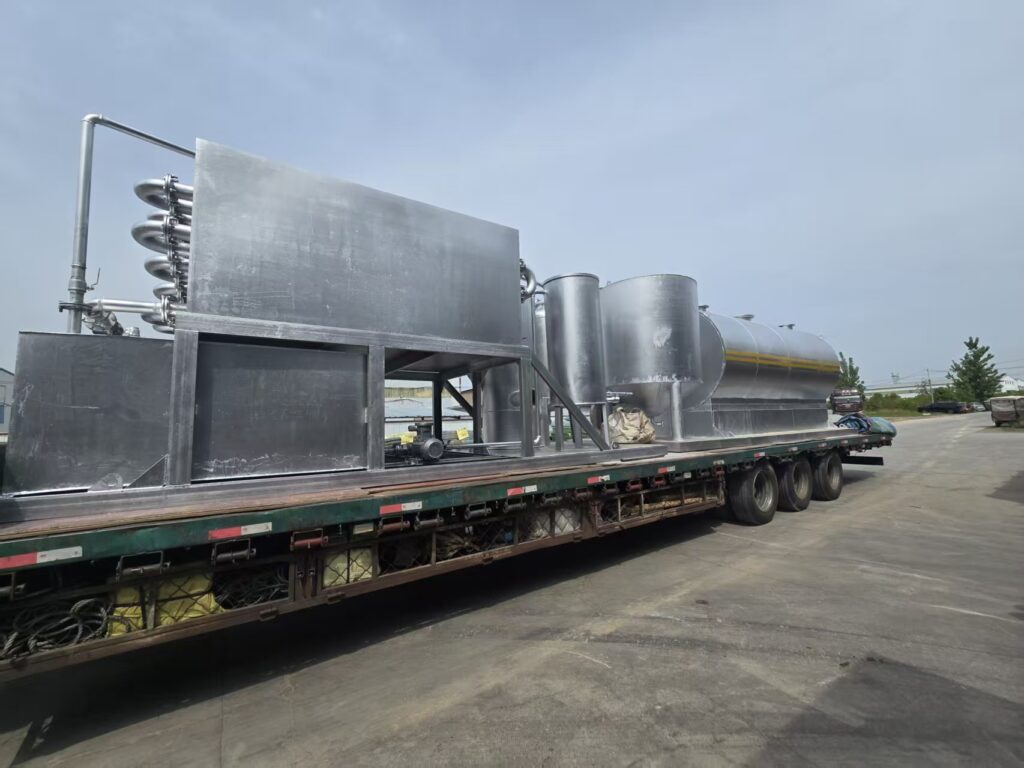
Our engineering team conducted a comprehensive site assessment and operational analysis to design a solution that would meet the client’s specific requirements while accounting for the unique challenges of operating in the DRC. The solution centered on a skid-mounted, 5-ton-per-day waste oil distillation unit featuring advanced vacuum distillation technology and modular design optimized for rapid deployment in remote industrial settings.
Technical Configuration and Adaptations:
The selected unit was configured with a Q345R carbon steel main reactor (16-18mm thickness) capable of processing multiple feedstock types including used engine oil, hydraulic oil, heavy fuel oil, and tire pyrolysis oil . The system incorporated a three-stage condensation cooling system with two vertical condensers, two horizontal condensers, and dedicated cooling towers to maximize oil recovery rates. Given the DRC’s tropical climate and potential for seasonal heavy rainfall, we specified enhanced water-cooling systems with closed-loop capabilities to ensure consistent performance during the wet season.
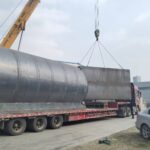
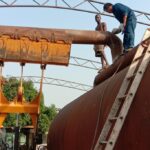
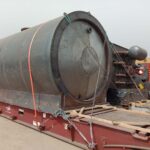
The skid-mounted design proved particularly advantageous for this deployment. Unlike traditional fixed installations requiring extensive civil works and extended commissioning periods, the modular unit arrived pre-assembled on a reinforced steel frame, reducing installation time by approximately 40% and minimizing on-site construction requirements.
This approach was critical given the client’s need to commence operations quickly to address immediate waste accumulation and the logistical complexities of coordinating international shipments to Kinshasa.
Operational Specifications:
- Processing Capacity: 5 tons per day (24-hour continuous operation)
Oil Production Rate: >98% recovery rate using anaerobic pyrolysis separation technology
- Power Consumption: 55 kW/h with 380V/3-phase/50Hz power supply configuration
- Working Temperature Range: 175°C to 550°C with PLC-controlled automation
- Final Product Quality: Refined fuel oil meeting industrial heating fuel specifications with flash point >55°C
Integration and Support Services:
Considering the significance of local capacity building, our approach involved training sessions aimed at the operators, carried out at the client’s site within two weeks. An inventory system for spare parts was developed, with key spare parts stocked in advance in Kinshasa to ensure minimal chances of breakdowns.
Moreover, we set up the plant to be remotely monitored, enabling our specialists to troubleshoot the plant in case of emergencies and tackle the problem of lacking expertise among the locals. The plant was designed in such a way that it could produce quality industrial fuel oil that can be used directly in the boilers, asphalt furnaces, and engines without any significant changes to the burners’ settings.
The fuel produced would be of good quality and ready to be used in the clients’ existing infrastructure, ensuring savings of 50-70% in costs compared to diesel and 30-40% compared to heavy fuel oil.
Project Results

ISO CE Approved
The equipment quality has passed IAF, CNAS, ISO, CE certifications, Certified by international professional organizations, the equipment is safe and reliable.

AAA Credit Audited Enterprise
One of the top refining equipment manufacturers in China, The government Audited Superb as AAA credit company (top level).

Solutions for Pyrolysis And Distillation
We will provide you with the latest industry solutions, and provide you with a one-year after-sales warranty to ensure stable operation of the equipment.

24-hour service
We have professional engineers to solve various problems for you, including equipment, process, material problems, etc.

Professional R&D team
We have obtained a number of utility model patents, including distillation production equipment and pyrolysis module equipment.

Fast Delivery
We have sufficient stock of pyrolysis and distillation equipment to ensure efficient logistics and fast delivery.
Operational Performance Metrics:
Following commissioning in late March 2025, the unit achieved full operational capacity within 72 hours and has maintained consistent performance. The key performance indicators demonstrate the project’s success:
| Metric | Specification | Actual Performance |
|---|---|---|
| Annual Processing Capacity | 1,825 tons waste oil | 1,850 tons (101% of design) |
| Average Oil Yield | 42-45% (industry standard) | 43.5% |
| Annual Fuel Output | ~794 tons | ~805 tons |
| Operating Days per Year | 300 days | 310 days |
| Energy Consumption | 55 kW/h | 52 kW/h (5% below spec) |
Financial Analysis and ROI Calculation:
Based on actual operational data from the first six months and projected annual performance, the financial returns are calculated as follows:
Investment Costs:
- Skid-mounted distillation unit (FOB): $45,000
- Shipping and logistics to Kinshasa: $8,500
- Installation and commissioning: $6,000
- Training and initial spare parts inventory: $5,500
- Total Capital Investment: $65,000
Annual Operating Costs:
- Waste oil feedstock (sourced from mining operations at $60/ton): $111,000
- Electricity consumption (52 kW/h × 24h × 310 days × $0.12/kWh): $46,387
- Labor (2 operators × $400/month × 12 months): $9,600
- Maintenance and consumables: $8,000
- Total Annual Operating Cost: $174,987
Annual Revenue Generation:
- Fuel oil sales (805 tons × $520/ton market price in DRC): $418,600
- Carbon black by-product (30% yield × 1,850 tons × $280/ton): $155,400
- Steel wire recovery (where applicable from tire oil): $12,000
- Total Annual Revenue: $586,000
Profitability Metrics:
- Annual Gross Profit: $411,013
- Annual Net Profit (after depreciation): ~$380,000
- Return on Investment (ROI): 584% annually, or 14.6-month payback period
The ROI calculation demonstrates exceptional financial performance: ($380,000 net profit / $65,000 investment) × 100 = 584% annual return. This significantly exceeds typical pyrolysis plant ROI benchmarks of 30-50% annually, attributed to the favorable SEZ tax environment, low feedstock costs, and strong local demand for industrial fuel alternatives in the DRC’s mining sector.
Environmental and Operational Benefits:
In addition to economic advantages, other benefits in terms of the environment have been generated through this initiative. Through the unit, about 1,850 tons of harmful oils are handled on an annual basis that otherwise could lead to serious contamination or costly disposal.
Through the conversion of waste into useful industrial fuel (about 805 tons), the customer has managed to reduce their dependence on imported fuels by about 35%. This leads not only to lower emissions but also to the creation of valuable carbon black, which can be used in construction and industry.
Other Cases
Conclusion
The success of the deployment of the waste oil distillation plant on skid is an excellent example of sustainable innovation within the context of the evolving markets. Using the strategic opportunities offered by the CIP Kin-Malebo Special Economic Zone such as favorable taxes, good infrastructure and proximity to major mining projects, the client has successfully converted a serious waste problem into a source of income.
This case proves that a careful selection of technology along with the correct implementation and localization strategy may lead to outstanding financial results while tackling important environmental issues. An extremely short payback period of only 14.6 months and annual ROI exceeding 584% clearly demonstrate the profitability of the proposed investment in the rapidly developing African markets.
With the ongoing industrialization process of the DRC coupled with massive infrastructural developments like the $6 billion, 3,100 km long industrial corridor that connects 20 important towns, these decentralized waste processing models will become increasingly critical in ensuring sustainable development. This case study is a viable model that can be replicated by operators elsewhere who want to ensure efficient use of resources and minimize on operational costs in terms of energy utilization.
The collaboration that has been brought about by this model places the client company in a prominent position as a regional pioneer in circular economy practices. There may be future prospects for expanding the business through the setting up of more processing centers due to increased demand from nearby mines. The project has provided proof that waste oil processing technology works effectively in African industries if well handled.