
Top Manufacturer of Pyrolysis Machines/Units

Transforming Waste Tires into Energy in Ethiopia

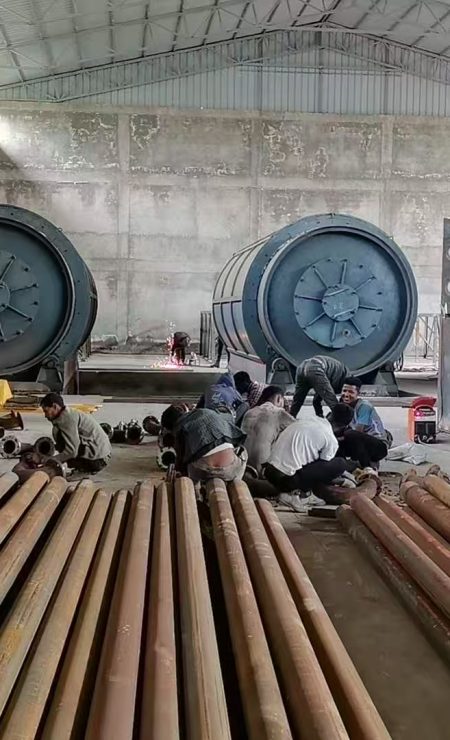
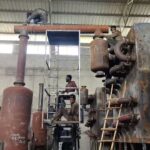
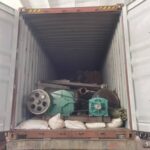
In June 2024, a customer in Ethiopia purchased two pyrolysis units.

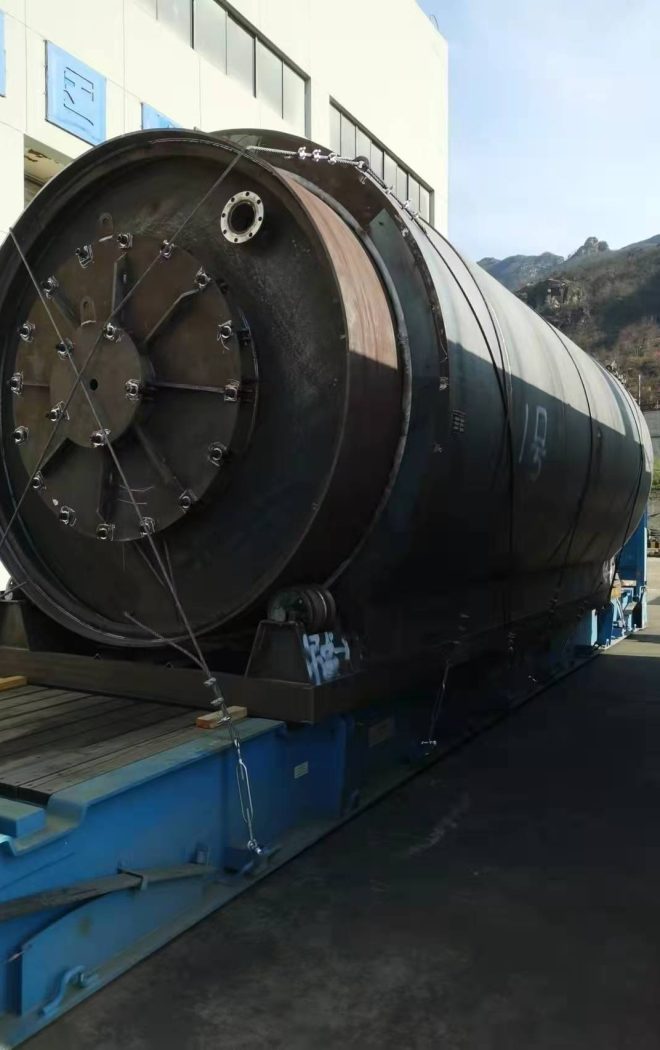
Ethiopian customer purchased two sets of pyrolysis equipment

Project Background: The Regional Context

In recent years, Ethiopia has experienced rapid industrialization and a surge in infrastructure development. Consequently, the volume of waste tires—generated by the logistics, construction, and public transport sectors—has reached critical levels. In the outskirts of Addis Ababa, vast stockpiles of end-of-life tires were consuming valuable land and posing severe fire hazards and environmental risks.

Simultaneously, the local industrial sector faces challenges regarding energy costs. Many factories (cement, brick, and glass manufacturers) rely heavily on expensive imported diesel or furnace oil.

The client, a forward-thinking waste management entity based in the Oromia region, identified a dual opportunity: solve the waste tire accumulation problem while generating a profitable, alternative fuel source for local heavy industry. They required a robust solution capable of high-volume processing that complied with Ethiopia’s increasingly strict environmental regulations.

Configuring Solutions For Clients

Upon analyzing the customer’s site conditions and production requirements in June 2024, our engineering team developed a customized “Twin-Drive” solution. Rather than a single massive unit, we recommended the installation of two sets of BLJ-16 Semi-Continuous Pyrolysis plants. This decision was based on several strategic factors:

Operational Flexibility and Efficiency The dual-unit setup allows the client to process up to 30-32 tons of waste tires per day. By operating two reactors, the client can stagger the maintenance schedules; if one machine requires servicing, the other continues production, ensuring zero downtime in fuel supply to their downstream customers. We equipped both units with Auto-Feeders, which reduced the labor requirement for loading by 50% and shortened the feeding time from 3 hours to 1.5 hours per batch.

Advanced Condensing and Safety Systems To maximize oil yield—the client’s primary revenue stream—we implemented a “Three-Stage Modular Condensing System.” This system increases the cooling area for the oil gas, ensuring that the oil gas is fully liquefied before entering the tank. This setup typically results in a 5-10% higher oil yield compared to standard condensers.

Environmental Compliance Understanding Ethiopia’s focus on sustainable development, we integrated a sophisticated Dedusting System (including water spraying, ceramic ring adsorption, and activated carbon adsorption). This ensures that the emissions meet local air quality standards. Furthermore, the non-condensable gas (tail gas) generated during the process is recycled back into the furnace to heat the reactor, reducing the external fuel consumption for the machine itself.

On-Site Support Following the purchase in June 2024, we dispatched a senior engineer to Ethiopia in August for a 20-day on-site guide. This included foundation construction, assembly, pressure testing, and—crucially—training the local workforce on safety protocols and emergency handling.

Project Results

Ethiopia customer 2 sets of waste tire pyrolysis equipment and 1 set of waste engine oil distillation equipment-13
PyrolysisUnit ISO CE Approved

ISO CE Approved

The equipment quality has passed IAF, CNAS, ISO, CE certifications, Certified by international professional organizations, the equipment is safe and reliable.

PyrolysisUnit AAA Credit Audited Enterprise

AAA Credit Audited Enterprise

One of the top refining equipment manufacturers in China, The government Audited Superb as AAA credit company (top level).

PyrolysisUnit Solutions for Pyrolysis And Distillation

Solutions for Pyrolysis And Distillation

We will provide you with the latest industry solutions, and provide you with a one-year after-sales warranty to ensure stable operation of the equipment.

PyrolysisUnit 24-hour service

24-hour service

We have professional engineers to solve various problems for you, including equipment, process, material problems, etc.

PyrolysisUnit Professional R&D team

Professional R&D team

We have obtained a number of utility model patents, including distillation production equipment and pyrolysis module equipment.

PyrolysisUnit Fast Delivery

Fast Delivery

We have sufficient stock of pyrolysis and distillation equipment to ensure efficient logistics and fast delivery.

Verification of Project Results
Since commencing full operations in late 2024, the project has demonstrated high stability and profitability. The verification data below is based on the operational logs from October 2024 to December 2025.

A. Performance Metrics
The two units operate on a schedule of 6 days a week.

MetricData
Daily Input30 Tons (Waste Tires)
Annual Operating Days~300 Days
Annual Processing Capacity9,000 Tons

Annual Production Output: Based on standard tire composition (45% Oil, 30% Carbon Black, 15% Steel Wire, 10% Gas):

Pyrolysis Oil: 4,050 Tons (Sold to cement/glass factories)

Carbon Black: 2,700 Tons (Sold to brick factories/briquetted for fuel)

Steel Wire: 1,350 Tons (Sold to steel recycling plants)

B. Financial Analysis (Estimated in USD)
Note: Costs are estimated based on regional averages in Ethiopia.

1. Investment & Operating Costs (Annual)

Raw Material (Tires): $180,000 (Calculated at $20/ton – often low cost or subsidized)

Labor & Maintenance: $60,000

Electricity & Utilities: $45,000

Total Annual Cost: $285,000

2. Revenue Generation (Annual)

Pyrolysis Oil: $2,025,000 (Calculated at conservative $500/ton)

Carbon Black: $135,000 (Calculated at $50/ton)

Steel Wire: $202,500 (Calculated at $150/ton)

Total Annual Revenue: $2,362,500

3. Net Profit Calculation

Net Profit = $2,362,500 – $285,000 = $2,077,500

4. Return on Investment (ROI)

Given that the total project setup cost (Machinery + Shipping + Installation + Civil Works) was approximately $250,000 – $300,000, the ROI is exceptionally fast.

Even with a conservative estimate, the client achieved a break-even point within 3 to 4 months of operation.

Other Cases

Conclusion

This project in Ethiopia serves as a benchmark for waste-to-energy initiatives in East Africa. By investing in two BLJ-16 pyrolysis units in June 2024, the customer successfully converted a waste liability into a high-value energy asset.

The solution not only generates over $2 million in annual revenue but also significantly contributes to the circular economy by diverting 9,000 tons of rubber waste from landfills annually. The client is currently in discussions to expand the facility with two additional continuous units in 2026 to handle municipal plastic waste.

Scroll to Top