Impact Of Medical Waste On The Environment
There are positive impacts of healthcare on human beings. However, healthcare produces waste. For instance, some of the wastes include bandages, syringes, drugs, and even toxic substances. If such wastes are not disposed of appropriately, the environment is bound to suffer and there may be health hazards as well. The volume of waste produced due to healthcare services is increasing. As healthcare increases, so does the number of devices, home remedies, and many other factors. In this article, the writer talks about medical waste, its sources, impact on the environment, and proposes a way of dealing with the environmental challenge.
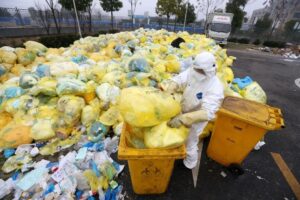
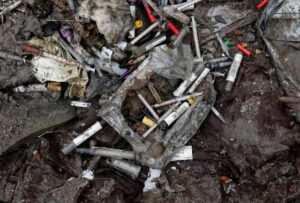
Medical waste can be defined as a waste which was used in the healthcare industry and which has dangers to humans’ health. There are various types of such waste. “Infectious waste” relates to materials that are contaminated by bodily fluids, for instance, used bandages, swabs etc. “Sharps” consist of needles, scalpels, glasses. “Pharmaceutical waste” refers to medications which were not used during operations and became expired. “Chemical waste” means chemicals used such as solvents or disinfectants. “Pathological waste” is related to surgeries during which tissues or organs were taken off. At last, there is also a number of materials which are just trash. However, due to their toxicity it is rather complicated to deal with such waste.
Various facilities produce this kind of garbage. The main source is hospitals and clinics. Laboratories are another place that produces various waste due to testing. Various dental clinics produce various waste. It is increasingly popular in our days to provide oneself with home care – injections or bandaging. Also, pharmacists are responsible for managing pharmaceutical waste.
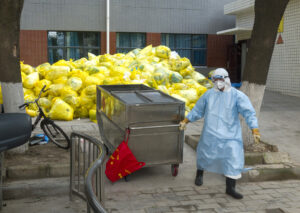
Waste produced from the health care facilities has various methods through which it ends up in the environment. The first method of medical waste reaching the environment involves improper disposal. Waste produced from the health sector that is not sorted is disposed of together with other wastes and taken to the landfill where it pokes through the waste disposal bags leading to the spread of infections and toxins in the nearby environment. These bags easily rip, allowing for the exposure of sharp objects to the collectors of the waste and wildlife in the area.
The second route of medical waste pollution involves the illegal dumping or burning of such waste. At some instances, trash is incinerated in the lack of appropriate filtration methods, releasing pollutants in the air. Medications are also poured down toilets and drains since no proper means have been laid to dispose of them properly; instead, they are dumped into water bodies like lakes and rivers.
Lastly, leakage of chemicals is caused through the leaking of chemicals from the dumping site to groundwater as a result of rain.
There will be land contamination caused by the medical waste. This will happen because the leachate generated from the contaminated waste material will enter the soil. The composition of the soil can thus be altered adversely and harm the plants. The animals burrowing into the waste material will make sure that the contamination spreads to the soil.
There is a great impact on the water bodies because of the presence of pharmaceuticals in them. These may cause alterations in the behavior and physiologies of the fish living in the water body. Chemical disinfectants may prove to be fatal to the aquatic organisms even at very low concentrations. Even in treated water, the presence of chemicals and drugs cannot be ruled out.
Lastly, there will be air pollution because of medical waste. This will happen because incineration of medical waste produces substances like dioxins. Open burning of medical waste is even more dangerous for it emits gases which travel far off distances to contaminate air, soil, and water resources.
The health dangers that result from medical waste cannot be emphasized enough. Humans stand at a very high risk of being cut by sharp materials such as needles that are infectious, thus spreading diseases such as hepatitis, for instance. Furthermore, coming into contact with the infectious dressings or body fluids might result in contracting some diseases. Chemical burn and mismanagement of chemicals and drugs could result in health-related risks for the workers as well as for those who will come into contact with the waste.
In animals, the physical dangers associated with the medical waste might result in physical injuries caused by swallowing of the material, whereas the biological dangers might emanate from exposure to the drug and chemicals. The effects might include hormonal changes that will make the fish and birds exposed to the pharmaceuticals have a reduction in their rate of reproduction and mortality rates. Antibiotic resistance is another health risk that arises from the medical waste. It is likely that those exposed to medical waste containing antibiotics might develop resistance in their bodies.
There are several ways of handling medical waste. Incineration involves burning the medical waste using high temperatures in special furnaces, whereby they reduce the volume of waste while eliminating pathogens. However, the incineration technique also results in the release of toxic gases because the factories lack proper filters.
The autoclaving method uses steam to sterilize the waste. The process eliminates pathogens without burning the waste, which is then thrown away in landfills. Another technique is the use of chemicals to disinfect waste by eliminating any pathogens from both liquid and solid wastes.
However, all these techniques used to handle medical waste face some challenges. For instance, incineration facilities are expensive to set up and monitor. Additionally, autoclaves cannot manage large volumes of waste and certain types of chemical waste. Some chemical treatments also leave residues that require proper disposal techniques.
Improper handling of medical waste in developing nations is common because of a lack of specialized equipment. Medical waste in developing nations can be burnt, buried, or mixed with normal waste.
Effective waste management requires money, regulations, and training. Medical waste should be separated at the point of generation. Hazardous waste should never be mixed with regular waste. The type of technology used to treat the waste should be appropriate for the type of waste.
Several measures could be taken to minimize the effects of medical waste. First, medical facilities should purchase supplies in bulk, recycle where necessary, and reduce testing and supplies. Second, segregation is necessary. The four major categories of waste should be segregated into separate and properly labeled receptacles. In addition to making disposal safer, this measure also proves to be economically feasible. Third, take-back programs should be initiated. Fourth, the medical fraternity and related parties should be educated regarding proper disposal methods. Finally, assistance in developing safe medical waste disposal techniques should be provided.
Government action is essential in the management of this problem. The following measures should be put into place: waste classification, licensing of waste treatment facilities, and punishment for illegal dumping. Assistance should be extended to poor countries as well. It can prove effective in addressing the issue. Some examples of such aid include grants, sharing of facilities, and provision of mobile autoclaves.
Lastly, the public also plays a role. Do not flush drugs. Use the take-back programs. If you are caring for someone at home, seek advice on how to dispose of the drugs. By working together, we can reduce the risk that medical wastes pose to the environment and our health.