What Are The Environmental Benefits Of Plastic Pyrolysis
We have come to depend on plastic products in our everyday life, but such an overreliance comes at the expense of creating an unprecedented amount of waste. It is estimated that annually the planet produces 350 million tonnes of plastic waste. The effect of this waste accumulation is evident – we can observe it on beaches. However, even more worrying is how difficult it is to manage all this material on the surface of the planet.
The most common strategy in use until now was based on the utilization of traditional approaches towards waste management. Recycling is among them, but its most popular variety – mechanical recycling – faces many difficulties. The procedure includes such actions as sorting, cleaning, melting, and grinding plastic products. Such an approach functions quite efficiently when the plastic materials are pure and clean, but it becomes ineffective when used with complicated cases, including mixed plastic waste, multiple-layer food wrapping, and dirty plastic items. Such “messiness” is one of the reasons why, despite all efforts, only 9.1% of plastic items in the USA undergo recycling process.
Pyrolysis as a Chemical Solution
It is here that advanced recycling, particularly pyrolysis of plastics, is necessary. Pyrolysis refers to a chemical reaction in which plastic waste is subjected to heat in an environment without any oxygen, meaning that the plastic is melted and vaporized without ever combusting. This is a process that reforms the plastic back into valuable compounds rather than ash or toxic fumes.
The process involves taking a very long and complex chemical chain known as plastic and reducing it back to its basic components, which are valuable liquid and gaseous compounds.
Since pyrolysis can take on the complex, mixed plastic waste that mechanical recycling fails to sort through, it functions as a vital clean-up technique, thereby dramatically increasing the total plastic that can be saved from wasting away.
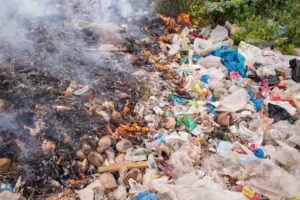
The first and foremost environmental advantage that emerges from using pyrolysis lies in its handling of the huge volumes of garbage that we generate daily. Any form of plastic waste that is not disposed of in secure landfill sites or recycled falls under the category of mismanagement. It has been estimated that about one-fourth of the total plastic waste in the world, which amounts to around 82 million tons, is mismanaged or discarded carelessly.
Through pyrolysis, there is a remarkable decrease in the bulk of the material that requires disposal. Pyrolysis is extremely efficient and produces between 70 percent and 90 percent of the waste into useful gas and liquids. Thus, it stops several million tons of waste from being deposited in disposal sites.
Stopping Pollution at the Source
If the plastic waste builds up on land, it inevitably finds its way into the environment and causes soil, riverine, and coastal pollution. Although only 0.5% of total worldwide plastic waste gets leaked to end up in the ocean, the marine pollution begins with huge amounts of improperly managed plastic waste on land.
With the help of pyrolysis technology, which takes plastic away from the waste stream in an efficient way, we stop the chain reaction. We keep plastic from finding its way to landfills while converting it into valuable products, thus decreasing dramatically the probability of its leakage into the environment and preventing water and soil contamination.
The benefits of the process can be confirmed by the studies that examine the environmental impact of processes, i.e., Life Cycle Assessments (LCA). The results of LCA indicate that if pyrolysis oil is used for manufacturing plastic materials instead of regular crude oil, a significant 116%-to-118% decrease in solid waste throughout the entire life cycle of produced plastics is observed. This is true not because the old plastic is not utilized anymore, but also because the extraction, refining, and processing of virgin fossil fuel are also prevented by using the alternative technology.
One of the key advantages of using plastic pyrolysis as an environmentally friendly solution is related to climate change. Pyrolysis addresses the issue of climate change in two critical ways. Firstly, this process eliminates GHG emissions associated with conventional waste treatment options, such as landfills (emitting methane), and incineration.
Secondly, and probably most importantly, the end products produced during pyrolysis may be used in place of fossil fuels and thus help eliminate the GHGs emitted at each step of crude oil extraction and processing.
A number of LCA analyses carried out by leading researchers in the field and scientists at the Argonne National Laboratory of the U.S. Department of Energy demonstrate this advantage.
Cutting Emissions Compared to New Production
When pyrolysis oil, which is a liquid product derived from heating plastic waste, is used as an ingredient to manufacture new low-density and high-density polyethylene (LDPE and HDPE) plastics, it is replacing fossil-based ingredients like naphtha. The analysis shows that making plastic this way results in an 18% to 23% decrease in greenhouse gas emissions compared to using crude oil-derived ingredients. This demonstrates that the advanced recycling product is environmentally cleaner than its crude oil counterpart.
Cutting Emissions Compared to Throwing Waste Away
The potential for climate benefits is even greater when we contrast it to other common methods of getting rid of plastic waste currently being used. Compared to the existing disposal methods in America, which include incineration and landfilling, producing plastic products with pyrolysis oil leads to a remarkable 40% to 50% reduction in GHGs.
This shows the enormous environmental cost associated with the act of discarding plastic products that often involves releasing GHGs. Through responsible management of plastic waste, pyrolysis helps in obtaining maximum environmental credit by reducing GHG emissions.
The reduction in GHG emissions can be traced back to improvements in other areas, too. For instance, the LCA analysis has also revealed a large decrease in the consumption of fossil fuel required throughout the plastic product’s entire lifecycle, amounting to 65% to 70%.
Combined, these LCA results make a clear case in favor of pyrolysis as an environmentally-friendly method of dealing with plastic products:
LCA Findings: Pyrolysis Reduces Environmental Impacts
Environmental Factor | Reduction Compared to Making Virgin Plastic | Notes on Impact |
Greenhouse Gas (GHG) Emissions | 18% to 23% less | Achieved by replacing fossil fuel feedstocks like crude oil. |
Fossil Energy Use | 65% to 70% less | Significant savings across the entire product lifecycle. |
Solid Waste Volume | 116% to 118% less | Dramatically reduces the amount of material ending up in disposal sites. |
Environmental sustainability involves utilizing the circular economy model, whereby we design products to be able to recycle them endlessly in lieu of having to keep extracting fresh, finite resources. Pyrolysis serves as one form of advanced solution, where discarded material can be transformed back into chemicals.
Developing New Raw Materials
The pyrolysis process results in pyrolysis oil. This oil is not low-grade fuel but rather a chemical raw material. As such, it directly replaces the fossil fuels used in manufacturing processes. From the chemical feedstock, manufacturing firms can develop chemical monomers, including ethylene and propylene. Such monomers serve to make new plastics.
Through chemical recycling, it becomes possible to preserve our precious fossil fuels. In essence, since the plastic is reduced to basic molecules and formed again, there is little need for virgin petroleum feedstocks. This results in lower impacts from oil drilling, refining, and transport.
Maintaining Material Quality
In contrast to mechanical recycling, where material quality continues to degrade in each process iteration (downcycling), pyrolysis produces high-quality plastics that are equivalent to virgin plastic.
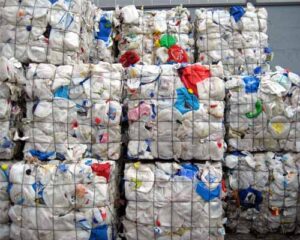
The chemical methods need power to heat the plastic material and split up the chains at the molecular level. An important feature of pyrolysis technology, environmentally friendly, is that it generates a large part of its own energy, resulting in a highly sustainable process.
Useful Gas Capture
As well as pyrolysis oil, during the thermal cracking of plastics, there is a useful product called synthesis gas or syngas. It consists mainly of hydrogen and carbon monoxide gases and has excellent burning qualities.
An important part of a good pyrolysis device is the capture of this syngas and its return into the unit to produce heat needed for the reactor. Thus, the process becomes energy-self-contained, as the necessary amount of energy comes from within itself and does not require a huge supply of energy from outside.
Improving Efficiency
Making use of the syngas within the facility significantly cuts down on the need for outside fossil energy sources. This energy self-sufficiency is one of the reasons why LCA analyses reveal a 65% to 70% reduction in fossil energy consumption for production of new plastic through pyrolysis in comparison to virgin plastic production.
The fact that producing plastic and making use of the energy necessary to do so at the same time is possible reveals that the pyrolysis process was built to be efficient on all levels. Recycling the gaseous output of the process makes sure that even the energy waste of the process is used properly and efficiently.
Although pyrolysis oil is the primary raw material for the production of new plastic, the technology usually generates additional useful resources in cases where composite wastes, like end-of-life tires, are processed. Thus, through pyrolysis, companies receive a variety of alternatives, which enable the maximum possible replacement of carbon-heavy virgin materials.
Recovered Carbon Black
When dealing with carbon-containing waste materials, including tires, a certain amount of carbon ends up staying in solid form during the pyrolysis process. In this way, the technology produces what is known as the recovered carbon black (rCB). As an essential component, virgin carbon black is used for tire and rubber manufacturing and plastics production. The process of virgin carbon black generation is associated with the significant use of energy generated from non-renewable sources.
The rCB created with the help of pyrolysis can be a valuable resource that allows industries to move closer to sustainability and the idea of a circular economy by using recycled materials.
Further Carbon Storage Capacity
For some special applications of pyrolysis, the resulting char can undergo an additional manufacturing process into a material known as biochar. When the biochar is used in soils, it becomes a tool to store carbon securely. Carbon storage through this method can balance out greenhouse gas emissions for centuries to come, providing an invaluable contribution to the environment.
The capability of producing oil, energy sources, and a valuable solid chemical compound makes the application of pyrolysis a multifunctional source of environmental benefits in several important industrial supply chains.
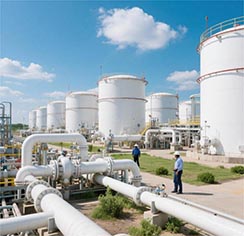
It should be noted, however, that even with significant environmental advantages of pyrolysis, the realization of the maximal effect would only be possible under conditions of a large-scale and efficient implementation of the technology. The notion, in which this idea is based on, is known as “economy of scale”: the more one does something, the better it turns out.
Efficiency and Resource Conservation
A direct relationship has been established between the size of a pyrolysis facility and its environmental performance: as an advanced plant grows in terms of its production capacities, it improves in regard to efficiency in handling heat and energy. It uses less fossil energy and consumes less water in the process of processing each ton of plastic waste.
Such enhanced efficiency matters greatly since it leads to more positive results in terms of climate change mitigation. As a result, it is possible to see how operations are capable of producing smaller amounts of net greenhouse gases per unit of final product.
For example, when plants are designed for high throughput—processing hundreds of tons of plastic waste daily 20—they can achieve meaningful cost savings and improve equipment utilization, which results in more effective absorption of fixed costs.
Ultimately, scaling up pyrolysis operations is the most effective way to realize the massive environmental reductions documented in rigorous scientific analyses. Larger, more efficient facilities provide the best opportunity to turn plastic waste into a long-term sustainable resource.