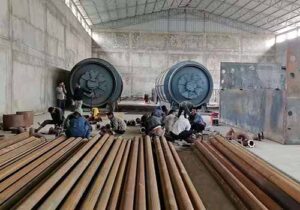

The process of biomass pyrolysis implies heating of such organic materials as wood, agricultural residues, nutshells in an atmosphere of low oxygen concentration to get biochar, bio-oil, and syngas or producer gas. Here is the simplest definition of the term.
The importance of biomass pyrolysis can be explained with the example of turning waste into something that is valuable. This technique produces a substance that improves the fertility of soils (biochar), a product that can be further refined into heat or chemical products (bio-oil) and fuel that is necessary to produce heat and electricity (syngas). Thus, for the owners of agricultural enterprises, municipalities, and corporations it becomes possible to utilize waste and find alternative sources of energy or carbon sequestration. As the provider of services related to pyrolysis, we are supposed to know what our clients expect from us.
In this post, we will talk about the feedstock selection, pyrolysis itself, equipment, products obtained in the process of pyrolysis, advantages and disadvantages of pyrolysis. We will try to provide information that is easy to digest even by a layman and can help one choose the right equipment.
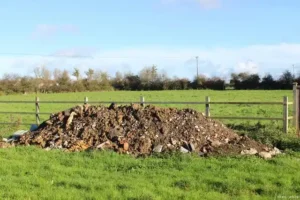
“Biomass” is just a general term for organic materials that can either be burned or decomposed. Some examples of feedstocks for pyrolysis are the following:
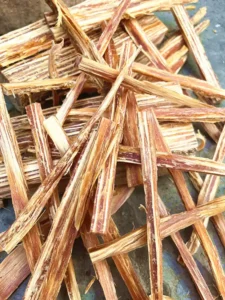
Trees and other wood: wood chips, sawdust, tree bark, off-cuts.
Plant agricultural waste: straw, corn stalks, rice hulls, and coconut shells.
Nuts: shells and husks of peanut shells, almond shells, and others.
Organic waste: grass cuttings, garden prunings.
Animal waste: dried manure or dried animal dung.
Some specific types of industrial waste: for example, some pulp and paper industry products.
Some important considerations regarding the feedstocks are the following:
The level of moisture of the materials affects the process, with moist materials wasting heat. Higher moisture levels (typically above 20 or 30 percent) reduce bio-oil production and require more energy. Feedstocks generally have to be dried.
Size of particles is relevant: smaller particles heat more efficiently. Big lumps may heat inefficiently.
Pollutants must not be present in the feedstocks, since plastic, metal, or treated wood produces toxins. Cleanliness is desirable.
Feedstocks should match the objective: large woody materials and slow pyrolysis give better biochar; finely divided, dried feedstock and rapid pyrolysis provide good bio-oils.
Operators should realize the advantages of preparing proper feedstocks carefully.
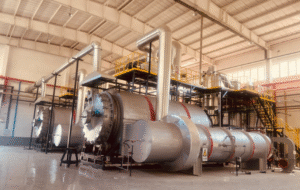
In general, pyrolysis refers to thermal decomposition under an inert atmosphere with minimal oxygen content. It implies heating of the material until breaking of its chemical compounds and transformation into smaller fragments without their complete combustion. Since oxygen is minimal, unlike traditional processes, no ash is left.
This process includes the following stages:
Dehydration (up to ~200°C/392°F). Evaporation of free water occurs. It does not affect the major chemical structures.
Pyrolysis proper (approximately between 200–600°C/392–1112°F). Breaking of bonds in cellulose, hemicellulose, and lignin takes place. Larger organic molecules decompose into smaller molecules in gaseous, vapor or solid states. This is when the largest amount of liquids and gases is produced.
Char production (over ~400°C). The rest of the carbon forms biochar – the porous black solid. As a rule, the higher the temperature is, the smaller amount of char is produced.
These three factors determine the results:
Low temperature plus long duration = more char.
High temperature plus quick heating = more gases and bio-oil (bio-oil may differ in quality).
Middle values will give a combination.
The major output materials include:
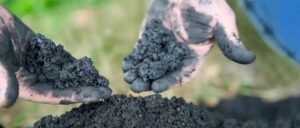
Biochar – it is a highly stable carbon-containing solid material. It resembles charcoal and is good to enrich soil or serve as carbon storage.
Bio-oil – a brown liquid that contains various organic compounds. It can be used as fuel or processed further into chemicals; however, bio-oil cannot replace gasoline and diesel as it is not the same substance without processing.
Producer gas (syngas) – a gaseous product including CO, CO2, CH4, H2, and trace gases. Producer gas can be used either as a fuel or for power generation.
Thus, pyrolysis can be viewed as a kind of controlled disassembly of the molecules of biomass, where the operator sets up appropriate conditions to obtain desired products.
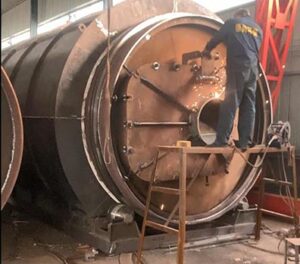
In practice, there are several types of pyrolysis depending on the heating rate and residence time:
Slow pyrolysis
Description: Slow heating process with extended residence time (minutes-hours). Moderate temperatures (400 – 600 °C).
Products: Large amount of biochar. Bio-oil and gas in smaller quantities.
Applications: Rich in carbon biochar for soil enrichment, filtration processes, and carbon storage purposes. Suitable in cases when carbon stabilization is required.
Fast pyrolysis
Description: Rapid heating process with short residence time (seconds) and moderate temperatures (450 – 550 °C). Usually biomass is milled to fine particles and rapidly supplied to the reactor.
Products: High amount of bio-oil. Gas and char are produced in smaller quantities.
Applications: Bio-oil for burning or processing. Condensers are required to capture the vapor.
Flash pyrolysis
Description: Super-fast heating process with extremely high temperature (in milliseconds to seconds). Fluidized bed technology can be used.
Products: In some variants of the process, very high bio-oil yield can be achieved.
Applications: High-tech industrial bio-oil production.
Gasification vs. pyrolysis – brief comparison
Gasification occurs at high temperatures using either oxygen or steam in order to generate syngas. This is another process similar to the other process. The pyrolysis can be done in such a way that gas or char are generated in accordance with the requirement.
Typical yields (rough guide)
Yield differs from one type of biomass and machine; however, an average yield can be obtained as follows:
Slow pyrolysis: 30-60% char, small liquid and gas fractions.
Fast pyrolysis: 45-75% bio-oil, small char and gas fractions.
Flash pyrolysis: can maximize bio-oil but very difficult technically.
Pilot tests are recommended to estimate actual yields.
The structure of the pyrolysis facility depends on the scale and type, however, main components can be named similarly:
Main components
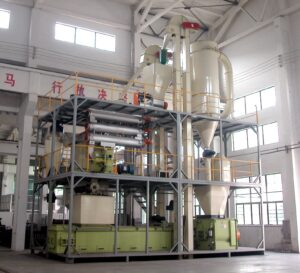
Feeding system: consists of conveyors, hoppers, and sometimes grinders to prepare feedstock to suitable size and flow.
Reactor: a vessel for pyrolysis reaction taking place by heat treatment at reduced oxygen conditions. Types of reactors include fixed bed, rotary kiln, screw (auger) reactor, and fluidized bed reactor. Each has its disadvantages and advantages regarding feedstock adaptability, maintenance, and resulting products.
Heating system: is either direct, that is, burning of syngas or some other fuel, or indirect (heat carrier). Heating should be controlled precisely.
Cooling/condensation system: cooling down and condensing gases into liquid phase (bio-oil).
Gases cleaning system: filtering, washing, and cyclone treatment of syngas.
Controlling equipment: includes temperature sensors, flow meter devices, and safety elements. Automated control allows for maintaining stable qualities of products.
Storing containers: bio-oil storage tank, gas buffer tank, and char storage tank.
Reactors – types
Fixed bed reactor (simple and inexpensive): The biomass is placed inside a reactor and heat is introduced to the system. Ideal for small operations but relatively inefficient for precision control.
Rotary kiln: Material moves through rotation; ideal for bigger chunks of biomass. Very flexible and reliable.
Auger reactor: Biomass is moved by an auger inside a reactor. It is compact and suited for continuous operations.
Fluidized bed reactor: Biomass is suspended in the hot fluidized bed usually made of sand particles. Efficient heat transfer makes it very effective for fast pyrolysis but complicated.
A standard run of the plant process
Preparing the feedstock (drying and cutting).
Starting the reactor and raising the temperature slowly.
Feeding the biomass into the reactor while limiting the oxygen levels.
Capturing and condensing the vapor and collecting the char.
Using syngas locally or cleaning it up before exporting.
Monitoring and data logging and regular maintenance and servicing.
The quality control involves monitoring moisture of the feedstock, quality and appearance of the products and composition of gases. The small changes in feed rate and temperature lead to yield variations so the process can be tuned by experienced staff.
There are good reasons for pyrolysis, which can turn waste into valuable output. However, there are real advantages, but there are also challenges.
Uses of products
Biochar: use in soils as a conditioner improving water absorption, nutrients holding and soil composition. Also acts as a means of carbon storage for decades or even centuries when used appropriately. Applications of biochar include filtration, animal bedding, and building materials.
Bio-oil: burn in boilers or heating appliances or chemically upgraded to chemicals. Not ready to be used directly in engines as a liquid fuel, but a good renewable fuel to be utilized in various ways.
Syngas: either burn it for producing heat, or clean it up for using in engines for generating electricity. Syngas utilization on-site decreases fuel expenses and improves overall energy efficiency.
Environmental aspects
Waste minimization: converts waste into a product rather than dispose of it in landfills or burning it in the open air.
Carbon reduction: biochar can be used in soils, sequestering carbon, which contributes to environmental protection goals. Responsible usage of biomass can be one of the elements of less carbon-intensive energy production.
Local energy generation: heat and electricity generated close to the source of waste.
Environmental issues and management
Emissions from air: the process of pyrolysis may release particles, volatile organic compounds (VOCs), or other gases if appropriate emissions control practices are not put into place.
Water and leachate pollution: bio-oils and condensates are often acidic in nature and must be stored safely. Biochar requires testing before widespread use in soils.
Contaminants in feedstocks: treated wood and plastic may result in formation of poisonous byproducts, which should not enter into feedstocks.
Other lifecycle issues: whether the practice will actually help the environment will depend on where feedstocks come from, distances traveled, energy consumed in drying, etc.
In summary, pyrolysis can have a positive effect on the environment provided it is conducted in an environmentally friendly way, using clean feedstock.
Safety considerations
Pyrolysis entails heating, temperature extremes, combustible gases, and electricity. Make your safety practices straightforward and stringent:
Oxygen control. Excessive oxygen content leads to combustion rather than pyrolysis. Not enough may result in buildup of hazardous gases. Proper seals and controls are critical.
Temperature and pressure monitoring. Overtemperature incidents harm equipment and increase risks. Alarms and interlocks are imperative.
Gas safety. Syngas should be considered flammable. Ensure that flame arresting and pressure venting is done safely with proper pipework.
Electrical safety. High humidity and temperature call for special wiring and potentially explosion-proof hardware.
PPE for personnel includes appropriate gloves, eye protection, and respirators if performing clean-up of condensers and dusts.
Permits and regulation compliance. Applicable laws exist. Apply for permits and conduct emissions tests if needed.
Economics in a nutshell
The cost of the feedstock makes or breaks economics. Low cost or zero-cost feedstocks (waste streams) have a major positive impact. Transportation costs can wipe out any profit.
Value of product is varied. Biochar is priced depending on its quality and the markets that can use it. Bio-oil is valuable based on locally prevailing fuel costs. Syngas is valuable for energy savings alone.
Scale does matter. Pilot-scale units are ideal for experiments and learning. Economics work better with scaling, while capital cost increases.
Operating costs: power for drying, labor, maintenance, emissions control, and spare parts. Anticipate downtime and maintenance.
Revenues: sales of products, avoidance of fees for waste disposal, local energy saving, and possibly carbon credits for biochar or emission avoidance.
Do the calculation yourself based on your conditions: estimate feedstock supply and cost, expected yields (the result of your pilot test is the most reliable), capital and operating cost, and product revenue.
How to get started: some practical steps
Start small and test. Install a pilot or demo reactor to check your actual feedstock mixture and obtain yield figures. The real feedstock performs not like laboratory materials.
Feed preparation: dry and size the feed before sending it into the reactor. A seemingly obvious operation will increase quality and decrease problems.
Flexible design. Select the reactor that works with your feedstock type. Screw-type reactors and rotary reactors are flexible, while fluidized bed is excellent for fast pyrolysis but needs uniform feed.
Emissions control and management strategy. Provide adequate condensing equipment, gas purification system, and bio-oil storage facility. Environmental protection is achieved while ensuring compliance with regulations.
Operator training. Proper operations depend on well-disciplined processes such as feeding, monitoring, cleaning, and maintenance.
Process tracking. Maintain a simple log recording the inputs, temperatures, outputs, and challenges. Recording data helps to solve issues quickly.