

Pyrolysis refers to the thermal decomposition of organic materials under conditions of reduced oxygen. In contrast to the use of incinerators that burn waste under oxygen conditions and create enormous amounts of CO₂, pyrolysis concentrates on thermal cracking.
Common Sources:
Plastics (PE, PP, PS, PET, et cetera)
Tires and other rubbers
Biomass (wood, husks of rice, coconut shells, straw)
Industrial or municipal waste
Products of Pyrolysis:
Oil derived from pyrolysis – a liquid fuel alternative
Syngas (non-condensable gases) – can be utilized as a heat source
Solid waste – char, carbon black, biochar, or recyclables such as wire from tires
These factors of controlled reaction and different types of products are the essential elements in determining the place of CO₂.
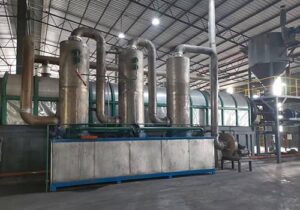
The Pyrolysis Flow: A Step-by-Step Process
In order to calculate the amount of CO₂ emission, it is necessary to examine the pyrolysis flow.
Step 1: Processing of the Initial Raw Material
Dried and chopped biomass is needed to ensure uniform heating. Drying can lead to the release of steam and a small amount of CO₂. However, when compared to the combustion process, the volume of CO₂ emissions is negligible.
Step 2: Pyrolysis Reactions in Reactor
In the sealed reactor:
The temperature usually varies between 350 and 600°C.
No oxygen is added, which prevents any form of combustion.
Organic compounds are split into pyrolysis oil, syngas, and char.
Carbon dioxide molecules are released during decarboxylation processes.
Step 3: Condensation
Vapor becomes liquid pyrolysis oil after cooling.
Non-condensing gases (methane, hydrogen, and other gases) can be used as a fuel.
By recycling gas, less fossil fuels are required, which results in fewer CO₂ emissions.
Step 4: Recovering Solid Materials
Biomass generates solid biochar.
Used tires and plastic are converted to carbon black and steel wire.
Solid matter retains carbon atoms without releasing them into the atmosphere.
Step 5: Treating Tail Gases
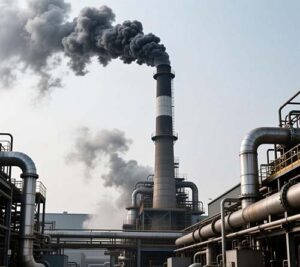
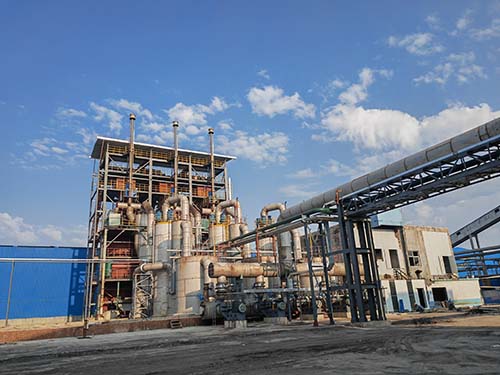
Modern pyrolysis plants use special equipment that cleans exhaust gases.
Trace gases, such as CO₂, undergo scrubbing, desulfurization, and dust removal.
One of the most important benefits of pyrolysis is how its products are used. This creates a circular economy where waste becomes a resource.
4.1 Pyrolysis Oil
- Can replace fossil fuel in boilers, kilns, or be refined into transport fuel.
- Every liter of oil from waste plastics offsets the extraction of crude oil, indirectly reducing CO₂.
4.2 Non-Condensable Gas (Syngas)
- Used internally to heat the reactor, eliminating the need for external fuels.
- Some systems upgrade syngas into hydrogen, a zero-carbon fuel of the future.
4.3 Biochar or Carbon Black
- Biochar locks carbon in stable form and improves soil fertility when used in agriculture.
- This makes pyrolysis of biomass carbon-negative.
- Tire char or carbon black can be used in construction, pigments, or activated carbon production.
4.4 Recovered Steel
- Recycling steel from scrap tires avoids the CO₂-intensive process of mining and smelting iron ore.
- Together, these applications ensure that pyrolysis not only avoids emissions but also actively contributes to reducing global carbon output.
As a manufacturer of pyrolysis machines, we strive to ensure that our machines are efficient and sustainable in operation. We manufacture our machines using:
Sealed reactors that prevent any introduction of oxygen into the reactors.
Syngas recycle mechanism that makes the machine independent of energy consumption.
Multi-stage condensers that maximize oil production from the waste material.
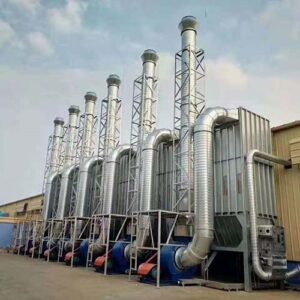
Gas scrubbers that clean the gas byproducts before release into the atmosphere.
Optional biochar units for clients who would like to generate carbon credits.
We, therefore, enable our clients to run their machines efficiently and sustainably.
 © Copyright2025- 2026 PyrolysisUnit CO., LTD. |