

Choosing a pyrolysis equipment manufacturer involves more than comparing advertised capacity or the number of products in a catalog. Different suppliers focus on different waste streams, reactor designs, process configurations, and levels of project involvement. A company that is suitable for a biomass thermal-treatment project may not be the best match for a tire-recycling line or a mixed-plastic feedstock.
This guide introduces five pyrolysis equipment manufacturers and technology providers worth comparing: Beston Group, ETIA Group, Klean Industries, Niutech, and PyrolysisUnit. The profiles focus on publicly described product scope and technology direction so that buyers can identify relevant candidates before requesting project-specific information.
Editorial note: This is a supplier shortlist, not a verified global ranking. The companies operate in different market segments, and no common third-party performance test has been used to score them. Product availability, project responsibilities, and technical specifications should be confirmed directly with each company.

How to Compare Pyrolysis Equipment Manufacturers
Before reviewing individual suppliers, define the basis of comparison. Manufacturers may use similar terms while offering systems designed for different materials and operating conditions.
- Feedstock specialization: Determine whether the supplier’s equipment is intended for waste tires, plastics, oil sludge, biomass, or another specific material. Suitability for one feedstock does not automatically establish suitability for another.
- Process configuration: Distinguish batch, semi-continuous, and fully continuous systems. Feeding, discharge, heat management, and pretreatment requirements may differ substantially.
- Project role: Establish whether the company is supplying equipment, licensing process technology, integrating a complete line, or developing a larger recycling project.
- Evidence available: Look for equipment drawings, feedstock-specific test results, operating references, and technical documents that relate to the intended application.
These factors are more useful than a generic ranking based on unverified claims about maximum yields, guaranteed payback, or universal environmental compliance.
Top 5 Pyrolysis Equipment Manufacturers to Compare
1. Beston Group
Company focus: Multiple waste-recycling and thermal-treatment solutions.
Beston Group publicly lists pyrolysis solutions for waste tires, plastics, and oil sludge, as well as separate equipment for biomass processing. Its pyrolysis portfolio includes batch and fully continuous configurations. This makes the company a relevant candidate for buyers who want to compare several waste-treatment options within one supplier portfolio.
Beston may be worth shortlisting when the project is still evaluating feedstock routes or when different equipment configurations need to be compared. However, a broad catalog should not be interpreted as proof that one standard machine can process every listed material under identical conditions.
What to clarify: Confirm the proposed model for your exact feedstock, the included pretreatment and emissions-control systems, and which performance figures are supported by representative test data.
Official company information: Beston Group pyrolysis plant solutions.
2. ETIA Group — Biogreen Technology
Company focus: Electrically heated screw-conveyor pyrolysis technology.
ETIA Group’s Biogreen process uses an electrically heated screw conveyor to control material temperature and residence time. Its published technology information describes applications involving biomass, plastics, and other selected waste streams. The actual processing capacity depends on the material’s properties and the time required in the reactor.
This technology is particularly relevant to projects evaluating continuous screw-conveyor thermal treatment rather than assuming that all pyrolysis reactors use the same mechanical design. Buyers should compare the proposed feeding method, residence-time requirements, thermal profile, char handling, and suitability for the exact feedstock.
What to clarify: Ask whether the proposed system has been tested with your specific material and whether its feed preparation, throughput, and residue-handling requirements match the intended installation.
Official company information: ETIA Group Biogreen technology.
3. Klean Industries
Company focus: Industrial thermal-conversion technologies and recycling projects.
Klean Industries presents technology and project activities related to end-of-life tires, non-recycled plastics, and municipal solid waste. Its public portfolio includes tire-pyrolysis projects, alongside technologies associated with upgrading recovered oils and carbon-containing materials.
For project developers considering a larger recycling facility, Klean is worth examining when the scope extends beyond purchasing an individual reactor. Its business role in a specific proposal is important, because equipment supply, process licensing, project development, and integrated plant delivery represent different commercial arrangements.
What to clarify: Identify the contracting entity, the technology or equipment being supplied, the division of engineering responsibilities, and which party is accountable for commissioning and agreed performance.
Official company information: Klean Industries.
4. Niutech
Company focus: Industrial continuous pyrolysis equipment for multiple waste streams.
Niutech publicly describes continuous pyrolysis technologies for waste tires, plastics, oil sludge, and other industrial waste streams. Its stated experience across a range of organic solid-waste applications makes it a candidate for projects evaluating continuous thermal treatment at industrial scale.
The important question is not how many types of waste appear in a company’s overall portfolio, but whether the proposed line is engineered for the specific composition, contamination, physical form, and throughput of the customer’s material.
What to clarify: Request feedstock-specific application references, the material-preparation requirements, the proposed continuous operating arrangement, and technical evidence relevant to the intended product and residue streams.
Official company information: Niutech.
5. PyrolysisUnit
Company focus: Pyrolysis equipment for tire, plastic, and other selected waste-processing applications.
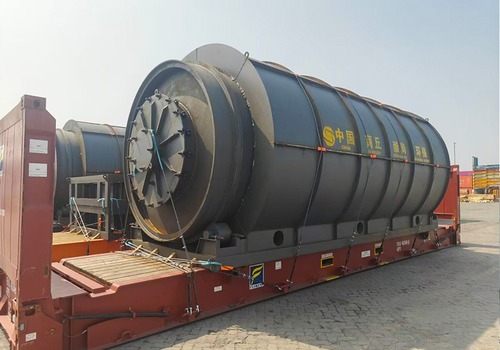
PyrolysisUnit’s published catalog includes several equipment formats, including small, batch, semi-continuous, and continuous pyrolysis systems. Its product pages cover waste-tire and plastic processing, alongside other listed waste-treatment applications. This provides a starting point for buyers who want to compare equipment configurations before defining a project-specific system.
For an early-stage project, begin with the available feedstock and equipment options, then establish whether the standard configuration meets the required throughput and output specifications. If the intended material differs significantly from the supplier’s stated application, ask for a technical assessment before assuming that the same configuration will be suitable.
What to clarify: Confirm the model-specific capacity basis, reactor and auxiliary-equipment scope, feedstock acceptance conditions, emissions-control configuration, installation responsibilities, and performance evidence available for the proposed application.
Explore the PyrolysisUnit pyrolysis machine range or browse the full equipment catalog.
Manufacturer Comparison by Technology and Project Scope
The following table summarizes the publicly described areas of focus. It is intended to help buyers create an initial shortlist, not to imply that the companies have been tested or certified against one another under identical conditions.
| Manufacturer | Publicly Described Focus | Potential Reason to Shortlist | Main Point to Verify |
|---|---|---|---|
| Beston Group | Tires, plastics, oil sludge, and biomass-related equipment | Comparing multiple waste-treatment routes and equipment configurations | Model-specific feedstock suitability and actual supply scope |
| ETIA Group | Biogreen screw-conveyor pyrolysis for selected waste streams | Evaluating a controlled, continuous screw-conveyor process | Feed properties, residence time, thermal design, and demonstrated throughput |
| Klean Industries | Thermal-conversion technologies and recycling projects | Projects that may require broader technology or project-development involvement | Contractual role, technology rights, equipment scope, and performance responsibilities |
| Niutech | Continuous pyrolysis for several industrial waste streams | Industrial continuous-treatment applications | Feedstock-specific design and operating references |
| PyrolysisUnit | Multiple pyrolysis equipment formats and waste-processing applications | Comparing listed machine configurations for a defined project | Exact model specifications, included systems, and project-specific performance evidence |
Manufacturer, Technology Provider, or Project Integrator?
One important distinction in the pyrolysis equipment market is that companies do not always sell the same type of deliverable. Two quotations may carry similar project descriptions but represent different contractual responsibilities.
Equipment manufacturer
An equipment manufacturer supplies defined machinery and should be able to identify the components, technical specifications, drawings, inspection requirements, and scope of the equipment it is providing.
Technology provider or licensor
A technology provider may offer a proprietary process design or license, operating methodology, or specialized thermal-conversion system. The project may still require separate suppliers for ancillary equipment, utilities, construction, or integration.
System integrator or project developer
An integrator or project developer may coordinate several technologies and suppliers into a complete installation. That can be useful for projects with complex process boundaries, but the contract must clearly define who is responsible for engineering interfaces, site integration, commissioning, and acceptance.
These roles may overlap within one company. Rather than relying on a business label, ask each shortlisted company to define exactly what it will supply, which responsibilities are subcontracted, and which performance obligations it accepts in the proposed contract.
Which Manufacturer Should You Shortlist for Your Feedstock?
The most relevant starting point is the material you intend to process and the operating conditions the project requires. Use the following table to narrow the shortlist before moving into detailed technical evaluation.
| Project Requirement | What to Prioritize | Next Step |
|---|---|---|
| Waste tire recycling | Feed preparation, steel separation, reactor operation, char handling, and product specifications | Review the continuous pyrolysis plant options and request tire-specific evidence |
| Waste plastic processing | Polymer composition, feed consistency, contamination limits, vapor handling, and emissions controls | Review the plastic pyrolysis plant information |
| Biomass or selected organic residues | Moisture, particle size, residence time, heating method, and the desired solid or liquid products | Compare the supplier’s proposed process design with the actual material properties |
| High-throughput continuous treatment | Steady feed supply, conveying, automatic feeding and discharge, maintenance access, and process integration | Compare continuous systems with the requirements described in the batch vs. continuous pyrolysis plant guide |
These are starting points rather than exclusive recommendations. Several listed companies serve more than one feedstock category, and the final selection should be based on the actual proposed machine, verified experience with the material, and clearly documented contract scope.
How to Move from a Shortlist to a Technical Comparison
After identifying two or three potentially relevant suppliers, compare proposals against the same feedstock description, target throughput, product requirements, site conditions, and supply boundary. Make sure a system that includes pretreatment and emissions-control equipment is not being compared directly with a reactor-only quotation.
For broader guidance on evaluating vendor credentials, technical evidence, service arrangements, and purchasing risks, read our separate guide on how to find quality pyrolysis plant manufacturers. That article covers the supplier-screening process in greater depth, while this page focuses on the differences among selected companies.
Project cost is another separate decision. Equipment pricing, feedstock preparation, utilities, construction, environmental controls, and commissioning can vary substantially by location and configuration. Our pyrolysis plant cost guide discusses project budgeting rather than attempting to rank manufacturers by price alone.
Frequently Asked Questions
Who is the number one pyrolysis equipment manufacturer in the world?
There is no universal ranking in this guide that establishes one company as the global number one. The most suitable supplier depends on feedstock, process requirements, the type of equipment or project services needed, and the evidence available for the proposed application.
Are all pyrolysis equipment manufacturers able to process both tires and plastic?
No. Some companies list equipment for several waste streams, but that does not mean one machine can process all materials without configuration changes or additional pretreatment. Ask for the specified feedstock range and supporting test information for the exact model under consideration.
Is a continuous pyrolysis system always the best option?
Not necessarily. Continuous systems can be relevant for projects with steady material supply and a suitable feeding system, while other projects may favor batch or intermediate configurations. The preferred design depends on throughput, feed properties, operating schedule, available labor, and project constraints.
Should I choose a supplier based on the highest advertised oil yield?
No. Yield figures should identify the feedstock, measurement basis, operating conditions, and product-quality requirements. A high headline yield alone does not establish that the recovered product meets the intended specification or that the entire process is suitable for your site.
What should I do before asking for a quotation?
Prepare the feedstock description, expected quantity, operating schedule, target outputs, project location, and desired scope of supply. Share the same information with shortlisted companies so that their proposals can be compared on a consistent basis.
Explore Pyrolysis Equipment for Your Project
The five companies profiled here provide different starting points for researching pyrolysis equipment and thermal-conversion technologies. Rather than selecting a supplier solely by a list position, narrow your options based on the target waste stream, process configuration, technical evidence, project responsibilities, and the requirements of the destination market.
To explore available equipment categories, visit the PyrolysisUnit product catalog. For a project-specific discussion, provide the waste type, required throughput, available material analysis, and project location so the equipment scope can be assessed against your actual needs.