How Much Does It Cost to Start a Pyrolysis Plant? Complete Waste-to-Oil Business Guide
Across the globe, mounting waste generation—from end-of-life tires to post-consumer plastic and industrial oil sludge—has created both an environmental crisis and a lucrative business opportunity. Pyrolysis technology, which thermally decomposes organic waste in an oxygen-free environment to produce fuel oil, carbon black, steel and recyclable gas, has emerged as a proven waste-to-value solution. For entrepreneurs and investors looking to enter this space, the most common first question is: how much does it cost to start a pyrolysis plant?
While equipment purchase is often the first cost people consider, building a profitable waste-to-oil business requires far more than a machine. A successful pyrolysis project relies on stable feedstock supply, verified product demand, regulatory compliance, proper facility design and accurate financial modeling. Cutting corners on any of these elements can lead to costly delays, operational losses or even project failure.
In this comprehensive 2026 guide, we break down every cost component, operational factor and profitability metric you need to evaluate before investing in a tire, plastic or oil sludge pyrolysis plant. Whether you are a first-time investor or an existing waste management company expanding into energy recovery, this guide will help you build a realistic business plan and calculate your expected return on investment.
1. Choose the Right Feedstock for Your Pyrolysis Plant
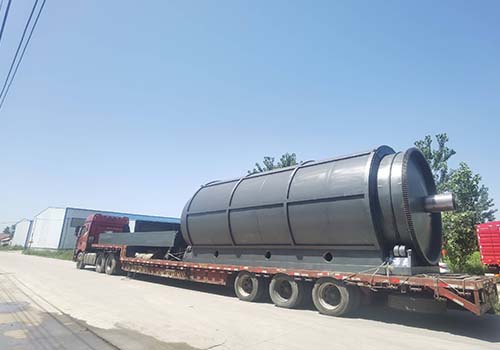
The first and most foundational decision for your waste-to-oil business is selecting your raw material. Different waste streams require different processing configurations, produce different product mixes and deliver different profit margins. Your choice should always be driven by local waste availability, not just which material has the highest theoretical oil yield.
Waste Tires and Rubber
End-of-life tires are the most mature and widely used feedstock for commercial pyrolysis, thanks to their consistent composition and established global supply chains. The pyrolysis process breaks down tire rubber into four core products: pyrolysis oil, carbon black, steel wire and non-condensable process gas.
Key advantages:
- Abundant supply in most countries, with predictable collection channels
- Stable product composition and reliable yield rates
- All by-products have established secondary markets
- Well-understood processing technology with low technical risk
Waste tire pyrolysis oil is widely used as industrial heating fuel, while recovered carbon black can be reused in rubber manufacturing, ink production or as a pigment. Steel wire is sold as scrap metal to steel mills, and the process gas is typically recycled back to heat the reactor, reducing external fuel costs.
Waste Plastic
Post-consumer and industrial plastic is another high-potential feedstock, with oil yields significantly higher than tires. Suitable plastics include polypropylene (PP), polyethylene (PE), polystyrene (PS) and high-density polyethylene (HDPE).
Critical note: PVC and PET are not recommended for pyrolysis. PVC releases corrosive chlorine gas during heating, which damages reactor internals and creates toxic emissions requiring expensive treatment. PET produces very low oil yields and excessive solid residue, making it economically unviable.
Plastic pyrolysis yields fuel oil, industrial wax, carbon residue and process gas. The exact ratio depends heavily on plastic type; for example, clean PE can achieve oil yields as high as 75%, while mixed plastic waste typically falls in the 50–60% range.
Oil Sludge
Oil sludge is a heavy waste by-product generated by oil refineries, petroleum storage terminals, crude oil production sites and shipyards. This viscous, oil-rich waste is classified as hazardous in most jurisdictions, making disposal expensive for generators. Pyrolysis recovers valuable hydrocarbon fractions from the sludge, turning a costly waste stream into sellable fuel oil.
Oil sludge yields vary dramatically based on oil content, ranging from 30% for low-grade tank bottom sludge to 70% for high-oil-content refinery waste. This feedstock is especially attractive for operators located near oil infrastructure, where raw material is abundant and often available at zero or even negative cost (i.e., generators pay to have it removed).
Waste Lubricating Oil
Used engine oil, hydraulic oil and industrial lubricants are processed not through standard pyrolysis but through vacuum distillation technology. This process removes impurities and recovers base oil or refined fuel oil, with recovery rates of 70–85%. This is a more niche but high-margin segment for investors with access to steady volumes of used lubricants.
2. Secure a Consistent & Cost-Effective Raw Material Supply
Once you have identified your target feedstock, the next question is: can you source enough waste material reliably, at a predictable cost, every single day? This is the single biggest factor determining project success, and the number one reason new pyrolysis plants fail.
How Much Feedstock Do You Need?
To put volumes in perspective:
- A 5-ton-per-day plant requires ~1,500 tons of raw material per year
- A 10-ton-per-day plant requires ~3,000 tons per year
- A 20-ton-per-day plant requires ~6,000 tons per year
These calculations assume 300 operating days per year, accounting for scheduled maintenance, holidays and minor downtime.
What to Research Before Investing
Before purchasing any equipment, conduct on-the-ground due diligence on your local supply chain:
- Waste volume:How much of your target waste is generated within a 50–100 km radius? Long-haul transportation can erase profit margins quickly.
- Supply sources:Identify specific suppliers—tire collection centers, auto repair shops, logistics fleets, plastic recycling plants, refineries or waste management companies.
- Pricing structure:Is waste sold by weight, by volume or per load? Do prices fluctuate seasonally?
- Competition:Are there other pyrolysis plants, recycling facilities or cement kilns already competing for the same waste stream?
- Contract stability:Can you sign 1–3 year supply agreements to lock in volume and price?
Recommendation for New Investors
For first-time entrants, we strongly recommend starting with a 5–10 ton per day capacity plant. This modular scale allows you to:
- Validate feedstock supply reliability without overcommitting capital
- Test production processes and optimize product quality
- Build customer relationships and prove market acceptance
- Scale up gradually once your business model is proven
Attempting to launch a 20+ ton plant as your first project dramatically increases financial and operational risk.
3. Analyze Your Local Market for Pyrolysis Products
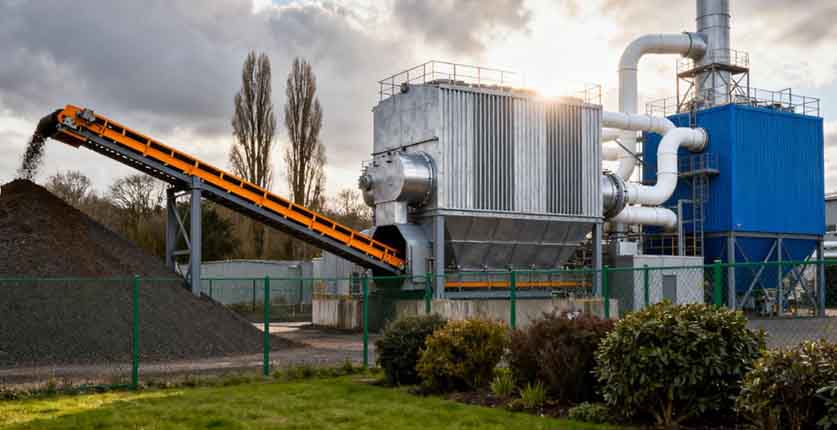
Producing oil is only half the business. The other half is selling it—at a price that makes your operation profitable. Many new investors fixate on equipment specs and oil yields, only to discover after launch that there is no local buyer for their product at their target price.
Core Product Markets
Pyrolysis Oil
Crude pyrolysis oil is primarily used as industrial heating fuel. Key customer segments include:
- Cement factories (the largest single consumer of pyrolysis oil globally)
- Industrial boiler plants for process heat
- Asphalt mixing plants
- Marine fuel suppliers (for bunker fuel blending)
- Brick and ceramic kilns
- Glass manufacturing facilities
Fuel quality requirements vary by industry. For example, cement kilns can accept lower-grade oil with higher sulfur content, while marine and power generation applications require stricter sulfur limits (typically 500–1000 ppm for many industrial markets). Always confirm product specifications with potential buyers before finalizing your equipment configuration.
Carbon Black
Recovered carbon black from tire pyrolysis can be sold as a low-cost reinforcing agent for rubber products, a pigment for inks and coatings, or a raw material for activated carbon production. Higher-quality, processed carbon black commands a significant price premium over raw, unprocessed material.
Steel Wire
Steel wire extracted from tires is a straightforward commodity product, sold to scrap metal dealers or steel mills. While it is not the highest-value product, it provides a steady secondary revenue stream.
Process Gas
Non-condensable gas generated during pyrolysis is almost always recycled on-site to heat the reactor. This is a major advantage of pyrolysis technology: after startup, the plant is largely energy self-sufficient, minimizing external fuel costs.
Market Research Action Steps
- Identify at least 3–5 potential bulk buyers within economical trucking distance
- Request written indications of interest, including desired volume, quality specifications and target price
- Research local fuel oil pricing trends to understand market volatility
- Evaluate whether you will sell directly to end users or through fuel distributors
4. Factory Layout, Land Requirements & Regulatory Permits
Once feedstock and markets are confirmed, you can move to facility planning and regulatory approval. This stage is often more time-consuming and costly than investors anticipate, especially in regions with strict environmental regulations.
Land & Facility Requirements
For a standard 5–10 ton per day batch pyrolysis plant, we recommend:
- Total land area:800–1,500 square meters
- Covered workshop area:300–600 square meters (semi-closed or fully enclosed)
- Outdoor storage:Separate paved areas for raw material, finished products and solid by-products
Your site should be zoned for industrial use and include clear functional zones:
- Raw material receiving and storage area (with impermeable flooring to prevent soil contamination)
- Main production hall with reactor and processing equipment
- Oil storage tank farm (with secondary containment dikes)
- Carbon black and steel wire storage
- Environmental treatment equipment area
- Control room and small office space
For safety, maintain adequate setbacks between process equipment, storage tanks and property boundaries.
Regulatory Permits
Permitting requirements vary widely by country and region, but almost all jurisdictions require:
- Environmental impact assessment and approval (EPA permit)
- Industrial building construction permit
- Fire safety inspection and approval
- Hazardous waste handling permit (if processing oil sludge or other classified waste)
- Air emissions license
During the approval process, authorities will typically request:
- Detailed process flow diagrams
- Equipment technical specifications
- Emission control system details
- Oil and residue testing reports
- Emergency response plans
Pro tip: Allocate 3–6 months for the permitting process in your project timeline. Starting equipment production before permits are finalized risks costly modifications if regulators require additional environmental controls.
5. Pyrolysis Plant Equipment Cost Breakdown
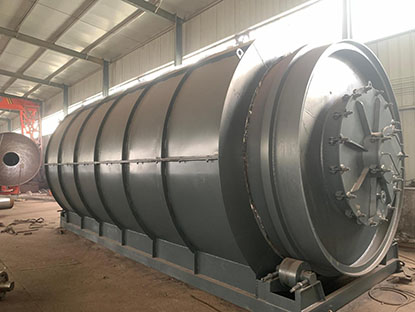
Equipment investment is the largest upfront cost for a pyrolysis project, but prices vary enormously based on capacity, automation level, build quality and environmental performance.
Core Equipment Components
A complete pyrolysis system includes:
- Main reactor:The core vessel where thermal decomposition occurs
- Feeding system:Manual, semi-automatic or fully automatic feed mechanism
- Condensation system:Cools and liquefies pyrolysis vapor into crude oil
- Discharge system:Removes solid residue (carbon black, char)
- Gas recycling system:Cleans and recirculates non-condensable gas for reactor heating
- Flue gas treatment system:Removes dust, sulfur and pollutants before exhaust
- Control system:Manual gauges or PLC-based automatic control
- Oil storage tanks and auxiliary piping
Factors That Determine Price
- Processing capacity:Larger reactors have higher absolute cost but lower cost per ton of capacity.
- Reactor material:Standard carbon steel (Q245R) is the most common; stainless steel or alloy reactors cost more but offer longer life and better corrosion resistance for aggressive feedstocks.
- Automation level:Fully automatic systems with PLC control, continuous feeding and automatic slag discharge cost 50–100% more than basic manual batch systems but reduce labor requirements and improve operational consistency.
- Environmental standards:Basic dust filtration is standard; upgraded systems with desulfurization, denitrification and activated carbon adsorption add cost but meet stricter EU, North American or East Asian emission standards.
Typical Investment Ranges
For a 5–10 ton per day pyrolysis plant:
- Basic configuration (manual batch, standard emission controls):USD 35,000 – 50,000
- Mid-range configuration (semi-automatic, enhanced dust removal):USD 50,000 – 65,000
- Premium configuration (fully automatic PLC, full desulfurization & dedusting):USD 65,000 – 80,000
Often-overlooked additional costs:
- International sea freight and domestic transportation: 5–10% of equipment cost
- On-site installation and commissioning: 8–15% of equipment cost
- Civil works, foundations and tank fabrication: 15–30% of equipment cost
- Initial spare parts and tooling: 2–5% of equipment cost
6. Full Operating Cost Analysis
Beyond upfront capital investment, you need to accurately forecast ongoing operating expenses to calculate real profitability. Many first-time business plans drastically underestimate operational costs.
Labor Costs
Most small to medium pyrolysis plants operate 2 shifts per day, 6 days per week. Each shift requires 2–3 workers:
- 1 plant operator (monitors temperature, pressure and process parameters)
- 1–2 general workers (feedstock handling, product discharge, site maintenance)
Total staffing for a 10-ton plant is typically 5–7 full-time employees, including a part-time manager/technician. Labor costs vary dramatically by region—from USD 300–600 per month per worker in developing economies to USD 2,000–4,000 in Western countries.
Electricity
One of the key advantages of pyrolysis technology is low grid electricity consumption. The reactor’s process heat comes primarily from recycled process gas, so electricity only powers circulation pumps, control systems, lighting and small motors.
For a 10-ton plant: ~100 kWh per day of operation.
Heating Fuel
External fuel is only required during the initial startup phase (the first 3–6 hours of each batch) to bring the reactor up to operating temperature (~450–550°C). Once pyrolysis begins, the system self-heats using recycled gas.
Typical startup fuel consumption: 150–300 liters of fuel oil per batch. Alternative heating sources include natural gas, LPG, biomass pellets or coal.
Maintenance & Consumables
- Routine maintenance:Seal replacements, bearing lubrication and general upkeep
- Annual overhaul:Reactor internal inspection, descaling and anti-corrosion treatment
- Environmental consumables:Activated carbon, desulfurization agent and filter media replacement
As a rule of thumb, budget 3–5% of your total equipment investment per year for maintenance and consumables.
Other Operating Costs
- Raw material transportation
- Finished product delivery
- Site utilities (water, telecommunications)
- Insurance and taxes
- Laboratory testing (periodic oil quality and emission testing)
- Administrative overhead
7. Product Yield Rates & Value Optimization
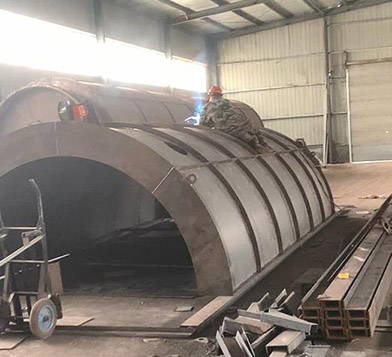
Product yields are not fixed numbers—they vary based on feedstock quality, process parameters and equipment design. Understanding typical yield ranges is critical for accurate revenue forecasting.
Typical Yield by Feedstock
Feedstock Type | Oil Yield | Solid Residue | Steel/Wire | Process Gas |
Waste Tires | 35–45% | 30–35% (carbon black) | 10–15% | 5–10% |
Clean PE Plastic | 65–75% | 5–10% (carbon residue) | N/A | 10–15% |
Mixed Plastic Waste | 50–60% | 15–25% | N/A | 10–15% |
Oil Sludge (medium grade) | 40–60% | 25–45% | N/A | 5–15% |
Waste Lubricating Oil (distillation) | 70–85% | 10–20% | N/A | 5–10% |
Factors That Impact Yield
- Reaction temperature:Higher temperatures generally increase gas production at the expense of oil yield
- Heating rate:Slow, controlled heating maximizes liquid oil output
- Feedstock purity:Contaminants like dirt, metal and non-processable plastic reduce oil yield
- Reactor design:Well-insulated reactors with efficient condensation systems achieve higher liquid recovery
Ways to Boost Product Value
- Oil refining:Add a distillation unit to upgrade crude pyrolysis oil into higher-value diesel or gasoline fractions
- Carbon black processing:Grind and pelletize raw carbon black to meet industrial quality standards and command 2–3x higher pricing
- Wax collection:For plastic pyrolysis, recover high-value industrial wax as a separate product stream
8. Step-by-Step ROI Calculation (Real-World Example)
To demonstrate how all these factors come together, here is a realistic financial model for a 10-ton-per-day waste tire pyrolysis plant operating in a mid-cost emerging market.
Base Assumptions
- Operating days: 300 per year
- Waste tire purchase cost: USD 75 per ton
- Pyrolysis oil selling price: USD 420 per ton
- Carbon black selling price (raw): USD 70 per ton
- Steel wire selling price: USD 110 per ton
- Average oil yield: 40%
- Average carbon black yield: 32%
- Average steel yield: 12%
Daily Revenue Calculation
- Pyrolysis oil: 10 tons × 40% = 4 tons × USD 420 = USD 1,680
- Carbon black: 10 tons × 32% = 3.2 tons × USD 70 = USD 224
- Steel wire: 10 tons × 12% = 1.2 tons × USD 110 = USD 132
- Total daily revenue: USD 2,036
Daily Operating Costs
- Raw material: 10 tons × USD 75 = USD 750
- Labor (6 workers): USD 130
- Electricity: USD 15
- Startup fuel: USD 40
- Transportation (in & out): USD 90
- Maintenance & consumables: USD 50
- Admin, insurance & other: USD 71
- Total daily operating cost: USD 1,146
Profitability Summary
- Daily net profit:USD 2,036 – USD 1,146 = USD 890
- Monthly net profit (25 days):USD 22,250
- Annual net profit:USD 267,000
Investment & Payback Period
- Total equipment (mid-range semi-automatic): USD 60,000
- Civil works, installation & commissioning: USD 22,000
- Initial working capital: USD 35,000
- Total initial investment: USD 117,000
- Estimated payback period: ~5.3 months
This example represents a strong business case with favorable feedstock pricing and market conditions. In higher-cost regions or with tighter margins, payback periods of 1–2 years are more typical.
Key Variables That Move the Needle
The three biggest factors impacting your ROI are:
- Raw material cost– A USD 10 per ton increase in tire price reduces annual profit by USD 30,000
- Fuel oil selling price– A USD 50 per ton oil price swing changes annual profit by USD 60,000
- Plant utilization rate– Dropping from 300 to 250 operating days cuts profit by ~17%
9. Understand The Transaction Process And Manufacturer Qualifications
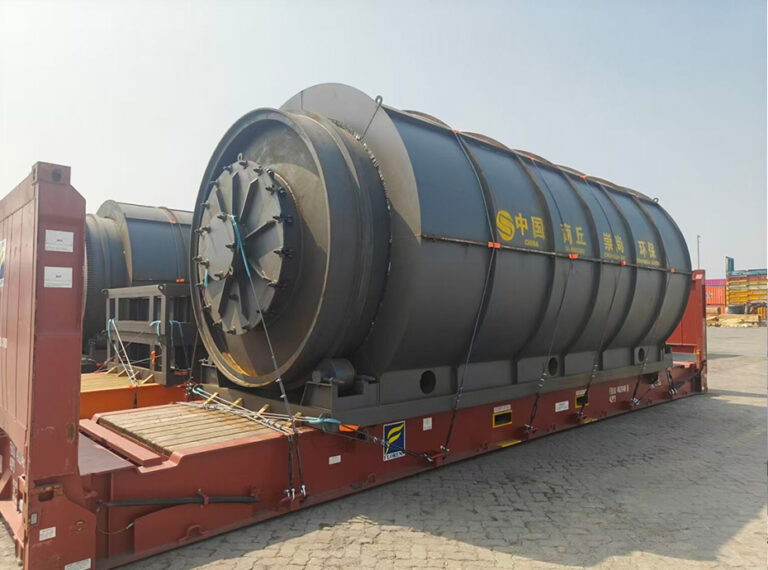
For example, with our PyrolysisUnit, we would specify a manufacturing time of 20-35 days and a shipping time of 45-60 days. Payment would be a 30% deposit, with the remaining 70% due before shipment.
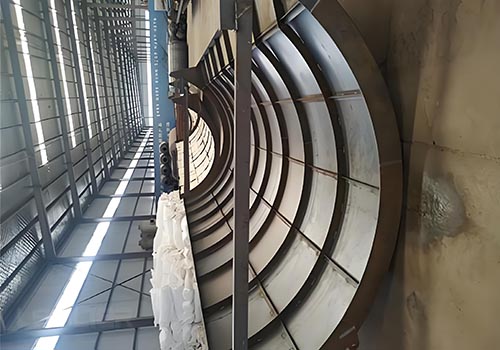
To verify the manufacturer’s qualifications, check if they will conduct an internal flaw detection report and perform a pre-shipment inspection, including stamping the documents.
Normally, the manufacturer needs to provide an inspection report before shipment, including the following:
- Appearance: The surface shall be glossy; the insulation layer shall be glossy and flat with uniform thickness and free of cracks.
- Insulation layer thickness: Unit: cm; Requirement: Meet thickness requirements for new‑style and old‑style (outlet side).
- Shell wall thickness deviation: Unit: mm; Requirement: ±0.5.
- Shell dimensional deviation 4.1 Difference between maximum and minimum diameters on the same cross‑section: Unit: mm; Requirement: ≤5. 4.2 Outlet concentricity deviation: Unit: mm; Requirement: ≤3.
- Welding rod: Welding rod surface shall be smooth, free of cracks, pores and defects, complying with enterprise standard requirements.
- Sealing performance: The pyrolysis device shall withstand a 0.5 MPa water pressure test and 0.2 MPa air pressure test for a duration of 30 seconds.
- Safety requirements 7.1 Gas bag explosion‑proof valve 7.2 Rotation device explosion‑proof valve 7.3 The electric control part of the pyrolysis device shall operate flexibly and run stably. 7.4 All wiring of the pyrolysis device shall be arranged in order; wires shall not contact moving or heat‑affected components. 7.5 Insulation resistance: Unit: MΩ; Requirement: ≥2.
- Main kettle weld flaw detection: Welds shall be free of excessive slag inclusions and pores.
- Component welding and pressure test 9.1 Gas distribution bag: Weld condition & pressure test. 9.2 Oil‑gas condenser: Welding condition & pressure test. 9.3 Oil storage tank: Welding condition & pressure test. 9.4 Water seal: Welding condition & pressure test. 9.5 Cast‑iron sealing parts: Free of excessive sand holes and pores.
- All field‑welded pipelines and connecting sealing parts: Conduct 0.2 MPa steam air pressure test with no leakage. The equipment runs normally under atmospheric pressure without exceeding specification limits and complies with enterprise standard equipment specifications. Customer signature shall be regarded as inspection acceptance.
Final Thoughts
Building a successful pyrolysis business is a comprehensive undertaking that goes far beyond purchasing a machine. It requires careful analysis of local waste supply, product markets, regulatory requirements and operational costs. When planned correctly, waste-to-oil pyrolysis offers strong financial returns while delivering real environmental benefits by diverting waste from landfills and reducing reliance on fossil fuels.
The most important advice for new investors is to start small, validate your business model locally and scale gradually. Take the time to do thorough due diligence on every link in your value chain before committing large amounts of capital.
If you are planning to launch a waste-to-oil pyrolysis project and need a customized equipment configuration, project feasibility study or detailed financial projection, our team can provide a professional project evaluation tailored to your local market conditions.
PyrolysisUnit — Turning Waste Into Value