1. Introduction — Is Pyrolysis Safe?>>>
When looking at the potential to implement a new technology, such as pyrolysis, the first consideration that you must ask yourself is “Is pyrolysis safe?” The significance of this question cannot be underestimated. Safety will determine the feasibility of your implementation plan, the insurance coverage for your project, your training programs, and even your community relations. Safety cannot be considered a hypothetical question because it is the biggest determinant in turning theory into practice.
The risks involved in pyrolysis are no different than those in other industrial thermal processes. If they are properly designed, analyzed, and operated, then pyrolysis can be safely managed. As an operator, safety is defined by measurable controls, accessible data, and contractual guarantees.
The most effective method of ensuring that a company is safety-minded is requiring transparent data. A transparent vendor will offer performance guarantees, share the risks, and provide service and maintenance contracts.
2. Origins & Technical Basics>>>
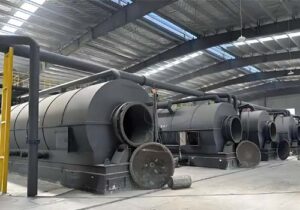
Safety evaluation requires one to know both chemistry and equipment. The term pyrolysis implies thermal degradation of organic substances in an atmosphere without oxygen, and this is technically what separates pyrolysis from other forms such as combustion or gasification. In a closed system, heat will cause bond dissociation and will generate volatile organic components, permanent gases (gases which cannot be condensed), and char.
As a result of the absence of oxygen, the reaction does not involve a flame, which allows one better control. By controlling such factors as temperature, residence time, and heating rate, one can fine-tune the products obtained because lower temperatures produce more char and heavy oil, whereas higher temperatures produce more light oils and gases. This is an advantage in terms of safety since the operator controls what will happen through temperature and residence time, rather than having uncontrollable reactions.
Feedstock preparation itself is another very important aspect, because by shredding the raw material, controlling particle size, and adjusting moisture content, one minimizes hot spots in the process and eliminates contaminants.
3. Engineering Controls & Machine Design>>>
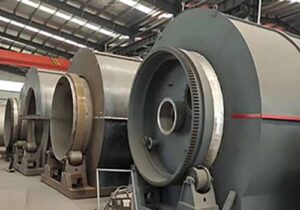
The design itself is the primary safety measure that ensures that the safety criteria can be quantitatively verified. For example, the atmosphere control methods include purging the vessel using either inert gases or recycling non-condensable gases to avoid the risk of introducing air, which could potentially ignite due to combustion or oxidation.
In terms of detection and controls measures, we use continuous monitoring systems for parameters such as temperature, pressure, differential readings, and gas composition, with programmable logic controllers (PLCs) providing redundancy. Low explosive limit (LEL), flame, and ventilation interlock detectors ensure the proper functioning of the alarm chain. We also specify electrical devices to a certain safety class, provide segregated and grounded cabling, and protect the enclosures accordingly.
Automated shutdown procedures and safe state procedures are implemented to ensure that should there be any parameter deviation, the machine will go into a safe state as opposed to maintaining the equipment in an unsafe state. Overall, the machine is constructed to identify, trigger alarms, and react; in essence, keeping its users safe from danger. As far as control measures and data analysis are concerned, our remote monitoring system detects small deviations and performs diagnostics.
4. Environmental & Regulatory Safety>>>
The issues raised by the community and regulators concern not only personal safety but environmental safety in terms of emissions to air, liquid effluents, and the disposition of residues. The design of a well-developed pyrolysis unit addresses all these concerns through sound engineering and information.
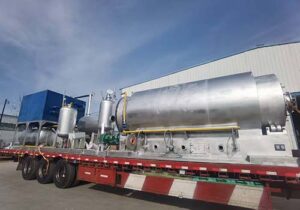
Pyrolysis Unit considers gas and condensate streams as part of the process, requiring treatment: condensible vapor is processed by stage-wise condensation with oil-water separation to recover oils from the aqueous phase; noncondensible gases are subjected to filtering, scrubbing where required, and combustion in appropriately designed burners or thermal oxidizers. Dust and aerosols are separated by filtration or cycloning prior to entering condensers to prevent clogging and collect the char fines.
Acidic gases such as HCl generated by PVC in the feedstock are addressed using the appropriate gas scrubber designs whether wet or dry scrubbers. For VOC or trace organics, activated carbon polishing may be necessary. The solid char product is classified as a residue which must be sampled, stabilized as necessary, and utilized as fuel, carbon black, or soil amendment only after passing the relevant testing and certifications.
Aqueous streams are treated using conventional wastewater treatment systems or recycled in a closed loop system based on the available infrastructure and allowable discharges. Documentation is provided by Pyrolysis Unit to assist in permit approval including process descriptions, emissions modeling, material safety data sheets, and independent stack testing if required. Our objective is to design the treatment system based on expected worst case conditions, not nominal operating conditions. Honest data lead to regulatory predictability and community acceptance. Finally, waste minimization is incorporated in our design philosophy.
5. Operational Safety & Training>>>
The hardware of the machine may be great; however, safe results can be ensured only through people and their actions. Pyrolysis Unit views operational protocols and training as safety equipment: our company provides you with the complete operator training, which involves learning basics of system, hierarchy of alarm, operating windows (both normal and upset conditions), and emergency protocols. The training process implies attending lectures, practicing with simulators (or even mocked-up panels), taking care of commissioning, and operating under supervision till your personnel becomes capable of performing independently.
We provide operating manuals, pre-start checklists, schedules of maintenance, as well as procedures concerning lockout/tag-out (LOTO), entering the confined space, obtaining a hot work permit, and safely working with hot oils and char. Preparedness for operational work means wearing personal protection equipment, having documentation about evacuation, performing regular exercises to ensure emergency preparedness together with local emergency services, and having an effective channel of incidents reporting. These steps allow turning protocols from papers into actual readiness.
Maintenance protocols are carried out based on runtime of the equipment and are planned according to such predictive indicators as gas composition drift, vibration characteristics, and condition of the instruments.
6. Practical Applications & Customer Benefits>>>
From the point of view of the customer, safety and business results are one topic. If the machine is capable of operating safely and predictably, it will not violate any permits, cause public complaints, or undergo unexpected shutdowns – all of which would be a direct financial impact on the business.
The machines in our Pyrolysis Unit produce not only for safety reasons but also with maximum efficiency and quality of production. You will be able to estimate the amount of production of pyrolysis oil, replace gas as fuel with the produced substitute syngas, and regulate char outputs as a profit-producing waste product.
As we ensure containment and predictability, many customers find the process of permits and insurance to be easier – having the capacity to prove solid engineering, continuous data collection, and a training program turns out to be much more practical than skeptical. Our modular units enable you to test the machine on a smaller scale before going big and expanding your operation.
Safe design equates to decreased lifetime risk, resulting in improved financing conditions and enhanced value proposition. We further facilitate community involvement by providing assistance in developing understandable documentation and facility tours that highlight process safety, highlighting containment, monitoring, and emergency response procedures so as to instill confidence among residents and officials in the project. Effective communication can sometimes result in expedited permitting and mitigation of objections.
In light of the above factors, the project benefits from not only lowered costs of disposal at landfills, reduced liability in transportation, and creation of marketable goods but also decreased risks to the environment and communities.
7.Conclusion & Next Steps >>>
In other words, is pyrolysis safe? Yes it is, provided that one picks manufacturers and suppliers that put the emphasis on engineered containment, thorough treatment of gases and residues, documented processes, and ongoing training. Safety is part of our product engineering and services at Pyrolysis Unit as we recognize how crucial it is for our customers’ reputations and uninterrupted operation.
At Pyrolysis Unit we offer pilot trials, supplier validation of spare parts delivery channels, and long-term service agreements so that safety becomes one of the contractual guarantees, rather than a vague concept of commitment.
When considering various vendors, require test reports from independent third parties, comprehensive commissioning documents, guarantees of performance and evidence of ongoing training and assistance. These will be signs that the safety aspect is treated seriously and not just as a promotional one. All of these documents will be available from Pyrolysis Unit, as a part of our quotation, including references and documentation from other facilities that had similar needs.
Summarizing briefly, pyrolysis is a well-researched engineering thermal process whose safety depends on engineering, treatment capabilities, operational discipline, and transparency. Pyrolysis Unit offers all of these features through its equipment and training services.