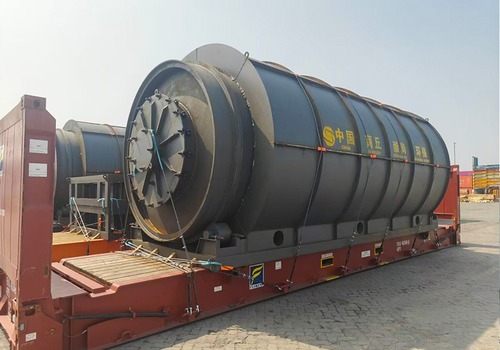


Plastic pyrolysis can help manage selected plastic waste streams by converting them into liquid products, gas, and solid residues. Its environmental value depends on what waste is processed, how the plant operates, and what happens to the recovered products.
Modern equipment makes these benefits achievable in practice – the plastic pyrolysis plant includes full emission control to keep the process clean.
Pyrolysis is not automatically cleaner than every alternative. To understand its potential benefits, project developers must consider waste diversion, recovered material use, energy consumption, emissions control, and the full life cycle of the process.
1. Diverting Suitable Plastic Waste from Disposal
Pyrolysis may provide a treatment route for certain plastic residues that are difficult to recycle mechanically. When these materials would otherwise be poorly managed or sent for disposal, an appropriately designed process may recover useful resources and reduce the quantity requiring final disposal.
The benefit depends on effective collection, suitable feedstock preparation, and proper management of the remaining solid and liquid residues. Pyrolysis does not eliminate the need for waste sorting or responsible disposal.
2. Recovering Materials from Plastic Waste
Plastic pyrolysis can produce hydrocarbon-rich liquids that may be processed further for use as chemical feedstocks. Where recovered material genuinely replaces virgin fossil feedstock in new plastic production, it may reduce demand for newly extracted resources.
However, producing pyrolysis oil does not by itself complete a recycling loop. The oil must meet the receiving processor’s specifications and enter a suitable manufacturing pathway. If it is burned as fuel, the outcome is energy recovery rather than material recycling.
For a closer look at the recycling pathway and its limitations, read our guide to using pyrolysis to recycle plastics.
3. Potential to Reduce Life-Cycle Emissions
Environmental assessments may identify benefits when recovered products displace virgin materials or when a pyrolysis process performs better than the relevant waste-management alternative. But the result depends on the energy source, plant configuration, feedstock transport, pretreatment, emissions control, and the destination of each product stream.
A 2025 life-cycle study comparing different plastic-pyrolysis configurations found that environmental performance varied with the technological setup. This means that a result for one process design should not be treated as a universal reduction rate for all pyrolysis plants.
When reviewing an environmental claim, check its system boundary, reference scenario, functional unit, and assumptions about product substitution. A percentage reduction is meaningful only when the comparison is clearly defined. See this study of environmental performance across plastic-pyrolysis configurations.
4. Recovering Process Gas for Heat
Non-condensable gas from plastic pyrolysis may be used to supply part of a plant’s heating demand when its composition, gas-cleaning system, and combustion equipment allow. This can reduce the need for external fuel.
It does not guarantee energy self-sufficiency. Feed preparation, reactor heating, auxiliary equipment, cooling, and emissions control all consume energy. A credible assessment requires an energy balance based on actual operating conditions rather than a generic claim that the plant produces all the energy it needs.
5. Environmental Conditions That Must Be Controlled
The potential benefits of plastic pyrolysis depend on managing its environmental impacts as well as recovering products. Important considerations include:
- Feedstock contamination: Unwanted polymers, chlorine-containing materials, dirt, and other contaminants can affect process safety, product quality, and emissions.
- Air emissions: Gas handling, combustion, and exhaust-treatment systems must be designed for the actual process and applicable environmental requirements.
- Residual materials: Solid residues, collected dust, wastewater, and off-specification products need appropriate treatment, reuse, or disposal routes.
- Transport and energy: Collection distance, feedstock preparation, and the source of process energy can materially affect overall environmental performance.
These factors should be measured and managed during project design and operation. Installing pollution-control equipment alone does not establish that a facility complies with every applicable emission limit.
When Is Plastic Pyrolysis an Appropriate Option?
Mechanical recycling should generally be prioritized when plastic can be collected, sorted, and reprocessed into useful material at the required quality. Pyrolysis may complement mechanical recycling when suitable residual plastics cannot be practically processed through conventional routes.
The decision should compare realistic alternatives using the same waste stream and system boundary. It should also account for recovered-product quality, energy consumption, transport, emissions, and the final destination of the products.
For a detailed comparison of the trade-offs, see our article on pyrolysis versus recycling economics.
Choosing Equipment with Environmental Performance in Mind
Before selecting a plant, identify the plastic feedstock, required throughput, intended use of recovered products, and environmental requirements at the project location. Ask the supplier for the proposed gas-treatment configuration, residue-management plan, energy balance, and any relevant performance-test data.
Explore the plastic pyrolysis plant range or browse the PyrolysisUnit equipment catalog.
Frequently Asked Questions
Does plastic pyrolysis always reduce greenhouse gas emissions?
No. The result depends on the process design, energy source, feedstock, transport, and use of recovered products. A life-cycle assessment is needed to compare the proposed system with a relevant alternative.
Does plastic pyrolysis eliminate plastic waste?
No. It converts suitable feedstock into other material streams, but residues and off-specification products may remain. These need appropriate management.
Is pyrolysis always better for the environment than mechanical recycling?
No. Mechanical recycling is often preferable for clean, sortable plastics. Pyrolysis can be a complementary option for selected residual streams that are difficult to recycle mechanically.
Conclusion
Plastic pyrolysis may support waste diversion, resource recovery, and reduced use of virgin feedstocks when the process and downstream product route are well designed. Its environmental benefits are not automatic: energy demand, emissions, transport, residues, and actual product use all matter.
To discuss suitable equipment for your plastic feedstock, contact PyrolysisUnit with your material type, expected throughput, and intended product application.