

Top Manufacturer of Pyrolysis Machines/Units

Carbonization Furnace Market

1. Executive Summary

The carbonization furnace market is growing. More people and companies want to turn wood, agricultural waste, and biomass into charcoal, biochar, or fuel. This helps farmers, industry, and communities make value from waste. It also lowers emissions when done right.

Buyers care about efficiency, safety, ease of use, and return on investment. They want machines that run well, last a long time, and are backed by fast service. That is where Pyrolysis Unit fits in: we build dependable carbonization furnaces that are easy to run, efficient, and supported by strong after-sales care.

This post explains the market, the drivers, how customers decide, and why Pyrolysis Unit’s furnaces are a smart choice.
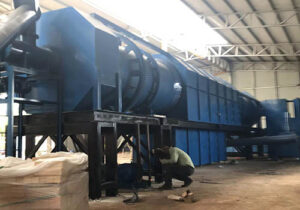
continuous carbonization furnace

2. Market Drivers & Growth Factors

There are several clear forces pushing the market forward.

Value recovery from waste. Farmers have waste that can be turned into a marketable product using carbonization. The same applies to the wood product industry. This is another source of revenue.

Market demand for biochar and activated carbon. Biochar is an excellent way of storing nutrients and water in the soil. Activated carbon is used in filters. As the market grows, the need for high-quality carbonization equipment increases.

Fuel self-reliance. In places where energy resources are scarce or expensive, charcoal and pyrolysis oil created during the carbonization process can serve as an alternative source of energy.

Sustainability and circular economy requirements. Governments and consumers seek technologies and processes that allow for minimizing waste and creating a circular economy. Carbonization is one such technology.

Incentives from the government. Government subsidies and incentives encourage companies to invest in carbonization.

These factors are not contradictory but rather complementary to each other, ensuring that there will always be a stable market for quality furnaces.

3. Key Market Segments & Applications

The carbonization furnaces market is not uniform; there are differences in terms of the feedstock type, furnace scale, and end products.

Feedstock type

Wood and sawdust

Agricultural waste (rice husks, coconut shells, corn cobs)

Bamboo and tree prunings

Energy crops and dedicated biomass

End products

Charcoal: Cooking, metal refining, and heating applications.

Biochar: Improves soil quality, sequesters carbon, and manages waste.

Activated carbon precursors: Precursor material for activated carbon.

Pyrolysis oil and syngas: Fuel or chemical feedstock.

Furnace scale

Small-scale equipment: Designed for individual farmers or small enterprises. Inexpensive. Easy to operate.

Medium-scale equipment: Suitable for co-operatives, sawmills, and small factories. Offers a good compromise between capacity and price.

Large-scale industrial equipment: Continuous process for large quantities and stringent process control.

Technology type

Batch kilns (flexible, simple design)

Continuous carbonization furnaces (high production rates, high control levels)

Retort systems (emissions management and higher yields)

The consumer makes their selection depending on the type of feedstock, desired end products, operating experience, and available budget.
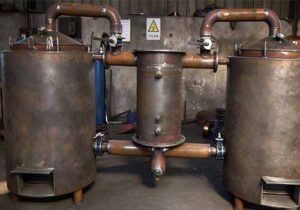
Bamboo Charcoal Making Machine-2

4. Regional Trends & Demand Hotspots

Regional requirements vary.

In agricultural areas, biochar may be required to restore soils and make value out of crop residues. Countries with large agricultural production become good customers.

Wood industry countries (sawmill industry, furniture making) generate regular wood residue flows. Such areas require medium and large units.

Developing countries often need cheap small/medium-size furnaces as local fuel and earning means. Maintenance and operator training costs are most important there.

Industrialized countries require energy-efficient, low emission and large capacity units, may want fully automated units, tight emissions control technologies.

Cities with organized organic waste treatment systems start adopting carbonization technology for their purposes.

Knowledge of customer needs allows for more successful targeting of product. Our Pyrolysis Unit designs units that may be customized to specific customer’s conditions; it leads to faster customer profits.

5. Regulatory, Environmental & Economic Forces

Both regulation and economic factors impact buyer decisions.

Emission regulations. Some areas prohibit open burning and smoke emissions. It means that furnaces must meet local emission regulations.

Carbon credit programs. Biochar absorbs carbon, which in certain places gives credits or other incentives. The buyer considers this when calculating the payback period.

Availability and cost of feedstock. Feedstock price and availability impact the payback period. Furnaces accepting different types of feedstocks mitigate risks.

Energy pricing. If energy costs are high locally, then carbonization products will be more attractive for buyers.

Labor costs. When considering labor needs, the buyer takes into account how easy the device is to operate and maintain. Low labor and skill requirements are valued where skilled people are lacking.

The correct selection of equipment depends on local regulations and economic factors. This explains why local assessments and customized solutions are often sought by buyers.
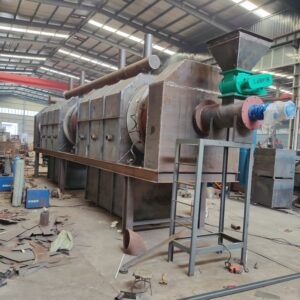
Pyrolysis of biomass

6. Competitive Landscape & Buyer Considerations

In comparing various carbonization furnaces, customers focus on:

Yield & Efficiency. What amount of charcoal or biochar is produced per one ton of biomass? The higher the yield, the higher the profit.

Energy Recovery. Can the equipment reuse syngas or heat to operate itself or support other processes? In this case, operational expenses will be reduced.

Emissions Control. Is there any restriction on smoke and other emissions? Compliance with local regulations is required.

Construction Quality & Material. High quality material leads to durability and longevity.

Operation Ease. What about ease of ignition, loading, and unloading? What kind of training is required?

Maintenance & Spare Parts Availability. Are the parts easily available? How complicated is servicing?

Automation & Control. While some customers prefer manual and straightforward systems, others require programmable logic controllers (PLC) and data recording.

Total Cost of Ownership (TCO). Customers consider more than purchase price – they evaluate fuel consumption, labor costs, maintenance, yields, and income.

After-Sales Service & Warranty. Good after-sales services and warranty minimize risks and often influence customer decision-making.

There are a lot of manufacturers in the market. An experienced supplier that assists customers in running their plants and measuring ROI gains their trust.

7. Why Choose Pyrolysis Unit — Our Advantages

It is here where our specific advantages are shown. The list of customer benefits when using Pyrolysis Unit is presented below.

Reliable, robust, and proven designs suitable for industrial purposes

Our industrial furnaces are highly durable and constructed from premium materials. It contributes to higher lifespan and reliability. Additionally, reliable designs mean ease of use and repair even under conditions lacking services.

High efficiency in yield and energy recovery

The process of carbonization is designed in a manner to achieve high yields. Thus, the furnace pays itself off faster than competitors’ products. When it is possible, we utilize heat and syngas recovery features.

Flexible feedstock processing

Pyrolysis Unit furnaces allow burning of various types of feedstock – from wood chips through shells and husks, through bamboo to pruning wastes.

Efficient emissions treatment and environmental compliance

Our pyrolysis furnaces provide either retort or continuous technology that burns off volatile gases. Our customers are thus able to meet local regulations and build positive relationships with their neighbors.

User-friendly design and minimal maintenance requirements

We design all our controls and access points in such a way that regular processes become much faster. Moreover, the system is easy to operate with little training needed.

Furnace customization to fit the needs of each customer

The feedstock type, available space, and output needs vary between customers. Our furnaces can be custom sized, automated as needed, and outfitted to handle the expected outputs efficiently. This approach minimizes initial losses and accelerates ROI.

Local service and spare parts logistics

Our company stocks commonly used spare parts and trains our local partners on how to use them. If there is a problem with the equipment, it gets fixed quickly, minimizing downtime.

ROI calculation and total costs forecasting

We assist our customers in estimating various factors such as yield rate, energy savings, product profits, and return on investment period. It enables decision makers to understand the benefits before purchasing.

Safety-conscious design approach

Our furnaces have safety features, including the appropriate valves, sufficient insulation, and instructions for safe operations. Safety is taken into account in design and operation.

Examples of successful implementations of our products

We serve agriculture, lumber mills, and small factories. In all cases, our engineers consider feedstock and desired product first. Then they propose a furnace design that allows achieving necessary yield rate and ROI.
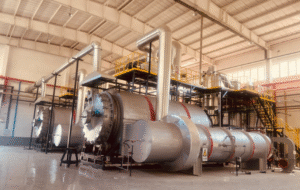
Biomass Pyrolysis machine

Practical Buying Checklist — What to Ask Before You Buy

In making choices, consumers should consider the following:

What type of biomass am I working with currently and next year?

Which products am I looking to sell or consume: charcoal, biochar, oil, or thermal energy?

What capacity do I require each day or month?

What emission standards and licenses exist locally?

How user-friendly is the process for operation and maintenance?

Does the company offer any training sessions or manuals?

Which components need frequent replacement and how quickly are replacements available?

How is the company involved during the installation and commissioning stages?

What will be the yield produced by each ton of input material and how long before breaking even?

Are future upgrades or expansion possible?

Pyrolysis Unit ensures that all of these concerns are addressed. We conduct feedstock testing, forecast yields, and outline installation procedures.

Final Thoughts & Outlook

The demand for the carbonization furnaces is excellent. It can be used by farmers, the wood industry, waste disposal, and energy users. The most profitable venture is selecting the right furnace for your business.

The Pyrolysis Unit Company is specialized in manufacturing carbonization furnaces according to the buyer’s requirements. Our concern is to ensure maximum productivity, minimum operational costs, safety, and local after-sales services in order to provide a buyer with the maximum profit from his investment.

Are you thinking of various types of carbonization furnaces? Begin with the analysis of your feedstock and then apply an ROI calculator. Enquire concerning the maintenance and spare parts of the machine along with after-sales services. Should you search for a manufacturer who will design a furnace that will satisfy your needs and provide the fastest return on investment, it is Pyrolysis Unit.


    Scroll to Top