
Table of Contents How Much Does It Cost to Start
As you explore the field of waste recycling, chances are you have come across the term “pyrolysis” more than once. It may seem daunting, but the gist of it is simply cooking garbage – think of used tires and plastics – without any oxygen until it becomes crude oil. It’s an awesome method that will help you save the world and earn your keep along the way.
However, there is one major catch you must be aware of – how much would such equipment set you back?
There are countless sources online claiming they could supply you with a machine at a reasonable price, yet none of them are willing to give you the exact figures. This is where our article comes into play.
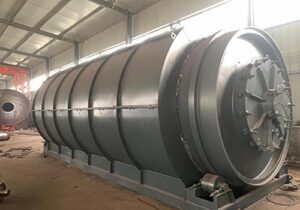
The single most impactful variable influencing the price is the kind of machine. You will essentially be choosing between batch or continuous processing machines.
Batch Machines (Cheap Option)
Imagine a big oven where you pour your tires or plastics, seal the oven, and let it process. Once it is finished processing, it needs to be opened, cleaned, and loaded again to begin another cycle.
Advantages: It is considerably cheaper than the others. Repairing it in case it malfunctions will be easier.
Disadvantages: More workers will be required to load and unload it. The cooling period after each processing cycle will make it slower.
Impact on Cost: This is the reason behind why some machines cost only $60,000. This will be because of the requirement for manual labor and time.
Continuous Machines (Expensive Option)
Imagine a conveyor belt-type oven found in pizza joints. The conveyor moves waste materials continuously while the machine pours oil continuously until it is processed.
Advantages: The process is highly efficient. Fewer workers are needed. Can be run continuously for weeks without needing to stop.
Disadvantages: Very costly. Malfunctioning in a single unit can halt the entire process line.
Impact on Cost: The automation, efficiency, and engineering of this machine push its cost to upwards of $300,000.
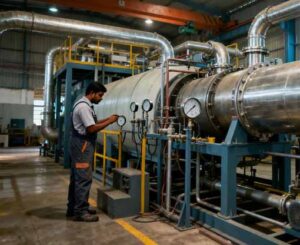
In the context of pyrolysis, “capacity” refers to the amount of waste that the machine can process per day.
If you are new to this business, then your first choice should be either 6 tons or 10 tons. The 10-ton batch machine is considered industry standard for novices because it provides the right balance between cost and capacity. Such a unit may cost somewhere between $70,000 and $90,000.
Nonetheless, if you have a deal with a municipality to clean up their landfill site, then 10-ton batch machine is definitely not enough for the job; you will require a 50-ton continuous unit. Because the steel reactor is big and the cooling equipment required to operate such a machine is massive, the price would triple in comparison to the price of 10-ton batch unit.
The Hidden Costs of Buying (Shipping & Installation)
This is a common pitfall of inexperienced buyers. When making your budget, you factor in the cost of the unit itself ($80,000), but you fail to consider shipping and installation costs.
Remember, you are purchasing not a toaster, but 40 tons of steel.
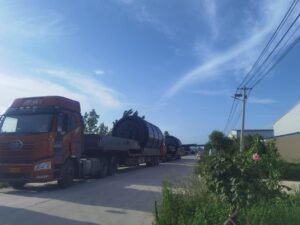
Shipping: In order to transport a standard machine, you will require 2 to 3 shipping crates. Shipping prices may vary from day to day, but you will definitely spend something like $5,000 to $10,000 to transport the equipment to the nearest port. Then you will still need to use some trucks to deliver the machine to your land.
Import Duties and Taxes: Depending on the country that you are dealing with, you might face some very unpleasant import taxes. It could range from mere 5% in some countries to whopping 30% in others. Please make sure to check this information before purchasing the machine.
Installation: This machine can not be simply plugged to the nearest wall socket. The construction of the concrete base, shed/roof, water tanks, and electricity supply line is required.
“Engineer fee”: Most companies have an engineer on hand, who will come to you, assist in the installation process. This engineer’s plane ticket, visa, accommodation cost and daily rate ($100/day) have to be paid by you.
Reality Check: If you pay $80,000 for the machine, you should have **$120,000** on your bank account to fully install and operate the system.
OPEX: Operating Expences (Running the Beast)
Labor: Even a fully automatic machine needs people. You need someone monitoring the pressure gauges, someone moving the raw materials, and someone moving the oil. For a batch plant, you might need 3 or 4 people per shift.
Energy: The machine needs heat. Usually, you can use the gas produced by the machine (syngas) to heat the reactor, which saves money. But you still need electricity to run the motors, pumps, and shredders. A standard plant might use $30 to $50 of electricity a day.
Maintenance: Things will break. Seals wear out, pipes get clogged, and pumps fail. You should set aside 3% to 5% of the machine’s cost every year for repairs.
But why do you need all these expenses? That is because the products that come out from this device are profitable for sale.
Consider an example of an average production capacity of a Tire Pyrolysis Plant with an output of 10 tons per day:
Raw Material: 10 tons of waste tires (they are usually free or cheap to buy).
Production Output:
4.5 tons of Fuel Oil: They are sold to factories, glassworks or boiler houses.
3 tons of Carbon Black: They can be used to produce building bricks or be added into rubber products.
1.5 tons of Steel wire: Sold to scrap dealers.
If you work productively, earnings on oil production are sufficient to pay for operational expenses. While carbon black and steel provide pure profits.
It takes only 6–12 months for most successful plant owners to receive back all their first investments. But remember, the profitability of this type of business is fully dependent on the price of oil in your region. The higher the oil cost, the faster you earn money.
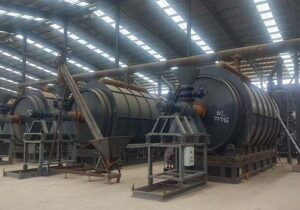

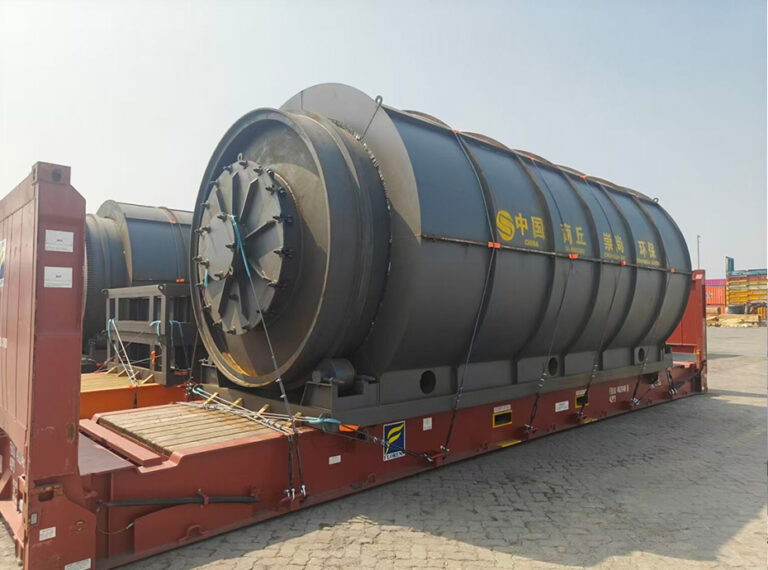
Table of Contents How Much Does It Cost to Start
Table of Contents 3 Types of Pyrolysis Furnace Insulation Shells
Table of Contents The Charcoal Making Process, Step by Step: