Why Is Pyrolysis Not Widely Used
It may seem unbelievable, but imagine that scientists can take all that junk from a dump yard and convert it back to oil or fuel by simply exposing it to heat. Indeed, this technology exists; it is called pyrolysis.
This method is very similar to cooking, but instead of using water or any other liquid, it applies heat in the absence of oxygen. When exposed to extremely high temperature, organic compounds decompose to form simpler compounds in gaseous, liquid, or solid states. In such a way, one obtains char, gases, and oil.
Thus, knowing about the existence of a technology that allows transforming waste materials into useful products, the question arises – why are there no plants for waste transformation in every city? Is it reasonable to keep throwing plastic in dumps and landfills? There should be some reasons. Let us figure out what makes pyrolysis so difficult.
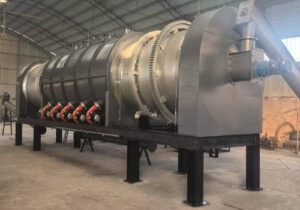
1. It Costs a Lot of Money
There are numerous reasons why these plants are not ubiquitous yet. However, the most important of all is associated with the initial investment necessary for its construction. Pyrolysis plants’ costs exceed millions, even billions, of dollars due to the specific nature of these machines. First, there is a need for special reactors able to resist the extremely high temperatures during decomposition. Besides, safety measures are needed in order to prevent leaking of hazardous materials. Another aspect involves post-processing of liquid oil and gas extracted from the waste.
Nevertheless, the expenses do not end at this point. The operation of a pyrolysis plant requires a certain amount of money as well.
Expenses on Energy: In order to heat the waste, temperatures exceeding 400°C (750°F) are used. As a result, significant amounts of additional energy may be needed; sometimes almost as much as is obtained.
Maintenance Costs: As mentioned above, decomposition processes generate lots of liquid and gas. Due to this, the machines suffer wear and tear quite frequently.
Potential investors are interested in receiving profits. It is easier and more beneficial financially to dispose of the garbage in a landfill than invest in the functioning of such plants.
2. Trash is Messy and Hard to Sort
However, for a proper function of the pyrolysis reactor, there is an important requirement for a steady input of the right kinds of trash. The device works best on clean, dry, and particular plastics (such as polyethylene milk bottles or polyvinyl chloride pipes).
The issue is that municipal solid waste (MSW) does not have that consistency.
Mixtures: Your household waste has everything from organic remains to paper and glass to metals to no less than 10 kinds of plastic in one container.
Contamination: A dirty yogurt cup or a shampoo bottle with metallic springs can affect the entire operation. Moisture produced by food waste cools down the machine; metals cause problems with the grinding machine.
Chemicals: Some of the plastics have added chlorine (such as PVC pipes). Adding those into the reactor can produce hazardous acid corroding pipes and producing toxic vapors.
Therefore, sorting and cleaning must occur prior to processing in the pyrolysis reactor, and that is another time-consuming and expensive stage. An inconsistent feedstock results in poor-quality fuel.
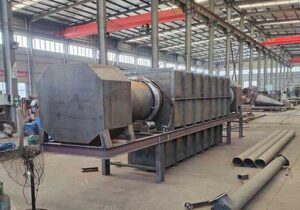
3. The End Product Isn't Always "Ready to Use"
Whenever there’s mention of the process of pyrolysis, there seems to be an implication that you take plastic at one end of a machine, and then you get gasoline-like fuels out of the other. However, it isn’t quite as simple as that.
The crude oil produced from a typical pyrolysis facility is generally unrefined, contaminated, and unstable. It has a foul odor and could even contain water or wax, which means you can’t just dump it straight into your car’s fuel tank.
Need For Refinement: To turn that oil into something useful, you need to refine it, much like crude oil extracted from the earth. More machines and cash are required for this.
Low-Grade Product: Due to the low-grade nature of the product, it commands a low price on the market. It may even have to be sold as heavy fuel oil for marine vessels and factories, which makes less money than diesel and gasoline would.
The second by-product of the process is “char.” Although companies try to market their products under the name “carbon black,” it turns out that char obtained from a mixture of plastic cannot be used as such, due to contamination.
4. Competition with Cheap Fossil Fuels
However, pyrolysis attempts to fight its way through a marketplace of behemoths – oil and gas corporations.
Drilling of crude oil and natural gas was always quite cheap until recent years. The price of crude oil determines whether people will be willing to purchase expensive “plastic oil” derived from pyrolysis. Would you prefer an inexpensive product or one that is more elaborate?
Such economic swings pose significant threats to companies. If they invest in pyrolysis technology in periods of higher oil prices, they can become bankrupt once prices drop the next year.
Takeaway: Pyrolysis must exist within the rules of the free market. Without intervention from the state via financial support for producers, it will find it difficult to compete with lower-priced sources of energy and landfills.
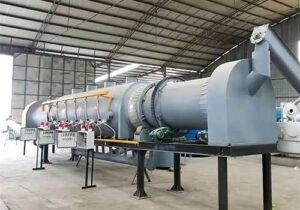
5. Environmental Worries and Rules
It seems like environmental organizations should embrace pyrolysis since it removes plastic from the environment. However, many environmentalists remain either cautious or hostile to this process.
The reasons include:
Underground Burning: According to critics, pyrolysis is a sophisticated form of burning waste. When there is gas leakage or poor handling of the carbonized material, toxic emissions could result.
Contribution to Global Warming: Assuming the oil generated by the process is further refined into fuel, burning this product will contribute to CO2 emissions. Critics contend that it would be better to concentrate on reducing the creation of plastics than on burning them.
Chemical Additives: Plastics contain chemical substances such as dyes and flame retardants. While pyrolysis eliminates them, it does not destroy the pollutants. Instead, it transforms them into the oil and the gases emitted during processing.
These are some of the challenges that hinder the development of pyrolysis facilities. For instance, governments find it difficult to classify such plants. Should they consider them recycling centers or incinerators?
Should governments classify pyrolysis plants as incinerators, they must comply with stringent air quality regulations. This increases the cost of setting up pyrolysis facilities, thus discouraging potential investors due to regulatory uncertainties.
6. The Logistics Challenge
So let us discuss logistics for transporting the garbage. Plastics are light but take up a lot of volume. Picture a truck loaded with empty water bottles—most of it is empty space!
Moving that airy trash from far-off places involves expensive fuel and labor expenses. This leads to geographical difficulties:
Large Plants: In order to turn a profit, you need to build an enormous, constant-flow pyrolysis facility. Such large-scale facilities need a huge influx of garbage, which means importing it from several hundred miles away, thus making it unprofitable.
Small Plants: Small-scale production is easier to build nearer the source of garbage but is less productive than large-scale production, and the price per gallon of oil produced is higher.
Finding a perfect location for a production plant is rather problematic since it has to be located close to garbage and far from populated areas.
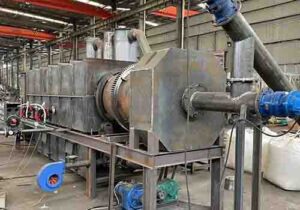
7. Technological Maturity
Even though pyrolysis has been around for many years as a scientific process, applying it at industrial scales to deal with mixed plastics remains fairly new and we’re still in a ‘trial and error’ period.
A lot of organizations have made grand claims about having developed groundbreaking technology, but failed to deliver in a few years’ time due to not being able to reproduce consistent results.
Clogging: The melted plastic is rather sticky, hence prone to clog pipes and heat exchangers.
Heat Transfer: Plastic is a poor heat conductor (an insulator). Uniformly heating the giant tank full of melted plastic is extremely difficult.
The technology is not ready until it gets ‘boring’, meaning working flawlessly all day every day without any failure during months and even years.
8. What Does the Future Hold?
But does that mean that pyrolysis is a thing of the past? Not necessarily. The urge to find a solution to the problem is constantly growing.
For pyrolysis to gain widespread acceptance, the following steps should be taken:
Improved Sorting: As technology advances in terms of sorting garbage via AI and robotics, there is a chance to produce the feedstock required by the process of pyrolysis.
Chemical Recycling Trend: The trend now seems to be moving away from using plastic as fuel (which is burned in a process called pyrolysis) towards recycling old plastic into new plastic. That is why many large corporations are showing great interest in chemical recycling.
Government Support: If the government imposes taxes or a landfill ban on new plastic, the situation will start looking more economically feasible.
Modular Plant Designs: Engineers have already started designing modular pyrolysis plants to reduce the costs related to transportation.
9. Summary
The idea behind pyrolysis is absolutely amazing, converting waste products back into basic components. But, unfortunately, the transition from an ingenious idea to a money-making venture is a very long way indeed.
Presently, such a venture is unprofitable due to being more costly and more complicated than landfills and cheap oil. Due to all the problems associated with waste material, legislation, and expenses related to the operation of a pyrolysis plant, it remains a marginal industry.
Yet, with landfills running out of room and the search for new approaches to solving the problem of plastics, technological advancements will most likely come. While it probably won’t be a miracle cure for our environmental issues, it might prove itself useful.