

Table of Contents How Much Does It Cost to Start
The world tire market is under tremendous pressure since recycling tires is an extremely complicated task. Over a billion tires become waste annually due to being manufactured out of tough cross-linked rubber. In past years, used tires were buried or burnt, which caused soil contamination and wastage of useful materials present in the waste. Pyrolysis technology, a chemical process of splitting materials using high temperatures, appears to be a better alternative to those traditional recycling techniques.
In the machine, tires are heated at the temperature of 450°and 700°in an environment without oxygen presence. The lack of oxygen prevents tire burning and causes separation of rubber components. As a result, the solid residue left after processing contains only carbon black and minerals, while liquid oil and gas form from other substances.
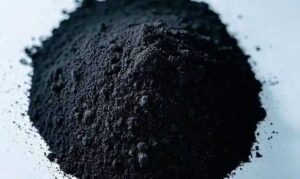
Such residue becomes the source for production of recovered carbon black, or rCB, which is widely utilized for making new tires, plastics, and printing inks. The properties of such residue determine whether manufacturing companies will consider it for production. It should meet the requirements for being pure and durable enough to substitute virgin carbon black.
Product Fraction | Average Yield (wt%) | Industrial Application | Key Quality Indicators |
Recovered Carbon Black | 30% – 40% | Rubber filler, pigment | Ash content, surface area, structure |
Tire Pyrolysis Oil (TPO) | 40% – 50% | Fuel, chemical feedstock | Flash point, BMCI, sulfur content |
Syngas | 10% – 20% | Internal process heat | Calorific value, $H_2$ content |
Steel Wire | 10% – 15% | Metal recycling | Purity, residue level |
Different design and operational characteristics of pyrolysis reactors lead to different types of carbon black produced by them. In some reactors, a slow heating process is used, in other – ultrafast heating, or even microwave technology for the separation of rubber compounds. At low temperatures, oil residues remain on the surface of carbon black, making it odoriferous and inefficient when mixed with rubber.
However, at optimal temperatures and complete gasification, a high degree of activation of the surface of carbon black occurs. Contemporary systems employ multistage furnaces that stir tire parts and ensure thorough heating of all particles. It prevents any leakage and allows producing carbon black that meets high standards of consistency. Such products are required by large manufacturers, such as Michelin or Bridgestone.
Carbon black quality depends on the input materials, following the rule known as “in equals out”. While different tires have similar appearances, their composition varies significantly, as they are designed for different purposes. Tires for compact cars are designed to be fuel-efficient and maintain excellent road traction under wet conditions, thus containing plenty of synthetic rubber and silica filler.
During the process of pyrolysis, silica is separated and forms a part of the ashes contained in the output carbon black. Tires used for trucks require extra durability and cooling capacity during operation, thus using plenty of natural rubber and traditional carbon black as fillers.
Therefore, the recycled carbon black from trucks is much cleaner compared to that from passenger tires due to fewer ashes. Studies suggest that truck-based carbon black has nearly identical characteristics to the commonly used N550 virgin carbon black. On the contrary, carbon black produced by processing passenger tires has excessive amounts of ashes that complicate its practical application.
Feedstock Component | Truck Tires (wt%) | Passenger Car Tires (wt%) | Statistical Difference |
Volatile Matter | 64.7% | 62.5% | Significant |
Fixed Carbon | 28.2% | 24.5% | Significant |
Ash Content | 7.1% | 13.1% | Significant |
Potential rCB Ash | 20.1% | 34.8% | Very High |
Due to the above mentioned factors, tire recycling firms should exercise extreme caution when collecting their input tires. Any mixing would affect the characteristics of the carbon black produced on a daily basis, thus making the products inconsistent with the requirements of industrial facilities.
Currently, some governments have begun introducing Extended Producer Responsibility regulations, allowing recycler firms to gain consistent sources of already sorted tires. Such sorting is an opportunity to develop various grades of carbon black similar to that which is produced by the virgin carbon black industry.
Thus, with the use of truck tires, a recycler can produce a premium product with high mechanical properties, whereas with car tires one can produce standard carbon black for floor mats and plastic bags. It is important that such sorting of tire inputs serves as a foundation stone to transform the industry from waste management into high technology chemical processing.
In assessing the quality of RCB, three parameters are mainly considered: ash content, surface area, and structure. Ash represents the combination of zinc oxide and silica present in the initial tire. In contrast to virgin carbon black, the ash in RCB accounts for 15%-30%. Initially, the industry considered the necessity to extract all of the ash; however, they later discovered that it was economically inefficient.
It was found that reaching below 1% ash can cause the costs to rise by up to 60%. Most manufacturers seek to reduce the ash level down to 8%-15%; at that point, it remains applicable for production without affecting the product price negatively.
Another crucial factor in evaluating the quality of the material is the surface area. This parameter helps calculate the amount of carbon particles available to interact with the rubber molecules and create their strength. During the heating stage, there occurs a formation of coke, which is a carbon residue layer covering the surface of the material and clogging its pores.
Should the pyrolysis equipment not work flawlessly, such residues will become an adhesive that will stick together the carbon grains into solid agglomerations that would fail to blend into fresh rubber. The third parameter of consideration is the structure, which refers to how the miniscule carbon spheres are grouped together. It is evaluated based on the Oil Absorption Number (OAN). A low level of structure results in rubber that is soft and flimsy, while an optimal level ensures rubber that is strong and durable.
Quality Parameter | Virgin Carbon Black (vCB) | Recovered Carbon Black (rCB) | Impact on Performance |
Carbon Content | 98% – 99% | 75% – 85% | Purity and reinforcement |
Ash Content | < 0.5% | 15% – 25% | Can dilute strength |
Surface Area (BET) | 30 – 120 $m^2/g$ | 40 – 90 $m^2/g$ | Particle-polymer interaction |
Volatile Matter | < 1.5% | 2% – 5% | Affects cure rate and odor |
In order to unify all parties in terminology and approaches to testing and grading of the material, a special Committee on RCB named ASTM Committee D36 was established by ASTM International in 2017.
Prior to the establishment of the Committee, all recyclers used different criteria for evaluating their product. This situation led to a major problem since the producers of tires could hardly be assured that their raw material met the necessary standards. Nowadays, however, there exist standardized testing methods such as ASTM D8474, which employs thermogravimetric analysis (TGA) technique to evaluate the weight of the carbon in specific temperatures.
Moreover, the standard grading system has been developed that includes grades from N100 (best possible quality) to N900 (most basic one). Such rules enable producers to show that their product is both safe and stable. These features are critical for persuading large corporations to abandon fossil fuels.
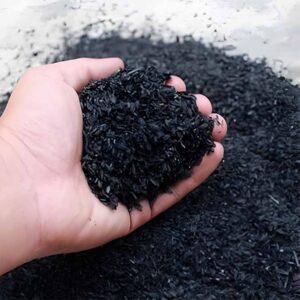
However, the carbon black emerging from the pyrolysis unit is often a relatively crude material characterized by its coarseness and dirty appearance. In order to convert this substance into a valuable product, the post-processing operations involving a few critical stages must be performed. Firstly, milling is required, during which the product is ground to a fine powder consisting of particles smaller than 10 microns (less than a tenth of the thickness of human hair).
These particles are responsible for such undesirable qualities of the product as cracking when subjected to stretching. Special mills utilizing jetting air or liquid streams are used for this process. As a result, the carbon black becomes extremely dust-prone and poses a potential threat to health, and thus pelletizing is used to obtain small particles known as pellets. Not only do pellets reduce the mess in the factory but also ease the shipment process of the product.
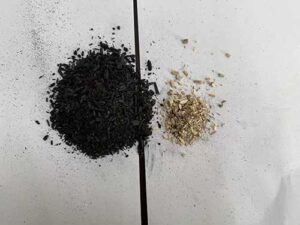
It happens sometimes that, apart from pelletizing, de-ashing is necessary due to the presence of excessive mineral content. This stage of processing is also known as demineralization and implies dissolving impurities in certain chemicals, such as hydrochloric acid.
Another benefit of this cleaning step is that it can recover valuable metals like zinc, which can be sold for extra money. However, these chemical treatments also use a lot of water and energy, so companies have to decide if the higher quality is worth the extra cost and environmental impact. The goal is to find the right balance between making a great product and keeping the process as green as possible.
Property | Unit | Virgin N550 | Truck-Derived rCB | Car-Derived rCB |
Hardness | Shore A | 80 | 78 | 76 |
Tensile Strength | MPa | 21.6 | 21.3 | 17.1 |
Elongation | % | 252 | 247 | 296 |
100% Modulus | MPa | 8.38 | 8.51 | 5.08 |
The most fascinating thing about rCB is its positive impact on the environment. The creation of raw carbon black is highly polluting since it needs to burn massive amounts of oil at high temperatures; therefore, 2.5 to 3 tons of CO2 are emitted when producing one ton of carbon. On the other hand, creating rCB is far less energy-intensive and involves only 20% of the emissions. This is a critical point since corporations strive to decrease their carbon footprint in order to prevent global warming.
Moreover, the utilization of rCB prevents tires from ending up in landfills and being burned in the air, which leads to harmful fumes and oil infiltration into the soil. Each kilogram of rCB saves enough energy to operate a family home for an entire day; hence, it is one of the most prominent examples of circular economies.
Reclaimed carbon black is now incorporated into various goods available on the market. Even though it is primarily utilized in tires as sidewall and inner components, rCB also plays a crucial role in the plastic industry.
In addition, the product can be used for the production of paints and coating. Moreover, in an incredible piece of science, researchers have also discovered that it can be employed to produce parts for solar energy collectors. The resulting devices were no less effective than the traditional solar cells produced from costly materials.
The increased number of producers is estimated to lead to the demand increasing by more than 12% annually up to the value of billions of dollars by 2032. The future of carbon black will include the creation of tires without any need for oil extraction from nature. Currently, several organizations have taken steps towards the production of sustainable carbon black. It implies that oil obtained during pyrolysis is utilized as the energy source of a traditional carbon black production facility. As a result, it is possible to obtain a completely identical product, which is produced from recycled tires only.
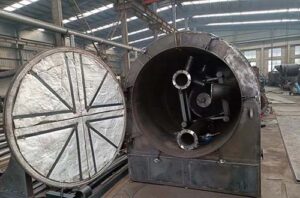
rCB has shown that it is much more than waste, but rather an important material of the 21st century. With the help of numerous researchers and developers, it has been possible to tackle many of the early challenges relating to consistency and quality.
Thanks to modern standards of ASTM and cleaning, today, it can be safely recommended to companies interested in being greener. Even though integration with the most complex materials, such as high-end tires, is still a challenging process, one cannot deny how great the results have been already achieved.
In the wake of emerging factories and advancing technologies, recovered carbon black will become crucial for achieving energy independence and solving the problem of millions of tons of tires annually sent to landfills. Thanks to the efforts of innovative thinkers, the concept of circularity is about to become a reality, which would not have been possible without science and heat.

Table of Contents How Much Does It Cost to Start
Table of Contents 3 Types of Pyrolysis Furnace Insulation Shells
Table of Contents The Charcoal Making Process, Step by Step: