
Top Manufacturer of Pyrolysis Machines/Units

Namibia Distillation and Filtration Equipment Parts

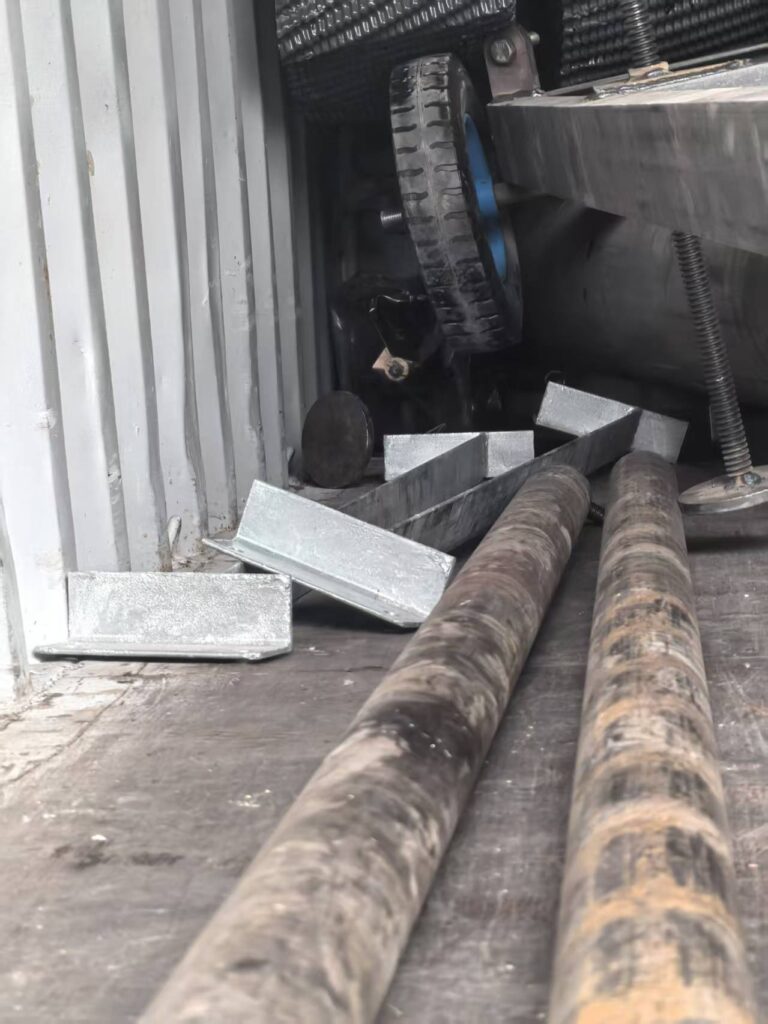
April 2024, Namibia Waste Engine Oil Distillation and Filtration Equipment Parts

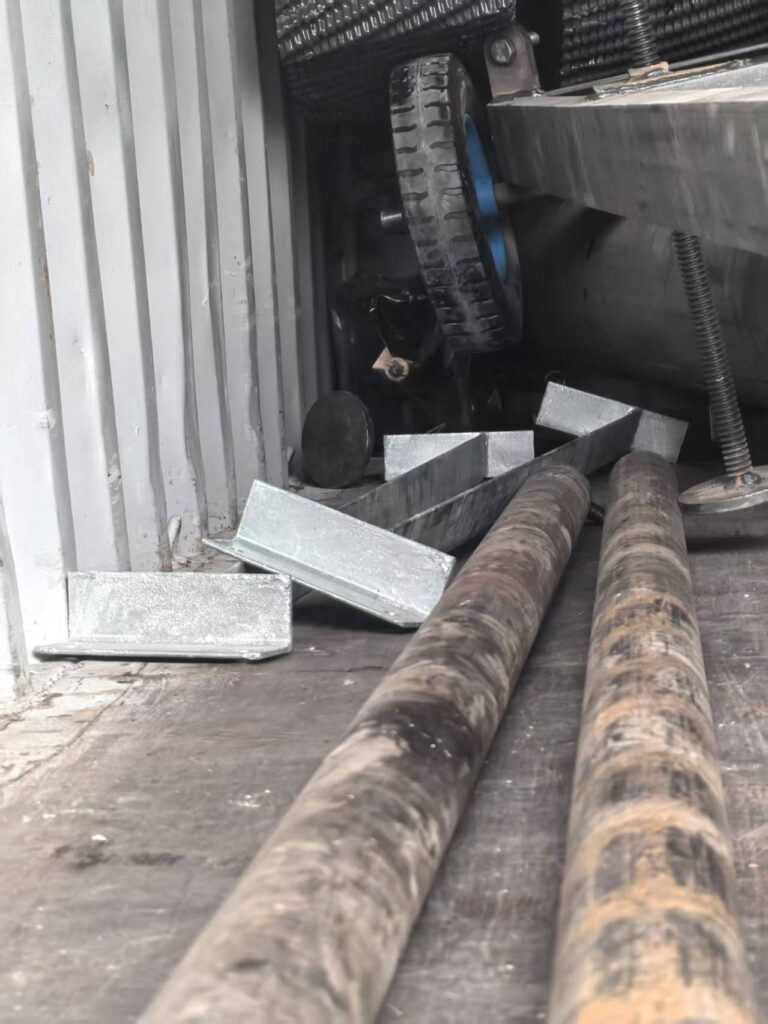
Parts for waste oil distillation and filtration equipment in Namibia, April 2024-3

Project background

A Namibian industrial waste management company contracted us to supply parts and design an integrated processing line to (a) convert waste tyres into pyrolysis oil and by-products, and (b) distill & filter waste engine oil into reusable fuel/base oil fractions. The client’s goals were to reduce landfill volume, generate local fuel supply, recover saleable commodities (carbon black, steel), meet local emissions standards, and deliver a commercially sustainable plant that can be operated and maintained with local staff.

Professional Solution Delivered

We delivered a modular, skid-mounted solution combining a medium-scale tyre-pyrolysis train with a downstream distillation & filtration package engineered specifically for the Namibian context (limited utilities, remote logistics, emphasis on robustness).

Key technical elements:

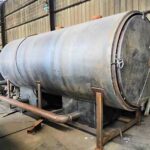
  • Pyrolysis module (mechanical feeders → reactor → condenser system): a continuous-feed rotary reactor sized for 10,000 tonnes/year feedstock. Reactor internals were configured for stable residence time and uniform heat transfer; a gas-recirculation subsystem recovers non-condensable gas to supplement heating fuel and minimize external fuel demand.

  • Condensation & primary separation: a multi-stage condenser train with knock-out drums and an entrainment separator to maximize liquid recovery and minimize aerosols entering downstream units.

  • Distillation & filtration skid for engine oil / pyrolysis oil upgrading: a vacuum fractional distillation column sized to refine both low-grade used engine oil and the heavier fractions of pyrolysis oil. The column is paired with an in-line coalescer, multi-stage centrifugal filtration (10 μm → 1 μm → activated carbon polishing) and an electrostatic water separator to meet product spec and reduce corrosive contaminants.

  • Emission control and safety: a thermic oxidizer for tail gas, baghouse for particulate capture, and a compact SCR-ready exhaust pathway to meet local air quality requirements. Safety interlocks and flame detection were integrated with a PLC/HMI for local operator use.

  • Utility & maintenance design: low-technology maintenance points (easily swappable catalyst/filters), locally-sourced spare parts list, and remote diagnostics provisioning. We included operator training (4 weeks on site), a 12-month spare-parts kit and a three-month commissioning & optimization engagement.

Operational rationale: using pyrolysis for tyres produces oil that is upgraded in the same plant’s distillation & filtration package; this creates a circular feedstock flow, reduces logistics, and increases overall product yield. The plant design emphasizes maintainability, modular replacement of wear parts, and staged scaling so the client can add an extra pyrolysis train without redesigning the distillation skid.

Project Results

Parts for waste oil distillation and filtration equipment in Namibia, April 2024-3
PyrolysisUnit ISO CE Approved

ISO CE Approved

The equipment quality has passed IAF, CNAS, ISO, CE certifications, Certified by international professional organizations, the equipment is safe and reliable.

PyrolysisUnit AAA Credit Audited Enterprise

AAA Credit Audited Enterprise

One of the top refining equipment manufacturers in China, The government Audited Superb as AAA credit company (top level).

PyrolysisUnit Solutions for Pyrolysis And Distillation

Solutions for Pyrolysis And Distillation

We will provide you with the latest industry solutions, and provide you with a one-year after-sales warranty to ensure stable operation of the equipment.

PyrolysisUnit 24-hour service

24-hour service

We have professional engineers to solve various problems for you, including equipment, process, material problems, etc.

PyrolysisUnit Professional R&D team

Professional R&D team

We have obtained a number of utility model patents, including distillation production equipment and pyrolysis module equipment.

PyrolysisUnit Fast Delivery

Fast Delivery

We have sufficient stock of pyrolysis and distillation equipment to ensure efficient logistics and fast delivery.

  •  

Revenue calculation (yearly):

  1. Fuel (from pyrolysis-derived fuel):

    • 2,856 t × $600 / t =

    • 2,856 × 600 = (2,856 × 6) × 100 = 17,136 × 100 = $1,713,600.

  2. Carbon black (assumed 20% of 10,000 t tyres = 2,000 t):

    • 2,000 t × $200 / t = $400,000.

  3. Steel scrap (assumed 10% of tyres = 1,000 t):

    • 1,000 t × $150 / t = $150,000.

  4. Distilled engine oil product (850 t × $800 / t):

    • 850 × 800 = (850 × 8) × 100 = 6,800 × 100 = $680,000.

  5. Total annual revenue = $1,713,600 + $400,000 + $150,000 + $680,000 =

    • $1,713,600 + $400,000 = $2,113,600

    • $2,113,600 + $150,000 = $2,263,600

    • $2,263,600 + $680,000 = $2,943,600.

  6. Annual gross profit (before tax, ignoring depreciation):

    • Revenue $2,943,600 − OPEX $600,000 = $2,343,600.

  7. Return on Investment (simple):

    • ROI = Annual gross profit ÷ Total investment

    • ROI = $2,343,600 ÷ $2,000,000 = 1.1718 → 117.18% per year.

      • Calculation: 2,343,600 ÷ 2,000,000 = 1.1718 → ×100 = 117.18%.

  8. Payback period (simple):

    • Payback = Total investment ÷ Annual gross profit

    • Payback = $2,000,000 ÷ $2,343,600 = 0.853 years ≈ 0.85 years ≈ 10.2 months.

      • Calculation: 2,000,000 ÷ 2,343,600 ≈ 0.853 → 0.853 × 12 = 10.236 months ≈ 10.2 months.

Notes on the figures: these numbers are illustrative, conservative in product pricing but optimistic in yield and marketability of by-products. Real plant economics depend on actual feedstock sourcing terms (tipping fees vs. purchase), local fuel pricing, taxes/subsidies, product specifications, and capital financing costs. We recommend an on-site material balance and local market study before final investment.

Other Cases

Conclusion

The delivered solution combined robust pyrolysis technology with an adaptable distillation & filtration package to convert local waste tyres and used engine oil into saleable fuel and commodities. For the modeled 10,000 t/year tyre feed (plus 1,000 t/year engine oil), the plant produces ~4,200 t pyrolysis oil (→ ~2,856 t upgraded fuel) and generates significant by-product revenue from carbon black and steel, producing an illustrative annual gross profit that breaks even on the assumed $2M investment in under a year. The design prioritizes emissions control, maintainability, local operability, and staged expansion. We advise the client to proceed with a detailed feasibility (confirm local product prices, permitting timelines, utilities, and logistics) and to allocate a modest contingency to account for feedstock variability and market movement.

If you’d like, I can convert this into a printable one-page PDF for investor meetings, or run the same calculations with different capacity, yield or price assumptions — tell me the alternative figures and I’ll recompute the step-by-step numbers.

Scroll to Top