Waste Tire Pyrolysis Plants in Kuwait: What Plant Owners Need to Know
Why Kuwait is a special case
If you run a pyrolysis or oil refining plant, Kuwait is not a normal tire market. It is a cleanup market. The country has dealt with one of the world’s largest tire dumps in Sulaibiya, and the site has been tied to repeated fires and heavy smoke. Reuters, reported through the World Economic Forum, said more than 42 million tires were moved from the desert site to Al-Salmi, where recycling work began.
That matters because the business case is not only about selling oil. It is also about solving a storage, fire, and logistics problem. Kuwait’s latest recycling push also says the country already has three recycling facilities, but officials want more capacity because annual waste tire generation can reach about two million tires.
The real problem
What happens when tires sit in the open for years?
They become a fire load. They also become a slow-moving environmental problem. The Kuwait coverage says tire fires in 2012 and 2020 released toxic smoke and harmful compounds into the air, including particulate matter, volatile organic compounds, and polycyclic aromatic hydrocarbons.
For a plant owner, that means your biggest risk is not only low yield. It is poor feed handling, weak storage control, and weak fire control.
How a Kuwait waste tire pyrolysis plant solves the problem
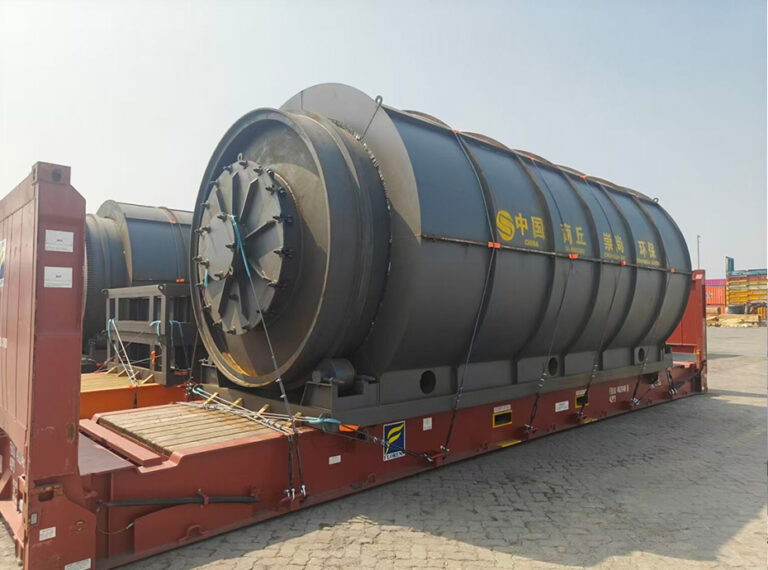
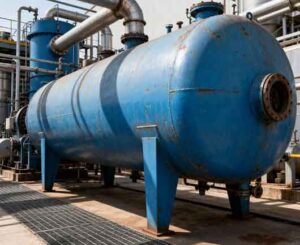
A tire pyrolysis plant uses heat without oxygen to break tires into smaller parts. In the Kuwait-focused industry coverage, the process is described as cracking waste tires into fuel oil, carbon black, and combustible gas. Reuters also reported that the Al-Salmi recycling flow includes sorting and shredding before the material is turned into consumer products or sent into pyrolysis.
Simple process flow
Collect and sort tires
Remove obvious contamination
Shred or pre-cut the tires
Feed them into the reactor
Condense vapors into oil
Recover carbon black and steel
Use syngas to support reactor heat
That flow is important because Kuwait’s tire stockpile is large, so the plant must run with stable feed prep and predictable output. One Reuters-reported plant in Kuwait said it could recycle up to 3 million tires a year.
What outputs matter most to you?
Output | What it is | Practical use |
Pyrolysis oil / fuel oil | Condensed liquid from the reactor | Industrial furnaces, cement plants, steel plants, brick plants, glass plants |
Carbon black | Solid carbon-rich fraction | Fuel substitute or further refining stream |
Syngas | Non-condensable gas | Reactor heating and lower external fuel use |
Steel wire | Separated metal | Scrap recovery and resale |
The Kuwait industry article says the fuel oil can have a calorific value of 10592.48 Kcal/kg, and carbon black is described as having a calorific value of about 7000 Kcal/kg. It also says syngas can be used to heat the reactor, which can reduce operating fuel use.
That is why owners often compare waste tire pyrolysis plants in Kuwait with direct burning or simple shredding. Pyrolysis gives you more than disposal. It gives you recoverable product streams.
Timeline: how Kuwait moved from tire graveyard to recycling project
Time | What happened | Why it matters |
2012 | Major tire fire reported in Sulaibiya | Showed the risk of open stockpiles |
2020 | Another major fire affected a large area of the dump | Increased pressure for cleanup |
Sep. 2021 | Reuters reported all tires had been moved to Al-Salmi and recycling had started | Marked the shift from storage to processing |
2025 | Weibold reported Kuwait had three recycling facilities and planned more factories in Salmi | Shows the market is still expanding |
What this means for plant owners
If you already own a pyrolysis or oil refining plant, Kuwait is a market where waste logistics and cleanup policy can be as important as reactor design. The business is stronger when you can answer four questions:
Can you handle dirty, mixed feedstock?
Can you keep the feed dry enough for stable operation?
Can you separate steel, oil, and char cleanly?
Can you prove safe storage and fire control?
I would look at Kuwait projects in two layers:
Layer 1: waste handling
This covers transport, sorting, size reduction, and stockpile control. Reuters’ reporting on Kuwait shows the tire problem is not small and not local. It is a national-scale movement problem.
Layer 2: product recovery
This covers oil quality, carbon black handling, gas reuse, and steel resale. The Kuwait industry coverage makes clear that the plant’s value comes from product streams, not just disposal.
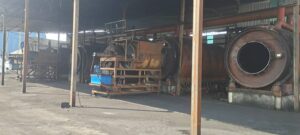
Operator feedback from the field
A Reuters-reported executive from EPSCO said the factory is “helping society” by cleaning old tires and turning them into consumer products. Reuters also reported that the plant was exporting products to nearby Gulf countries and Asia.
That feedback matters because it shows the project is not only environmental. It can also be commercial when product quality and logistics are handled well.
Common mistakes to avoid
The biggest mistakes I see in tire pyrolysis projects are simple, but costly.
- Treating stockpiled tires like clean feedstock
Old tires can carry dirt, moisture, and mixed waste. That hurts heat stability and product quality. Kuwait’s open-dump history makes this risk very real. - Ignoring fire control
The Kuwait site has already suffered major fires and harmful smoke. If your storage yard is weak, your project inherits that same risk. - Focusing only on oil yield
A plant that cannot handle char, steel, or gas safely will struggle even if the oil output looks good on paper. The Kuwait articles repeatedly frame the project as a full recycling system, not a one-product process. - Skipping market checks for oil and carbon black
The output is only useful if you have buyers. Kuwait’s reporting shows the products may go to furnaces, construction uses, and other industrial channels.
Q&A
Q1: Why are waste tire pyrolysis plants important in Kuwait?
Because Kuwait has had a huge tire stockpile problem, with repeated fires and major cleanup efforts. Pyrolysis helps turn that waste into oil, carbon black, gas, and steel instead of leaving it in open storage.
Q2: What products can a tire pyrolysis plant make?
The main outputs are fuel oil, carbon black, syngas, and steel wire. The Kuwait industry article says the gas can also help heat the reactor.
Q3: How big is the Kuwait tire problem?
Reuters reported more than 42 million tires were moved to Al-Salmi, while Weibold reported annual waste tire generation can reach about two million tires.
Q4: What is the main technical risk?
Fire control, feed quality, and product handling. Kuwait’s past fires show why open stockpiles are dangerous, and why good storage and process control matter.
Q5: Is pyrolysis only a disposal method?
No. In Kuwait’s case, it is being used as both a cleanup method and a product-recovery business model.