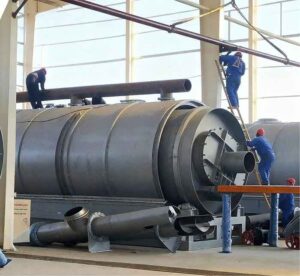

Pyrolysis is a special process that uses intense heat to break down materials, such as plastic waste, in an environment where there is no oxygen. It is important that oxygen is kept out of the system, because if oxygen were present, the materials would simply burn, which is called combustion. Since burning is prevented, the process is instead a thermal conversion technology, meaning heat causes the chemical structure of the material to change. This method has been used for thousands of years to create useful items, like converting wood into charcoal.
When applied to plastics, pyrolysis converts long, complicated plastic chains into smaller, typically more valuable molecules. This transformation is part of what is known as advanced or chemical recycling. The resulting products are fuels and chemical raw materials that can be reused.
The Value of Plastic Pyrolysis
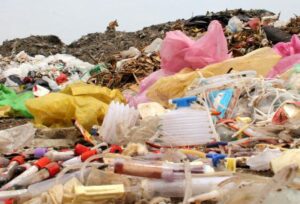
This technology is especially important because it can effectively handle plastic waste that is often too complex, too contaminated, or too mixed for traditional mechanical recycling to process. Traditional recycling usually requires clean, well-sorted plastics, but pyrolysis offers a solution for the difficult material that might otherwise be sent to landfills or disposed of in other ways. By converting this challenging plastic into useful outputs, the process provides an economically sound and environmentally responsible way to manage a large portion of waste.
The main goal of plastic pyrolysis is typically to produce a liquid product commonly known as “pyrolysis oil” or “pyoil”. This oil can then be refined and reused. It is critical to recognize that pyrolysis is fundamentally different from incineration, which burns waste with oxygen for energy. Pyrolysis deliberately works in a sealed, oxygen-free environment to chemically decompose the plastic, producing three distinct streams of material: a liquid oil, a gaseous fuel, and a solid char. This capability to target complex waste streams is the central factor that makes advanced pyrolysis technology necessary for solving modern recycling challenges.
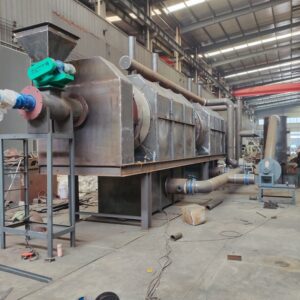
The reactor is the core component where the plastic is chemically broken down. The specific type of reactor chosen is a strategic engineering decision because it determines which products are maximized (oil or char) and how efficiently the material is processed.
Core Industrial Reactor Types
For large-scale, industrial operations, three core reactor designs are predominantly used, each optimized for different processing goals.
Fluidized Bed Reactors: In this design, the solid plastic feedstock particles are held in place by a strong, upward flow of hot gas, typically an inert gas. This causes the particles to behave like a fluid, swirling and mixing intensely, similar to a boiling pot of water. This physical movement ensures that heat transfers extremely rapidly and uniformly to every piece of plastic. Because of this superior heat transfer, the fluidized bed is the industry standard for fast pyrolysis, which is the method designed to produce the maximum amount of liquid pyrolysis oil.
Rotary Kiln Reactors: A rotary kiln is a large, horizontal tube that is typically heated indirectly from the outside. The kiln rotates slowly, tumbling the plastic material inside, much like a large cement mixer. This rotation provides thorough mixing and allows the plastic to remain in the hot zone for a longer time, which is known as a longer residence time. This robustness makes rotary kilns suitable for handling varied or difficult feedstocks, and they are generally used for slow pyrolysis, where the goal is to maximize the production of solid carbon char.
Batch Versus Continuous Operation
The operational strategy—whether the machine runs in batches or continuously—has a massive impact on efficiency, energy consumption, and product quality.
Batch Systems: Batch equipment processes material in distinct cycles: load, heat, cool, and unload. These systems are limited in scale and are better suited for specialized, low-volume production. The repeated cycles of heating and cooling make energy use relatively inefficient, and the changing conditions make it difficult to guarantee a consistent chemical reaction and stable product quality.
Continuous Systems: These plants are designed for large, industrial throughput, processing tons of material per hour. They run non-stop, with constant feeding of plastic and continuous discharge of products. This continuous operation ensures a steady, stable environment for the chemical reactions, which translates directly into higher heat transfer efficiency, fuller use of the energy produced, and a stable, higher-quality final product. The consistency of continuous systems solves a key barrier to industrial adoption: product instability. By guaranteeing reliable product quality, the oil becomes a more dependable raw material for downstream buyers, thereby justifying the higher initial cost of continuous equipment. Continuous operation also results in lower operational and labor costs compared to the manual input needed for batch systems.
The pyrolysis process converts plastic waste into three valuable product streams: a liquid oil, a gaseous fuel, and a solid char. The proportions of these products depend heavily on the temperature used and how quickly the material is heated.
Product 1: Pyrolysis Oil (Pyoil)
Pyoil is the primary liquid product and typically represents the main revenue source for a plastic pyrolysis facility. To maximize the production of this liquid, the process must use fast pyrolysis conditions. This requires maintaining the reactor temperature around 500 °C and applying an extremely high heating rate. Under these optimized conditions, liquid oil yields can reach 60 percent to 70 percent of the total product output.
The highest quality pyoil comes from polyolefins like PE and PP. This high-quality oil can be refined using conventional petroleum refining processes. Once refined, the oil serves as a feedstock for producing new plastics, achieving a quality comparable to materials derived from crude oil. This makes pyoil an essential component of the circular economy, offering a way to create new, high-end applications from previously unusable waste.
Product 2: Syngas (Fuel Gas)
Syngas, or Synthesis Gas, is the gaseous product stream that is non-condensable. It is primarily composed of hydrogen (H2) and carbon monoxide (CO), along with smaller amounts of methane (CH4) and carbon dioxide (CO2).
A significant advantage of pyrolysis is that the syngas can be immediately used as a fuel to power the reactor itself. Combustion of the syngas (and sometimes a portion of the char or oil) provides all the necessary energy to drive the pyrolysis reaction, making the process largely self-sustained. This internal energy generation significantly reduces the operational costs of the plant and improves its overall energy efficiency. Modern pyrolysis plants are engineered to be highly efficient, often generating three to nine times the energy required to run the process.
Product 3: Pyrolysis Char (Solid Carbon)
Char is the solid, carbon-rich residue that remains after the volatile components of the plastic have been driven off by the heat. The amount of char produced is maximized through slow pyrolysis, which uses slower heating rates and longer residence times. Slow pyrolysis can produce substantially more char, sometimes yielding around 50 percent of the total product.
Pyrolysis char is a marketable co-product with several potential uses. Depending on its physical and chemical properties, char can be utilized as:
A chemical adsorbent, useful for cleaning air and water.
A soil modifier for improving contaminated land.
An additive in concrete or other construction materials.
A reducing agent in industrial processes, such as steelmaking.
The decision regarding which output stream to maximize—oil, gas, or char—dictates the choice of reactor technology. If the market requires high-value liquid oil, a fast pyrolysis system, typically using a Fluidized Bed reactor, is necessary. If the goal is maximizing the volume of solid char for environmental or industrial applications, a Rotary Kiln designed for slow pyrolysis is the appropriate technical choice. This technical flexibility allows facilities to align their operation with local market demand.
While the promise of plastic pyrolysis is high, successful industrial operation faces consistent, significant technical and economic challenges. Addressing these issues through rigorous engineering and operational protocols is vital for achieving profitability.
The Problem of Inconsistent Feedstock
Even when facilities sort plastic waste to exclude the major contaminants like PVC, the remaining feedstock still varies greatly in composition. This variability prevents the production of a standard, consistent pyrolysis oil. Refineries that purchase pyoil as a feedstock demand highly consistent quality, and a lack of standardization makes it difficult for pyrolysis facilities to establish stable, long-term supply agreements. Therefore, operations must include rigorous cleaning, sorting, and testing protocols to minimize these variations.
Equipment Damage: Corrosion and Fouling
The two most costly technical challenges in operating a pyrolysis reactor are corrosion and fouling.
Corrosion: As noted, contaminants like chlorine create highly corrosive acids, such as hydrogen chloride, which attack the metal surfaces of the reactor and process piping. This leads to extensive damage, requiring frequent maintenance and the use of expensive, specialized corrosion-resistant materials for construction.
Fouling: This refers to sticky buildup inside the equipment. Metallic contaminants (including sodium, iron, and calcium) that may be present in the waste can lead to heavy fouling on catalysts and other process equipment. Fouling reduces the heat transfer efficiency of the reactor and necessitates costly, unscheduled shutdowns for cleaning and maintenance.
Unreliable equipment causes disruptions in operations, and the resulting downtime imposes significant financial burdens that go beyond the cost of parts. For large, professional pyrolysis facilities, long-term reliability and maximum uptime are far more critical to economic success than small gains in product yield. Therefore, strategic engineering efforts must focus on durable materials, precise feedstock preparation, and advanced monitoring to prevent these failures.
Energy and Capital Requirements
Pyrolysis facilities are inherently energy intensive. Although the process can be made largely self-sustaining by burning the syngas output, the initial construction requires significant capital investment. This high cost is due to the need for complex high-temperature systems and specialized equipment that can manage corrosive materials and challenging fluids. The success of the business model relies heavily on the long-term reliability and energy efficiency of the pyrolysis machines to recover these substantial initial costs.
The field of plastic pyrolysis is rapidly evolving, driven by technological advances and increasing pressure to meet environmental standards. The industry is moving toward smarter, more flexible operational models while grappling with mandatory regulatory compliance.
The Future of Pyrolysis Technology
The market for pyrolysis equipment is shifting toward decentralized and automated solutions.
Modular and Decentralized Units: There is an increasing trend toward deploying mobile and modular pyrolysis units. Modular designs, which have seen a 47% increase in adoption, enable scalable operations that can be implemented across industrial zones or municipalities. This decentralization allows processing to happen closer to the source of the waste, lowering the high costs associated with transporting bulky plastic.
Digitalization and AI: The next major advancements involve integrating digitalization and automation into plant operations. Systems are starting to use sensors to track critical data points like temperature, pressure, and feedstock composition in real time. Artificial Intelligence (AI) and machine learning algorithms are being developed to analyze this data, predict outcomes, and automatically adjust operational settings to optimize efficiency. The adoption of AI-integrated controllers has been shown to increase system efficiency by as much as 17 percent. The use of these advanced controls is critical, as they enable the facility to dynamically adjust to slight changes in feedstock composition, thereby making the complex process reliably compliant and profitable.
Environmental Responsibility and Benefits
Pyrolysis offers significant environmental benefits when compared to traditional waste management methods like landfilling or incineration.
Resource Substitution: A primary environmental advantage is that the pyrolysis oil substitutes for commercial diesel or other fossil fuels. Since the production of commercial diesel has a high environmental impact, using pyoil instead results in a net environmental improvement. Advanced recycling technologies are reported to reduce greenhouse gas emissions by 43 percent compared to incinerating virgin plastic films.
Emissions Management: Despite its benefits, a pyrolysis facility is an industrial operation that must carefully manage its emissions. The process results in the emission of carbon dioxide (CO2), which contributes to climate change. Facilities also have the potential to emit air pollutants like carbon monoxide (CO), sulfur dioxide (SO2), and nitrogen oxides (NOx). To mitigate air and water pollution risks, facility owners must invest substantial capital in proper pollution control equipment and continuously monitor emissions.
The Mandate of Regulatory Compliance
Operating a pyrolysis facility requires strict adherence to environmental regulations, which greatly influence the plant’s design and operating costs.
Air Regulations: In jurisdictions like the United States, facilities must comply with federal standards, such as those under the Clean Air Act (CAA). Federal permitting requirements are triggered if the potential to emit Hazardous Air Pollutants (HAPs) exceeds 10 tons per year for a single HAP or 25 tons per year for a combination of HAPs. Facilities are also subject to specific operational limits under programs like the New Source Performance Standards (NSPS). Beyond federal rules, plants must obtain and comply with construction and operating permits issued by state and regional air quality authorities, who may impose even stricter local standards.
Water Regulations: Process water generated during pyrolysis must also be managed carefully. The federal Clean Water Act (CWA) requires authorization for any discharge of process water. Facilities may need to treat this water on-site before discharging it directly under a permit, or indirectly into a public treatment system.
Investment in pollution control and environmental waste management is mandatory for the long-term future of the industry.