

Raw pyrolysis oil, as it comes directly out of the pyrolysis unit, possesses several chemical and physical properties that make it incompatible with the strict requirements of modern automotive engines and fuel infrastructure. The issues center around oxygen content, acidity, and stability.
Chemical Roadblocks: Oxygen and Acidity
Unlike petroleum diesel, which is composed almost entirely of hydrocarbons, raw PPO contains a high percentage of oxygenated chemical compounds. Studies show that the chemical composition of PPO can include substantial oxygenates, sometimes as high as 22.69%. The presence of this oxygen decreases the fuel’s energy per gallon, reducing the potential power output compared to conventional diesel.
Furthermore, many of these oxygenated compounds are organic acids, specifically carboxylic acids. This results in raw PPO having high acidity, which is measured by its Total Acid Number (TAN). This high acidity is a severe obstacle to commercial use because it causes rapid and significant corrosion. Raw pyrolysis oil is very corrosive to standard industrial materials like carbon steel and other alloys with relatively low chromium content.
If raw pyrolysis oil were to be distributed, energy infrastructure—such as storage tanks, pipelines, and transfer pumps—would face widespread damage. Carbon steel stress corrosion cracking has been observed after only a few hundred hours of exposure at just 50°C. This means that the fuel cannot be stored or transported safely in the existing petroleum infrastructure. For PPO to be utilized broadly, it must either be chemically neutralized or all existing infrastructure would need to be replaced with expensive, specialized materials like plastic or stainless steel, which is not economically viable for wide-scale adoption. The necessary solution is to treat the fuel chemically before it enters the market.
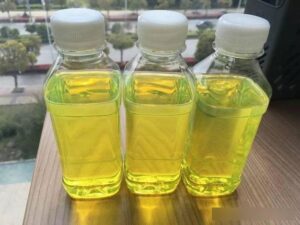
Raw Oil Failure in an Engine
Beyond corrosion risks, raw pyrolysis oil performs poorly when ignited inside a diesel engine.
Diesel engines require fuel that ignites quickly under high compression. This property is measured by the cetane number. Raw PPO typically has a low cetane number, often stemming from the presence of aromatic compounds and various oxygenated species. If the feedstock included plastics like polyethylene terephthalate (PET), the high oxygen content and aromatic structure further contribute to a lower cetane number, reducing the combustion efficiency.
This poor ignition leads to a significant ignition delay when the fuel is injected.8 The physical properties also cause problems: high viscosity (thickness), poor ignition, and low stability contribute to clogging of the fuel injection system, as well as general erosion and corrosion inside the engine components. Consequently, starting an engine from a cold state using only raw pyrolysis oil is often impossible because of its poor ignition characteristics. Conventional fuels are typically needed as a starter before switching to the PPO.
The table below summarizes why raw PPO cannot function as a direct drop-in replacement for automotive diesel fuel.
Table 1: Raw Pyrolysis Oil vs. Standard Diesel: The Key Chemical Differences
Property | Standard Diesel | Raw Pyrolysis Oil | Consequence for Car Engine |
Oxygen Content | Very Low (Near $0\%$) | High (Up to 22% or more) | Lower energy per gallon; complex modification needed. |
Acidity (Corrosiveness) | Very Low | High (Due to Carboxylic Acids) | Causes corrosion of engine parts and storage tanks. |
Cetane Number (Ignition) | High (Approx. 40–55) | Low | Poor ignition; difficult starting when cold. |
Physical Stability | High | Low (Polymerization during storage) | Short shelf life; fuel quality degrades quickly. |
For pyrolysis oil to move from a raw chemical product to a commercial-grade fuel suitable for blending and sale, it must undergo significant chemical modification, known as upgrading. The goal of upgrading is to remove impurities, reduce oxygen and water content, and stabilize the fuel against degradation during storage. This complex process transforms the unstable, highly acidic raw oil into a simpler mixture of stable hydrocarbons that resemble petroleum diesel.
Achieving a fuel that is truly automotive-grade requires addressing two distinct, fatal flaws of the raw product: its corrosivity and its poor combustion quality. Therefore, producers cannot rely on a single treatment method; a multi-stage process plant is essential.
Method 1: Hydrotreating (Addressing Oxygen and Cetane)
The primary method for improving combustion properties is hydrotreating, or Hydrodeoxygenation (HDO). This process is highly technical, requiring high temperature and pressure, along with hydrogen gas and specialized catalysts.
The main purpose of hydrotreating is to chemically strip oxygen and water from the PPO. By removing oxygen, the fuel’s heating value significantly increases, and the cetane number rises, which is necessary for efficient ignition in a compression-ignition engine. Academic studies focusing on hydrodeoxygenation processes have demonstrated high efficiency, achieving bio-oil conversions of up to 87.23% in some controlled environments. This technical step is what makes the final product chemically similar to high-quality diesel.
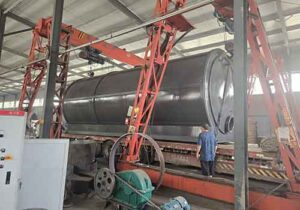
Method 2: Esterification (Addressing Corrosivity and Stability)
To eliminate the severe corrosivity, esterification is required. This method involves chemically reacting the corrosive organic acids present in the PPO with alcohols, such as methanol or butanol.
By neutralizing these acids, the fuel’s pH level increases (it becomes less acidic), successfully reducing the Total Acid Number (TAN) to low, safe levels, often ranging from 5 to 10 mg KOH/g. To ensure this acid neutralization is fully effective, an additional step involving azeotropic water removal, often using a solvent like n-heptane, is necessary, as water interferes with the chemical reaction.
Without both hydrotreating (to fix combustion) and esterification (to fix corrosion), the pyrolysis oil product remains limited to highly specialized or stationary systems. The requirement for a sophisticated, multi-stage upgrading process is why the downstream manufacturing of automotive-ready PPO necessitates significant investment in advanced chemical engineering facilities.
Table 2: Two Ways to Upgrade Pyrolysis Oil
Method | Main Goal | What it Fixes | Technical Benefit |
Esterification | Reduce Acidity | Corrosion risk, fuel instability, and high water content. | Allows safe storage and use in standard equipment. |
Hydrotreating/HDO | Reduce Oxygen | Low energy content and poor ignition (low Cetane). | Makes the fuel chemically similar to petroleum diesel. |
Not all pyrolysis oil is created equal, and not all fuels must meet the same standards. The required quality of the final product determines the extent and cost of the upgrading process. It is necessary to distinguish between fuels meant for stationary equipment and those intended for road vehicles.
Different Grades for Different Uses
International standards bodies, such as the IEA Bioenergy Task 34 collaboration, have worked to develop designations for different stationary uses of pyrolysis oil. These standards are focused on specific industrial applications that often have less demanding engine requirements than a passenger vehicle. Examples include:
Grade B: Bio-oil specifically designated for power production in medium-speed stationary diesel engines, requiring a Total Acid Number (TAN) less than 15.
Grade D: A classification for light fuel oil, requiring very low levels of solids (less than 0.2 wt%) and ash (less than 0.1 wt%).
Grade G: Heavy fuel oils, which correspond to the specifications laid out in ASTM Standard D7544.
While these grades are important for the overall pyrolysis industry, they do not serve as sufficient certification for commercial transportation.
The Automotive Gold Standard
To be legally sold and safely used in road vehicles in major markets, upgraded pyrolysis oil must meet the same stringent quality control standards as conventional diesel. In the United States, this is primarily ASTM D975, and in Europe, it is EN 590. These standards define key operational properties, including kinematic viscosity, density, sulfur content, and the critical cetane number.
High-quality PPO, when produced from carefully selected and consistent feedstock, can successfully meet these rigorous requirements. A study involving PPO derived from High-Density Polyethylene (HDPE) waste demonstrated that the synthetic product, after processing, was within all specifications of the petrodiesel fuel standards ASTM D975 and EN 590. This specific product showed excellent properties, including a kinematic viscosity of 1.98 cSt at 40°C and a density of 0.75 gm/cc, confirming that the technical barriers to producing automotive-grade fuel are surmountable.
The feasibility of meeting these standards depends heavily on the quality of the incoming waste material. Research has shown that PPO derived from a mix of plastic wastes only generally meets the quality standards for diesel oil, often falling short on parameters like density and color.
However, focusing on high-purity inputs, such as sorted HDPE, minimizes the impurities and acidic compounds that require the most aggressive and costly steps in the downstream upgrading process. This feedstock control is a crucial factor in achieving the high-value automotive market consistently and affordably.
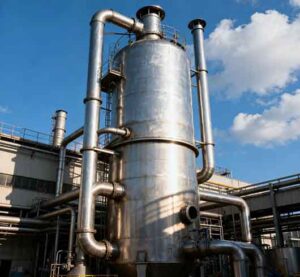
The Necessity of Blending
Even when PPO is highly refined, it is rarely intended to be used as a 100% replacement fuel. To ensure the final product consistently meets all required standards and provides optimal engine characteristics, upgraded PPO is typically used as a blending component, mixed with conventional diesel, biodiesel, or agents like ethanol. Blending helps stabilize the fuel and smooth out any small variations in composition that might occur during production.
Once upgraded and properly blended, pyrolysis oil proves to be a highly effective fuel. Academic testing of optimized blends has demonstrated performance that is not only comparable to but often superior to pure petroleum diesel, especially in terms of emissions control.
Improved Efficiency and Combustion
Engine tests on compression-ignition engines reveal that upgraded PPO blends exhibit excellent energy performance, particularly regarding Brake Thermal Efficiency (BTHE)—a measure of how efficiently the engine converts the fuel’s chemical energy into power.
For example, an optimized blend (BL2) containing 25 vol.% waste plastic pyrolysis oil and 10 vol.% ethanol showed superior BTHE, surpassing the efficiency of standard diesel by 1.3% at full engine load. This improved performance is linked to the high calorific value and improved cetane index achieved during the upgrading process. While some carbon-based emissions might temporarily increase due to minor ignition delays, the overall engine efficiency remains beneficial.
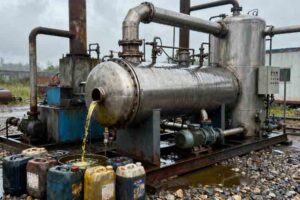
Cleaner Emissions: The Oxygen Advantage
One of the most valuable aspects of using upgraded PPO blends is their effect on tailpipe emissions. The presence of oxygen-carrying components, whether from the PPO itself or from blending agents like ethanol, promotes a more complete combustion process inside the engine.
The analysis of emissions shows several key reductions compared to conventional diesel:
Carbon Monoxide (CO) Emissions: CO emissions were consistently reduced across all tested blends, sometimes attributed to 25% reductions, because the improved availability of oxygen ensures CO is converted more completely into carbon dioxide (CO2) during the combustion cycle.
Smoke and Particulate Matter: Optimized blends have demonstrated substantial environmental improvements by reducing smoke opacity—a measure of particulate matter—by almost 60% compared to standard diesel in specific testing.
Nitrogen Oxides ($\text{NO}_{\text{x}}$) Emissions: Optimized blends can also reduce NOx. For instance, blend BL2 reduced Nitric Oxide emissions by 21.7% at full engine load compared to diesel.
The fact that PPO blends actively improve combustion efficiency and lower specific harmful emissions (CO and smoke) suggests that the fuel’s value extends beyond simple volume replacement. Upgraded PPO acts as a clean-burning performance additive or oxygenate, helping engines meet increasingly strict air quality regulations.
Table 3: Performance Results of Upgraded Pyrolysis Oil Blends vs. Diesel (Academic Testing)
Engine Performance Metric | Standard Diesel | Upgraded Blend (Example BL2) | Significance |
Brake Thermal Efficiency (BTHE) | Standard | Higher by 1.3% | Better use of the fuel’s energy. |
Carbon Monoxide (CO) Emissions | Standard | Consistently Reduced | Cleaner burning, lower harmful emissions. |
Smoke Opacity (Particulate Matter) | Standard | Reduced by up to 60% | Significant environmental improvement. |
Nitric Oxide(NOx) Emissions | Standard | Reduced by over 20% | Helps meet environmental air quality rules. |
While the technical feasibility of using pyrolysis oil in cars has been proven through testing, the deployment of this technology at a commercial scale faces formidable economic barriers that exist downstream of the pyrolysis machine itself.
The Massive Capital Investment Barrier
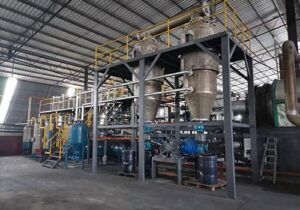
The most significant obstacle to the widespread production of automotive-grade PPO is the initial capital investment required for commercial-scale upgrading facilities. To reach the purity and stability required by standards like ASTM D975, the necessary hydrotreating and refining processes are complex and expensive.
Commercial-scale upgrading plants typically require initial investments ranging from $100 million to $300 million, depending on the capacity and specific technology selected. This staggering financial requirement exceeds the capabilities of most smaller companies and potential market entrants. Consequently, market development is highly concentrated among large, established energy companies and refiners that possess the necessary financial resources to absorb such a substantial capital outlay.
For manufacturers of pyrolysis equipment, this means the commercial strategy must focus on supplying high-capacity machines to these established industrial partners, rather than attempting to enter the finished, refined fuel market directly. The primary value of the pyrolysis machine lies in generating the feedstock, not in producing the final road-ready fuel.
Economic Competition and Pricing
Even when a high-quality upgraded product is manufactured, it must be cost-competitive with conventional diesel fuel. Economic analysis suggests that for pyrolysis oil to be an effective replacement, its price point must be low enough to justify the switch for consumers and distributors. Specifically, its price must not be greater than 85% of the price of diesel oil.
Achieving this tight margin requires rigorous control over operating costs, including continuous feedstock supply and efficient, continuous production. The margin for error is narrow, and the efficiency of the upgrading process is crucial to maintaining viability against fluctuations in the fossil fuel market.
Regulatory and Safety Hurdles
The transition of PPO from a laboratory curiosity to a widely used commercial fuel also requires resolving several key logistical and safety standards.
Before deployment across transportation and heating sectors, comprehensive toxicological data for exposure to both liquids and vapors must be developed, along with standardized procedures for dealing with spills. New norms and standards are continuously being developed to facilitate the use of bio-oil, including the work by the IEA Bioenergy Task 34 collaboration to establish guidelines for utilization. These regulatory requirements must be fully met to integrate PPO into existing supply chains safely.
The analysis confirms that pyrolysis oil can be used in cars, but only after expensive, high-tech upgrading and typically as a component in a blend. However, the path to market does not need to start with the most demanding automotive sector.
Focus on Accessible Stationary Markets
The quality requirements for stationary uses, such as power generation and industrial heating, are significantly easier to meet than the standards for road vehicles (ASTM D975). Targeting designated grades like Grade B, D, or G 5 provides a reliable, financially viable first step for producers.
Stationary engines and burners/boilers can tolerate less-upgraded fuels or can be customized to mitigate corrosion concerns more easily than the global fleet of passenger vehicles.
Furthermore, the maritime industry is preparing for stricter emission regulations, leading to an increasing demand for sustainable alternatives like upgraded bio-oil for marine fuels. This market offers immediate opportunities to scale production and stabilize finances before attempting to tackle the more competitive road transport sector.

PPO as a Key Sustainable Feedstock
The underlying strength of the pyrolysis industry is the global movement toward net-zero emissions. Upgraded pyrolysis oil is rapidly gaining importance as a valuable feedstock for the production of renewable chemicals and sustainable fuels, particularly Sustainable Aviation Fuel (SAF). The use of upgraded bio-oil reduces reliance on petroleum feedstocks and allows manufacturers to meet growing consumer demand for sustainable products.
The environmental benefit of converting waste tires and plastics into usable fuel minimizes issues of waste disposal and lowers the global reliance on fossil fuels. This strong, long-term, regulatory-driven demand for the upgraded product provides a necessary economic validation for the entire pyrolysis supply chain.