

Pyrolysis Oil is fast becoming a sustainable fuel option to replace conventional fuels. Pyrolysis oil is obtained through the decomposition of waste materials such as plastic, tires, biomass, and oil sludge. The multipurpose liquid fuel is creating a new direction in energy production. Not only can it be used directly to replace furnace oils or diesel in boilers but it can be also used to produce valuable chemicals or be converted to transportation fuels. With the increasing focus on finding clean and efficient fuels around the world, utilization of pyrolysis oil is an important step towards achieving that goal.
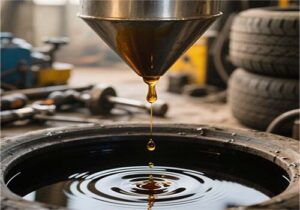
The first obvious application of the use of pyrolysis oil is the use of pyrolysis oil as an energy source; the application of pyrolysis oil offers a renewable energy source in place of fossil fuel sources used by industries at present.
Industrial Boilers and Furnaces
This application is one of the simplest forms of pyrolysis oil usage, as it involves using pyrolysis oil instead of natural gas, coal, or any other heating fuel. For the installation of pyrolysis oil burning systems, the modification cost involved is usually very low. Modifications include fitting the boiler with a multifuel burner that allows burning of both pyrolysis oil along with natural gas/coal or heating oil. Moreover, construction of pipes and tanks from stainless steel will also be required.

The environmental advantages of such a substitute cannot be overstated. It may cause a considerable decrease in carbon dioxide emissions; it is claimed that switching to this biofuel reduces emissions by up to 60%. One particular case is that of the production facility of FrieslandCampina manufacturing milk powder in Borculo. Its direct emissions have been cut by half thanks to using renewable pyrolysis oil instead of fossil fuel gas. In fact, the amount of natural gas saved amounts to about million cubic meters per year. This shows a clear trend towards sustainable energy supply and less reliance on volatile gas prices. While competing favorably with heating oil, competitiveness in comparison with cheap natural gas at certain moments still needs to be considered.
Gas Turbines and Diesel Engines
In addition to being used in boilers, pyrolysis oil is suitable as an alternative fuel source in gas turbines and diesel engines, especially within Combined Heat and Power (CHP) systems and decentralized power production. Such uses are particularly relevant when applied in remote areas or to industrial companies that generate their own electricity, heat or steam. Another promising area includes marine propulsion; in ships, too, pyrolysis oil proves to be an economically viable option.
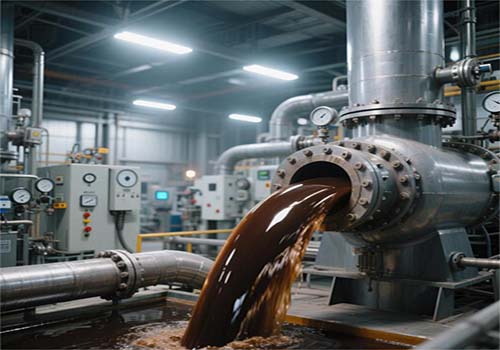
However, successful tests of stationary diesel engines with these fuels were completed. Some changes are needed, nevertheless, to protect the engine and fuel system from negative effects caused by the presence of water and acidity. In addition, an MW class OP16 gas turbine was adjusted to work with pyrolysis oils, and manufacturers give guarantees that after modification of the combustion chamber the process of working with it will be seamless. This gives new prospects to create completely eco-friendly heat and power sources under various conditions. However, according to some researches, the application of waste plastic pyrolysis oils in gas turbines results in additional nitrogen oxide emissions (for example, an increase of –61%) and carbon monoxide (25%) along with decreasing thermal efficiency (by 5-10%).
Although direct combustion produces immediate results, one of the areas of development of pyrolysis oil is in converting the biooil into high value-added transportation fuels like gasoline, diesel, and jet fuels. The process will help achieve decarbonization of the transport industry.
Transportation Fuels
Converting pyrolysis oil into transportation fuels forms part of the strategic means of cutting back on primary fossil resources. Pyrolysis oil from plastic feedstocks has more hydrocarbons and fewer oxygen atoms than biomass oils. It can therefore be expected to produce petroleum-like fuels such as diesel and gasoline. This is proven in studies that involve the pyrolysis of waste tires and rice husk to obtain liquid fuel with energy values close to diesel.
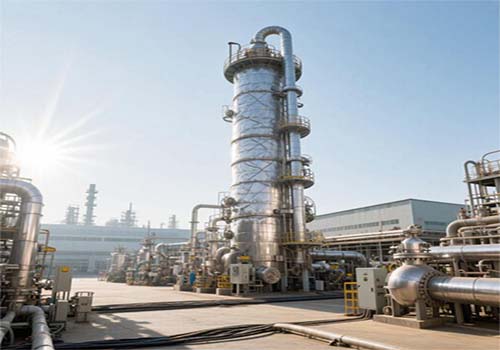
Fuel Upgrading Technologies
Taking into account the complexity of the characteristics of virgin pyrolysis oils (oxygen content, acidity, viscosity, instability, etc.), a variety of upgrading technologies are used to improve the properties of such fuels. These technologies help to achieve better quality and higher calorific value, stability, and reduction of corrosivity of the produced fuel.
Hydrotreatment (Hydrodeoxygenation – HDO): High-pressure chemical process, where hydrogen is used in combination with catalysts (Co-MoS2/Al2O3, Ru/C, NiMo sulfides). Hydrodeoxygenation successfully strips off oxygen, nitrogen, and sulfur, while saturation of olefins and aromatics occurs. As a result, the calorific value is enhanced, the oil becomes less acidic and viscous, and high-quality fuel is obtained (resembling crude oil). The following reaction ways can be identified: cracking, decarbonylation, decarboxylation, hydrocracking, hydrogenation.
Catalytic Cracking: Catalytic cracking can be used as an alternative to hydrotreating, where the process takes place at atmospheric pressure with zeolite catalysts, like HZSM-5, to reduce the oxygen content in the pyrolysis oil. This may result in a higher yield of aromatics (e.g., toluene and xylene) due to a significant reduction in the yield of oxygenated products (e.g., acetic acid and phenols).
Emulsification: Emulsification is another physical upgrading technique which addresses the issue of poor solubility of pyrolysis oil in hydrocarbon fuels. The mixture of pyrolysis oil with diesel and surfactants increases the stability of the resulting mixture that leads to improved properties, such as calorific value, pH, and stability of the fuel. Optimal stability could be achieved when the mixture includes certain proportions of pyrolysis oil (10-20%), diesel (50-90%), and surfactants (1-10%), optionally with co-surfactants (e.g., alcohols).
Esterification: This is a chemical modification technique which allows converting highly corrosive organic carboxylic acids contained in pyrolysis oils to relatively stable esters with the help of reactions with alcohols (e.g., methanol or ethanol) in the presence of a zeolite-supported catalyst. Esterification results in lower acid number, density, and water content of the bio-oil along with a higher calorific value.
Challenges in Upgrading
In spite of all the above potential, however, there are certain obstacles for upgrading pyrolysis oil into advanced fuels.
Catalyst Deactivation: First, catalysts can be deactivated due to carbon deposits on their surface, nitrogen and sulfur contamination as well as metal deposition. The deactivation of catalysts is a serious limitation factor in their lifetimes which may be below 0 hours in certain processes; it makes necessary to use more durable catalysts or develop processes of regenerating them. Such approach is crucial for successful economics of upgrading technology.
Consumption of Hydrogen: Another drawback of hydrotreatment is consumption of large amounts of hydrogen. Its availability and sustainability are vital for further economics and environmental performance of upgrade process.
High Pressure and Temperature: Most upgrading technologies require rather high temperatures and pressures, for example, -300 bar in case of hydrotreating and temperatures of 0-400 °C. It raises considerably capital and operational expenses.
Table : Pyrolysis Oil Upgrading Methods and Their Benefits
This table summarizes various upgrading methods and their impact on pyrolysis oil properties, highlighting how each technique contributes to enhancing its suitability for advanced fuel applications.
Upgrading Method | Primary Purpose | Key Benefits | Challenges/Considerations |
Hydrotreating (HDO) | Deoxygenation, desulfurization, denitrogenation, saturation of unsaturates | Increases calorific value, improves acidity & viscosity, enhances stability, produces crude-oil-like product | High hydrogen consumption, high pressure/temperature, catalyst deactivation (coking, poisoning) |
Catalytic Cracking | Deoxygenation, production of aromatics (BTX), reduction of oxygenates | Can operate at atmospheric pressure, produces valuable chemicals, improves fuel quality | Extensive carbon deposition, very short catalyst lifetimes, lower H/C ratio in product |
Emulsification | Improve solubility in hydrocarbon fuels, enhance stability | Increases calorific value, improves pH, enhances stability, acts as lubricant | Requires specific surfactant ratios, potential for phase separation, thermal stability differences |
Esterification | Reduce acidity by converting carboxylic acids to esters | Reduces acid number, density, water content; increases calorific value; improves viscosity | Requires alcohols (e.g., methanol), further improvement in calorific value may be needed |
Apart from being used as fuel, there is growing recognition of the use of pyrolysis oil as a feedstock for the production of diverse industrial chemicals which otherwise are sourced using non-renewable resources.
Aromatics (Benzene, Toluene, Xylenes – BTX)
The BTX (benzene, toluene, xylene) group consists of basic aromatic compounds of great industrial significance that form the base for the synthesis of polymers, drugs, solvents, and consumer goods. While conventional BTX production involves catalytic conversion of naphtha or separation of pyrolysis gasoline from the products of steam crackers, BTX production through catalytic pyrolysis of polyolefin-based plastic waste is fast gaining recognition as a very efficient process.
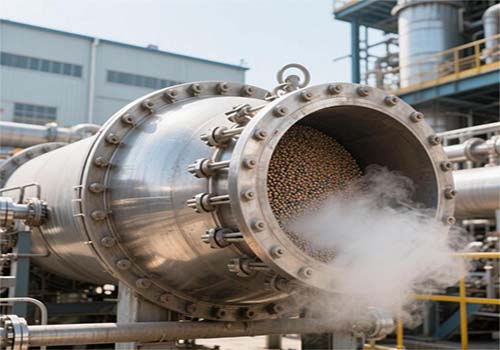
The process involves utilizing the natural hydrocarbons present in the plastics to create BTXs. For example, investigations have shown the possibility of extracting BTXs at . weight percent from polypropylene through the use of a double fluidized bed reactor with catalysts. In addition, fractions of liquid produced by the pyrolysis of biomass containing phenols have been able to produce BTXs at 80% (on carbon and dry basis) by catalytically upgrading with zeolites such as H-ZSM-5. Zeolite catalysts have proven highly efficient owing to their ability to aromatize, which is due to their acidic nature and specific pores.
Specialty Chemicals
Apart from the large volume BTX (benzene, toluene, xylene) aromatic hydrocarbons, there is another use of pyrolysis oil as the source of other chemicals. Pyrolysis oils obtained from biomass are very rich in oxygen-containing compounds suitable for the synthesis of phenols, acetic acid, and furfural. Phenol is one of the major precursors used in producing phenolic resins and in the pharmaceutical industry. Some of the chemicals, like acetic acid and furfural, that can be obtained from bio-oils, are close to being commercially viable or already commercialized. Moreover, it is possible to extract phenols and polyphenols with antioxidant properties from bio-oil through fractionation.
Fractionation and Selective Catalytic Pyrolysis
A variety and complexity of chemical compounds contained in pyrolysis oil create problems of separation in order to extract required compounds. Fractionation is needed when it comes to separation of pyrolysis oil on the basis of its chemical composition or molecular weight. There are different ways to perform fractionation including solvent extraction and distillation. Solvent extraction is used to eliminate waxes and fatty acids; liquid–liquid extraction can be used to extract pyrolytic sugar and lignin streams from which mono-phenolics are produced as by-products.
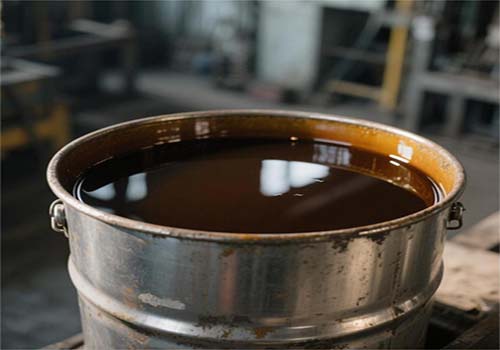
Meanwhile, innovations in selective catalytic pyrolysis are allowing control over the selectivity of the products. With the use of appropriate catalysts and pyrolysis parameters, it is feasible to direct the synthesis of targeted chemicals. This synergy between targeted pyrolysis followed by fractionation or further processing makes it possible to exploit the potential of waste materials as sources of valuable products, positioning pyrolysis oil as a versatile platform for the chemical industry.
Further use cases of pyrolysis oil can range beyond fuel and chemical production. Research in different fields can find innovative ways to utilize pyrolysis oil and contribute to advancements in various industries, such as construction and materials science.
Use Cases of Pyrolysis Oil in Asphalt
Bio-based oils are considered a viable option for partial substitution or modification of asphalt binders in road-building works. By using bio-oils in combination with asphalts, it becomes possible to increase rutting resistance and improve stiffness in different temperature ranges, thus increasing durability and making roads less vulnerable to temperature cracks. Not only does it help to minimize the impact of road building on the environment, but also helps to utilize renewable resources.
Pyrolysis oils, including that from tires, can serve as a rejuvenating component for old asphalt. This innovation can make contributions to sustainable development within road building due to minimizing problems associated with aging of conventional bitumen. Moreover, biochar, produced through pyrolysis processes, can serve as an additive for bitumen to strengthen its chemical structure and reduce aging effects.
Bioplastics and Advanced Materials
Pyrolysis products have been used to manufacture high-quality bioplastics and advanced materials that can compete with industrial standards while maintaining their integrity and quality. This involves using the recycled plastic from pyrolysis in food-grade packaging, including food packaging like pet food containers and snack packaging, which is a considerable commercial opportunity. The biodegradable materials have found an application in the medical and pharmaceutical sectors as well since they are being utilized in the manufacturing of medical packaging and pharmaceutical packaging.
Environmental advantages of pyrolysis oil have played a huge part in making this technology more appealing, as they represent effective answers to various environmental problems associated with waste management and climate change.
Waste to Resource Conversion
One of the main purposes of pyrolysis technology in the context of waste management is the conversion of multiple types of waste, such as end-of-life plastics, tires, and agricultural biomass, into useful products. The technology is particularly important due to global waste crisis that includes marine plastic waste. In other words, the conversion of waste into resources offers a viable solution to the problem. Moreover, unlike many existing methods of plastic waste management, pyrolysis can be applied to mixed waste streams that cannot be processed by using conventional recycling technologies.
Reduction of Greenhouse Gases
Another notable advantage of pyrolysis is its potential to reduce greenhouse gas emissions. The use of the technology for plastic waste processing can reduce carbon dioxide (CO2) emissions by as much as -75%. Another way that pyrolysis can contribute to mitigation of greenhouse gases involves prevention of their production during decomposition of organic wastes at landfills.
Circular Economy Enabler
The pyrolysis process acts as an excellent enabler of circular economy by allowing the re-entry of “dirty, degraded mixed plastic waste back into circulation as high-grade materials.” In comparison to waste-to-energy solutions which focus on the recovery of energy but not on materials, the pyrolysis process can be seen as an important enabler of circular economy principles since it allows recycling of plastics using less virgin fossil resources in the process. As a result, there is less environmental impact when it comes to the creation of new plastic materials. With growing interest from organizations in achieving sustainability standards like ISCC PLUS, there will be an opportunity for the emergence of long-term contracts with chemical companies.
Although there is great potential in using the produced pyrolysis oil as a fuel, there is a need to address several technical and economic issues before the mass implementation of pyrolysis technology.
Challenges Involving Characteristics of Oil
There are numerous challenges associated with the intrinsic properties of pyrolysis oil. First, the acidic nature of oil requires the use of special materials for storing and transporting the liquid, such as stainless steel. Moreover, the presence of water increases the difficulty of using the fuel as it reduces the efficiency of the process. High viscosity poses challenges regarding pumpability and atomization when the substance is used as a fuel. Finally, instability results in aging of pyrolysis oil, increased viscosity, and solidification, thus making it more difficult to store and transport. Consequently, special attention needs to be paid to these characteristics when designing facilities for processing the fuel.
Potential Emissions and Emissions Management
There will always be some emissions when using pyrolysis oil as a fuel.
Types of Emissions: When producing pyrolysis oil and burning it, exhaust gases include various air pollutants such as particulate matter (PM), VOCs, CO, NOx, SOx.
Emissions Trends for Particular Compounds:
NOx: There is contradictory information on NOx emissions. While some sources confirm an increase in the quantity of this gas due to higher temperatures in the process of combustion in gas turbines, when employing pyrolysis oil derived from plastic waste, other researchers speak of a possible decrease or an indistinct trend because of the effects of factors such as ignition delay or peak temperature.
CO: In most cases, CO emissions are found to be no higher than the emission level produced by conventional fuels, and there can even be a decrease due to the amount of oxygen left in pyrolysis oil.
PM: PM emissions are confirmed to be higher in comparison with light fuel oil. This calls for implementing appropriate mechanisms of particulate matter removal.
SOx: The level of sulfur oxide emissions depends on the presence of sulfur in the source material used in pyrolysis.
VOCs: The presence of volatile organic compounds is observed in the exhaust gases; the type and amount depend upon the feedstock used as well as the pyrolysis method adopted.
Emission Management: There are effective emission management approaches that have been devised and applied.
Pre-processing of Feedstock: It is imperative to carry out adequate pre-processing (drying and crushing of feedstock) to make the pyrolysis process efficient and reduce any possible emissions.
Catalytic Pyrolysis & Upgradation: Use of catalysts in the process of pyrolysis or upgradation may help in producing a better quality oil along with reduced emissions through clean combustion.
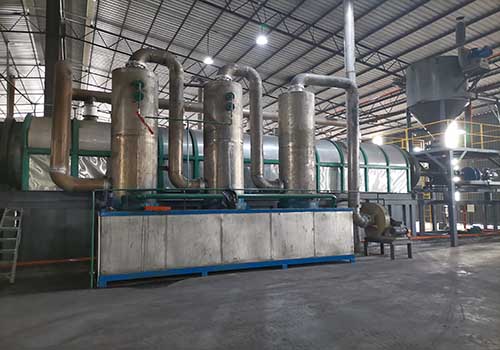
Gas Treatment Process: Efficient gas treatment systems are necessary for controlling emissions resulting from pyrolysis oil combustion:
Wet Scrubbers and ESPs (Electrostatic Precipitators): These are very effective control technologies in the removal of particulates.
Baghouse Filters: Baghouse filters are other types of control technologies which are highly effective for the removal of particulates.
Desulfurization: Oxidative desulfurization technologies have been highly effective in eliminating sulfur emissions from tire pyrolysis oil (-93.% sulfur).
VOC Reduction: Adsorption, catalytic oxidation, photocatalysis, and thermal oxidizers are technologies used to lower the VOC content in the waste gases.
Table: Comparison of the Environmental Impacts: Pyrolysis Oil Versus Fossil Fuels (Emissions)
Below is a comparison of the environmental impacts associated with burning pyrolysis oil versus fossil fuels based on key emissions from combustion.
Pollutant | Pyrolysis Oil Combustion (Typical Trends/Levels) | Fossil Fuel Combustion (General Comparison) | Emission Control Strategies |
CO2 (GHG) | 50-75% reduction vs. incineration ; Net-positive for GHG reduction | Significant contributor to GHGs | Waste-to-resource, circular economy, replacing virgin fuels |
NOx | Increased (26-61% for WPPO in gas turbines) ; Ambiguous/variable | Significant contributor, especially from vehicle exhaust | Process optimization, catalytic upgrading, combustion air control |
CO | Comparable or reduced ; Meets EPA standards (e.g., . ppm) | Significant contributor from incomplete combustion | Optimized combustion, residual oxygen in fuel |
Particulate Matter (PM) | Higher than light fuel oil ; Can exceed EPA limits (e.g., mg/m³ vs. mg/m³) | Significant contributor | Filtration, wet scrubbers, electrostatic precipitators (ESPs), baghouse filters, catalytic upgrading |
SOx | Dependent on feedstock sulfur content | Significant contributor from sulfur-rich fuels | Desulfurization (oxidative, extractive), flue gas desulfurization (FGD) |
VOCs | Present (few ppm to hundreds ppm) | Significant contributor, especially from cooking/vehicles | Catalysis, adsorption, photocatalysis, thermal oxidizers, optimizing pyrolysis conditions |
The future trend of pyrolysis oil is one of great growth and rising significance owing to favorable market dynamics and consistent innovation.
Market Trends & Growth
There are favorable growth trends in the global pyrolysis oil market as its size is expected to rise from around USD .-2.0 billion in 2025 to about USD . billion by , at a CAGR of .-9.%. The key factors driving this market include growing demand for renewable fuel, surging concern over global plastic waste problems, and adoption of the concept of the circular economy. Various firms involved in transportation, chemicals, and energy are considering switching to pyrolysis oil instead of conventional fossil fuels.
The most dominant region in the pyrolysis oil market is presently Asia Pacific, whereas North America will register the fastest growth rate during the forecast period. By feedstock type, the plastic category had the largest share of the market in , while the rubber category is expected to register the fastest growth rate due to growing volumes of automobile rubber waste and stringent regulations on tire disposal worldwide. The flash pyrolysis process, which focuses on the production of liquid, contributed significantly to the largest market share in.
Investment and Innovation Drivers
The momentum generated by the market can be attributed greatly to regulations and investment. Various governments, especially those in places such as the European Union and North America, are embracing policies relating to the circular economy as well as enforcing bans on sending plastic waste to landfills, thus encouraging investments in pyrolysis systems. It is evident that there is a move toward decentralizing waste-to-energy systems due to the benefits associated with them.
Also fueling investments is pressure from corporates to decarbonize their supply chains and achieve ESG targets. Companies are spending money on the development of chemical recycling to reduce their reliance on virgin crude oil. This is evident through large chemical firms entering into off-take agreements with pyrolysis firms, suggesting that there is already some maturity in this market segment. Research and development activities have been geared towards optimizing reactor designs and creating better catalysts among other innovations to enhance efficiency, yields, and purity of products obtained. The increasing number of ISCC PLUS certified pyrolysis oil is making this technology even more appealing for global brands.