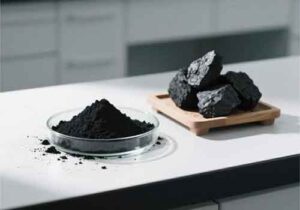

Carbon black produced by waste tire pyrolysis is the solid residue left after heating tire rubber in the absence of air. It contains carbon, ash, and small amounts of metals and other residues. Unlike commercial furnace blacks, pyrolysis carbon black (PCB) is a by-product of a waste-to-energy process.
When treated correctly, PCB can be a useful raw material. Turning that waste into a useful product reduces landfill, cuts demand for virgin carbon materials, and creates value from a previously low-value stream. This post explains how to move from raw tires to a usable carbon black product, focusing on practical steps, typical upgrades, and the markets where the material can be sold or reused.
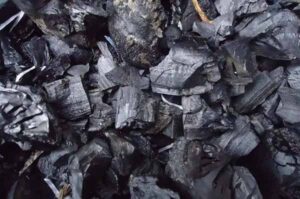
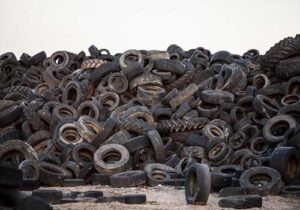
The tires are subjected to heat under an oxygen-free environment. The rubber disintegrates into gases and oils. The residual portion left behind after the above reactions is referred to as the solid char. This consists of carbon black, ash, and some metals.
Important points about the process:
Temperature. Pyrolysis is normally conducted at temperatures between 400°C and 700°C. Low temperatures produce a greater amount of char while high temperatures produce greater amounts of gases and oils. Set the temperature according to the desired product mix.
Duration of heating and heating rates. The carbonization level and the form of particles depend on the residence time and the heating rates.
Quenching. Once pyrolysis is completed, it is necessary to cool the resultant char without exposing it to any oxygen to avoid burning. Inert gases such as nitrogen are used for this purpose.
Primary sorting. Mechanical sorting after cooling allows separation of stones and metallic objects from the char.
Even after passing through the reactor, the resulting char is a mixed product and usually has high levels of ash and metals compared to commercially available carbon blacks.
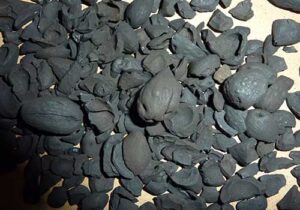
Improvement of raw pyrolysis carbon black forms the essence of making something useful out of garbage. The types of treatment include physical treatment up to chemical activation and changes in surface chemistry. Determine the required treatments according to the use of the product and cost-effectiveness.
The common methods of improving pyrolysis carbon black:
Deashing. Ash is one of the key differences between the pyrolysis and furnace carbon blacks. Ash reduction through acid washing with mild mineral acids (such as hydrochloric acid) or chelating agents and subsequent washing with water and neutralizing is possible. Another alternative is thermal annealing.
Grinding and separation. This process involves grinding the product and separation of particles by size.
Activation: Steam or chemical activation. The steam activation consists of an oxidative process at high temperature, then heating again. In the case of chemical activation, some activating agents like KOH or H3PO4 are needed during production for activated carbon used in adsorption processes.
Surface modifications. Functional groups can be introduced to enhance compatibility with polymers or dispersibility. These processes include mild oxidation using substances like nitric acid or ozone that result in functional groups having oxygen. Also, there can be a surface chemistry approach through silane coupling or grafting reactions.
Graphitization/thermal annealing. If a better-quality product is required, thermal graphitization at high temperatures will be needed to alter properties and structures. It requires energy, and its benefits are only realized in special markets.
During designing the flow of processing, cost factors, handling of chemicals environmentally, and product value have to be considered. Pilot-scale experiments are needed.
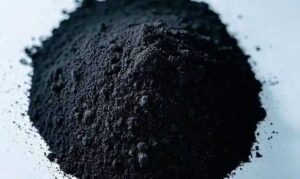
The finished carbon blacks have several possible product forms. Each form will require certain actions from both the seller and the buyer.
Typical product forms:
Powder. The fine powders find wide usage in the areas of fillers and pigments. Their packaging requires dust protection measures.
Pellets or granules. Forming into pellets increases their bulk density and minimizes the formation of dust. Thus, pellets are more convenient in transportation and use in industry.
Agglomerates or masterbatches. When using for polymers, creating a masterbatch with the carrier resin facilitates the addition process.
Tests for quality control to run:
Ash content. This test involves burning a certain amount of the sample and measuring its weight. Low ash contents are preferable for many types of usage.
BET surface area. BET surface area defines adsorbing capabilities of the material.
Particle size distribution. Laser diffraction is used for the identification.
Water extract pH and conductivity. Presence of salts in the water extract.
Sulfur and chlorine content. These parameters will influence downstream processes.
Metal content screening via ICP/XRF. Zinc, iron, or lead trace metals can be detected using those methods.
Moisture content and bulk density.
Set clear specifications for each product grade. Keep a testing log and track batch-to-batch variability. Good documentation builds buyer confidence and supports higher pricing.
Upgraded pyrolysis carbon black finds demand in multiple sectors. Match product grades to end uses to maximize value.
Potential markets:
Rubber and tire industry. High-end tires require furnace blacks with tight specs. PCB can be used in non-critical rubber goods like gaskets, mats, and industrial hoses when appropriately treated and blended.
Plastics and masterbatches. PCB can act as a pigment or conductive filler in plastics after surface modification. Pelleted forms are often preferred.
Pigment & inks. In low-quality pigments, treated PCB can substitute some of the carbon black produced from scratch. Tests on consistency and color strength are extremely important.
Construction Materials. Concrete, asphalt, roofs, sealants could make use of treated PCB in the role of filler or additive. More ash is less of a problem when it comes to such applications.
Activated Carbon. Upon activation, PCB becomes a cost-efficient activated carbon capable of purifying water or gases and removing VOCs. Its surface area and pore structure matter in terms of competition.
Batteries & Advanced materials. Under proper processing, PCB gets converted into higher-value graphite that can be used in batteries’ anodes or as conductive additive. This market has high requirements on purity and structure and requires substantial investments.
When contacting potential customers, offer your technical data sheets, samples with corresponding tests and proposed use amounts. Be reasonable with what type of markets you try to enter. Some markets require high purity and reliable performance.