
Top Manufacturer of Pyrolysis Machines/Units

Four Sets Of Waste Tire-To-Oil Pyrolysis Equipment

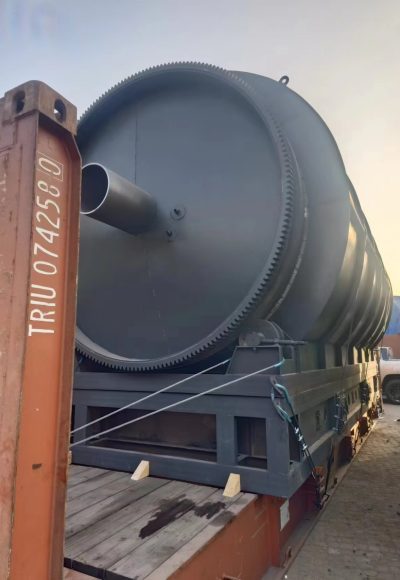
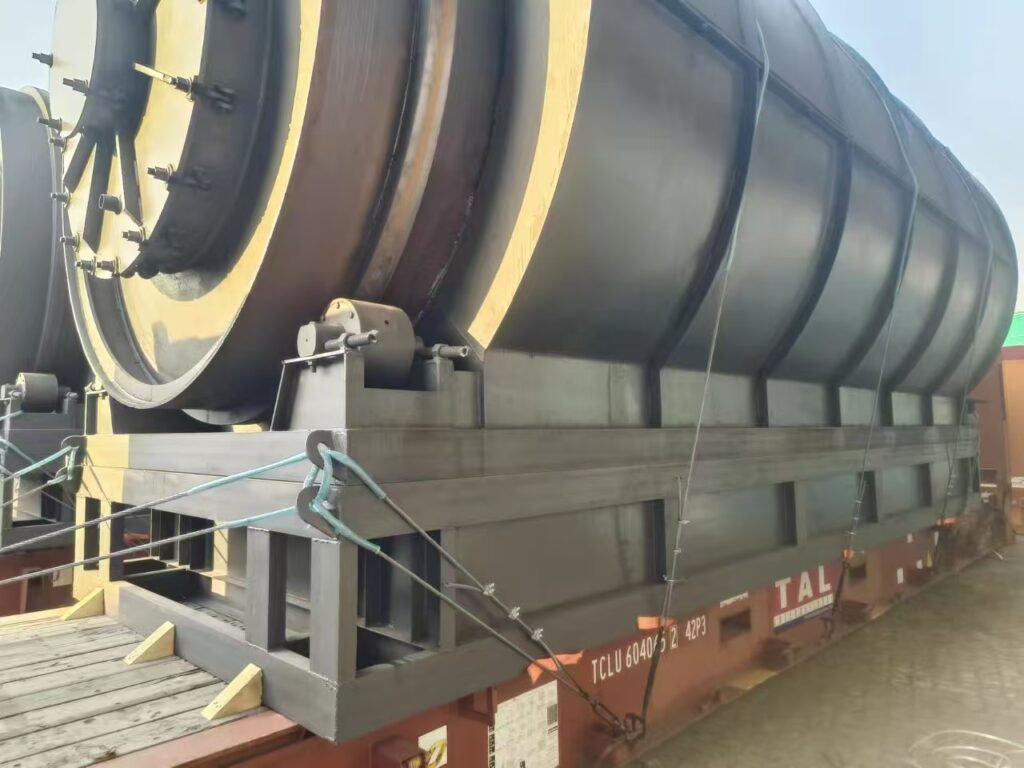
Delivery Of Four Sets Of Waste Tire-To-Oil Pyrolysis Equipment To Ghana In August 2025

Four waste tire pyrolysis plants in Ghana will be installed

Introduction and Background Context

In recent years, Ghana has experienced rapid urbanization and an increase in automotive ownership, leading to a mounting environmental challenge: the disposal of end-of-life tires (ELTs). Historically, millions of scrap tires were left in landfills or illegally dumped, creating breeding grounds for mosquitoes and posing severe fire hazards. Recognizing the dual need for sustainable waste management and alternative energy sources for local industries, a prominent Ghanaian waste-to-energy firm partnered with us in early 2025.

Their goal was to establish a commercial-scale tire recycling facility near Accra. In August 2025, we successfully delivered and commissioned a four-set waste tire-to-oil pyrolysis plant, providing a closed-loop system that transforms hazardous rubber waste into highly sought-after industrial fuel.

Professional Solution Tailored for the Client

Understanding the client’s ambitious capacity goals and the specific environmental conditions in West Africa, we engineered a comprehensive, highly customized solution centered around four sets of our 15-ton daily capacity batch pyrolysis plants.

First, to address Ghana’s tropical climate—characterized by high ambient temperatures and humidity—standard cooling systems would have struggled to achieve optimal oil condensation rates. We upgraded the condensing infrastructure to include a heavy-duty, three-step water cooling system featuring specialized cooling towers and enlarged tube condensers. This ensured maximum recovery of pyrolysis oil from the oil gas, maximizing the client’s yield regardless of the local weather.

Second, the Ghanaian Environmental Protection Agency (EPA) enforces strict emissions regulations for new industrial projects. To guarantee compliance and ensure the facility could operate near urban zones, we integrated an advanced dedusting and tail-gas purification system. This multi-stage scrubber uses water washing, ceramic ring adsorption, and chemical sprays to neutralize sulfur dioxide and filter out particulate matter from the smoke.

Furthermore, we designed a combustible gas recycling loop. The non-condensable syngas generated during the tire breakdown process is redirected back into the furnace to heat the reactor. This dramatically reduces the client’s reliance on external fuels (like wood or diesel) for continuous heating, cutting operational expenditures by nearly 40%. Finally, our engineering team provided on-site installation guidance and a rigorous two-week training program in August 2025, ensuring the local workforce could safely and independently manage the 60-ton daily operation.

Project Results and ROI Assessment

Four waste tire pyrolysis plants in Ghana will be installed
PyrolysisUnit ISO CE Approved

ISO CE Approved

The equipment quality has passed IAF, CNAS, ISO, CE certifications, Certified by international professional organizations, the equipment is safe and reliable.

PyrolysisUnit AAA Credit Audited Enterprise

AAA Credit Audited Enterprise

One of the top refining equipment manufacturers in China, The government Audited Superb as AAA credit company (top level).

PyrolysisUnit Solutions for Pyrolysis And Distillation

Solutions for Pyrolysis And Distillation

We will provide you with the latest industry solutions, and provide you with a one-year after-sales warranty to ensure stable operation of the equipment.

PyrolysisUnit 24-hour service

24-hour service

We have professional engineers to solve various problems for you, including equipment, process, material problems, etc.

PyrolysisUnit Professional R&D team

Professional R&D team

We have obtained a number of utility model patents, including distillation production equipment and pyrolysis module equipment.

PyrolysisUnit Fast Delivery

Fast Delivery

We have sufficient stock of pyrolysis and distillation equipment to ensure efficient logistics and fast delivery.

Since the project went fully operational in late 2025, the facility has consistently hit its performance benchmarks, proving to be both an environmental and economic triumph.

Performance Metrics:

  • Annual Waste Tire Processing Capacity: 18,000 tons (Based on a 60-ton daily capacity operating for 300 days a year).

  • Average Pyrolysis Oil Yield: 45% (Consistently achieved due to the upgraded cooling system).

  • Annual Fuel Output: 8,100 tons of high-calorific pyrolysis oil.

  • Secondary Outputs: 5,400 tons of carbon black (30% yield) and 2,700 tons of scrap steel wire (15% yield).

Simple ROI Calculation (Annualized Estimates in USD):

  • Total Initial Investment: $650,000 (Includes 4 sets of equipment, shipping to Tema port, installation, civil works, and initial licensing).

  • Estimated Annual Operating Costs (OPEX): $450,000 (Includes labor, electricity, water, maintenance, and scrap tire transport/acquisition).

  • Estimated Annual Revenue: $1,620,000

    • Pyrolysis Oil: 8,100 tons at $150/ton = $1,215,000

    • Carbon Black & Steel Wire: $405,000 combined.

  • Annual Net Profit: $1,170,000 ($1,620,000 Revenue – $450,000 OPEX).

  • Return on Investment (ROI): 180% (Note: With a net profit of $1,170,000 against an initial capital expenditure of $650,000, the project achieved full payback in roughly 6.5 months of active operation).

Other Cases

Conclusion

The delivery and commissioning of the four-set pyrolysis plant to Ghana in August 2025 stands as a testament to the viability of circular economy technologies in developing markets. By tailoring our machinery to meet local climatic constraints and strict environmental standards, we empowered our client to turn a severe ecological liability—scrap tires—into a lucrative, sustainable energy business. The impressive 180% ROI and the safe disposal of 18,000 tons of rubber waste annually highlight that strategic investments in green technology yield profound benefits for both the environment and the bottom line.

Scroll to Top