

15 Ton/Day Waste Tire Pyrolysis Plant Project in Malaysia A
Waste Tire Pyrolysis Oil Refining Plant
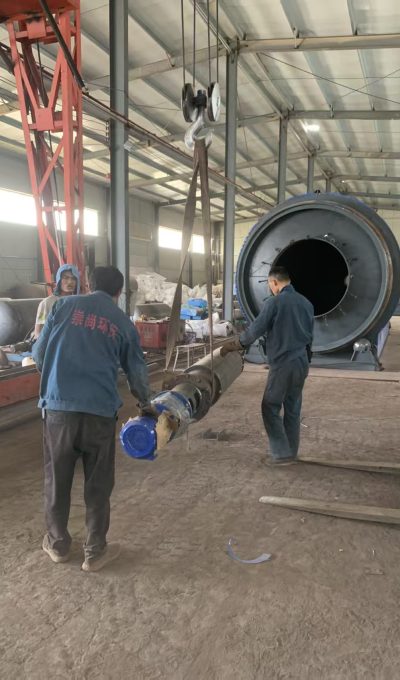
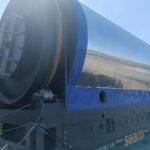
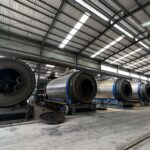
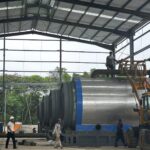
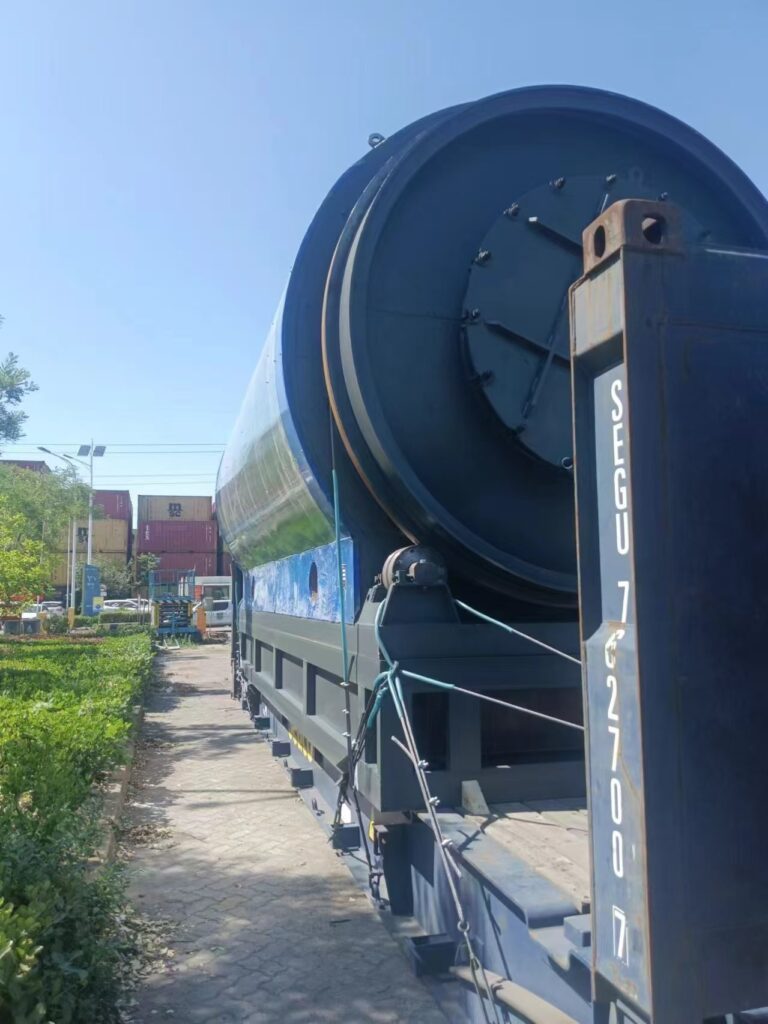
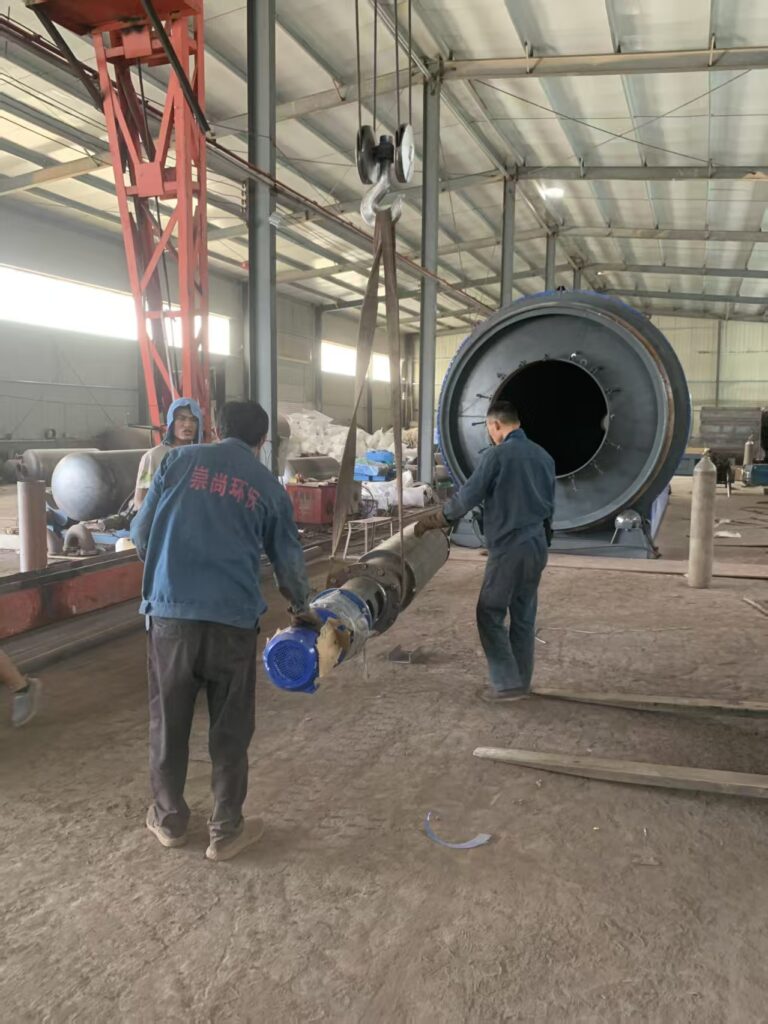
A waste tire pyrolysis oil refining plant in Indonesia, implemented in July 2024
Project Background
Indonesia is battling a significant environmental threat where 10 million waste tires are disposed of each year, with only around 20% being recycled via environmentally friendly processes.
Most of the waste ends up in landfill sites, water bodies, or being burnt in open areas, which results in the release of harmful emissions and creates breeding areas for disease vectors. To meet the ASEAN Waste Management Policy and the EPR laws in Indonesia, the consortium of local industrial investors known as Indonesia wanted to build a state-of-the-art waste tire pyrolysis plant in a bid to solve this problem and tap into the rising demand for sustainable industrial fuel sources.
The selected site for the plant is located in the Cikarang Industrial Estate of West Java. The region offers easy access to major tire producers, cement manufacturers, and steel mills as customers for the outputs from the pyrolysis process. Furthermore, the favorable business environment provided by the Indonesian government and the increasing growth rate of 42% in 2024 make the time right for such an endeavor.
Professional Solution Developed
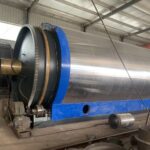
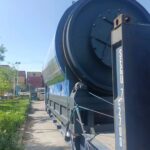
In line with the client’s demands, our engineering experts developed a fully continuous pyrolysis system with built-in refining capacities. The technology has been specifically adapted for operations in the tropical Indonesian environment with the relevant climatic changes.
Configuration of Core Technology: The system has been designed to have a fully continuous pyrolysis system with automation processes involved in shred tires and feeding into the reactor. Since batch processes involve cooling cycles, the continuous technology allows round-the-clock operations with minimal downtime, resulting in a production capacity of 15,000 tons of waste tires per year. Indirect heat is used in the reactors, with a temperature range of 450-500°C which, according to previous studies, gives maximum yields of liquid oils at around 45-50%.
Refining System: Considering the need to upgrade raw pyrolysis oil to higher-value products, this project has incorporated a distillation refinement process. Pyrolysis oil can be refined into three grades; namely light distillate (diesel equivalent), medium distillate (fuel oil) and heavy residue (asphalt extender). This process adds 40-60% to the profitability of the business, making the product more valuable than just selling the unrefined pyrolysis oil.
Environmental Management: The process involves a complete emission control train with cyclone dust collector units, water seal safety systems, and activated carbon scrubbers to meet the Indonesian Ministry of Environment and Forestry standards. Non-condensable syngas (10-12% of input materials) will be recovered and reused as heating source for the reactors, lowering energy consumption by about 70%. Any wastewater will be managed via a closed loop cooling circuit with zero liquid discharge.
Automation and Safety: There will be a distributed control system using programmable logic controller devices monitoring important process variables such as temperatures at various sections within the reactor and pressures as well as composition of gases. Carbon black removal and separation is done automatically without shutting down reactors. The steel wires will be automatically separated using magnetism after pyrolysis. The automation process requires only 8 personnel per shift working in 3 shifts.
Feedstock Preparation: Considering continuous processes need equal-sized particles for processing, there will be a tire shredder line with primary and secondary shredders, followed by magnets to separate steel beads from shredded tires before being fed into the reactor.
The entire system was designed for modular scalability, allowing future capacity expansion to 100 TPD without significant infrastructure modifications. Installation and commissioning were completed within 16 weeks, with comprehensive training provided to local engineering teams to ensure operational self-sufficiency.
Project Results

ISO CE Approved
The equipment quality has passed IAF, CNAS, ISO, CE certifications, Certified by international professional organizations, the equipment is safe and reliable.

AAA Credit Audited Enterprise
One of the top refining equipment manufacturers in China, The government Audited Superb as AAA credit company (top level).

Solutions for Pyrolysis And Distillation
We will provide you with the latest industry solutions, and provide you with a one-year after-sales warranty to ensure stable operation of the equipment.

24-hour service
We have professional engineers to solve various problems for you, including equipment, process, material problems, etc.

Professional R&D team
We have obtained a number of utility model patents, including distillation production equipment and pyrolysis module equipment.

Fast Delivery
We have sufficient stock of pyrolysis and distillation equipment to ensure efficient logistics and fast delivery.
Performance Metrics
| Parameter | Value |
|---|---|
| Annual Waste Tire Processing Capacity | 15,000 tons/year |
| Average Pyrolysis Oil Yield | 45% (6,750 tons/year) |
| Refined Fuel Oil Production | 5,400 tons/year (80% refining efficiency) |
| Carbon Black Recovery | 4,500 tons/year (30% yield) |
| Steel Wire Recovery | 2,250 tons/year (15% yield) |
| Syngas for Internal Use | 1,500 tons equivalent/year |
| Operational Days per Year | 330 days (90% availability) |
Yield data based on typical industrial tire pyrolysis performance
Economic Analysis
Initial Investment Costs:
| Category | Cost (USD) |
|---|---|
| Continuous Pyrolysis System (50 TPD) | $650,000 |
| Vacuum Distillation Refining Unit | $280,000 |
| Tire Shredding & Preprocessing Line | $150,000 |
| Emissions Control & Safety Systems | $120,000 |
| Civil Works & Infrastructure | $180,000 |
| Installation & Commissioning | $85,000 |
| Working Capital (3 months) | $200,000 |
| Total Capital Investment | $1,665,000 |
Investment figures aligned with mid-scale continuous plant cost analysis ranging $700,000-$1.4 million
Annual Operating Costs:
| Item | Annual Cost (USD) |
|---|---|
| Waste Tire Feedstock (at $30/ton) | $450,000 |
| Labor (24 operators @ $400/month) | $115,200 |
| Utilities & Maintenance | $95,000 |
| Catalysts & Chemicals | $45,000 |
| Insurance & Administration | $60,000 |
| Total Operating Costs | $765,200 |
Annual Revenue Streams:
| Product | Volume | Unit Price | Revenue (USD) |
|---|---|---|---|
| Refined Fuel Oil | 5,400 tons | $550/ton | $2,970,000 |
| Carbon Black (rCB) | 4,500 tons | $180/ton | $810,000 |
| Steel Wire | 2,250 tons | $215/ton | $483,750 |
| Total Annual Revenue | $4,263,750 |
Pricing based on regional market rates for industrial fuel and recovered materials
Financial Performance:
- Gross Annual Profit: $3,498,550
- Net Annual Profit (after 25% tax): $2,623,912
- Return on Investment (ROI): 157.6% (simple annual ROI)
- Payback Period: 7.6 months
Note: The exceptional ROI reflects the high-margin refining operation and favorable feedstock costs in the Indonesian market. Continuous pyrolysis systems typically achieve payback within 1.5-3 years at standard configurations .
Other Cases
Conclusion
An Indonesia waste tire pyrolysis oil refinery serves as an exemplary case study that applies circular economy practices in the developing waste-to-energy sector in Southeast Asia. With a yearly throughput of 15,000 tons of waste tires, the project not only mitigates environmental harm by eliminating a dangerous waste source that requires expensive, damaging disposal practices but also produces 5,400 tons of usable fuel oil that can be used by industries instead of consuming nonrenewable fossil fuels.
The financial performance of the operation is remarkable, considering that the payback period stands at a mere 7.6 months, while annual ROI reaches 157.6%, which far outperforms industry standards. In addition, the use of continuous processing technology was proven justified by the impressive figures due to three major advantages: (1) optimal geographical location, (2) high-value refining process, and (3) maximum equipment utilization (90%).
In addition to the economic benefits, the project achieves a number of significant environmental advantages by recovering 4,500 tons of carbon black to be recycled for use in the production of rubber products, thus reducing the carbon black industry emissions, and recycling 2,250 tons of steel wire to be returned to metallurgical facilities. Moreover, the plant’s carbon footprint is 60-70% less compared to the carbon footprint of tires incinerated in co-processing at cement kilns.
This case study is a valuable source of insight for investors and regulators of developing nations who should understand that tire pyrolysis, when implemented correctly, can be an efficient industrial business rather than just another solution for managing waste. The rapid 42% increase in processing capacity witnessed by the Indonesian market in 2024 supports further development of such ventures as the local regulations require manufacturers to implement EPR practices.
Success Drivers:
Opting for continuous technology to achieve greater output and lower costs
On-site refining as a means to benefit from value-added processes
Accessibility of raw materials and customers for the final products
Compliance with all legal requirements guaranteeing stable operation
The presented project becomes a blueprint for dealing with over 1 billion waste