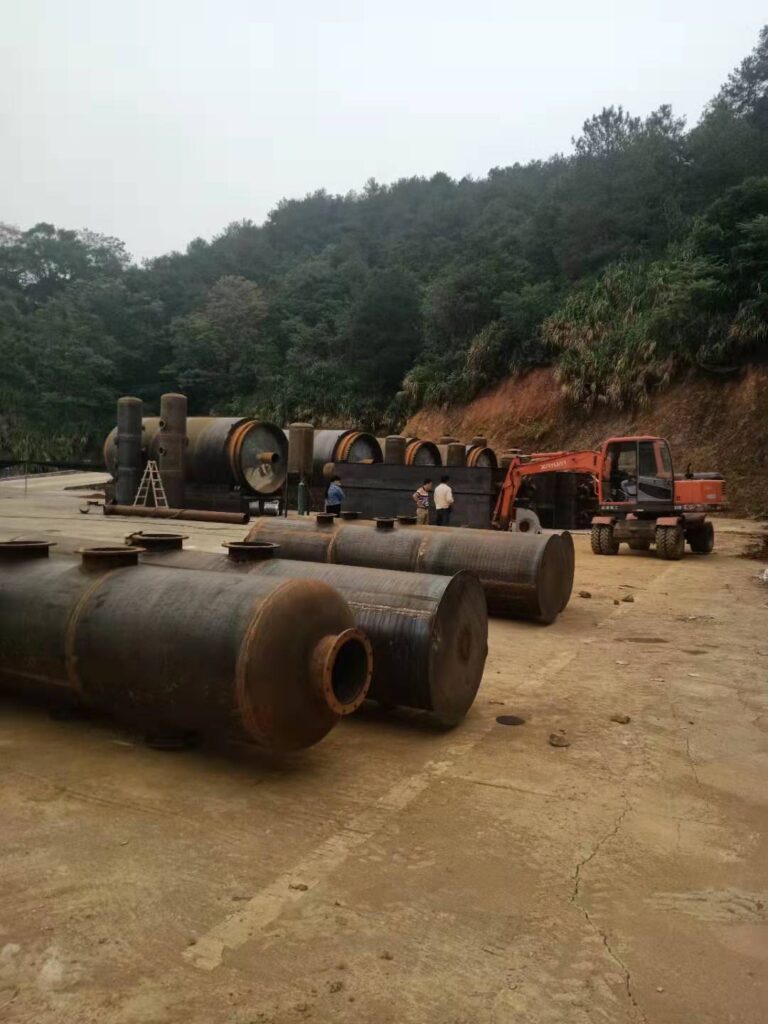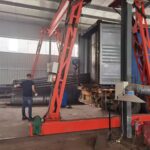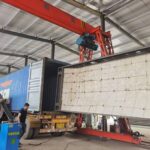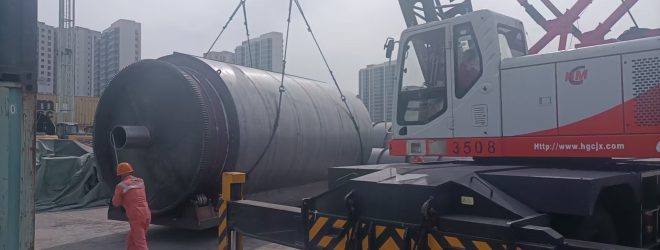

Distillation Equipment Project in Malaysia In February 2026, a waste-tire
Malaysia Waste Tire Pyrolysis Project
In May 2021, Malaysia purchased two intermittent pyrolysis units for waste tires.
Project Background:
Towards the beginning of 2021, a waste management company located in Malaysia encountered an increasingly complex problem both logistically and environmentally. Due to increased Malaysian regulation of “Scheduled Waste,” the cost associated with ELT disposal had been increasing.
The client required a solution which would enable it to reduce the amount of waste that is destined for landfills while at the same time recovering valuable products. The industrial sector in Malaysia has high consumption levels of both IFO and carbon black, which presents an ideal market for products from the pyrolysis process. Two intermittent pyrolysis units were installed by the client in May 2021.


Configuring Solutions For Clients
In order to satisfy the needs and budgets of the client, a Batch Pyrolysis Plant will be used. In comparison to continuous plants, batch plants are relatively easier to control and maintain.
System configuration
Number of Units: 2 Batch Pyrolysis Plants.
Capacity: 6 tons per unit/day (Total capacity 12 tons/day).
Reactor: Horizontal rotary reactor to ensure uniform heating of the tire.
Cooling process: High efficiency condensation system named “Three-in-One”, which is capable of dealing with the high ambient temperature in Malaysia in order to maximize oil gas liquefaction.
Environmental protection: “Dedusting system” with water spray, activated carbon and ceramic ring filters to comply with the emission standards of Malaysia’s Department of Environment.
Project Results

ISO CE Approved
The equipment quality has passed IAF, CNAS, ISO, CE certifications, Certified by international professional organizations, the equipment is safe and reliable.

AAA Credit Audited Enterprise
One of the top refining equipment manufacturers in China, The government Audited Superb as AAA credit company (top level).

Solutions for Pyrolysis And Distillation
We will provide you with the latest industry solutions, and provide you with a one-year after-sales warranty to ensure stable operation of the equipment.

24-hour service
We have professional engineers to solve various problems for you, including equipment, process, material problems, etc.

Professional R&D team
We have obtained a number of utility model patents, including distillation production equipment and pyrolysis module equipment.

Fast Delivery
We have sufficient stock of pyrolysis and distillation equipment to ensure efficient logistics and fast delivery.
Following 12 months of continuous operations, the project performance analysis was conducted, revealing high efficiency and consistent production levels.
Performance Results
Annual Processing Capacity: Running for 300 days per year, the units were capable of processing about 3,600 tons of used tires.
Oil Production Rate: The high-grade waste tires (truck tires) generated an average of 45%.
Annual Fuel Production: 1,620 tons of fuel per annum.
Economic Analysis
In order to gauge the economic feasibility, we consider the equation between operating expenses and revenue from the sales of recovered products (Oil, Carbon Black, and Steel Wire).
Capital and Operating Expenses
The upfront capital investment included machinery, transportation, site preparation, and installation.
Estimated Capital Investment: $250,000
Annual Operating Expenses: ($180,000).
Annual Revenue CalculationThe revenue is derived from three main streams:
Pyrolysis Oil: 1,620 tons X $500/ton = $810,000
Carbon Black: 1,080 tons X $60/ton = $64,800
Steel Wire: 430 tons X $150/ton = $64,500
Total Gross Revenue: approx $939,300
Net Profit = $939,300 – $180,000 = $759,300
Given the initial investment of $250,000, the payback period was achieved in less than 5 months of full-capacity operation, representing an exceptionally high-yield environmental project.
Waste Plastic-to-Fuel Refining Equipment Two Sets of Waste Plastic-to-Fuel Refining
Conclusion
The 2021 Malaysia project is one such example that highlights how intermittent pyrolysis systems can be used to target the Southeast Asian region. By treating 12 tons of tires on a daily basis, the client has been able to:
Ensure that 3,600 tons of waste tires will be diverted from the landfills of that region each year.
Provide themselves with a renewable source of fuel that does not involve the extraction of fossil fuel resources.
Make profits quickly while demonstrating the compatibility between being environment-friendly and making money.
The success of this project has made the client want to install continuous pyrolysis systems by the end of 2026.