Top Manufacturer of Pyrolysis Machines/Units

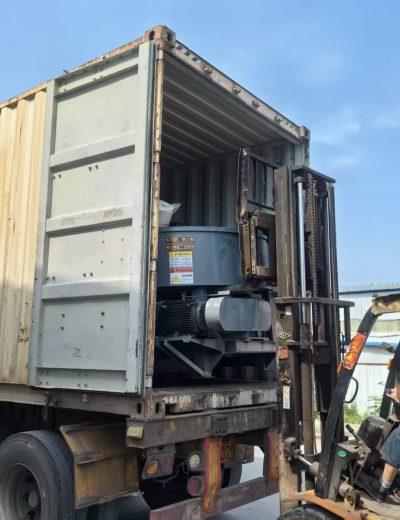
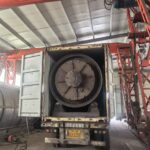
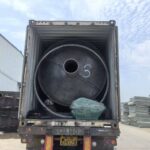
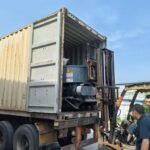
Three Pyrolysis Units In Iran In August 2024

The project timeline from contract signing to handover was eight weeks for procurement and logistics and a further six weeks for mechanical installation and commissioning.

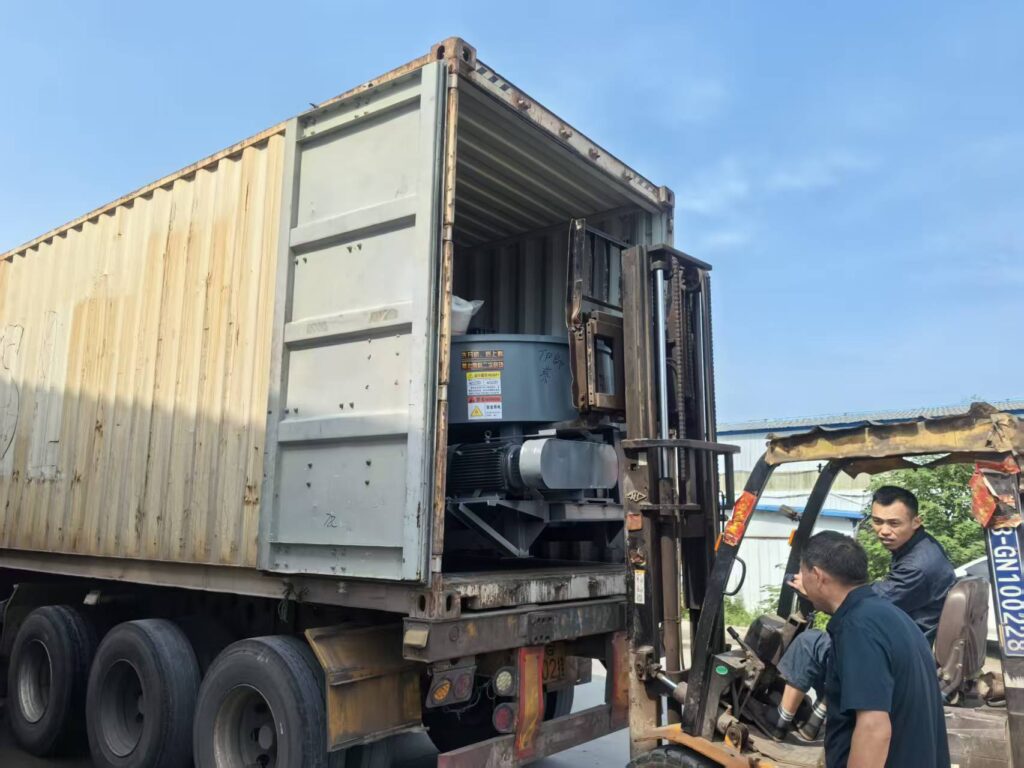
Photos and videos of three pyrolysis units shipped to Iran in August 2024-3

Project Background

In August 2024, a regional industrial recycler engaged our engineering team to install three modular tire pyrolysis units to address rising end-of-life tire volumes and local fuel demand.

The client — a mid-sized waste-management and resource-recovery company — wanted a turnkey installation: equipment supply, civil works supervision, onsite commissioning, operator training, and a one-year performance guarantee. The site chosen by the client had existing utilities and freight access but required tailored layout changes and emissions-control integration to meet local environmental expectations.

Configuring Solutions For Clients

We designed a solution that balanced throughput, operability, and local operating conditions. Three identical modular pyrolysis lines were selected to provide operational flexibility (each line can operate independently for maintenance or scale-up). Each line was specified for 20 tonnes/day nominal tire feed and included: a batch-feed reactor with automated feed control, an oil condensation train with stepped condensers and knock-out vessels, a gas recycling loop to capture non-condensable syngas for on-site heating, an air-pollution control bundle (cyclone + wet scrubber + activated-carbon polishing stage), and a material-handling system for shredded tire feedstock and char discharge. We included remote monitoring instrumentation (temperature, pressure, oil flow, condensate temperature) and integrated basic PLC logic to allow both local HMI control and remote telemetry for preventive maintenance.

Because the client operates in a region with limited spare-part access and stringent seasonal temperature swings, we specified ruggedized electrical components, overspecified insulation on piping, and stocked a local spare-parts kit that covers wear items (seals, thermocouples, gaskets) for the first 12 months. We also engineered a low-complexity carbon-black processing option so the char could be either upgraded to a saleable carbon product (via simple screening and mild grinding) or sent directly as a bulk fuel for industrial boilers depending on local buyer requirements.

Training and commissioning were central to our scope. We provided a five-day onsite operator course covering safe feedstock handling, reactor heat-up and cool-down procedures, routine sampling and lab checks (oil density, moisture), basic troubleshooting, and environmental monitoring reporting. During commissioning we ran the lines through a 30-day performance validation (feedstock variability tests, oil yield mapping across temperature setpoints, and emissions testing at steady state) and delivered a documented Operation & Maintenance (O&M) manual tailored to the installed system and local personnel qualifications.

This approach delivered operational resilience (modular redundancy), regulatory compliance (integrated emissions control and monitoring), and commercial flexibility (two product pathways: sell as crude pyrolysis oil or further distill/upgrade). The modular design also shortened installation time and reduced civil works compared with a single, monolithic plant of equivalent capacity — an important capital-efficiency advantage for the client.

Project Results

Photos and videos of three pyrolysis units shipped to Iran in August 2024-8
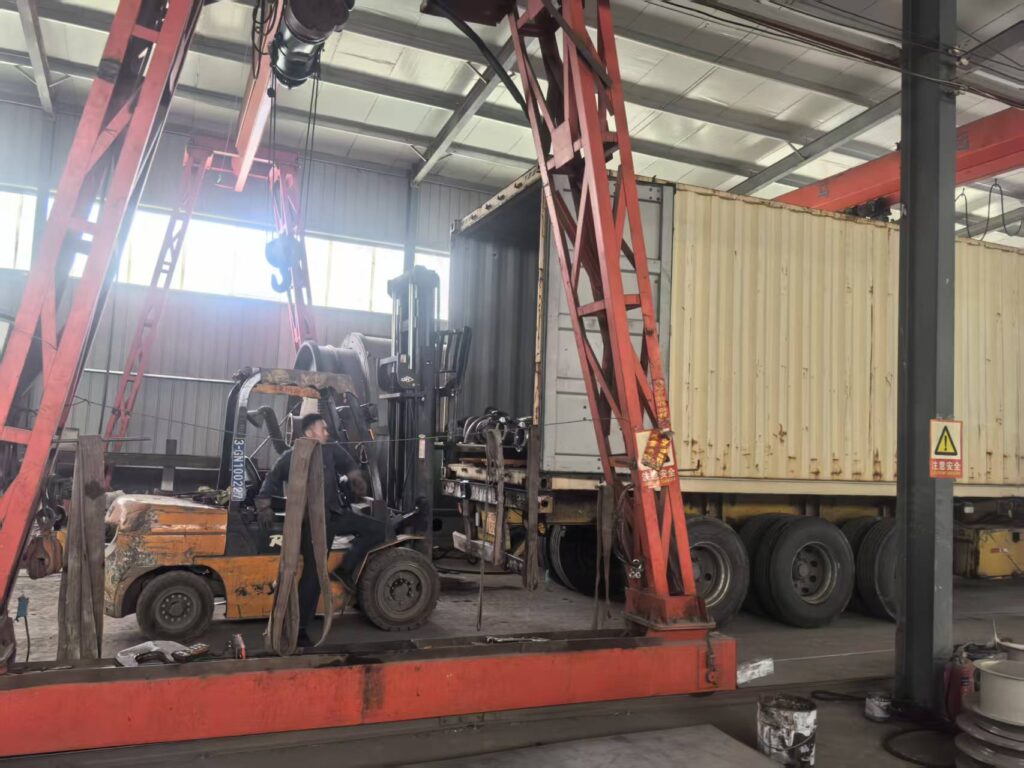
Photos and videos of three pyrolysis units shipped to Iran in August 2024-3
Photos and videos of three pyrolysis units shipped to Iran in August 2024-4
PyrolysisUnit ISO CE Approved

ISO CE Approved

The equipment quality has passed IAF, CNAS, ISO, CE certifications, Certified by international professional organizations, the equipment is safe and reliable.

PyrolysisUnit AAA Credit Audited Enterprise

AAA Credit Audited Enterprise

One of the top refining equipment manufacturers in China, The government Audited Superb as AAA credit company (top level).

PyrolysisUnit Solutions for Pyrolysis And Distillation

Solutions for Pyrolysis And Distillation

We will provide you with the latest industry solutions, and provide you with a one-year after-sales warranty to ensure stable operation of the equipment.

PyrolysisUnit 24-hour service

24-hour service

We have professional engineers to solve various problems for you, including equipment, process, material problems, etc.

PyrolysisUnit Professional R&D team

Professional R&D team

We have obtained a number of utility model patents, including distillation production equipment and pyrolysis module equipment.

PyrolysisUnit Fast Delivery

Fast Delivery

We have sufficient stock of pyrolysis and distillation equipment to ensure efficient logistics and fast delivery.

Key operational performance (annual basis, steady-state):

  • Annual waste tire processing capacity (three units): 19,800 tonnes/year.
    (Assumption: each unit 20 t/day × 330 operating days × 3 units = 19,800 t/year.)

  • Average pyrolysis oil yield (by weight): 42% (industry-typical steady-state average).
    → Annual pyrolysis oil produced: 8,316 tonnes/year.

  • Annual fuel (pyrolysis oil) volume (approximate): ~8,753,684 liters/year.
    (Using oil density 0.95 kg/L → 1 t = 1000 kg → 1000/0.95 ≈ 1,052.63 L per tonne.)

Byproduct volumes (annual, estimated):

  • Pyrolysis char (solid residue) ≈ 6,930 tonnes/year (35%).

  • Recovered steel ≈ 3,564 tonnes/year (18%).


Simple investment & revenue calculation

Assumptions used

  • Installed capital expenditure (CAPEX) per unit (equipment + standard installation): USD 850,000.

  • Contingency / balance-of-plant (civil, utilities, shipping, commissioning, training) multiplier: +20%.

  • Annual operating cost (energy, labor, consumables, maintenance): USD 40 per tonne processed.

  • Sale prices (conservative): pyrolysis oil USD 380 / tonne, char USD 90 / tonne, recovered steel USD 200 / tonne.

Step-by-step math

  1. Total CAPEX (three units): 3 × 850,000 = USD 2,550,000.

  2. CAPEX with 20% contingency: 2,550,000 × 1.20 = USD 3,060,000.

  3. Annual processed feedstock: 19,800 t/year.

  4. Annual operating cost: 19,800 t × USD 40/t = USD 792,000 / year.

  5. Annual product volumes:

    • Oil: 19,800 t × 0.42 = 8,316 t/year.

    • Char: 19,800 t × 0.35 = 6,930 t/year.

    • Steel: 19,800 t × 0.18 = 3,564 t/year.

  6. Annual revenue (conservative pricing):

    • Oil revenue: 8,316 t × USD 380/t = USD 3,161, (please see full number below).

    • Char revenue: 6,930 t × USD 90/t = USD 623,700.

    • Steel revenue: 3,564 t × USD 200/t = USD 712,800.

(Complete oil revenue calculation) 8,316 × 380 = 3,161, (8,316 × 300 = 2,494,800; 8,316 × 80 = 665,280) → total USD 3,160,080.

  1. Total annual revenue: 3,160,080 + 623,700 + 712,800 = USD 4,496,580 / year.

  2. Annual profit before tax: revenue − operating cost = 4,496,580 − 792,000 = USD 3,704,580 / year.

  3. Simple ROI (annual profit ÷ CAPEX with contingency): 3,704,580 ÷ 3,060,000 ≈ 1.21 → 121% (annual return).

  4. Simple payback (CAPEX ÷ annual profit): 3,060,000 ÷ 3,704,580 ≈ 0.83 years (~10 months) — aggressive, illustrative calculation using conservative product prices but not accounting for taxes, financing costs, or market variability.

Important financial notes: this is a simplified, illustrative model. Real project finance should include: debt service (if financed), taxes, insurance, local regulatory permit costs, product offtake contract terms (spot vs long-term), downtime allowances beyond the 330 days assumption, marketing/transport costs for products, and capex escalation if procurement lead times are long. Sensitivity analysis on pyrolysis oil price and days-of-operation materially affects ROI.

Other Cases

Conclusion

The three-unit modular installation delivered a rapid, low-footprint solution to convert nearly 20,000 tonnes/year of end-of-life tires into saleable fuel and byproducts. Under conservative operational assumptions (42% oil yield, robust emissions controls, and conservative product pricing), the system demonstrates strong economics: significant annual fuel production (~8,316 tonnes / ~8.75 million liters), diversified revenue streams (oil, char, steel), and a quick simple payback on capital deployed.

For the client, the key commercial wins were operational flexibility (modular redundancy), lower upfront civil scope versus a single large plant, and local value capture by converting a municipal waste stream into marketable commodities. We recommend follow-up actions for the client: secure multi-year offtake agreements for pyrolysis oil or arrange local upgrading, perform a market-sensitivity review (price vs. days-of-operation), and plan a phased spare-parts stocking strategy to ensure >330 annual operating days in year-two and beyond.

If you’d like, I can (a) produce a one-page customer-facing PDF version of this case study, (b) run a sensitivity table showing ROI across oil prices from USD 300–500/t and operating days from 250–330, or (c) convert the financials into a short investor slide — tell me which and I’ll generate it here.

Scroll to Top