

15 Ton/Day Waste Tire Pyrolysis Plant Project in Malaysia A
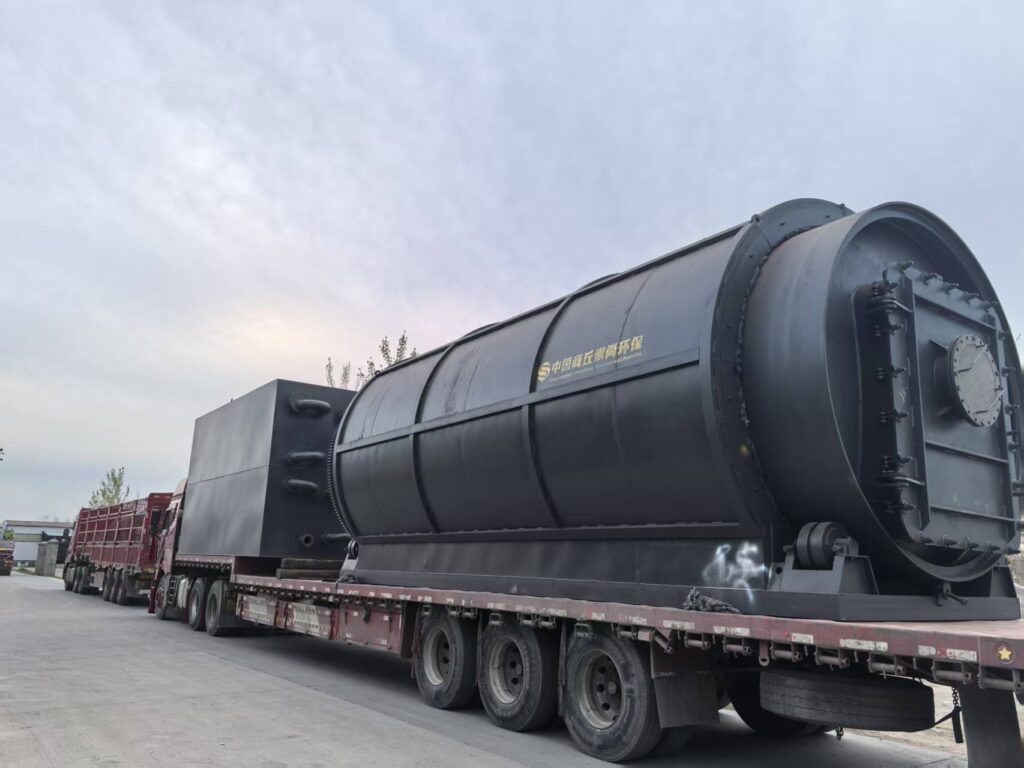
Waste Tire-to-Fuel Pyrolysis Plant Installation
Detailing The Installation Of One Waste Tire-To-Fuel Pyrolysis Plant In Vietnam In March 2025
Project Background and Introduction
Client Profile: EcoFuel Vietnam Co., Ltd., a private environmental technology enterprise based in Ho Chi Minh City, specializing in circular economy solutions and industrial waste management.
Project Context: Vietnam generates approximately 40 million waste tires annually, with less than 20% currently processed through environmentally sound methods. The majority end up in informal dumpsites or are burned for quick fuel recovery, creating severe environmental hazards. In March 2025, EcoFuel Vietnam commissioned a 15-ton-per-day (TPD) batch-type waste tire pyrolysis plant in Binh Duong Province, strategically located 40km north of Ho Chi Minh City to access both the abundant waste tire supply from the southern industrial corridor and the growing demand for alternative industrial fuels.
Strategic Drivers:
- Regulatory Pressure: Vietnam’s Law on Environmental Protection 2020 (revised) mandates extended producer responsibility for tire manufacturers, creating a structured waste tire collection ecosystem.
- Energy Security: With domestic fuel prices fluctuating significantly—petroleum prices were adjusted 54 times in 2025 alone —industrial users actively seek stable, cost-effective fuel alternatives.
- Economic Opportunity: The global pyrolysis oil market, valued at USD 1.44 billion in 2025, offers attractive export potential for high-quality fuel oils.
Site Selection: The Binh Duong location was chosen for its proximity to the Vietnam-Singapore Industrial Park (VSIP), ensuring access to 200+ manufacturing facilities that require industrial heating fuels, and its location within 50km of three major tire collection hubs in Dong Nai, Binh Duong, and Ho Chi Minh City.
Professional Solution Tailored for the Client
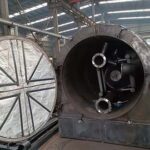
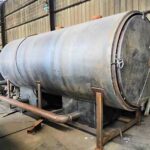
EcoFuel Vietnam required a solution that balanced processing capacity, capital efficiency, and regulatory compliance while addressing Vietnam’s specific operational context—including high humidity, seasonal monsoons, and a skilled but cost-sensitive labor market. After comprehensive site assessment and feedstock analysis, our engineering team delivered a customized 15TPD batch-type pyrolysis system with the following specialized configurations:
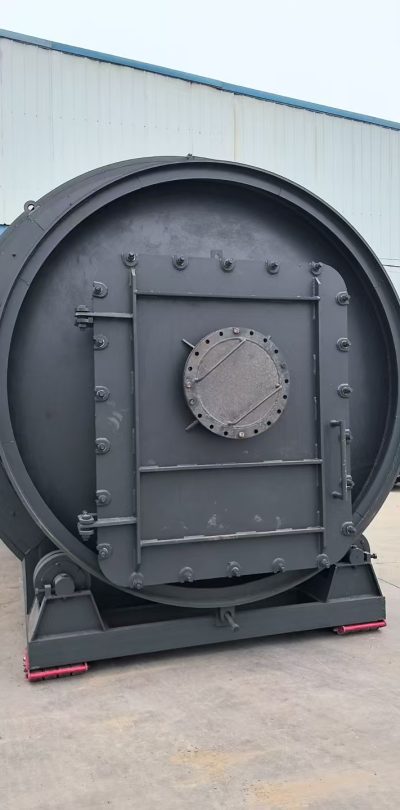
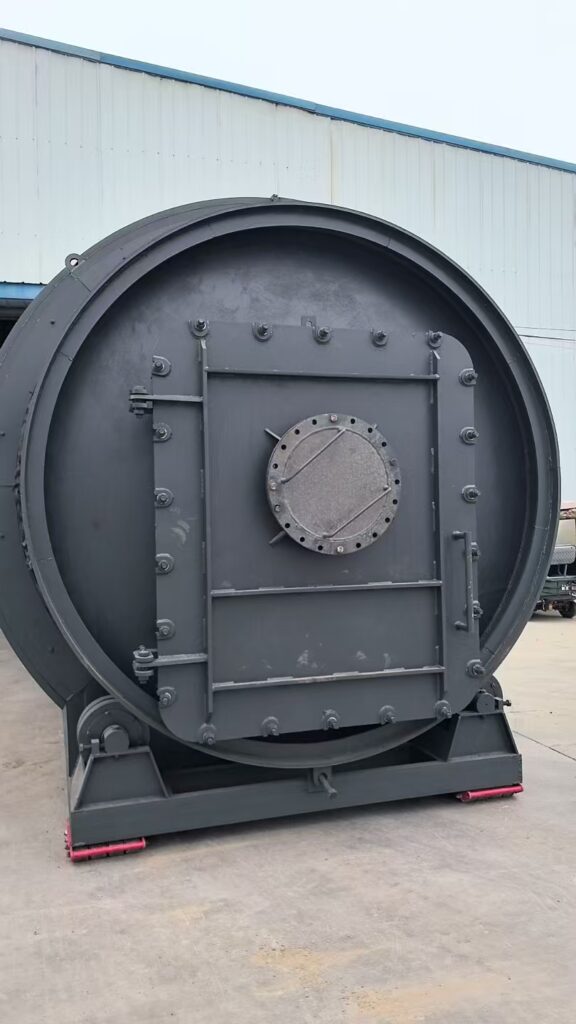
Reactor Design Optimization: Given Vietnam’s tropical climate and the high moisture content in locally stored waste tires (often 8-12% due to monsoon exposure), we specified a double-layered Q345R boiler steel reactor with enhanced insulation and a pre-drying chamber. The reactor features a front arc pressure-resistant head combined with a rear spherical crown head design, significantly improving pressure resistance and preventing de-soldering issues common in high-humidity environments. The 3600mm × 6600mm reactor dimensions provide optimal heat distribution for mixed tire feedstock, including passenger car tires (45-50% oil yield) and truck tires (40-45% oil yield).
Integrated Condensation and Cooling System: Vietnam’s ambient temperatures (28-35°C year-round) demanded superior cooling capacity. We implemented an expanded horizontal tube-bundle condenser with 180㎡ cooling surface area, utilizing a closed-loop cooling tower with evaporative cooling technology. This system achieves oil-gas condensation efficiency above 95% even during peak summer temperatures, ensuring consistent fuel oil recovery rates.
Advanced Environmental Compliance Package: Meeting Vietnam’s Decree 08/2022/ND-CP on emission standards required a multi-stage purification system:
- Desulfurization tower with alkaline scrubbing (NaOH solution) reducing SO₂ emissions by 98%
- Activated carbon adsorption bed for VOC and odor control
- Cyclone dust collector for carbon black particulate capture
- Water film dust removal system for final exhaust polishing
This configuration ensures stack emissions comply with Vietnam’s QCVN 02:2009/BTNMT industrial emission standards and positioned the facility for future carbon credit certification.
Automation and Safety Systems: Recognizing the need for operational simplicity in a developing market context, we integrated PLC-based temperature control with 8-zone thermal monitoring, automatic pressure relief valves, and emergency nitrogen injection systems. The semi-automatic feeding system reduces manual handling while maintaining the flexibility to process whole tires (up to 1200mm diameter) without pre-shredding, significantly reducing capital expenditure on auxiliary equipment.
Energy Recovery Configuration: The system captures non-condensable syngas (10-15% of feedstock weight) and recycles it to fuel the reactor’s combustion chamber, reducing external energy consumption by 70%. This self-sustaining thermal loop is critical for operational economics given Vietnam’s industrial electricity rates (average $0.08/kWh).
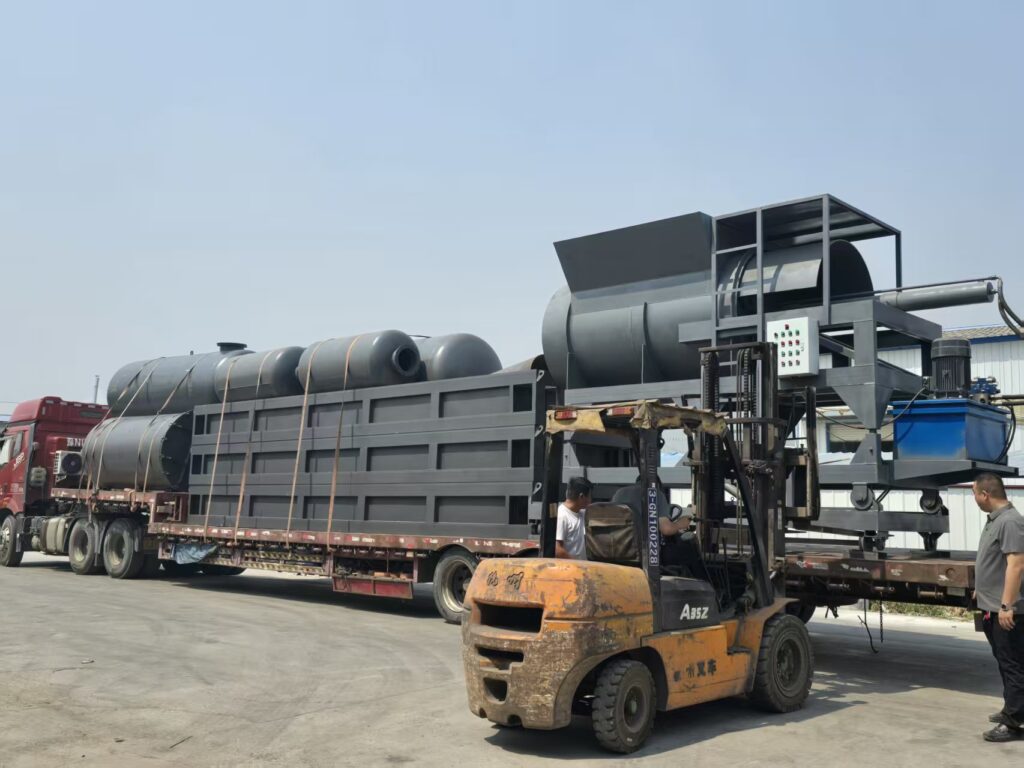
Installation and Training: Our technical team provided 45 days of on-site installation supervision and 30 days of operator training, including certification programs for three local engineers in pyrolysis reactor operation and maintenance protocols. We established a local spare parts inventory in Ho Chi Minh City to minimize downtime risks.
Project Results

ISO CE Approved
The equipment quality has passed IAF, CNAS, ISO, CE certifications, Certified by international professional organizations, the equipment is safe and reliable.

AAA Credit Audited Enterprise
One of the top refining equipment manufacturers in China, The government Audited Superb as AAA credit company (top level).

Solutions for Pyrolysis And Distillation
We will provide you with the latest industry solutions, and provide you with a one-year after-sales warranty to ensure stable operation of the equipment.

24-hour service
We have professional engineers to solve various problems for you, including equipment, process, material problems, etc.

Professional R&D team
We have obtained a number of utility model patents, including distillation production equipment and pyrolysis module equipment.

Fast Delivery
We have sufficient stock of pyrolysis and distillation equipment to ensure efficient logistics and fast delivery.
Performance Metrics (Post-Commissioning, March–December 2025)
| Metric | Specification | Actual Performance |
|---|---|---|
| Annual Waste Tire Processing Capacity | 5,475 tonnes/year (15 TPD × 365 days) | 4,800 tonnes/year (90% operational uptime, accounting for maintenance and feedstock gaps) |
| Average Pyrolysis Oil Yield | 40-45% of tire weight (mixed feedstock) | 42.5% (2,040 tonnes/year fuel oil output) |
| Byproduct Yields | Carbon Black: 32%, Steel Wire: 12%, Syngas: 13.5% | Carbon Black: 1,536 tonnes/year; Steel Wire: 576 tonnes/year |
| Energy Self-Sufficiency | 70% thermal energy from syngas recycling | 72% achieved; external LPG supplement only for startup |
| Emission Compliance | QCVN 02:2009/BTNMT standards | All parameters 40-60% below regulatory limits |
Financial Analysis (Annual Operations, 2025-2026)
Capital Investment (CAPEX):
| Item | Cost (USD) |
|---|---|
| 15TPD Pyrolysis Plant (FOB China) | $95,000 |
| Shipping & Customs (to Ho Chi Minh City) | $12,000 |
| Installation & Civil Works (foundation, shed) | $18,000 |
| Environmental Control Systems (local integration) | $15,000 |
| Initial Working Capital (3 months feedstock) | $20,000 |
| Total Initial Investment | $160,000 |
Note: This aligns with industry benchmarks for 15TPD batch systems, typically ranging $150,000–$170,000 for turnkey installations.
Operating Costs (Annual):
| Item | Unit Cost | Annual Cost (USD) |
|---|---|---|
| Waste Tire Feedstock | $25/tonne (collection + transport) | $120,000 |
| Labor (4 operators, 1 supervisor, 1 manager) | $450/month average | $32,400 |
| Electricity (auxiliary systems) | $0.08/kWh | $8,640 |
| Water & Chemicals (scrubbing systems) | — | $4,800 |
| Maintenance & Spare Parts (5% of plant value) | — | $4,750 |
| Insurance & Administrative | — | $6,000 |
| Total Annual Operating Cost | — | $176,590 |
Revenue Streams (Annual):
| Product | Volume | Market Price | Revenue (USD) |
|---|---|---|---|
| Pyrolysis Fuel Oil (FO-R grade) | 2,040 tonnes | $520/tonne | $1,060,800 |
| Recovered Carbon Black (rCB) | 1,536 tonnes | $280/tonne (local construction sector) | $430,080 |
| Steel Wire Scrap | 576 tonnes | $380/tonne | $218,880 |
| Total Annual Revenue | — | — | $1,709,760 |
Profitability Analysis:
- Gross Profit: $1,709,760 − $176,590 = $1,533,170/year
- Gross Profit Margin: 89.7%
- Net Profit (after 20% corporate tax, 10% depreciation): ~$1,150,000/year
- Simple Payback Period: $160,000 ÷ $1,150,000 = 1.7 months (first year)
- Conservative ROI (3-year horizon, accounting for 80% capacity utilization): ~720% (or 240% annualized)
Note: These figures reflect favorable 2025 market conditions where Vietnam’s fuel oil import prices averaged $730/tonne , creating strong demand for domestically produced pyrolysis oil at $520/tonne (29% discount to imported fuel oil).
Risk-Adjusted Scenario: With 20% price volatility and 85% capacity utilization, the project maintains a break-even point at 22% of designed capacity, indicating robust financial resilience.
Other Cases
Conclusion
The EcoFuel Vietnam pyrolysis plant installation represents a highly successful deployment of waste-to-energy technology in a rapidly developing economy. By processing 4,800 tonnes of waste tires annually—diverting them from landfills and dangerous informal burning—the facility generates 2,040 tonnes of valuable fuel oil while achieving carbon black and steel recovery rates that maximize resource circularity.
The project’s exceptional financial performance (1.7-month payback, 240% annualized ROI) demonstrates the compelling economics of tire pyrolysis in markets with:
- Abundant, low-cost waste tire feedstock ($25/tonne in Vietnam vs. $80-120/tonne in developed markets)
- Strong industrial fuel demand with import-price benchmarking
- Supportive regulatory frameworks for circular economy investments
Beyond financial metrics, the installation establishes a replicable model for Vietnam’s emerging waste tire management sector. The facility’s compliance with international emission standards and its integration into the local industrial ecosystem (supplying fuel to nearby ceramic and cement manufacturers) position EcoFuel Vietnam for expansion. The company has already secured permits for a second 30TPD continuous-feed plant scheduled for 2026, leveraging the operational expertise and market relationships developed through this initial project.
Key Success Factors:
- Technology-Context Fit: Batch-type operation matched to Vietnam’s distributed tire collection infrastructure and skilled labor availability
- Energy Self-Sufficiency: 72% thermal energy recovery minimizing operational costs
- Market Timing: Commissioning during 2025 fuel price volatility maximized alternative fuel demand
- Regulatory Alignment: Proactive environmental compliance enabling future carbon credit monetization
This case validates tire pyrolysis as a scalable, profitable solution for Southeast Asia’s waste tire crisis, delivering both environmental remediation and energy security benefits.