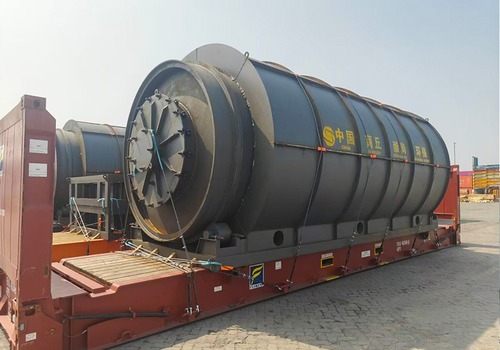


Wood vinegar, also known as pyroligneous acid, is an aqueous liquid collected from the vapors released during wood carbonization or biomass pyrolysis. It is not ordinary household vinegar and is not simply condensed water from burning wood. It contains water, organic acids, phenolic compounds, and other substances formed as the wood decomposes under oxygen-limited conditions.
Producing usable wood vinegar involves more than cooling smoke. The raw condensate must be collected, separated from tar and oil, and checked for impurities before it is considered suitable for a particular application.

What Actually Forms Wood Vinegar?
When wood is heated in a controlled, oxygen-limited environment, its cellulose, hemicellulose, and lignin begin to break down. The process releases a mixture of hot vapors and gases containing water vapor and many organic compounds.
As these vapors pass through a cooling system, part of the mixture condenses into liquid. The crude condensate may contain an aqueous phase, oily compounds, tar, and suspended particles. After appropriate settling and separation, the water-rich fraction is collected as wood vinegar.
Its chemical composition varies with the wood species, feedstock condition, carbonization temperature, and collection system. Acetic acid, formic acid, phenols, alcohols, aldehydes, and ketones may be present in different proportions.
From Wood Residues to a Separated Liquid
The quality of wood vinegar begins with the feedstock, but the collection and separation stages determine how much unwanted material remains in the final liquid.
Choosing Suitable Wood
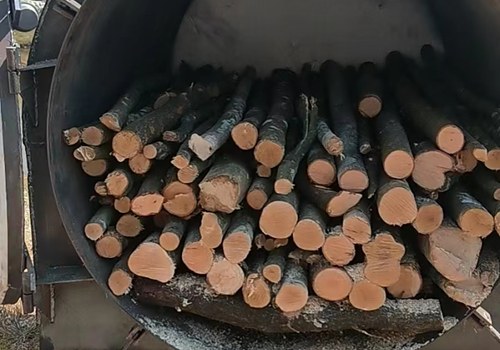
Hardwood, softwood, sawdust, and certain clean forestry residues can be considered for production. However, different species do not produce identical condensates. Their lignin, cellulose, hemicellulose, moisture, and mineral content influence the resulting liquid.
Painted timber, chemically treated wood, glued boards, and contaminated demolition waste should not be mixed into the feedstock. Their coatings and additives may introduce unwanted compounds into the condensate.
Before processing, remove foreign materials and prepare the wood to a reasonably consistent moisture level and particle size. The appropriate preparation specification depends on the reactor and feeding system.
Carbonization and Vapor Collection
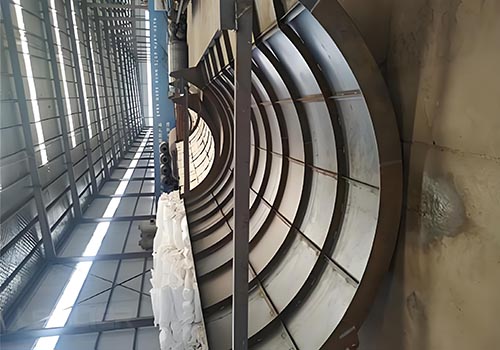
Prepared biomass enters a sealed carbonization reactor, where controlled heating takes place with restricted oxygen. The objective is thermal decomposition rather than open combustion.
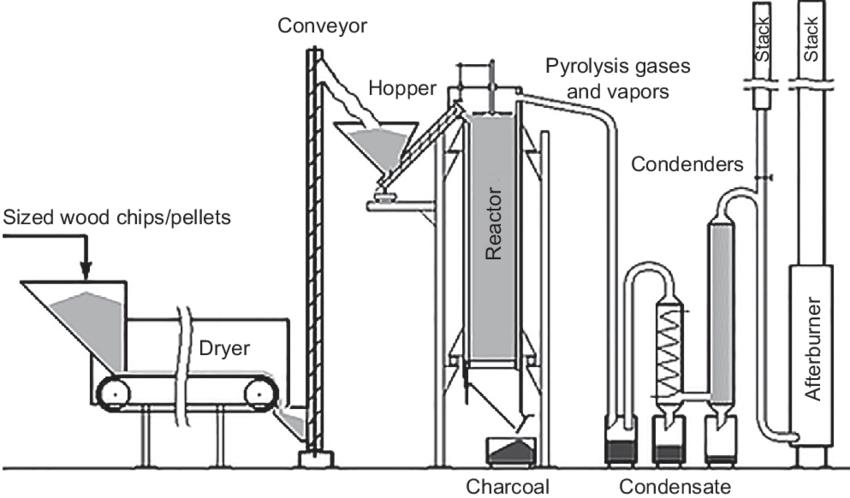
During heating, the reactor produces solid charcoal, combustible gases, and volatile compounds. The vapor stream is directed to the collection system, where cooling equipment reduces its temperature and recovers condensable liquids.
Non-condensable gases require a separate, properly designed handling system. Where the equipment supports gas recovery, part of the combustible gas may be reused as process fuel.
Why the First Condensate Is Not Finished Wood Vinegar
The liquid leaving the condenser is generally a crude condensate, not a finished commercial product. Depending on the process, it can contain suspended char, heavy tar, oily droplets, and several water-soluble organic compounds.
After collection, the liquid is normally transferred to suitable settling equipment. During separation, the heavier tar-rich material can accumulate separately from the aqueous fraction. The separated layers should be assessed rather than relying on a fixed assumption about their position or appearance.
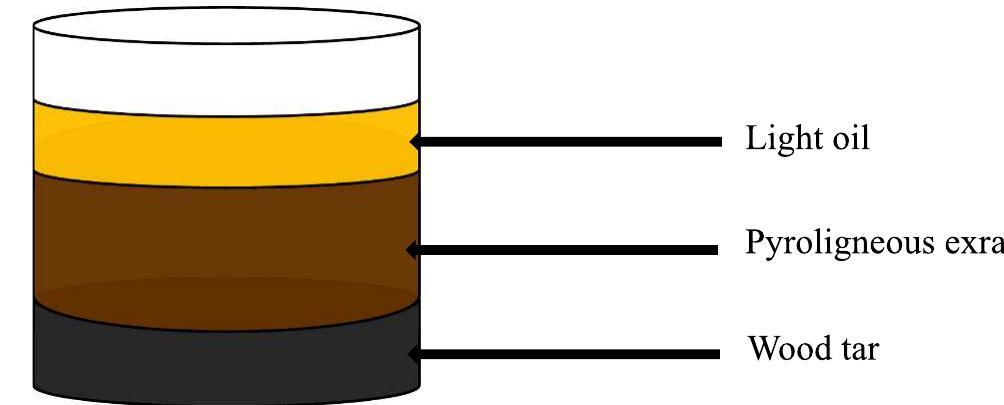
The water-rich portion is then carefully drawn off for further treatment. Filtration or other separation methods may be used to reduce suspended solids and remaining droplets.
A review of wood vinegar production describes this important distinction between the raw condensate, its aqueous phase, and the separated oily or tar-rich fraction. See the research review of wood vinegar production and properties.
How Is Wood Vinegar Quality Checked?
Wood vinegar is a complex mixture, so its color and smell alone cannot establish its quality. A batch intended for agricultural use may have different specifications from one intended for further chemical processing or a regulated food application.
| Quality Check | What It Helps Identify |
|---|---|
| pH and total acidity | Acidic characteristics and variation between batches. |
| Density and appearance | Basic physical consistency and visible changes. |
| Suspended solids and tar carryover | Remaining particles, oil droplets, and incomplete separation. |
| Chemical composition | Organic acids, phenols, and other compounds, where relevant. |
| Contaminant analysis | Potential PAHs, heavy metals, or other unwanted substances according to the intended use. |
Gas chromatography–mass spectrometry (GC-MS) can help identify organic compounds in more detailed product assessments. For commercial supply, testing should follow the requirements of the target market and the intended application.
Where Is Wood Vinegar Used?
Wood vinegar has attracted interest because its organic acids and phenolic compounds can influence biological activity. However, its practical value depends on the product’s composition, purification, concentration, and the way it is applied.
Agriculture and Plant Production
Diluted wood vinegar has been investigated as a plant biostimulant and as an input in soil and crop management. Depending on the formulation and application method, studies have reported effects on seed germination, plant development, and crop performance.
The response is concentration-dependent. A 2025 review of 65 studies found that lower application concentrations could benefit plant growth, while excessive concentrations could reduce growth or cause phytotoxic effects. For this reason, dilution should be based on the product specification, crop type, local regulations, and small-scale trials rather than a universal mixing ratio. Read the 2025 review of pyroligneous acid in agriculture.
Composting and Organic Residue Management
Wood vinegar is also studied as an additive in composting and organic residue management. Its acidic compounds may influence microbial activity and odor-related processes, but results depend on the compost material, application rate, and operating conditions. It should be evaluated through controlled trials rather than assumed to accelerate every composting process.
Wood Preservation and Industrial Formulations
Selected wood vinegar fractions have been investigated for their preservative and antimicrobial properties. Their suitability depends on chemical composition, treatment method, durability testing, and applicable product standards. Crude condensate should not be treated as a ready-to-use industrial preservative.
Food-Related Smoke Flavoring
Some purified smoke condensates are processed for use as food flavoring ingredients where regulations permit. This is a separate quality-controlled product category. Crude wood vinegar from a carbonization system must not be assumed to be food-grade or suitable for direct consumption.
Handling and Storage Need to Match the Product
Wood vinegar is acidic and may contain phenols, aldehydes, and other volatile organic compounds. Operators handling concentrated or unrefined liquid should use suitable gloves and eye protection, provide adequate ventilation, and follow the product’s safety documentation.
Store the liquid in closed, compatible containers away from excessive heat and direct sunlight. Container material should be selected after checking chemical compatibility with the actual product. Keep batches labeled and avoid mixing materials from different production runs without quality review.
Do not pour concentrated wood vinegar or untreated condensate into drains or natural water systems. Residual tar, contaminated liquids, and other process waste must be handled according to local environmental requirements.
What Should a Wood Vinegar Production System Include?
For commercial production, the collection line matters as much as the carbonization reactor. A suitable system should be assessed for:
- Stable feedstock preparation and controlled reactor operation.
- Vapor transfer that limits leaks and uncontrolled condensation.
- Cooling capacity matched to the vapor flow and operating conditions.
- Settling tanks or separators for aqueous and tar-rich fractions.
- Accessible filtration, collection, and cleaning arrangements.
- Safe handling of non-condensable gases and process residues.
The appropriate configuration depends on the raw material, target charcoal output, expected condensate volume, and required wood vinegar specification. Review our biomass pyrolysis plant solutions and wood pyrolysis machine to understand the available equipment options.
For readers interested in the wider carbonization process, our guide to the charcoal making process explains how charcoal and liquid byproducts are generated together.
Final Thoughts
Wood vinegar is a recoverable aqueous byproduct of wood and biomass carbonization, but collecting condensate is only the beginning. Feedstock selection, vapor cooling, tar separation, product testing, and appropriate storage all influence the quality of the final liquid.
Its agricultural and industrial applications also require product-specific evaluation. A well-designed production system should therefore be matched to the intended wood vinegar quality and the market it will serve. For a project assessment, contact PyrolysisUnit with your feedstock type, processing capacity, and target product requirements.