How to Solve the 2026 Fuel Crisis?
Global Fuel Markets Have Been Volatile from 2024 to 2026
Although some forecasts, such as EIA reports, suggest that oversupply will push oil prices down, geopolitical tensions and continued demand growth still pose risks to supply. Converting waste into fuel through pyrolysis has become an important alternative.
We recommend that policymakers and companies pay close attention to the localization of pyrolysis equipment manufacturing and integration across the industrial chain. They should also take advantage of government tax incentives and subsidies, such as China’s policy support for chemical recycling technologies and the fuel tax credits provided under the U.S. IRA, to accelerate project implementation.
Taking into account feedstock supply, return on investment, and environmental benefits, distributed and centralized pyrolysis-plus-distillation systems should be deployed only after a full evaluation of CAPEX, OPEX, and regulatory compliance. Cooperation with logistics, refining, and other enterprises should also be strengthened to achieve commercial-scale applications in waste resource recovery and diversified fuel supply.
Background: Fuel Supply, Demand, and Price Trends from 2024 to 2026
In recent years, global energy demand has continued to rise. In 2024, global energy demand grew by 2.2%, driven significantly by electricity consumption and transportation fuels. In the first half of 2024, international oil prices fluctuated widely. The average annual prices of WTI and Brent crude were about $78.8 and $83.4 per barrel, respectively, representing year-over-year increases of roughly 4% to 5%.
The main drivers included voluntary output cuts by OPEC+, heightened geopolitical tensions in the Middle East and between Russia and Ukraine, and recovering demand growth.
However, the outlook for the future remains mixed. Institutions such as the IEA have warned that geopolitical instability and production disruptions could create supply risks, while the EIA has forecast that supply may exceed demand in 2025 and 2026.
For example, the EIA projected Brent crude to average about $69 per barrel in 2025 and fall to $52 per barrel in 2026. Research from Sinopec suggests that by the end of 2026, there may be a structural surplus of 3 million barrels per day.
Overall, while oil prices may ease in the short term, the long-term demand for fossil fuels may remain elevated as the energy transition continues, making energy security an important issue. To reduce dependence on petroleum and manage price volatility, the development of alternative fuels and resource-circulation technologies has become a policy priority in countries such as China, the United States, and those in Europe, helping to build a more diversified fuel supply system.
Pyrolysis Technology: Principles and Process
Pyrolysis is the process of heating organic waste in an oxygen-free environment so that it thermally breaks down into smaller molecular products. It can convert polymers such as plastics, tires, oil sludge, and biomass into combustible gases, condensable pyrolysis oil, and solid carbon residue.
Using waste plastic pyrolysis as a common example, the plastic is first pretreated and shredded, then fed into a pyrolysis reactor where it decomposes at high temperatures of 300–550°C, producing hot oil vapor and gas. The vapor is rapidly condensed and separated into crude pyrolysis oil and liquid carbon. The non-condensable gas, or synthesis gas, is purified and recycled back into the furnace as combustion fuel.
The crude pyrolysis oil then enters a distillation and refining system, where fractionation, hydrogenation, and other processes produce fuel products that meet specification standards, such as diesel and naphtha.
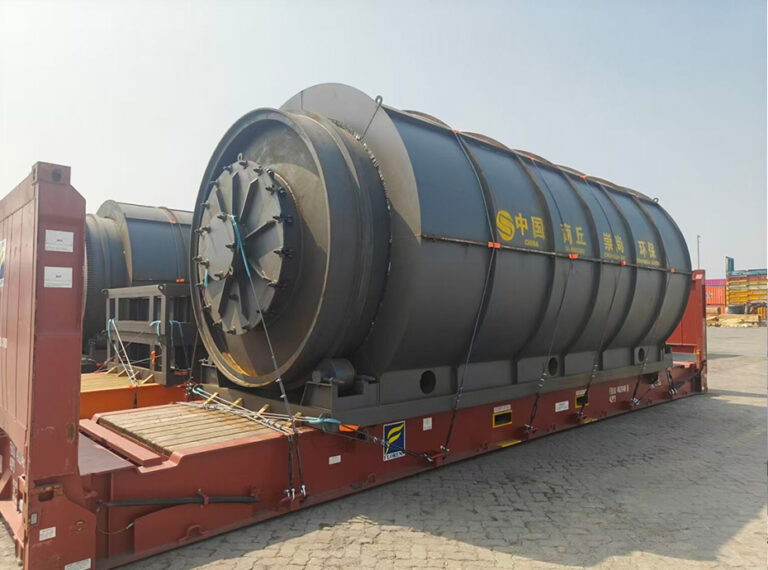
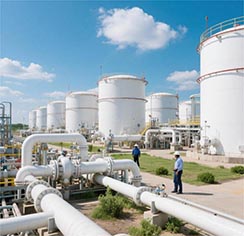
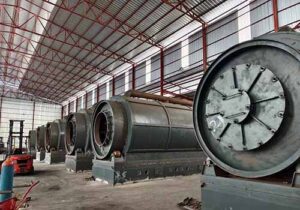
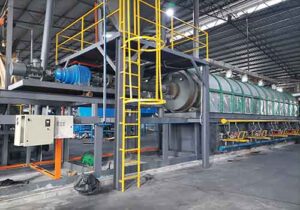
The pyrolysis system is the core component. For example, PyrolysisUnit’s horizontal rotary kiln pyrolysis system has obtained multiple patents and is known for mature technology and stable operation. The distillation unit further refines the pyrolysis oil. A typical system can process 10 to 15 tons per day and convert crude oil into high-quality fuel products such as diesel and naphtha. The overall process is shown below:
Waste collection
Preprocessing (shredding / drying)
Pyrolysis reaction (high-temperature oxygen-free cracking)
Condensation and separation (cooling the vapor)
Distillation and refining (fractionation, hydrogenation)
Finished fuel storage and transportation
Cases and Evidence
Domestic Demonstration and Industrial Projects
Since 2024, many regions in China have launched large-scale chemical recycling pilot projects for waste plastics and tires. For example, a soft-plastic chemical recycling pilot for municipal solid waste in Suzhou, supported by GIZ Germany, showed that more than 50% of plastic waste in typical municipal waste streams, with soft plastics accounting for more than 80%, can be recovered through pyrolysis-based chemical recycling. The resulting pyrolysis oil is of high quality and can be directly used in refineries or distilled into diesel after hydrogenation.
In July 2025, the world’s first 200,000-ton-per-year mixed waste plastic deep-cracking unit, built by Dongyue Chemical in Jieyang, Guangdong, successfully began trial production. This “one-step” technology does not require fine sorting and achieved a conversion rate of over 92% for mixed waste plastics.
Government officials and experts noted that processing 50 million tons of waste plastics per year is equivalent to developing 110 million to 150 million tons of crude oil production capacity. It could reduce dependence on oil imports by 20% and cut carbon dioxide emissions by about 250 million tons annually. This demonstrates the large-scale potential and dual-carbon benefits of pyrolysis fuel production.
International Experience and Market Trends
Large overseas companies are also investing in this area. ExxonMobil launched its first chemical recycling unit in Texas, United States, with an annual capacity of 40,000 tons of plastic waste under the Exxtend™ brand, enabling a plastic-to-naphtha recycling loop.
According to industry manufacturers such as Beston and Niutech, small plastic pyrolysis plants can have annual capacities of several thousand tons and an oil yield of 40% to 80% per year. Under clean-feedstock conditions, PP, PE, and PS plastics can reach oil yields of 70% to 90%.
Niutech, a Chinese publicly listed environmental company, reports that several ten-thousand-ton continuous pyrolysis projects are already operating in Denmark, Thailand, South Korea, and China, confirming the maturity and cost-effectiveness of the technology. International market research firms forecast that the global plastic waste pyrolysis oil market will grow at a compound annual growth rate of more than 5% from 2025 to 2034, with a market value of about $670 million in 2024.
These cases and data show that pyrolysis is practically valuable for handling mixed and contaminated waste while producing commercial fuel products.
Economic Analysis
The investment required for a pyrolysis project depends mainly on scale, process complexity, and feedstock characteristics. In general, equipment costs (CAPEX) vary widely: a small batch furnace may start at around $30,000, while a large continuous system can exceed $10 million.
For a project that processes 10,000 tons of waste plastic per year, total investment may range from tens of millions to hundreds of millions of yuan. Additional distillation and refining facilities may require another several million to tens of millions of dollars.
Operating costs (OPEX) include feedstock collection, energy use, maintenance, and labor. Net operating cost depends on the difference between recovered oil prices and crude oil prices. On the feedstock side, waste plastics and waste tires often come from municipal solid waste and industrial or agricultural waste. Some low-value feedstocks are inexpensive to obtain, and local governments often provide procurement subsidies or tax incentives. Biomass feedstocks are also relatively low cost.
In terms of yield, typical data suggest the following: waste plastic pyrolysis oil yield is about 40% to 80%; waste tire pyrolysis oil yield is about 35% to 45%; municipal solid waste and oil sludge have lower oil yields because of their mixed composition; and biomass yields only about 5% to 10% oil but produces large amounts of solid carbon. In energy recovery, most pyrolysis systems can use their own gas as fuel, increasing self-sufficiency.
Based on project examples and industry reports, when international crude oil prices are above $45 per barrel, the cost of producing chemical fuel from waste plastic is already comparable to traditional refining costs. Overall, pyrolysis projects are economically attractive when feedstock is abundant and fuel prices are high.
Feedstock Type | Oil Yield (%) | Heating Value (MJ/kg, Approx.) | Processing Difficulty | Typical CAPEX/OPEX (Million USD) |
Waste plastics (PE/PP/PS) | 40–80 (up to 90% for high-purity feedstock) | ~40 (liquid oil) | Medium (sorting and cleaning required) | CAPEX: 0.5–5; OPEX: depends on feedstock acquisition cost |
Waste tires / rubber | 35–45 | ~42 (pyrolysis oil) | Higher (shredding and steel removal required) | Similar to plastics; carbon black can add value |
Municipal solid waste | ~10–30 (depending on combustible fraction); most becomes char/gas | Mixed (organic matter ~20–25, plastics ~40) | Very high (complex sorting, high moisture content) | CAPEX: 5–20; OPEX: high (sorting operations) |
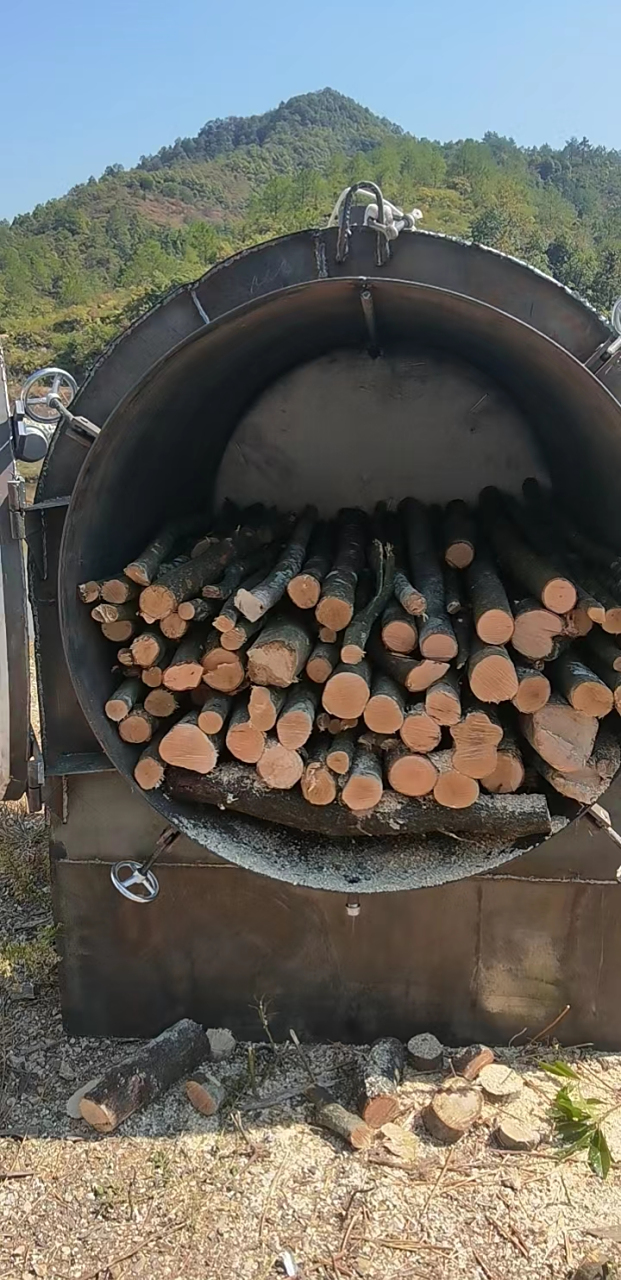
Biomass (straw, wood chips) | 5–10 | ~25 (bio-oil) | Medium (drying and grinding required) | CAPEX: 0.3–3; OPEX: low (feedstock is often cheap) |
Note: Oil yield and heating value are based on industry data. CAPEX/OPEX ranges are typical and depend on project scale, automation level, environmental controls, and other factors.
Environmental and Regulatory Impacts
Pyrolysis fuel production has both opportunities and challenges in terms of environmental performance and carbon reduction. On the one hand, converting waste into fuel can reduce the use of fossil oil and lower emissions from waste incineration.
As mentioned earlier in the Jieyang project example, processing 50 million tons of waste plastics per year could reduce carbon dioxide emissions by about 250 million tons annually. Solid carbon black and gas from waste tire or plastic pyrolysis can also be reused, making the full life-cycle impact better than direct incineration or landfilling.
On the other hand, pyrolysis processes must control emissions of volatile organic compounds (VOCs), sulfur oxides, nitrogen oxides, and other pollutants. They must be equipped with condensation recovery systems and exhaust-gas treatment facilities. China has included pyrolysis technology in national and local policy support programs. For example, the 2024 Industrial Structure Adjustment Guidance Catalogue lists industrial continuous cracking equipment as encouraged environmental equipment. Industry standards also require continuous, automated, fully enclosed designs to reduce pollution.
In addition, international standards and subsidy policies for sustainable fuels, such as the U.S. tax credit of up to $1 per gallon for renewable diesel and biodiesel, are being improved and will further affect business models. Overall, compliant operation of pyrolysis-plus-refining systems requires strict management of exhaust gas and by-products to maximize emission-reduction benefits and meet environmental regulations.
Comparison with Other Alternative Fuel Technologies
Compared with anaerobic digestion, pyrolysis mainly targets high-carbon, high-heating-value waste such as plastics, rubber, and biomass, whereas anaerobic digestion is suitable for wet organic matter such as food waste and sludge to produce biogas. Anaerobic digestion is gentle and technically mature, but it has low energy density and the gas still needs to be further utilized. Pyrolysis, by contrast, produces liquid fuels that are easier to store and transport and have higher energy density.
Gasification relies more heavily on very high temperatures, above 800°C, to produce synthesis gas. It can treat a wider range of waste, but the equipment investment and gas-cleaning costs are higher. Pyrolysis operates at moderate temperatures, typically 300–550°C. Its products condense directly into oil or solid char, making the process simpler, although further refining is required.
Biofuels such as ethanol and biodiesel are usually produced from crops such as corn or soybean oil, which creates competition with food and land use. Pyrolysis fuel uses waste feedstocks and therefore does not occupy farmland or compete with food supply. Mechanical recycling can only be used for single-material waste that can be sorted, while pyrolysis is more suitable for mixed and contaminated waste.
In summary, pyrolysis is a chemical recycling technology whose advantages lie in feedstock flexibility and the ability to produce fuels that can directly replace petroleum. When combined with distillation and refining, it forms a closed-loop system and complements other technologies.
Implementation Path and Business Model Recommendations
Pyrolysis projects can adopt a dual approach that combines small distributed systems and large centralized facilities. In China and other emerging markets, small and medium modular pyrolysis stations can be deployed in areas with concentrated plastic use or tire disposal, such as urban sanitation stations and industrial parks, so that waste can be processed locally, local fuel can be produced, and logistics costs can be reduced.
Feedstock sourcing should integrate tire recycling companies, plastic sorting plants, and offcuts from paper mills to build a stable supply chain. Biomass projects can work with agricultural cooperatives and power plants to supply straw and other feedstocks.
Large integrated recycling projects, such as the 200,000-ton Jieyang facility, require government guidance and industrial cluster support, including participation from upstream and downstream chemical and refining companies. In terms of financing, projects can seek government green industry funds, low-carbon loans, and industry subsidy policies. China has already introduced tax rebates and incentive catalogs for chemical recycling projects, and U.S. regulations such as the IRA can also significantly improve financial viability.
Potential partners may include environmental service companies, petrochemical groups, and downstream fuel users, such as oil companies that repurchase pyrolysis oil or jointly build hydrogenation and refining facilities. Business models can include equipment sales plus service, EPC contracting, or BOT operation.
Overall, the recommended model is one of “government guidance + market operation + technological innovation.” More capital can be attracted into the pyrolysis fuel sector through renewable fuel blending requirements, plastic taxes, and carbon trading mechanisms.
Risks and Limitations
The pyrolysis fuel industry still faces risks related to feedstock security, technological maturity, and market acceptance. Municipal solid waste and low-value plastic recovery rates are not high, so a well-developed recycling system is required. Projects must conduct extensive research and testing in the early stage to ensure equipment compatibility and environmental compliance.
Technically, pyrolysis conditions such as temperature and catalysts are highly sensitive to product distribution and must be optimized. During long-term continuous operation, equipment wear and carbon deposition must be managed.
Environmental compliance requirements are strict. If emissions are not properly controlled, community opposition may arise. On the market side, pyrolysis fuel must compete with existing fuels. If oil prices are low or regulatory incentives are insufficient, profit margins may be limited.
It is recommended that project developers conduct detailed feasibility studies, estimate oil output and selling prices carefully, use mature process designs such as continuous and fully automated systems to reduce risk, and diversify revenue by using multiple outputs, such as carbon black and local use of combustible gas.
Conclusion and Call to Action
In the face of the global energy transition and increasing environmental pressure, converting waste into alternative fuels through pyrolysis has strategic importance. This review shows that pyrolysis-plus-distillation technology has already been validated by multiple pilot projects and commercial installations in China and internationally.
We recommend that potential investors and policymakers: build on existing policy support, match project design to local waste-resource conditions, prioritize mature continuous pyrolysis plus refining solutions, and prepare for technical and market risks; use government subsidies, loans, and corporate partnerships to reduce CAPEX and OPEX pressure; and place strong emphasis on environmental compliance to ensure long-term sustainability.
This is a critical period for exploring waste resource recovery and diversified energy supply. If you are interested in working with us at PyrolysisUnit, we welcome your contact so we can promote the commercialization of pyrolysis technology and achieve both environmental and economic benefits.