1.The Philippine Waste Crisis and the Urgent Need for Advanced Thermal Conversion>>>
The Philippines faces a systemic environmental and infrastructural challenge stemming from rapid urbanization and decades of inadequate solid waste management. This pervasive issue is no longer confined to pollution statistics; it represents a critical failure in public infrastructure demanding immediate, industrial-scale technological intervention. The scale of the problem creates a unique and compelling market opportunity for definitive, resource-recovering solutions.
Quantifying the Untenable Reality
The volume of municipal solid waste (MSW) generated by the archipelago nation places it among the top waste generators in Southeast Asia. Projections indicate that the country’s total solid waste generation is expected to reach an alarming 23.61 million tons in the current year. This immense daily throughput necessitates high-capacity solutions that go far beyond incremental improvements in traditional waste handling. A significant portion of this challenge is driven by the plastic crisis: the nation generates approximately 2.7 million tonnes of plastic waste annually, with a startling 35% of that volume leaking into the open environment. This makes the Philippines the third-largest global contributor to marine plastics.
While the general composition of the Philippine MSW is characterized as highly organic (roughly 52.31%) and recyclable, the key problem lies in the complex, mixed, non-biodegradable fraction—particularly polyolefin plastics (PE, PP, PS) and end-of-life rubber tires. Traditional mechanical recycling methods often fail due to the variability and contamination inherent in this waste stream, leaving enormous volumes of material to accumulate in landfills or leak into waterways.
The Failure of Traditional Infrastructure and Regulatory Pressure
Local Government Units (LGUs) are primarily responsible for implementing and enforcing the Ecological Solid Waste Management Act of 2000 (RA 9003). This mandate requires comprehensive waste management, including strict segregation, collection services, and the establishment of Materials Recovery Facilities (MRFs).
However, many LGUs currently struggle with a systemic lack of proper waste disposal infrastructure, including adequate landfill sites and modern recycling facilities. This inadequacy often results in irregular or nonexistent collection services in far-flung and densely populated areas.
This systemic failure imposes massive financial liabilities on municipalities and compounds the environmental hazards. The recurrent problem of flooding, a major concern in cities, is demonstrably worsened by poor drainage blocked by plastic and other solid waste accumulation, as observed during events like Typhoon Ketsana (Ondoy). LGUs, therefore, face immense pressure to adopt reliable, large-volume reduction technologies that can deliver tangible environmental improvements and achieve regulatory compliance rapidly.
A crucial assessment reveals that the deployment of Pyrolysis Unit technology does not compete with existing efforts in composting or basic materials recovery. Instead, it is a specialized solution engineered to address the recalcitrant waste stream—the non-biodegradable, low-value plastics and rubber that generate the highest environmental damage through marine pollution and air pollution from illegal burning. Given that plastics can take 450 years or more to degrade in a landfill, a technological solution that converts this waste immediately into valuable commodities provides a definitive means of correcting this critical infrastructure deficit.
Furthermore, the high volume of MSW is concentrated in major economic hubs, including the National Capital Region (NCR), Central Luzon (Region III), and Southern Tagalog (Region IV). This concentration of predictable, high-volume feedstock makes large-scale, 24/7 processing capacity not merely an option, but an operational necessity for maximizing efficiency and profitability. This concentration of waste generation dictates that any viable technological solution must strategically favor industrial-scale continuous systems.
2.The Pyrolysis Unit Advantage: Technology and Feedstock Versatility>>>
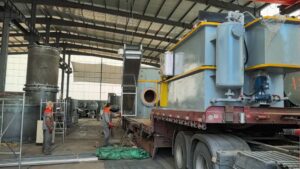
In addressing the Philippine waste crisis, the choice of conversion technology is paramount. Pyrolysis Unit provides an advanced, legally compliant, and resource-efficient thermal conversion pathway that transforms problematic waste into high-value energy commodities.
Pyrolysis Defined: The Legal and Clean Alternative
Pyrolysis is a process defined by the heating of carbon-based materials—specifically waste plastics and rubber tires—in an oxygen-deficient environment. This thermal decomposition breaks down the complex polymer chains of the feedstock into smaller molecules, yielding three main outputs: liquid fuel oil (Pyrolysis Oil), non-condensable gas (Syngas), and solid carbon char (Carbon Black).
A critical differentiator for investors is the regulatory standing of pyrolysis in the Philippines. Unlike mass-burn incineration, which is banned under Philippine law, pyrolysis operates under anaerobic conditions. This fundamental process difference ensures that the technology is legally viable, aligning fully with the Philippine Clean Air Act of 1999 and the Renewable Energy Act of 2008. By employing an enclosed, pollution-free process, Pyrolysis Unit systems meet strict environmental standards, positioning the investment securely within the regulatory framework.
Feedstock Mastery and Pretreatment Imperatives
Pyrolysis Unit technology is engineered to handle the exact waste streams that currently overwhelm Filipino infrastructure. The system efficiently processes the complex, low-value, mixed plastic garbage, including polyethylene (PE), polypropylene (PP), polystyrene (PS), and acrylonitrile butadiene styrene (ABS), alongside end-of-life rubber tires.
However, the efficiency and quality of the final product are highly dependent on feedstock preparation. For optimal performance, the Pyrolysis Unit system integrates raw material pretreatment steps. This typically involves using a crusher or shredder to break down bulk plastics into small, uniform particles, generally less than 5mm.
Furthermore, wet plastics may require dehydration to control the water content below 3%. Controlling moisture is essential, as water in the feedstock consumes substantial energy during the heating process, thereby reducing the net energy output and increasing operational costs.
Scaling the Investment: Continuous Pyrolysis for Economic Stability
For infrastructure investment targeting the high-volume, centralized waste streams found in the National Capital Region and surrounding economic corridors, the Continuous Pyrolysis Unit represents the optimal strategic choice compared to smaller, batch-type systems.
The decision to utilize continuous reactors is based on maximizing throughput stability and minimizing long-term operational costs. Continuous operation means the system avoids repeated cooling and reheating cycles, leading to lower energy consumption per unit of output and substantial energy savings over the operational lifetime. A high-capacity model, such as a continuous pyrolysis plant (e.g., the BLL-20 model), can efficiently process 20 to 24 tons of raw material per day. This high, uninterrupted throughput capacity is indispensable for securing competitive project financing and guaranteeing a stable return on investment (ROI) from high-volume municipal contracts.
The following table summarizes the strategic advantages of scaling up to continuous operation for the demanding Philippine market:
Table Title: Pyrolysis Unit System Selection: Batch vs. Continuous for Philippine Scale
Factor | Batch Pyrolysis (Low/Mid-Scale) | Continuous Pyrolysis (Industrial Scale) |
Upfront Investment | Lower, suitable for varied feedstock | Higher, due to automation and complexity |
Capacity & Throughput | Flexible, limited (e.g., 10T/day) | High volume, 24/7 operation (e.g., 20-24T/day) |
Operational Efficiency | Higher energy consumption due to repeated cycling | Lower long-term operational costs; higher energy efficiency |
Product Consistency | More variable quality | Consistent, uniform product quality for stable markets |
Continuous operation is the standard required for mitigating the greatest operational risk in waste management: inconsistent feedstock volume. By operating around the clock, Pyrolysis Unit ensures maximized “uptime” and guaranteed processing capacity, a crucial requirement for LGUs struggling to meet daily disposal needs. Furthermore, operating in a tropical, archipelagic climate demands robust engineering.
Pyrolysis Unit systems are designed with high-level safety features, including automatic pressure-releasing systems, fire protection, and automatic alarming. Essential cooling mechanisms, such as water cooling, are configured to handle high ambient temperatures and maintain the constant operational pressure necessary for achieving the maximum service life of 5 to 8 years for the equipment. The deployment of high-quality, climate-appropriate engineering is a non-negotiable factor in realizing long-term profitability in this challenging region.
3.Compliance and De-Risking Investment: Navigating the Philippine Regulatory Framework>>>
A key component of infrastructure investment due diligence is regulatory assurance. The Philippines has established clear, albeit complex, regulatory pathways and substantial fiscal incentives that dramatically de-risk compliant Waste-to-Energy (WtE) projects, provided the technological partner can successfully navigate the permitting environment.
Essential Environmental Permitting (DENR)
The Department of Environment and Natural Resources (DENR) governs the environmental safety and regulatory compliance of industrial facilities. A Pyrolysis Unit project, particularly one scaled for continuous industrial operation, requires several critical permits:
Environmental Compliance Certificate (ECC): This certificate is mandatory for projects deemed as Environmentally Critical Projects (ECPs) or those located in Environmentally Critical Areas (ECAs), which are presumed to have significant environmental impacts. Given the thermal conversion nature of pyrolysis, a detailed Environmental Impact Assessment (EIS) is required to secure the ECC.
Permit to Operate (PTO) Air Pollution Source and Control Equipments: As the pyrolysis process generates gases, a PTO is essential to ensure compliance with the Philippine Clean Air Act. Compliance verification is rigorous, requiring stack emission testing conducted by DENR-accredited third parties (TPSETFs).
According to EMB Memorandum Circular 2016-008, the minimum required load capacity for compliance testing must be at least 30% of the equipment’s declared operating capacity. Pyrolysis Unit technology must, therefore, be equipped with robust exhaust gas treatment and monitoring systems to consistently meet low-emission standards.
Hazardous Waste Generator Registration: While pyrolysis aims to minimize waste, the solid carbon residue may necessitate registration as a Hazardous Waste Generator. This requires securing management and disposal arrangements via accredited treatment, storage, and disposal (TSD) facilities.
While the government has introduced legislation such as the Energy Virtual One-Stop Shop Act and the Ease of Doing Business Act to streamline the issuance of permits and licenses for WtE facilities 24, the ECC and PTO processes remain detailed and may take several weeks to a few months to complete. The technological partner must provide the necessary documentation and technical specifications to ensure expedited approval.
Legislative Support and Attractive Fiscal Incentives
The Philippine legislative framework is strongly promoting WtE as a strategic national priority. House Bills, such as HB 4149 and HB 3913, are actively working to establish a National Framework for WtE Facilities that explicitly complements existing waste reduction and recycling efforts. The strategic importance of WtE is further reflected in the robust fiscal incentives offered under the Corporate Recovery and Tax Incentives for Enterprises (CREATE) Law:
Incentive Type | Benefit for Pyrolysis Unit Investment | Source |
Income Tax Holiday (ITH) | Exemption from income tax for four to seven years post-registration. | |
Enhanced Deduction Regime (EDR) | Option for enhanced deductions or a 5% Special Corporate Income Tax (SCIT) for ten years post-ITH expiration. | |
Duty Exemption | Exemption from duties on the importation of critical equipment and machinery. | |
The government’s dual approach—statutorily banning the cheapest, most polluting thermal conversion method (incineration) while offering substantial tax relief for compliant alternatives like pyrolysis—is an active mechanism to correct market inefficiencies and enforce environmental standards. This legislative support profoundly de-risks the investment. Furthermore, Republic Act No. 9003 mandates that financial institutions shall accord high priority in the extension of financial services to enterprises developing treatment facilities, directing them to allocate five percent (5%) of their loan portfolio to these projects. This governmental push for dedicated WtE financing significantly improves the project’s access to capital.
4.The Primary Revenue Engine: Monetizing Pyrolysis Oil as Industrial Fuel>>>
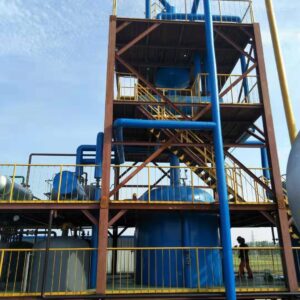
The economic viability of the Pyrolysis Unit system is rooted in the high demand and intrinsic value of its outputs, particularly the Pyrolysis Oil (PO), which serves as a renewable, localized substitute for conventional industrial heavy fuel oils (HFO).
Market Opportunity: Renewable Fuel Penetration
The Philippine industrial sector is increasingly seeking renewable alternatives to fossil-derived fuels to power boilers, furnaces, and kilns, aligning with global decarbonization trends. Pyrolysis oil, comparable in characteristics to regular fuel oil, is rapidly emerging as a sustainable and competitive energy source. The market acceptance is growing at an exponential pace: the Philippines Pyrolysis Oil Market is projected to grow from $1.3 billion in 2025 to $3.9 billion by 2031, reflecting an impressive Compound Annual Growth Rate (CAGR) of 19.4%.
This growth overlaps directly with the massive market for heavy fuels. The Philippines Bunker Fuel Market alone, which serves shipping and large-scale industrial operations, was valued at USD 758.66 Million in 2024 and is projected to reach USD 1.408 Billion by 2033. Pyrolysis oil, especially when refined or upgraded, directly addresses the need for compliant, low-sulfur industrial fuels, especially in light of stricter international maritime regulations like IMO 2020.
Proven Offtake and Supply Security
The demand for Pyrolysis Oil in the Philippines is established and reliable. Existing pyrolysis facilities have secured concrete off-take agreements with major industrial players, demonstrating that the locally produced fuel oil is accepted and utilized in high-demand, continuous industrial processes. Examples of current users benefiting from Pyrolysis Unit-derived fuel oil include:
Coconut oil mills located in Davao.
The Republic Cement production facility in Kiwalan.
Various asphalt batching plants servicing infrastructure needs across the Zamboanga Peninsula.
The boilers of sardine processing plants in Zamboanga City.
This established industrial adoption mitigates significant sales risk for new investors. Furthermore, the Pyrolysis Unit offers a compelling solution to a strategic national vulnerability: energy security. With the domestic Malampaya gas field depleting, the Philippines is accelerating its shift toward imported Liquefied Natural Gas (LNG) to secure baseload power. While LNG addresses the national grid, Pyrolysis Oil provides essential energy security at the decentralized industrial level.
By deriving industrial fuel from domestic waste, the Pyrolysis Unit effectively offers industrial consumers a powerful hedge against geopolitical and global crude price volatility that impacts imported HFO and bunker fuel. This stable, locally sourced energy alternative appeals strongly to manufacturers and processors focused on supply continuity. Achieving a consistent and high-quality liquid output is vital for market competitiveness. This outcome is best delivered by continuous pyrolysis systems, where controlled feed and heating rates minimize variations in composition, ensuring the product can compete effectively with conventional fossil fuels.
5.Maximizing Value: Secondary Revenue Streams from Carbon Black and Syngas>>>
The economic superiority of the Pyrolysis Unit solution is further enhanced by its principle of total resource utilization, converting residual byproducts into high-value commodities and internal energy savings, thereby guaranteeing a diversified revenue portfolio.
Recovered Carbon Black (rCB): The Solid Profit Center
Carbon Black is an indispensable, high-value byproduct, particularly when processing used rubber tires and complex plastics. It is a para-crystalline carbon valued for its ability to improve the physical and mechanical properties of various materials.
The market for recovered Carbon Black (rCB) is robust domestically and globally. The global Carbon Black market was valued at USD 13.2 Billion in 2022 and is projected to reach USD 21.7 Billion by 2032. In the Philippines, rCB is a critical chemical raw material used by manufacturers in several key sectors :
Rubber and Tire Manufacturing: It acts as an essential reinforcing agent, enhancing the strength, durability, treadwear, and rolling resistance of tires and mechanical rubber goods.
Plastics and Coatings: It serves as a deep black pigment, while also providing critical UV protection and electrical conductivity to plastics, inks, and surface coatings.
Construction: Emerging research also points to the potential use of pulverized scrap rubber and carbon char as sustainable alternative materials in concrete mixes.
By effectively recovering and marketing this co-product, the Pyrolysis Unit system ensures the investor can tap into a chemical supply chain market that operates on a different economic cycle than the liquid fuel market. This robust diversity of output products serves as a crucial financial hedge against temporary market fluctuations in the price of pyrolysis oil.
Syngas (Non-Condensable Gas): Ensuring Operational Self-Sufficiency
The third valuable product generated during thermal decomposition is the non-condensable pyrolysis gas, often referred to as syngas. Pyrolysis Unit systems are engineered to utilize this gas fully within a closed-loop energy management system.
The primary and most significant application of syngas is its immediate recycling back into the system to serve as the main fuel source for heating the pyrolysis reactor. This inherent efficiency drastically reduces the reliance on external heating fuels (such as charcoal, wood, or natural gas). The minimization of external fuel procurement translates directly into substantial long-term operational expenditure (OPEX) savings, maximizing the net profitability of the entire operation.
Beyond internal consumption, excess syngas can be utilized for external power generation. While current economic analysis suggests that the optimal electricity price for pyrolysis-to-power projects is around USD 12 cents/KWH, the ability to generate electricity contributes to localized energy security and grid stability. The fundamental competitive advantage of the Pyrolysis Unit system lies in its ability to generate revenue or critical cost savings from all three outputs—oil, carbon black, and internal energy use—significantly lowering the required tipping fee or product price realization needed for project profitability compared to technologies that generate only one product.
6.Investment Economics and Financial Modeling: Achieving Competitive ROI>>>
For any large-scale infrastructure investment, the financial model must demonstrate clear revenue stability, favorable return on investment (ROI), and the capacity to absorb operational costs. Pyrolysis Unit technology provides a compelling economic case based on a dual revenue stream model optimized for the Philippine market.
The Dual Revenue Structure: Product Sales and Municipal Tipping Fees
The financial feasibility of a Waste-to-Energy project is intrinsically linked to two revenue pillars: the sale of high-value commodities (Pyrolysis Oil and Carbon Black) and guaranteed fees for waste disposal.
Product Sales: As established, the demand for Pyrolysis Oil and rCB ensures a robust flow of revenue, bolstered by the high CAGR projections for the pyrolysis oil market.
Tipping Fees: Fees charged to LGUs for accepting and processing municipal solid waste (MSW) or plastic waste are essential for financial stability. Studies analyzing WtE viability in the Philippines indicate that for pyrolysis to be immediately profitable and competitive against continuing landfill operations, a strategically set tipping fee is required (for instance, an increase from $15/ton for landfilling to $18.5/ton for WtE conversion).
The financial capacity for LGUs to pay competitive tipping fees is significant. The case of Cebu City illustrates the massive existing financial burden: the local government incurred more than P407 million (approximately USD 7 million) in hauling and tipping fees in 2024 alone for traditional waste disposal. This massive expense provides substantial financial headroom for LGUs to redirect funds toward a definitive, technologically advanced, and compliant solution like Pyrolysis Unit, thereby solving their compliance crisis while offering economic stability to the investor. Securing long-term contracts with LGUs, which guarantee tonnage and tipping fees, provides the foundational stability required for securing project financing.
Operational Costs, Infrastructure, and Payback Timeline
Initial investment for industrial-scale continuous pyrolysis plants will be substantial, requiring a higher capital expenditure (CAPEX) than smaller batch systems. This investment covers the complex machinery, automation, and integrated environmental control systems. Total annual operating costs (OPEX) for large-scale operations, covering labor, maintenance, and material logistics, can be significant, estimated in the millions of dollars per year (e.g., $3.3 million for a specific large-capacity plant).
However, the high efficiency and dual revenue structure result in highly favorable ROI metrics. WtE solutions integrated with commodity sales typically achieve payback times below 8 years, and often as low as 5 years. This accelerated cash flow generation, potentially starting within 15 to 18 months of commissioning, makes the Pyrolysis Unit project highly attractive to infrastructure investors.
Furthermore, the entire financial model rests on the quality of the feedstock. Since feedstock quality—specifically cleanliness and low ash content—has the single greatest influence on the final product yield and cost, Pyrolysis Unit’s upfront investment in specialized shredding and pretreatment systems is a non-negotiable step to maintain output consistency and guarantee the expected ROI.
For financial modeling, it is recommended that investors utilize the standard regulatory benchmark for public infrastructure projects in the Philippines. Feasibility studies often employ the government’s social discount rate of 10% for public infrastructure, providing a conservative yet regulatorily accepted framework for calculating long-term ROI and valuation.
7.Pyrolysis Unit: The Strategic Partner for Philippine Waste-to-Energy Success>>>
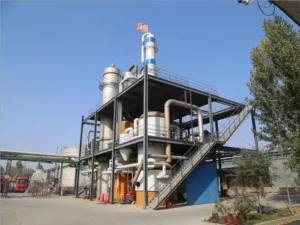
The successful deployment of complex WtE infrastructure in a demanding environment like the Philippines requires more than just machinery; it necessitates a technological partner with proven expertise, robust compliance protocols, and a commitment to customized solution delivery. Pyrolysis Unit embodies this strategic partnership.
Demonstrated Expertise and Regional Success
Pyrolysis technology has established a robust track record across Southeast Asia, proving its resilience and efficacy in managing high volumes of challenging waste streams. Successful projects are actively operating in countries such as Thailand, Malaysia, Singapore, and Indonesia, alongside existing deployments in the Philippines.
The commitment to the Philippine market is demonstrated by ongoing large-scale infrastructure development. For instance, detailed feasibility studies are being conducted for projects, such as a 10,000 metric tonne per year waste plastic pyrolysis facility. Pyrolysis Unit stands among the leading technology providers globally, recognized for delivering machinery necessary for these critical projects. Leveraging this established regional experience provides the investor with an accelerated path to market acceptance and operational optimization.
Integrated Solution for Environmental and Economic Returns
The Pyrolysis Unit value proposition is the synthesis of superior economics and essential ecology. The installation of a high-efficiency, continuous pyrolysis plant directly addresses the nation’s core challenges: it provides crucial volume reduction for municipalities struggling with RA 9003 compliance, contributes to energy security by producing stable domestic fuels, and significantly mitigates the devastating effects of marine plastic pollution.
The partnership extends beyond equipment delivery. Given the highly variable composition of the Philippine MSW and the distinct requirements of local regulatory bodies (DENR, LGUs) , Pyrolysis Unit’s true competitive advantage lies in providing customized technical consultation. This essential guidance covers everything from designing tailored feedstock pretreatment systems to assisting with the complex documentation required to secure critical permits like the ECC and PTO. This hands-on approach minimizes development delays and secures the long-term operational integrity required to capitalize on the substantial government incentives available.
Conclusion and Call to Action
The confluence of regulatory enforcement, massive waste volume, and high demand for localized industrial fuel has created an unprecedented investment window in the Philippine Waste-to-Energy sector. By choosing Pyrolysis Unit technology, investors are selecting a fully compliant, high-efficiency, continuous thermal solution capable of converting a national liability into a diversified, high-growth economic asset. The analysis confirms that strategic investment in Pyrolysis Unit systems provides a reliable pathway to achieve competitive ROI, deliver essential public infrastructure, and secure long-term revenue streams through guaranteed LGU contracts and premium commodity sales. Pyrolysis Unit is the strategic partner ready to transform the Philippines’ waste management crisis into enduring infrastructure success.