

Planning a pyrolysis plant in Bangladesh involves more than choosing a reactor and comparing equipment prices. Before investing, you need to establish how much suitable waste you can secure, whether your site can support the operation, what approvals may apply, how the equipment will reach your facility, and whether local buyers will accept the finished products.
This guide focuses on the decisions that shape a viable project in Bangladesh, from feedstock verification and capacity planning to imported equipment costs, environmental requirements, and supplier evaluation. It is intended for recycling businesses, industrial operators, waste management companies, and investors assessing a new facility or an expansion.
1. Start with Feedstock Availability, Not Plant Capacity
The first step in planning a pyrolysis plant in Bangladesh is to identify a reliable supply of suitable raw materials. National waste figures can indicate the scale of the wider waste management challenge, but they cannot tell you how many tonnes your business can collect, transport, and process at a competitive cost.
Build your assessment around identifiable suppliers, measured quantities, material composition, purchase prices, and delivery arrangements. Depending on the selected feedstock, potential sources may include vehicle service businesses, tyre collectors, transport fleets, plastic recyclers, packaging manufacturers, and industrial waste generators.
| Feedstock | What to verify before investing | Main planning concern |
|---|---|---|
| End-of-life tyres | Monthly quantities, rubber condition, steel content, moisture, dirt, and collection agreements. | Consistent supply, transport costs, and the required size-reduction equipment. |
| Suitable waste plastics | Polymer composition, contamination, moisture, sorting requirements, and representative sample results. | Mixed or unidentified plastics can produce inconsistent outputs and require additional treatment controls. |
| Rubber processing residues | Particle size, composition, remaining metal, contamination, and daily volume. | The feeding system and reactor must match the physical properties of the actual material. |
| Industrial oil-bearing residues | Waste classification, composition analysis, water and solids content, and permitted handling arrangements. | These materials may require a different process configuration and a separate compliance assessment. |
Do not assume that all municipal solid waste is suitable for pyrolysis. Plastic types need to be identified and assessed individually. For example, PVC can introduce chlorine-related treatment requirements, while PET and multilayer materials may behave differently from polyethylene- or polypropylene-rich feedstock. Confirm acceptable material specifications with the equipment supplier and an appropriate technical specialist before signing a purchase contract.
Build a realistic local supply map
Shortlist potential collection areas around your intended facility rather than assuming that all waste generated in Bangladesh is commercially accessible. Depending on your business and suppliers, areas around Dhaka, Gazipur, Narayanganj, or Chattogram may warrant investigation. These are candidate locations to evaluate, not a guarantee of available feedstock.
For each potential supplier, record the available quantity, collection frequency, delivered cost, seasonal variation, competing buyers, and distance to the proposed plant. Compare several transport-distance scenarios and include the cost of loading, unloading, storage, and rejected material.
Whenever possible, obtain written supply commitments before finalizing equipment capacity. A reliable supply contract is more useful for investment planning than an estimate based only on the amount of waste visible in the surrounding area.
2. Choose a Location That Supports Daily Operations
A suitable site for a pyrolysis plant in Bangladesh must accommodate the entire operation, not just the main reactor. Feedstock receiving, sorting, preprocessing, equipment maintenance, product storage, vehicle movements, utilities, and appropriate environmental controls all need space.
During site selection, evaluate the following conditions:
- Access and logistics: Confirm that delivery vehicles can reach the facility throughout the year and that local roads can accommodate the expected loads.
- Drainage and storage: Plan covered storage for moisture-sensitive materials, effective stormwater drainage, and measures to prevent contaminated runoff during heavy rain.
- Utilities: Verify the available electrical connection, power stability, water requirements, backup arrangements, and any process heating fuel requirements.
- Safety and separation: Allow for safe movement of vehicles and materials, fire protection, controlled process areas, and appropriate separation from neighboring activities.
- Expansion space: Consider whether future shredding, additional storage, product handling, or another processing line could be accommodated without disrupting the existing operation.
Before leasing or purchasing land, prepare a preliminary site layout with the equipment supplier. The drawing should show the reactor, pretreatment equipment, condensers, gas handling, emission-control equipment, storage zones, access routes, and maintenance clearances. Ask the supplier to identify any civil works or local facilities excluded from the quoted equipment package.
3. Calculate the Landed Project Cost in Bangladesh
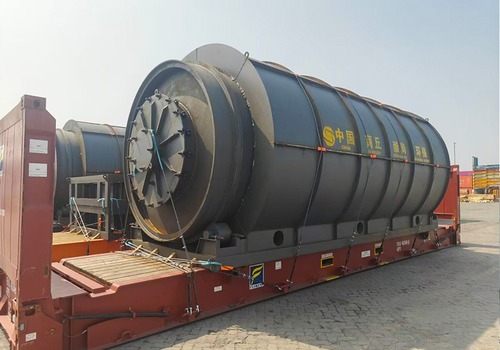
The quoted price of a pyrolysis machine is only one part of the initial investment. For imported equipment, the final installed cost depends on the quotation terms, transport arrangements, customs assessment, site preparation, supporting equipment, installation, and initial working capital.
| Cost category | Questions to resolve before purchase |
|---|---|
| Equipment quotation | Does the price include the reactor, feeding equipment, condensation system, gas handling, control panel, and specified emission controls? |
| International logistics | What are the quotation basis, packing arrangements, shipping charges, insurance, and estimated delivery terms? |
| Customs and port expenses | What import duties, taxes, clearance fees, port charges, and documentation costs may apply to the specific shipment? |
| Local transport and civil works | What will inland transport, foundations, installation space, drainage, storage tanks, and utility connections cost? |
| Installation and commissioning | Are technician travel, on-site labor, electrical work, piping, commissioning tests, and operator training included? |
| Environmental and safety systems | Are the required gas treatment, exhaust controls, fire protection, monitoring, and residue-handling arrangements included in the design? |
| Operating capital | Can the business fund feedstock purchases, wages, utilities, maintenance, product storage, and other expenses while production and sales stabilize? |
Request an itemized quotation rather than relying on a single equipment price. Ask the supplier to specify what is included, what is optional, and what must be sourced locally. A customs broker in Bangladesh should confirm the applicable tariff classification and import charges instead of relying on a generic duty estimate.
For a broader breakdown of investment variables, see our guide to pyrolysis plant costs and investment planning. The figures used in any preliminary budget should be treated as estimates until supported by supplier quotations and local cost checks.
4. Check Environmental and Operating Requirements Before Ordering
Environmental compliance should be part of the initial feasibility assessment, not a task postponed until the equipment arrives. The applicable requirements may depend on the feedstock, process design, location, emissions profile, waste handling arrangements, and the project’s regulatory classification.
Consult the relevant Bangladeshi authorities and qualified local advisers to determine which approvals and supporting documents apply. The Department of Environment maintains an official register of regulations, including the Environment Conservation Rules, 2023; the Air Pollution (Control) Rules, 2022; and the Solid Waste Management Rules, 2021, with an amended version also listed in its register.
Start your review with the Department of Environment’s official regulations register. Confirm the latest applicable requirements with the relevant authority; do not assume that a particular permit category or approval sequence applies to every pyrolysis project.
As part of this review, prepare a preliminary description of the process, proposed feedstock, waste intake and storage arrangements, emissions-control design, wastewater or stormwater management, solid residue handling, fire protection, and monitoring plan.
When evaluating suppliers, ask for equipment specifications and supporting documentation that can be assessed against the actual project requirements in Bangladesh. A manufacturer’s general statement that its equipment is environmentally friendly does not establish that the finished installation meets every applicable local requirement.
5. Select a Plant Capacity That Matches Verified Supply
Once the feedstock supply, site, and basic project requirements have been assessed, the next decision is processing capacity. Selecting a larger plant simply because it promises a higher output can create unnecessary risk if the supply chain cannot feed it consistently or the business has not established reliable buyers.
A useful initial calculation is:
Estimated daily feedstock availability = verified annual feedstock supply ÷ planned operating days per year.
For example, a business that verifies access to 1,200 tonnes of suitable material per year and plans 300 operating days has an average supply of 4 tonnes per operating day. This is an illustrative calculation, not a recommendation to purchase a 4-tonne-per-day plant. The final design needs allowances for supply interruptions, rejected material, maintenance, and the actual capacity definition used by the manufacturer.
Distinguish between the machine’s rated capacity, the amount of prepared feedstock it can accept, and the actual daily throughput expected under local operating conditions. Ask the supplier to state the capacity basis in writing.
Compare batch, semi-continuous, and continuous systems
| System type | When to evaluate it | Key questions |
|---|---|---|
| Batch pyrolysis plant | Projects evaluating staged production or operating with supply volumes that vary between deliveries. | What are the complete heating, processing, cooling, discharge, and cleaning cycles? How many productive cycles can be achieved? |
| Semi-continuous pyrolysis plant | Projects seeking a more structured production flow with a suitable and sufficiently consistent feedstock supply. | Which preparation, feeding, discharge, and handling systems are automated, and what operating interruptions remain? |
| Continuous pyrolysis plant | Projects with reliable prepared feedstock, defined product specifications, and an operational plan suited to longer production runs. | What feed size and consistency are required? What happens during shutdowns, maintenance, or interruptions in feedstock delivery? |
The appropriate design depends on supply consistency, feedstock characteristics, labor, utilities, automation, maintenance access, and investment limits. Compare the operating requirements rather than assuming that continuous processing is always the most profitable option.
Review the available pyrolysis machine solutions and the full product directory to identify configurations that warrant further evaluation.
Depending on the project, you may also want to compare a small pyrolysis machine, a batch pyrolysis plant, a semi-continuous plant, or a continuous pyrolysis plant. Actual feedstock specifications and project conditions should determine which options make the shortlist.
For a more detailed operating-mode comparison, read Batch vs. Continuous Pyrolysis Plant: How to Choose the Right One.
6. Confirm the Product Market Before You Commit Capital
Production capacity alone does not establish commercial viability. Before approving the final plant design, identify who may purchase the intended output, what quality specifications those buyers require, and whether the proposed production volume matches their purchasing capacity.
Ask potential buyers for their product acceptance criteria, testing methods, packaging or delivery requirements, preferred quantities, payment terms, and any relevant regulatory restrictions. Where appropriate, obtain independent laboratory analysis of representative samples and confirm whether additional processing is required.
Do not assume that every tonne leaving the reactor can be sold at a quoted market price. Product composition, contaminants, consistency, storage, transport, processing requirements, and buyer acceptance can all affect realizable revenue. If a buyer requires a specification that the proposed system cannot reliably achieve, reconsider the design before placing the equipment order.
Where possible, secure conditional purchase agreements or documented buyer interest before commissioning the facility. Treat projected sales prices as assumptions until supported by local quotations or other verifiable market evidence.
7. Evaluate the Project Using a Transparent Financial Model
A useful feasibility model should show the relationship between feedstock cost, actual plant utilization, output quality, sales prices, and operating expenses. Prepare at least a conservative case, a base case, and an optimistic case rather than relying on a single forecast.
Include the following variables:
- Feedstock costs: Purchase price, collection fees where applicable, sorting, pretreatment, transport, storage, and rejected loads.
- Operating expenses: Electricity, heating fuel, labor, water, consumables, maintenance, replacement parts, residue handling, and other recurring costs.
- Realizable sales: Expected saleable output, buyer-approved quality, contracted quantity, transport, and any required further processing.
- Installed investment: Equipment, freight, import costs, civil works, installation, commissioning, safety systems, and initial working capital.
- Downtime and interruptions: Planned maintenance, inconsistent feedstock supply, equipment repairs, and periods when buyers cannot accept deliveries.
Use a consistent calculation basis. A simplified screening measure is:
Estimated annual net operating cash contribution = annual receipts − annual operating costs.
A simple payback estimate can then be calculated by dividing the total initial project investment by the estimated annual net operating cash contribution, provided that contribution is positive. This is a preliminary screening metric, not a complete investment appraisal; financing, taxes, working capital changes, replacement investment, and other cash flows may materially affect the result.
Test what happens if feedstock costs rise, operating days fall, product prices weaken, or more material is rejected than expected. A project that remains workable under less favorable conditions is generally a stronger candidate for detailed engineering and financing review.
You can begin organizing the assumptions with the Pyrolysis Plant ROI Calculator. Replace generic assumptions with your own verified local quotations and operating estimates before making an investment decision.
8. What Historical Bangladesh Projects Can Tell You
Bangladesh has historical experience with tyre waste thermal recycling. A 2013 paper published in Procedia Engineering, titled Thermal Recycling of Solid Tire Wastes for Alternative Liquid Fuel: The First Commercial Step in Bangladesh, described a commercial tyre waste project in Gazipur involving two batch units, each reported to process 4.5 tonnes per run.
This is historical evidence that commercial tyre thermal recycling has been attempted in the country. It should not be interpreted as evidence of current plant availability, present-day profitability, current regulatory approvals, or guaranteed performance from a different machine. Those questions require up-to-date local verification.
When reviewing a case study from any equipment supplier, ask whether it identifies the project date, actual feedstock, plant configuration, operating conditions, measured results, and the basis for any financial claims. Request permission to contact a customer where a supplier offers a reference project as proof of performance.
9. Supplier Questions to Resolve Before Paying a Deposit
Before selecting a pyrolysis plant supplier for a Bangladesh project, request written answers to the following questions:
- What raw materials can the proposed configuration accept, and what are the documented pretreatment and rejection criteria?
- Is the stated capacity measured per batch, per operating day, or on another basis? What assumptions support the claimed throughput?
- Which feeding, heating, condensation, gas-handling, emission-control, and residue-handling systems are included in the quotation?
- What utilities, supporting structures, storage arrangements, and site works must the buyer provide?
- What product quality measurements and performance tests will be used during commissioning and acceptance?
- What safety documentation, operating instructions, maintenance schedules, and operator training will be provided?
- Which spare parts are recommended for initial stocking, and how will technical support and replacement parts be supplied?
- What are the manufacturing, shipping, installation, commissioning, warranty, and payment milestones?
- Which performance commitments are contractual, how will they be measured, and what happens if the acceptance criteria are not met?
- Which environmental and safety obligations remain the responsibility of the buyer in Bangladesh?
Do not rely on verbal promises about output, payback periods, or regulatory compliance. Attach the agreed feedstock specifications, capacity definition, equipment scope, test conditions, and acceptance criteria to the purchase contract wherever appropriate.
10. A Practical Go/No-Go Checklist for Bangladesh Investors
Before committing to equipment procurement, make sure the project has passed five checks:
- Supply: The raw material is suitable, sufficiently consistent, and supported by a realistic sourcing and transport plan.
- Site: The facility can accommodate the complete process, required utilities, storage, safe operation, and applicable environmental controls.
- Compliance: The project team has confirmed the relevant approval requirements with the responsible local authorities.
- Market: Potential buyers have reviewed the proposed products and their relevant quality requirements.
- Finance: The installed cost, operating model, working capital, and downside scenarios have been assessed using documented assumptions.
If one of these areas remains uncertain, resolve it before selecting a final capacity or making a substantial deposit. This sequence helps reduce the risk of purchasing an otherwise suitable machine for a project that lacks the necessary supply, site conditions, approvals, or commercial arrangements.
Frequently Asked Questions About Pyrolysis Plants in Bangladesh
How much does a pyrolysis plant cost in Bangladesh?
There is no single reliable price for every project. The total investment depends on feedstock, daily capacity, batch or continuous operation, pretreatment, environmental and safety equipment, imported freight, applicable import charges, site construction, installation, and working capital. Obtain an itemized quotation and calculate the full installed cost in Bangladesh before comparing suppliers.
Which feedstock should a new Bangladesh project evaluate first?
Start with the material that can be sourced consistently under verifiable commercial terms. Waste tyres, suitable waste plastics, and certain rubber residues may warrant assessment, but each requires its own feedstock specifications, processing configuration, and product-quality review. Do not select a machine based solely on a headline waste-generation figure.
Is a continuous pyrolysis plant always better than a batch plant?
No. A continuous system may be suitable for a project with stable prepared feedstock and a production plan designed for longer runs. A batch system may be worth evaluating where supply volumes, operating arrangements, or project scale differ. Compare the full operating cycle, preparation requirements, labor, maintenance, utilities, and investment rather than considering automation alone.
What permits are required for a pyrolysis plant in Bangladesh?
The applicable approvals depend on the specific project and its classification, location, feedstock, process, and environmental impacts. Consult the Department of Environment and relevant local authorities to confirm current requirements before ordering equipment or beginning construction. A supplier’s general compliance statement cannot replace a project-specific regulatory review.
How can I estimate whether a project will be profitable?
Start with verified feedstock quantities and delivered costs, realistic operating days, buyer-confirmed product specifications, achievable sales prices, the full installed investment, and recurring operating expenses. Compare several operating scenarios and account for downtime, maintenance, and working capital. Treat a preliminary payback calculation as a screening estimate rather than a guarantee.
What should I send a supplier to receive a useful equipment quotation?
Prepare a description of the feedstock and its composition, representative photos or samples, estimated daily and monthly supply, delivery arrangements, preferred operating mode, site dimensions, available utilities, target production capacity, local approval requirements, and intended product specifications. This allows the supplier to evaluate the application before proposing a machine configuration.
Discuss Your Bangladesh Pyrolysis Project
A sound equipment proposal should begin with the waste stream and the project constraints, then specify the machine, supporting equipment, utilities, safety systems, and performance tests needed for the intended application.
If you are evaluating a pyrolysis plant in Bangladesh, prepare your feedstock details, estimated supply volume, site information, and intended operating plan before requesting a quotation. The PyrolysisUnit engineering team can then review the application and discuss an equipment configuration for further technical and commercial evaluation.