
Table of Contents How Much Does It Cost to Start
Table of Contents
Pyrolysis Plants in the UK
As an expert who has spent the last ten years analyzing the waste management sector, I have seen many recycling technologies come and go. However, the shift toward chemical recycling in the United Kingdom has proven to be a lasting change.
If you are looking into starting a pyrolysis plant, you are entering a space with strict regulations, high technical demands, and clear environmental goals. The UK Government is actively pushing for a circular economy. They want to minimize waste sent to landfills and maximize resource recovery.
This guide will break down the process of starting a pyrolysis plant in the UK. I will cover the machinery, the regulations, and the common pitfalls you need to avoid.
The Problem: The UK Waste Challenge
The UK generates a massive amount of waste that traditional mechanical recycling simply cannot handle efficiently.
Consider these figures. The UK consumes around 5 million tonnes of plastic every year, yet only about 25 percent is recycled. The rest is often sent to incinerators, exported, or placed in landfills. On top of that, the country generates approximately 55 million waste tires annually.
Historically, many of these materials ended up in landfills. That is no longer an option. Under the Landfill Regulations of 2002, whole tires were banned from UK landfill sites. This ban was later extended to include shredded tires. Furthermore, the Department for Environment, Food and Rural Affairs (DEFRA) has introduced strict policies aimed at reducing nationwide waste by 15 percent by 2030. They also plan to phase out landfill usage for all recyclable materials by 2025.
Have you thought about how businesses will dispose of this waste when landfills are completely closed to them? This creates a massive problem for waste producers, but it opens a clear opportunity for chemical recycling facilities.
The Solution: How Pyrolysis Works
When mechanical recycling falls short, chemical recycling steps in. Pyrolysis is the core technology driving this transition.
Pyrolysis is the process of heating organic material, like plastics or rubber, in the absence of oxygen. Because there is no oxygen, the materials do not burn. Instead, the high heat causes them to break down at a molecular level. The solid waste turns into a vapor, which is then cooled and condensed into liquid oil.
This process offers a way to handle waste that is too contaminated or complex for standard recycling. It is a highly controlled, industrial process.
Real-World Application Scenarios: What Can You Process?
A pyrolysis plant is not a magic box where you can throw in any type of garbage. To run a successful facility, you need to focus on specific, consistent feedstocks. Here are the three main applications in the UK market.
1. Waste Plastics
Plastic pyrolysis involves processing materials like Polypropylene (PP), Polyethylene (PE), and Polystyrene (PS). These plastics yield a high percentage of pyrolysis oil.
However, you must be careful with your feedstock. Plastics like PVC (Polyvinyl Chloride) and PET (Polyethylene Terephthalate) should be avoided. PVC releases corrosive chlorine gas when heated, which will damage your reactor and create toxic emissions. PET produces very little oil and can cause blockages in your piping. Proper sorting is essential.
2. Waste Tires
Tire pyrolysis is one of the most common applications. When you process waste tires, you get four distinct products:
Pyrolysis Oil: Can be used as an industrial heating fuel or refined further.
Carbon Black: A solid residue that can be pressed into briquettes for fuel or refined for use in asphalt, rubber products, and inks.
Steel Wire: Extracted from the tire structure and sold to metal recyclers.
Syngas (Combustible Gas): This gas is captured and fed back into the plant to heat the reactor, lowering your ongoing fuel costs.
3. Oil Sludge
The UK has substantial oil reserves, particularly in the North Sea. The extraction process creates heavy oil sludge, drilling cuttings, and contaminated soil. The Hazardous Waste Regulations heavily restrict how this material is handled. An oil sludge pyrolysis plant can safely separate the oil from the solid sand and soil, recovering usable fuel while cleaning the soil to meet environmental standards.
Technical Parameters: Choosing the Right Equipment
When you start looking at machinery, you will find two main categories: Batch plants and Continuous plants. Choosing the right one depends on your budget, your available space, and the volume of waste you plan to process.
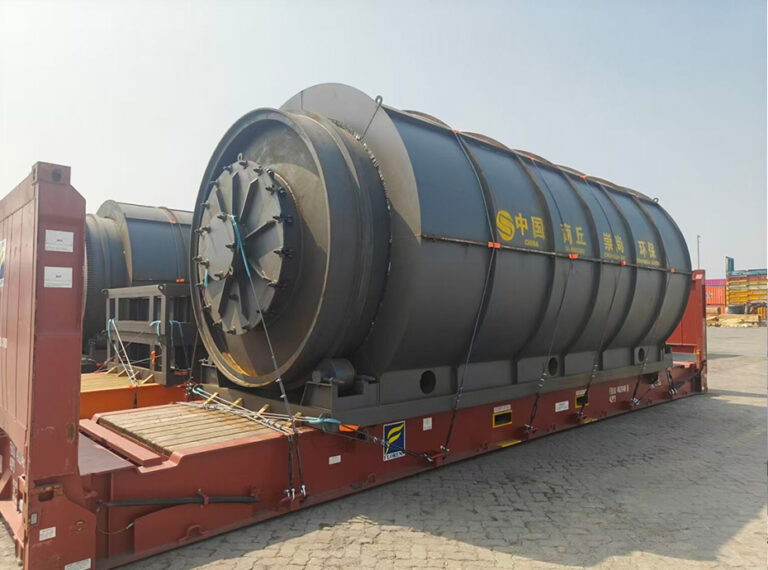
I will use industry-standard configurations, such as those from Beston Group, to illustrate the differences.
|
Feature |
Batch Type (e.g., BLJ-16) |
Continuous Type (e.g., BLL-30) |
|
Working Method |
Processes one batch at a time, requires cooling before reloading |
Runs continuously 24/7 without stopping to cool down |
|
Input Capacity |
15 to 16 tonnes per batch |
Up to 30 tonnes per day |
|
Raw Material Prep |
Can process whole or half tires directly |
Requires tires to be shredded into small pieces first |
|
Reactor Material |
Q345R Boiler steel |
310S Stainless steel (handles constant high heat) |
|
Reactor Lifespan |
5 to 8 years |
5 to 8 years |
|
Labor Needed |
Higher manual labor for loading and unloading |
Lower labor due to PLC automated feeding systems |
|
Installation Time |
About 45 days |
60 to 90 days |
|
Land Space |
~ 33 meters x 13 meters |
~ 70 meters x 20 meters |
If you are just starting and want to minimize upfront costs, a batch system makes sense. If you have secured a massive, ongoing supply of waste and want maximum efficiency, a continuous system is the better long-term investment.
Regulatory and Compliance Guidelines in the UK
The UK has strict environmental laws. You cannot simply buy a machine, set it up in a warehouse, and start melting plastic. Failing to understand the regulatory landscape is where many projects fall apart.
The Environment Agency and SEPA
In England, the Environment Agency (EA) monitors and regulates these facilities. In Scotland, the Scottish Environment Protection Agency (SEPA) handles oversight. You will need an environmental permit to operate a thermal treatment plant.
The End-of-Waste Framework
One of the most critical concepts you need to grasp is the “End-of-Waste” status. Just because you turned a tire into oil does not mean the government legally views it as a new product.
The UK recently introduced a Resource Framework for Tyre Pyrolysis Oil (TPO). This framework defines exactly when TPO stops being classified as “waste” and becomes a regular product. To achieve this non-waste status, your oil must meet strict specifications. For example, the kinematic viscosity must be under 15 mm²/second, and the sulphur content must be below 2 percent.
If your oil does not meet these standards, it is still legally considered waste. That means you can only sell it to buyers who hold a permit to process waste, which severely limits your market and the price you can charge.
Risk Warnings and Common Operational Mistakes
It is important to be realistic. Running a pyrolysis plant is a heavy industrial operation. It is not a simple, passive income stream. Here are the most common mistakes I see operators make.
1. Skipping Feedstock Preparation
Water is the enemy of pyrolysis. If your waste plastic or tires are wet, the reactor wastes massive amounts of energy boiling off the water before the pyrolysis process can even begin. This increases your fuel costs and slows down production. Furthermore, if you buy a continuous plant, you must invest in heavy-duty shredders. If your shredder breaks down, your entire pyrolysis plant stops.
2. Ignoring Local Planning Permission
Before you even apply for an environmental permit, you need local planning permission. Local councils and residents often push back against new industrial waste facilities due to concerns about traffic, noise, and perceived pollution. You must secure a site zoned for heavy industrial waste processing.
3. Having Unrealistic Expectations for the End Product
The raw pyrolysis oil that comes out of the machine is not commercial-grade diesel. You cannot pump it directly into a modern road vehicle. It is a crude, heavy oil. It is highly effective as a heating fuel for cement plants, glass factories, or steel mills. If you want to sell it as a premium transportation fuel, you will need to invest in a separate, expensive distillation plant to refine it further.
Project Timeline: What to Expect
Setting up a facility takes time. Here is a realistic sequence of events.
1.Market and Regulatory Research:Month 1 to 3.
Secure your waste supply contracts and identify buyers for your oil and carbon black. Begin initial talks with the local council regarding zoning.
2.Permitting and Ordering:Month 4 to 6.
Submit applications for your environmental permits. Once zoning is approved, sign the contract with your equipment manufacturer.
3.Manufacturing and Site Prep:Month 7 to 9.
The manufacturer builds your equipment. Meanwhile, you prepare the concrete foundations, electrical supplies, and safety systems at your UK site.
4.Shipping and Installation:Month 10 to 11.
The equipment arrives via sea freight. Engineers arrive to oversee the assembly of the reactor, condensers, and piping.
5.Commissioning and Training:Month 12.
The plant undergoes trial runs. Your staff receives training on safety protocols, temperature control, and maintenance. The plant officially begins production.
Genuine User Testimonials
Working with experienced manufacturers is crucial for navigating this timeline. A customer operating a BLJ-16 batch tire pyrolysis plant in the UK recently shared their experience after completing their installation and running their first successful oil generation cycle.
They noted the importance of having direct engineering support during the build, stating, “I am excited now. Thanks for all that Beston has done for us. They helped us a lot, and finally we succeeded. I appreciate both products and service.”
Having engineers on the ground to guide the casing, foundation, and condenser installation is a requirement, not an optional luxury.
Summary Q&A
To wrap up, here are answers to the most common questions clients ask when researching this technology.
Is a pyrolysis plant profitable in the UK?
It can be, provided you secure low-cost or negative-cost feedstock. In the UK, waste producers often pay disposal fees (tipping fees) to get rid of waste. If you can collect a tipping fee to take the tires, and then sell the resulting oil and steel, the economics are favorable.
Does the process create toxic emissions?
Modern, high-quality plants are designed to meet strict European Union and UK emission standards. The syngas is scrubbed of sulphur and dust before being burned. However, if you purchase cheap, uncertified equipment, you will fail the Environment Agency’s emission tests and your plant will be shut down.
Can I process different materials at the same time?
It is highly recommended that you do not mix feedstocks. Mixing plastics and tires in the same batch will result in poor-quality oil and a messy carbon black residue that is difficult to sell. Run distinct batches of single material types for the best results.
What is the biggest ongoing cost?
Aside from paying off the initial machinery investment, your biggest ongoing costs will be labor and electricity. While the plant generates its own heating gas to sustain the pyrolysis process, you still need grid electricity to run the shredders, conveyor belts, and cooling water pumps.
Starting a pyrolysis plant in the UK is a complex but rewarding venture. By understanding the regulations, preparing your feedstock correctly, and choosing the right equipment, you can build a facility that turns a serious waste problem into a sustainable business.
Recent Articles

Related Blog