1.Concise buying guide and commercial checklist>>>
Purchasing an oil distillation machine is never simply a transactional matter but rather a technical investment whose cost will influence how much money you make and the kind of product you can produce for years to come. At the outset, determine what type of offer you are seeking – whether you are buying an “equipment-only” arrangement, a locally assembled machine, or a fully turnkey system – as the “machine price” advertised on a product page is merely the headline figure.
This guide provides the realistic price range, defines the key components responsible for the price differences between vendors, outlines the operational metrics that generate income, and concludes with a clear procurement checklist you can apply to compare competitive offers. Read this as your exact blueprint to comparing three vendors at once, as your goal is to convert a vendor’s sales brochure into a single cost and performance spreadsheet.
2.Realistic price bands (what buyers see in market quotes)>>>
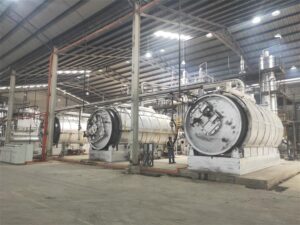
The listing on the market and the catalogues from different manufacturers will vary widely, from benchtop miniature distillation systems to a full line of refinery for continuous distillation with capacity exceeding multi-tons per day. Mini distillation systems that may be used for laboratory or workshop purposes, ranging from low thousands to low five figures; whereas a more compact system meant for single-shift operation will range from $7,000 to $40,000, and medium-sized commercial systems of up to 0.5 to 5 tons per day range from $30,000-$150,000.
Large continuous refinery systems that are used in base oil recovery can cost upwards of $65,000 to several hundreds of thousands of dollars. These ranges are mentioned in many different supplier catalogues and listings; and will give you a good starting ground when collecting quotations.
3.What actually drives that price — the technical and commercial line items to check>>>
Whenever two vendors provide vastly different figures on apparent “same” machine, the variance is due to the small number of specification variables that must be put down in black and white. Obviously, capacity (tons/day or liters/day) – since it determines the amount of steel structure required, the condensers and vacuum capabilities – but metallurgy is often times the major factor: stainless steel (SS304/SS316) or alloy-coated internal parts (for corrosive feedstock) have significantly higher price compared to carbon steel.
The quality of the vacuum package and surface area of the condensers define distillation temperatures achievable; hence yields. A low-end vacuum package might cause less expensive machine to produce lower quality fuel and demand retesting.
The type of heating package (electrical, gas, steam, biomass), presence of any pre-processing modules such as filters, centrifuge machines and chemical pretreatment, automation of the system (manual, semi-automatic and fully automatic, PLC/SCADA), emissions control and processing finish (catalyst towers, clay decoloration, filtration precision) are the other factors contributing both to the cost of the initial capital and system reliability.
Last but not least, it matters whether your project has an equipment only or a turnkey nature.
4.Full cost of ownership — beyond the sticker price>>>
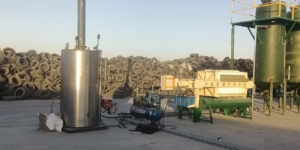
When it comes to the actual “waste oil distillation machine price,” consider the equipment invoice as just the first item in the cost bucket. Factor in transportation charges, import fees and duties (for international shipments), site preparation and civil engineering (foundation, bunding, tanks, piping), installation and startup (site engineers, calibration, FAT testing), permitting and compliance (pollution control, wastewater management), a parts inventory and first-year consumables (vacuum pump spares, seal kits, filters, catalysts), training and operating procedures, and finally a prudent contingency.
In practice, most medium-scale projects should factor in 20-40% more than the cost of equipment alone, unless the vendor has expressly stated an all-in, turnkey price – and even then, verify what is not covered under the permits and site preparation. Certain vendors provide a “price range” based on including some elements of scope; others specify the equipment price and installation/commissioning separately, which is common practice, but explains why similar quotes can vary widely.
5.Operating metrics that determine profitability (yields, energy & consumables)>>>
The operational performance of the plant is what makes or breaks the profitability of your investment. There are two key parameters that matter: recovery yield (% feed mass conversion to saleable fuel/base oil) and operational consumption cost per ton (electricity, catalyst, chemicals, manpower, and maintenance costs). From manufacturers’ testing and other technical literature, the typical recovery yields are as follows based on the material type and process: for waste tire and plastic pyrolysis oils, and for heavy mixed waste, it is approximately 80-85%, while for used engine oil and high-quality lubricant, it may be approximately 85-95%.
Consumption is dependent on the process; the consumption of operational materials may include moderate electricity consumption (on the order of tens of kW per ton depending on the economics of the process), minimal catalyst consumption (on the order of dollars per ton, as demonstrated by various vendors), and fuel/steam required for heating if any external fuel is employed.
Because yield and operating consumption are feedstock-specific, your strongest negotiating lever is to require a factory acceptance test (FAT) or trial run guarantee on a representative sample of your feedstock and to obtain a written material balance (input → fractionated outputs) as part of the contract.
6.A conservative payback example and how to use it when comparing quotes>>>
Numbers are always local, so apply the above spreadsheet model and substitute your feedstock cost and local prices for your end-product. For example, to demonstrate the effects of machine price on return of investment (ROI), let’s suppose a small commercial unit costing $30,000 (a middle figure often quoted by suppliers), a capacity of 0.5 tons/day, a yield of 85%, a saleable diesel/lower distillate price of $0.50/L (substitute your own price), operation days per year of 300, and operating consumables of $20/ton (energy, catalyst, etc.)
Arithmetic: 0.5 t/day = 500 kg/day; yield 85% means 425 kg/day ≈ 500 liters/day (assuming diesel has a density of about 0.85 kg/L). Selling at $0.50/L brings $250/day or $75,000/year; deducting operating costs of ≈$3,000/year leaves a net annual income of $72,000 without considering the cost of the feedstock. That ROI takes less than one year with that setup. Adjust any of these figures to see what happens.
The point is not to promise a payback but to show how sensitive returns are to three inputs you must verify in writing from any vendor:
- guaranteed recovery for your feedstock
- measured energy/consumables per ton
- a clear equipment vs turnkey scope so you don’t later add unexpected site costs.
Use the example arithmetic to build a one-page CAPEX+OPEX spreadsheet and require vendors to fill in their measured recovery and operating numbers for the feedstock sample you supply.
7.Procurement checklist and final recommendation (Practical next steps)>>>
When you are ready to request comparable quotes, use this checklist as the RFP backbone:
- define the feedstock precisely and supply a representative sample for FAT;
- state your required capacity in tons/day and expected uptime;
- require material certificates (SS grade/welding procedure) and vacuum pump make/model;
- ask for two prices — equipment-only and turnkey — and require installation, shipping and customs line items;
- demand a written yield guarantee or performance warranty tied to FAT results and include spare-parts kit pricing and lead times in the base quote;
- confirm warranty response times and whether local partners provide on-site service; and
- budget an additional 20–40% above equipment list for site works and permitting unless the vendor explicitly covers those items.
In terms of cost-efficiency, the “machine price” may seem appealing, but in most cases, unless it is supported by actual FAT figures, a reliable and timely spare parts supply, and a guaranteed after-sales service, it is definitely not a good deal. If needed, I can translate the calculations above into a downloadable CAPEX+OPEX Excel file and an RFP template that you will need to send to 3 suppliers in order to get comparative bids, just give me the required capacity of the machine (tonnage per day), whether your raw material will be freely available or you have to pay for it.
In case of immediate delivery of the spreadsheet and RFP, please indicate the capacity of the machine you need (per day), as well as its type (used engine oil, pyrolysis oil, mixed waste). Should the purchase involve equipment only or a turn-key project?
Conclusion — Practical energy recovery for responsible medical waste management>>>
Waste medical materials pyrolysis into fuel oil does not solve all the problems; however, provided there are appropriate controls on the quality of the input material, rigorous management of the emission levels, and compliance with the relevant regulations, it can be a feasible and highly promising solution for healthcare providers and waste management companies.
When considering technologies, pay special attention to vendors who supply fully engineered units, documentation, and commercial transparency regarding safety and compliance. Pyrolysis Unit is eager to assist you in evaluating the feasibility of the project, conducting pilot tests, and implementing the technology.
If required, we will develop a pre-feasibility analysis of the project specifically for your company taking into account your annual waste volumes, typical types of waste, and local waste management costs. Pyrolysis Unit is eager to help.