
Table of Contents How Much Does It Cost to Start
Table of Contents
A Practical Guide to Starting a Tire Pyrolysis Plant in the USA
Every year, the United States generates over 280 million waste tires. For a long time, these tires ended up in landfills. This created a massive environmental problem. Tires take up a lot of space, collect stagnant water, and pose severe fire risks.
The solution to this problem is tire pyrolysis. Pyrolysis technology turns end-of-life tires into valuable products like oil, carbon black, and steel. It is a practical way to manage waste and create a profitable industrial business. As someone who has spent the last 10 years working closely with waste-to-resource industrial machinery, I often speak with clients who want to enter this sector.
The global tire pyrolysis market is growing fast. Research from 2025 values the market at about $8.2 billion, and it is expected to grow steadily over the next decade. However, starting a plant in the USA requires careful planning. You need to understand the technology, the local laws, and the financial reality. This guide will walk you through the core elements of setting up a successful operation.
1. How the Pyrolysis Process Actually Works
Problem: Many people confuse pyrolysis with burning tires. Burning tires creates toxic smoke, wastes the material, and is illegal in most commercial contexts.
Solution: Understand that pyrolysis is thermal decomposition in an oxygen-free environment.
Because there is no oxygen in the reactor, the tires cannot catch fire. Instead, the high heat breaks the rubber down into gas, liquid, and solid parts. Here is a simple breakdown of the process.
Step 1: Feedstock Preparation. First, you must prepare the tires. Most modern plants require shredded tires. You run the whole tires through an industrial shredder to cut them into small blocks, usually around two inches in size. You also remove the thickest steel bead wires during this step.
Step 2: Feeding and Heating. A machine feeds the shredded tires into the pyrolysis reactor. The reactor is a large, sealed metal drum. You heat the reactor using fuel. Once the temperature inside reaches about 280 to 300 degrees Celsius, the solid rubber begins to turn into a heavy oil gas.
Step 3: Gasification and Cooling. The oil gas flows out of the reactor and enters a cooling system, called a condenser. The condenser cools the gas down. As it cools, the heavy gas turns into liquid tire pyrolysis oil.
Step 4: Managing By-Products. Not all the gas turns into liquid. A small amount of gas, called syngas, remains. You can route this syngas back to the main furnace to heat the reactor. This smart recycling saves on your daily energy costs.
Step 5: Discharging. After the oil is extracted, you are left with solid materials in the reactor. These solids are carbon black and the remaining steel wire. You must cool the reactor before safely removing these materials.
2. The Core Outputs and Their Financial Value
Problem: To run a profitable business, you need to know exactly what you are producing and who will buy it.
Solution: Focus on the four main outputs of tire pyrolysis and secure your target markets early.
Every ton of waste tires produces a consistent ratio of materials. The exact amounts can vary slightly based on the type of tires you process, but the averages remain steady across the industry.
Tire Pyrolysis Oil (TPO): This makes up about 45 percent of the output by weight. It is your main source of revenue. TPO is a heavy industrial fuel. You can sell it to cement factories, glass plants, and steel mills to use in their large industrial furnaces.
Recovered Carbon Black (rCB): This makes up about 35 percent of the output. Carbon black is a fine black powder. Manufacturers use it to make new rubber products, shoe soles, conveyor belts, and black ink. High-quality carbon black can sell for a premium price.
Steel Wire: This makes up about 12 percent of the output. Tires contain a lot of steel for structural strength. After the pyrolysis process, you pull this steel out using magnetic separators. You can sell it directly to scrap metal buyers or foundries.
Syngas: This makes up the final 8 percent. As mentioned earlier, you do not sell this gas. You use it to power your own plant, which lowers your operating bills.
Here is a quick look at the expected yield for a standard facility processing 20 tons of tires per day.
Output Material | Average Yield Percentage | Daily Output (from 20 tons) | Market Application |
Tire Pyrolysis Oil | 45 percent | 9.0 tons | Industrial heating fuel |
Recovered Carbon Black | 35 percent | 7.0 tons | Rubber goods, ink, plastic |
Scrap Steel Wire | 12 percent | 2.4 tons | Scrap metal recycling |
Syngas | 8 percent | 1.6 tons | Internal plant fuel |
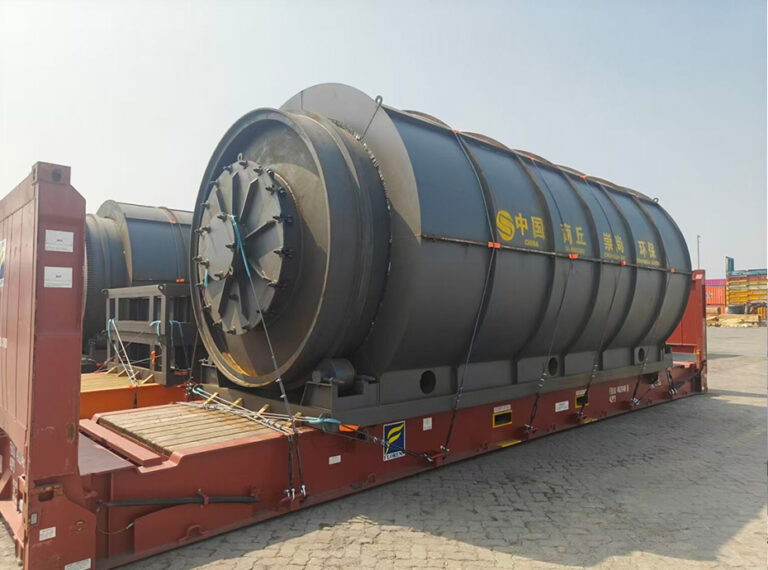
When I monitored a waste-to-fuel project in the Accra region of Ghana, the client received four sets of tire-to-oil equipment. Their primary goal was maximizing the oil yield to meet local industrial fuel demands. However, in the US market, selling the recovered carbon black is just as important for maintaining high profit margins and supporting the circular economy.
3. Choosing the Right Equipment: Batch vs. Continuous Systems
Problem: Buying the wrong type of machine can limit your daily efficiency and ruin your profit margins.
Solution: Choose the system that fits your capital budget and your processing volume goals.
There are two main types of pyrolysis plants: batch plants and fully continuous plants.
Batch Pyrolysis Plants
A batch plant processes one load of tires at a time. You open the reactor door, load the tires, seal it, heat it, cool it down, and empty it. This complete cycle takes about 16 to 24 hours.
The Good: The initial capital cost is lower. They are easier to operate and do not require complex shredding equipment. You can often load whole tires directly into them.
The Bad: They require more manual labor. The constant cooling and reheating cycle wastes time and energy.
Fully Continuous Pyrolysis Plants
A continuous plant runs 24 hours a day without stopping. You constantly feed shredded tires into one end, and oil and carbon black constantly come out the other ends.
The Good: They are highly efficient. They require less manual labor and produce a higher quality, more consistent oil yield.
The Bad: The upfront cost is much higher. They also require expensive pre-processing equipment to shred the tires down to the exact right size before feeding.
For a modern plant in the USA, fully continuous systems are the clear choice if you have the budget. They handle the high volume of tires efficiently. In my experience overseeing the commissioning of waste tire plants in Selangor, Malaysia, we installed multiple continuous units with 12-ton daily capacities. The continuous design was the only reliable way to manage the massive influx of national tire waste while keeping labor costs low. The same principle applies to American operations.
4. Navigating USA Environmental Regulations
Problem: The Environmental Protection Agency (EPA) has strict rules about air quality. If you ignore these, your plant will be shut down.
Solution: Plan for advanced emission scrubbing systems from day one and work closely with local authorities.
The USA has some of the strictest environmental laws in the world. Pyrolysis is much cleaner than traditional incineration, but it still produces emissions that must be managed. State-level policies vary, so you will need to check with your specific state environmental department.
Almost every state requires a Title V operating permit. To get this permit, your plant must prove it will not pollute the surrounding air. You must install advanced filtration and emission scrubbing systems.
A scrubbing system cleans the smoke before it leaves your chimney. It sprays a mist of water and safe chemical neutralizers into the exhaust gas. This mist catches harmful particles, like sulfur dioxide and heavy particulate matter, and washes them away.
Adding a high-quality scrubbing system can increase your total plant costs by 25 percent. Do not try to save money by buying cheap filters. I saw the absolute necessity of good filtration when monitoring a dual-line solid waste pyrolysis system in Vietnam late last year. Building the emission controls properly at the start prevents costly fines and forced shutdowns later.
5. Real-World Costs and Scaling Your Business
Problem: Building a plant is expensive, and trying to build a massive facility all at once can drain your funding before you even turn a profit.
Solution: Understand your costs and plan to expand your plant in planned, manageable stages.
Setting up a fully functional continuous pyrolysis plant in the USA is a major financial investment. Capital expenditures can range from 1.8 million to 2.2 million dollars per metric ton of capacity. Your costs will include the pyrolysis reactor, the tire shredding equipment, the cooling towers, the emission scrubbers, and the commercial land itself.
Operating costs include buying the waste tires, paying your workers, electricity, and water. A well-run continuous plant often achieves healthy profit margins once operational. Selling the oil and carbon black covers the daily bills and pays back the initial capital loan.
If you have a limited budget, you do not need to build a 100-ton-per-day facility on day one. You can scale your business in phases. Start with one or two production lines. Once those lines are running smoothly and generating revenue, you can add more lines. I watched a client successfully use this exact strategy during an expansion in Indonesia. They started small and eventually scaled up to eighteen pyrolysis and waste oil distillation units through careful, phased installations. You can apply the same patient, data-driven strategy in the US.
6. Summary Questions and Answers
To wrap up, here are five common questions I hear from clients regarding pyrolysis plants.
Is tire pyrolysis oil the same as regular diesel?
No. Tire pyrolysis oil is a heavy industrial fuel. It is thicker and less refined than the diesel you put in a commercial truck. To use it in a normal vehicle engine, it must go through an extra refining process called distillation.
Do I have to pay to get waste tires?
This depends entirely on your location and local laws. In some areas, you must buy waste tires from collectors. In other areas, you can charge a “tipping fee,” meaning people actually pay you to take the tires off their hands.
How much land do I need for a plant?
A standard continuous plant requires a large industrial lot. You need space for the heavy machinery, safety buffers, and large storage areas for both the incoming waste tires and the outgoing oil tanks.
Is the pyrolysis process dangerous?
Any industrial process involving high heat and oil carries risks. However, modern plants are built with pressure safety valves, automatic temperature sensors, and water seals to prevent accidents. Proper worker training is strictly required.
Can I process plastic in a tire pyrolysis plant?
Yes, the core technology is very similar. However, plastics produce different oil yields and can create different emission challenges. It is usually best to stick to one type of feedstock at a time to maintain consistent product quality.
Recent Articles


Related Blog