
A Practical Guide for Investors, Operators and Regulators
Executive summary
Australia is at an inflection point for advanced waste recovery. Pressure on materials supply chains, rising landfill constraints and national circular-economy policy settings are creating new opportunities for chemical and thermal recycling solutions — including pyrolysis. This article explains what a pyrolysis plant in Australia looks like today, the difference between tyre and plastic pyrolysis, the regulatory and permitting landscape you must navigate, environmental & community expectations, commercial economics, and practical steps to deliver a compliant, high-performing facility. Key evidence and pilot programs are cited from Australian regulators, industry bodies and recent project milestones.
Australia generates large volumes of recoverable waste (tyres, mixed plastics and industrial residues) and national policy is pushing towards a circular economy and improved resource recovery. The Commonwealth’s 2024 National Waste Policy Action Plan highlights national priorities to transition to “safe circular economy” approaches and support advanced recycling pathways.
Waste tyres remain an attractive feedstock. Recent industry reporting shows Australia generated approximately 537,000 tonnes of used tyres in 2023–24; while recovery rates are improving, a relatively small share currently translates into circular outcomes, leaving material and value available for new recycling technologies. This creates a stable, long-term feedstock base for tyre pyrolysis ventures.
Chemical recycling (including pyrolysis) is gaining traction for hard-to-recycle plastics and as a potential domestic supply of alternative feedstocks for refineries and petrochemical plants — evidenced by pilot processing of plastic pyrolysis oil by major industry players in Australia.
These drivers — abundant feedstock, policy momentum and commercial pilots — form the economic rationale for considering pyrolysis plants in Australia.
Types of pyrolysis plants (tyre vs plastic)
Pyrolysis (general): thermal decomposition of organic material in an oxygen-limited environment to produce condensable oil (pyrolysis oil), non-condensable gases (syngas), and a solid carbonaceous residue (char or carbon black for tyres). Temperature, residence time and feedstock composition determine product yields and quality.
Tire pyrolysis:
Feedstock: whole tyres or tyre-derived crumb/shred (includes rubber polymers, steel and textile components).
Key outputs: tyre-derived oil (TDO / pyrolysis oil), recovered steel, and carbon char (“recovered carbon black”, RCB).
Typical system considerations: robust feed preparation (de-beading, shredding), steel separation, high ash and filler content handling, downstream char upgrading.
Plastic pyrolysis (mixed plastics / polyolefins):
Feedstock: PE, PP, PS, and mixed non-PVC plastics (PVC and chlorinated plastics require special handling).
Key outputs: plastic pyrolysis oil (PPO) suitable for refinery co-processing or upgrading, and light gases that can be used for on-site energy.
Typical system considerations: consistent plastic stream (contamination control), condensation and fractionation systems to improve oil specs, chlorine monitoring.
Process modes: batch, semi-continuous and continuous. Industrial-scale projects typically prefer continuous flow designs for better margins and environmental control. Engineering choices affect CAPEX, OPEX, and permitting complexity.
- Federal & state split: Australia’s environmental regulation is primarily state/territory-driven for pollution control and planning approvals, while the Commonwealth handles national policy (e.g., waste policy, competition/industry incentives). Expect a combined set of requirements: local council planning, state EPA environmental approvals, and national policy context.
- State EPA frameworks: States have distinct policy frameworks for energy-from-waste and resource recovery. For instance, NSW’s EPA requires operators recovering energy from waste to comply with its Energy from Waste Policy Statement and facility-specific environmental protection requirements (stack emissions, odour, noise, management plans). Comparable frameworks exist in other states with differences in thresholds and allowable emissions controls. Early engagement with the relevant state EPA is critical.
- Industry guidance and scrutiny: Industry bodies such as Tyre Stewardship Australia (TSA) have commissioned research and produced guidance on pyrolysis viability and best practice in the Australian context. TSA’s work emphasizes careful assessment of outputs, quality controls and market pathways for products like recovered carbon black and pyrolysis oil. Regulators will look for evidence that outputs are managed, markets exist, and contaminants (e.g., metals, halogens) are controlled.
- Air emissions & monitoring: Modern plants must include multi-stage flue gas treatment (cyclones, scrubbers, catalytic/thermal oxidisers as needed), continuous monitoring of key stack parameters (NOx, SOx, particulates, CO, VOCs) and robust sampling regimes. Permit conditions frequently require best-available-technology (BAT) and independent compliance testing.
- Residuals & product classification: Char, oil and non-condensable gases must be classified under state waste/product codes. Markets for char (e.g., carbon black replacements), or acceptance as product vs waste, materially change permit and handling decisions.
- Takeaway: regulatory approval is not a simple “one permit” — it’s integrated across planning, air, water and waste classifications. Engage early with local council and state EPA and present rigorous monitoring and risk mitigation plans.
Key site criteria:
- Proximity to feedstock — tyre and plastic collection centers, tyre shredders, and transfer stations. Lower haul costs improve margins.
- Access to markets — proximity to refineries (for PPO co-processing) or industrial users for TDO. Recent refinery testing in Geelong highlights potential for local refinery take-off.
- Industrial zoning and planning compatibility — select industrial land with appropriate buffers to sensitive receptors and with existing environmental footprints.
- Utilities and transport — gas, power, water, heavy vehicle access and storage capacity.
- Community and supply contracts — long-term feedstock agreements with tyre collectors, councils, or waste managers; and offtake contracts for oil, char and recovered metals.
- Feedstock contract tips: secure diversified feed (multiple suppliers, minimum take-or-pay clauses), ensure contamination specifications, include audit and sampling rights, and build clauses for price and quality adjustments.
Primary revenue streams:
- Sale of pyrolysis oil (TDO/PPO): to industrial users, fuel markets or refineries (may require upgrading or co-processing agreements). Pilot refinery processing demonstrates existing pathways.
- Recovered carbon black / char: sold as lower-value filler or upgraded to higher-spec carbon black with further processing.
- Recovered steel: from tyre feedstock — straightforward metal revenue.
- Tipping fees / gate fees: depending on local waste flows, plants may receive fees from waste managers or councils to divert material from landfill.
Cost drivers:
CAPEX: reactor technology, condensers, gas cleaning, storage and site works.
OPEX: feedstock logistics, utilities, consumables for flue gas treatment, labour, product testing and regulatory compliance.
Permitting and community engagement add time and budget; plan for robust environmental assessments and independent monitoring.
Financing models:
Equity + project finance (common for mid-large plants).
Strategic offtake partnerships (refineries, waste managers) to derisk revenue and support debt.
Public grants / concessional finance for pilots, demonstration projects and circular-economy initiatives (check state and federal programs).
Return expectations: highly variable. Projects with secure offtake, low transport costs and proven product specifications have attractive unit economics; small modular plants may be profitable at smaller scale if capital cost is controlled.
Common operational risks and mitigation
- Feedstock variability: set tight supplier specs; maintain buffer stocks; pre-treat feed.
- Product acceptance risk: invest in laboratory QA and secure offtake MOUs before commissioning. Pilot trials at refineries de-risk acceptance.
- Emissions compliance: exceed regulatory minimums—build conservative emission control systems and continuous monitoring.
- Community opposition: early and transparent engagement, independent air/water modelling, demonstration of BAT.
- Regulatory changes: design modular systems that can be upgraded; track state and national policy developments.
Case studies & Australian pilots
- Viva Energy — processing plastic pyrolysis oil (PPO) at Geelong: Viva Energy successfully processed tonnes of PPO at its Geelong refinery, demonstrating refinery co-processing is feasible and providing a practical oil end-market. This is an encouraging signal: if local refineries can accept PPO at scale, commercial plastic pyrolysis becomes far more viable.
- ARENA-supported biomass pyrolysis (Renergi): ARENA has supported biomass pyrolysis projects that provide technical learnings for feedstock handling, continuous operation and integration with downstream fuel upgrading. These programs show Australia’s funding ecosystem can support pilots and scale-up.
- Tyre Stewardship Australia research: TSA has commissioned and published evaluations on pyrolysis of end-of-life tyres to assess technical and market viability in Australia — their work is essential reading for operators considering tyre pyrolysis projects in local markets.
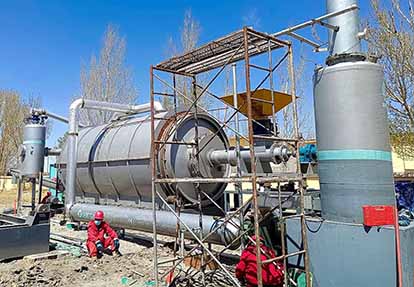
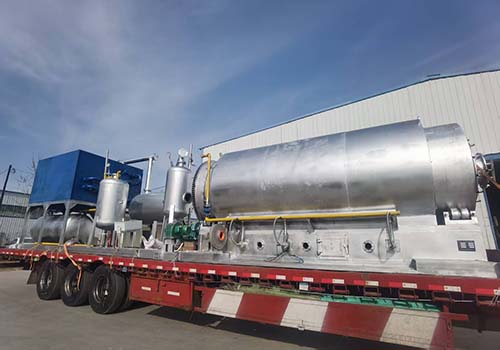
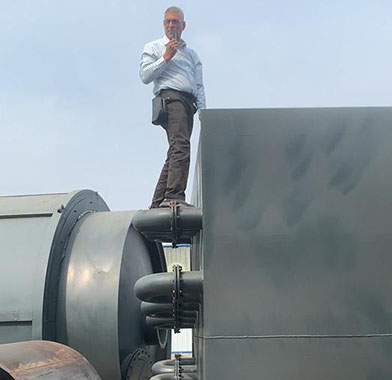
- Private pilot installations and equipment suppliers: several international and local equipment suppliers have delivered skid-mounted or small modular pyrolysis units to Australian customers as demonstrations — useful for staged commercialization strategies. (Example: reported shipments of small skid-mounted plants to Australia for demonstration and permitting assessment).
Pyrolysis presents a practical pathway to convert Australia’s tyre and plastic waste into valuable products, supporting national circular-economy goals and providing feedstocks for domestic industry. Success rests on:
securing reliable feedstock and offtake pathways (refinery co-processing is a strong enabler),
designing facilities to meet stricter state environmental controls and community expectations,
piloting and proving product quality to downstream customers, and using industry guidance and national policy context to frame your approvals and investor narrative.