

The cost of pyrolysis oil depends on how it is produced, how much usable oil is recovered, and what expenses must be covered before the product is ready for sale. A meaningful estimate should include more than feedstock and energy costs. Labor, pretreatment, maintenance, equipment depreciation, product testing, and any required upgrading can also affect the final cost.
It is important to distinguish the production cost of pyrolysis oil from its market selling price. The production cost measures what a plant spends to manufacture the oil, while the selling price reflects product specifications, buyer requirements, delivery terms, and the seller’s commercial margin. This guide explains how to calculate production cost per ton and use the result to evaluate a project.
1. What Does the Cost of Pyrolysis Oil Include?
Before comparing quotations or estimating profitability, define which cost you want to measure.
| Cost measure | What it includes |
|---|---|
| Operating cost | Feedstock, pretreatment, energy, labor, consumables, maintenance, and routine operating expenses. |
| Fully loaded production cost | Operating costs plus an appropriate allocation for equipment, site infrastructure, and other capital-related costs. |
| Upgraded oil cost | Crude oil production costs plus the additional costs of separation, distillation, treatment, testing, and product losses. |
| Minimum selling price | The selling price needed to cover the relevant costs and achieve the required gross margin, before any excluded taxes or selling expenses. |
These figures are not interchangeable. For example, the purchase price of a pyrolysis machine is a capital investment, not an annual operating expense. To calculate a fully loaded unit cost, allocate the relevant capital cost over a realistic operating period and the amount of saleable oil expected during that period.
2. How to Calculate Pyrolysis Oil Production Cost per Ton
A practical starting point is to calculate the annual cost of operating the plant, deduct only verified net income from coproducts and applicable feedstock handling fees, and divide the result by the annual quantity of saleable pyrolysis oil.
Fully loaded production cost per ton of pyrolysis oil:
(Annual operating costs + annualized capital costs − net coproduct credits − applicable net feedstock fees) ÷ annual saleable oil output
Annual saleable oil output should reflect actual production assumptions, not simply the reactor’s rated capacity. Use a consistent mass basis for feedstock and oil yield, and account for operating days, downtime, product losses, and any oil that fails the intended buyer’s specification.
Main cost components
| Cost component | What to include |
|---|---|
| Feedstock | Waste purchase price, collection, inbound transportation, loading, and handling. |
| Pretreatment | Sorting, shredding, drying, contaminant removal, and other required preparation. |
| Energy and utilities | Electricity, external heating fuel, cooling, water, and other utilities after accounting for any verified internal energy recovery. |
| Labor and maintenance | Operator wages, routine servicing, consumables, replacement parts, and repairs. |
| Product handling | Storage, sampling, testing, pumping, filtration where required, and internal transfer. |
| Capital allocation | An appropriate annual allocation for equipment and supporting site infrastructure. |
If the project receives a fee for accepting waste, count it only when the fee is contractually supported and applicable to the material processed. Likewise, deduct coproduct revenue only after the associated collection, processing, and selling expenses have been considered.
3. A Worked Example: Estimating Cost per Ton
The following simplified example demonstrates how the calculation works. All dollar figures and yields are hypothetical assumptions for illustration, not current market prices or a guaranteed production result.
Assume a plant processes one ton of feedstock with the following allocated costs:
| Cost item | Assumed cost per ton of feedstock |
|---|---|
| Feedstock and collection | $40 |
| Pretreatment | $18 |
| Energy and utilities | $22 |
| Labor, maintenance, and consumables | $25 |
| Testing, storage, and other allocated expenses | $10 |
| Annualized capital allocation | $20 |
| Subtotal | $135 |
| Less verified net coproduct credits | −$12 |
| Net cost per ton of feedstock | $123 |
Now assume that one ton of feedstock produces 0.45 tons of saleable pyrolysis oil after applying the plant’s measured yield and product acceptance assumptions.
Production cost per ton of oil = $123 ÷ 0.45 = $273.33
In this illustrative scenario, the fully loaded production cost is approximately $273 per ton of saleable oil. This is a model output, not a general quotation for pyrolysis oil.
The example also shows why oil yield matters. If the same $123 net cost per ton of feedstock produces only 0.40 tons of saleable oil, the unit cost rises to $307.50 per ton. If the saleable yield reaches 0.50 tons, the calculated unit cost falls to $246 per ton, assuming all other costs remain unchanged.
Actual results depend on the feedstock, process configuration, operating conditions, and the quality requirements of the intended buyer. Use representative testing and supplier performance data to replace these illustrative assumptions.
4. What Causes Pyrolysis Oil Production Cost to Change?
Several operating variables can materially affect the cost of each saleable ton.
Feedstock price and preparation
Low-cost waste does not automatically produce low-cost oil. Material that requires extensive sorting, drying, shredding, or contamination removal may be more expensive to process than a cleaner feedstock with a higher purchase price.
Saleable oil yield
Yield is the quantity of usable oil recovered from a given quantity of feedstock. A higher gross liquid yield does not necessarily mean a lower cost per ton of saleable oil if more material requires treatment or fails the customer’s specification.
Plant utilization
Fixed costs are spread over the actual output. A plant that operates substantially below its planned utilization may have a higher capital cost per ton, even if its rated capacity is unchanged. Model maintenance periods, feedstock interruptions, and realistic operating days.
Energy recovery and process configuration
Recovered process gas may reduce external heating demand when the equipment is designed to use it safely. Account for this benefit through lower net energy costs rather than counting the same gas as both a fuel saving and external sales revenue.
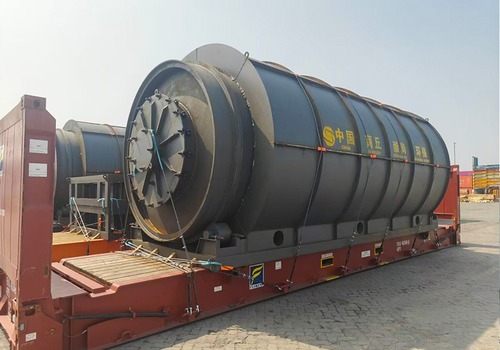
Equipment should match the feedstock and desired throughput. Compare the available pyrolysis machine solutions, including a batch pyrolysis plant and a semi-continuous pyrolysis plant, based on their actual operating requirements rather than assuming one system is always cheaper.
5. How Does Oil Upgrading Affect the Final Cost?
Crude pyrolysis oil and upgraded oil are different cost categories. If the crude product requires additional processing to meet the intended buyer’s requirements, those expenses must be included before calculating the cost of the upgraded product.
Additional costs may include distillation, filtration or other treatment, equipment investment, energy, consumables, quality testing, and losses during processing. If the upgrading stage produces several saleable fractions, allocate costs using a consistent method that reflects the actual products and yields.
For projects considering further treatment, review the pyrolysis oil distillation plant and the separate pyrolysis oil distillation plant cost guide. The price of upgrading equipment should not be confused with the cost of the crude oil itself.
For more detail on the factors affecting the product’s selling price, see What Factors Influence the Price of Pyrolysis Oil?
6. How to Estimate a Minimum Selling Price
Once the fully loaded unit cost is established, a business can estimate the selling price required to achieve a target gross margin.
Minimum selling price = unit production cost ÷ (1 − target gross margin)
For example, using the illustrative production cost of $273.33 per ton and a hypothetical target gross margin of 20%, the required selling price would be approximately $341.66 per ton before any excluded taxes, delivery costs, or selling expenses.
This calculation is a planning tool, not evidence that buyers will pay that price. Confirm the market value separately using product specifications, buyer quotations, accepted delivery terms, and the intended application. Explore the pyrolysis oil market guide for related market information.
7. Common Mistakes When Calculating Pyrolysis Oil Cost
- Dividing expenses by reactor-rated capacity instead of actual saleable oil output.
- Excluding pretreatment, maintenance, storage, or product quality testing.
- Counting the full equipment purchase price as a recurring annual operating expense.
- Double-counting recovered process gas as both an energy saving and sales revenue.
- Assuming all crude oil can be sold at the same price regardless of quality or application.
- Using theoretical yields or optimistic operating hours without validating the assumptions.
A reliable estimate should keep operating cost, fully loaded production cost, upgrading cost, and selling price separate. This makes it easier to identify which assumptions need to improve before investing in a project.
Frequently Asked Questions
Is the cost of pyrolysis oil the same as its market price?
No. Production cost measures the expenses required to manufacture the oil. Market price is the amount a buyer is willing to pay for a specific product under particular commercial terms.
What is the most important variable in the cost calculation?
There is no universal answer. Feedstock cost, saleable oil yield, pretreatment, utilization, and upgrading requirements can all be significant. The most influential factor should be identified through a sensitivity analysis using the plant’s actual operating assumptions.
Should equipment cost be included in the production cost per ton?
For a fully loaded production cost, yes. Allocate the relevant equipment and site investment over a realistic operating period and expected saleable output. Keep this calculation separate from recurring operating expenses.
How can I obtain a more accurate cost estimate?
Use the actual feedstock price, supplier-confirmed capacity and operating requirements, measured or defensible saleable yield, local utility rates, labor costs, maintenance assumptions, and any required product upgrading. A project-specific feasibility assessment is more reliable than a generic industry price.
Estimate the Cost of Your Pyrolysis Project
The cost of pyrolysis oil cannot be determined accurately from feedstock price or machine capacity alone. A useful estimate connects the plant’s annual costs with the actual quantity and quality of oil it can produce and sell.
Use the Pyrolysis Plant ROI Calculator to structure an initial financial assessment. For equipment configuration, processing requirements, and a project-specific quotation, contact the PyrolysisUnit team with your feedstock details and production targets.