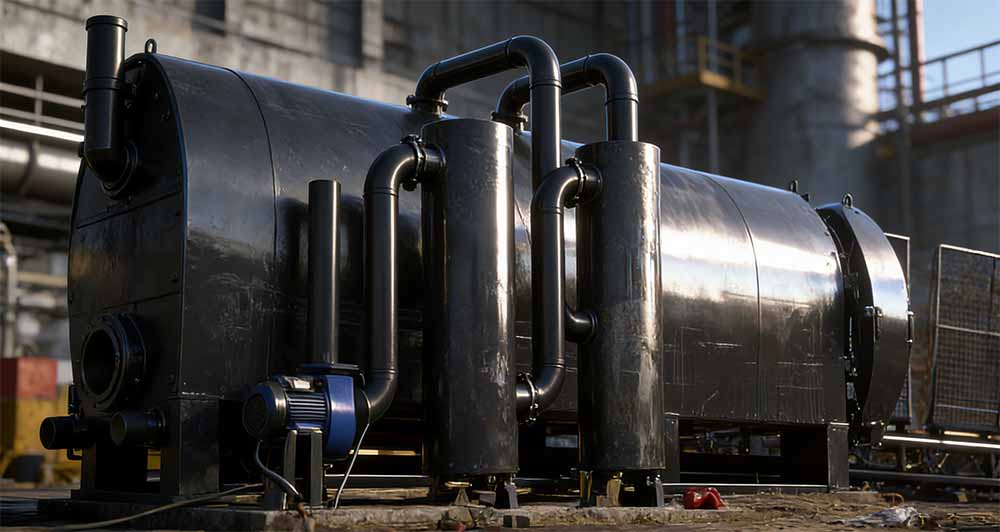
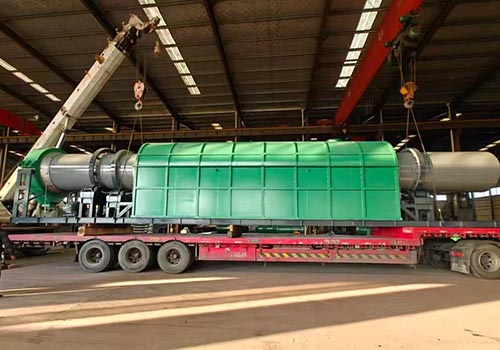
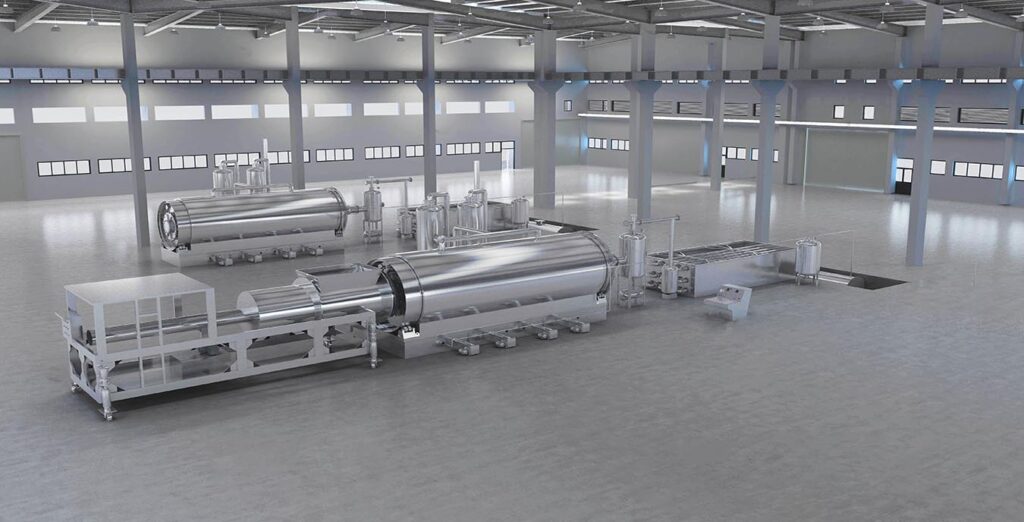
Making charcoal from sawdust is a mature and efficient biomass recycling process. Before starting the formal steps, the first step is to prepare qualified sawdust raw materials. You can process various biomass materials (such as waste wood, wood planks, tree bark, and log scraps) into uniform sawdust through crushing equipment—this pretreatment ensures the smooth progress of subsequent carbonization and the quality of finished charcoal. The formal production process is divided into four core steps, as detailed below:
Step 1: Drying
The moisture content of raw sawdust is usually high, which will affect the carbonization effect and yield. Therefore, drying is a necessary pretreatment step. Put the prepared sawdust into a drum dryer for drying. The core goal is to reduce the moisture content of sawdust to below 20%. During the drying process, the dryer uses hot air to fully contact the sawdust, taking away excess moisture. Properly dried sawdust not only shortens the subsequent carbonization time but also ensures uniform carbonization and improves the combustion performance of the finished charcoal.
Step 2: Carbonization
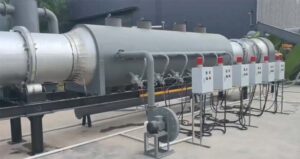
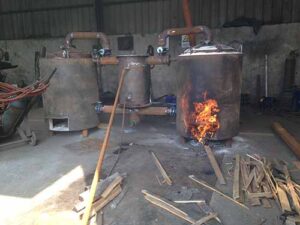
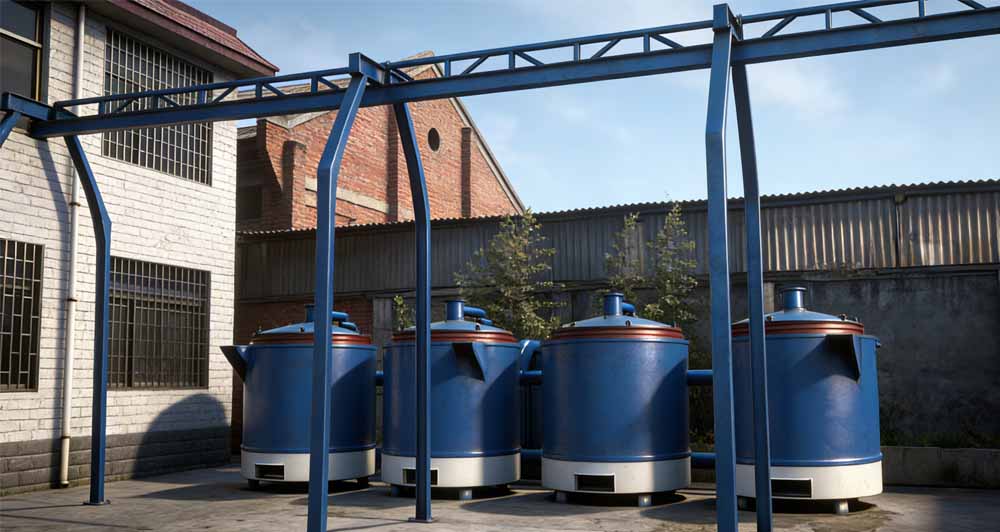
Carbonization is the core link of sawdust charcoal production. Transfer the dried sawdust to a sealed carbonization device, and carry out thermal decomposition under oxygen-limited conditions. The optimal carbonization temperature is around 400℃. Under this temperature condition, the organic components in the sawdust (such as cellulose, hemicellulose, and lignin) will be decomposed, and the non-carbon components (such as water, volatile matter) will be separated, leaving a solid carbon-rich product—sawdust charcoal. The whole carbonization process needs to maintain a stable sealed environment to avoid excessive oxygen leading to sawdust combustion instead of carbonization.
Step 3: Cooling
After the carbonization process is completed, the sawdust charcoal is in a high-temperature state. Direct contact with air at this time will easily cause re-oxidation, which may burn the charcoal and reduce the yield. Therefore, cooling is a key step to protect the finished product. Transfer the high-temperature sawdust charcoal to a dedicated cooling device, and use air cooling or water cooling to lower the temperature of the charcoal to room temperature. The cooling process should be carried out in a relatively sealed environment to avoid air circulation that causes oxidation.
Step 4: Discharging
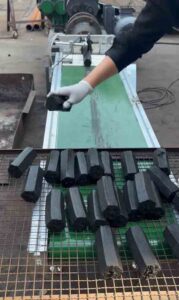
After the charcoal is completely cooled to room temperature, the discharging operation can be carried out. Collect the cooled sawdust charcoal through the discharging system, and then carry out simple sorting to remove a small amount of impurities (such as uncarbonized sawdust particles) to obtain high-quality finished sawdust charcoal. The sorted sawdust charcoal can be directly packaged for sale or further processed into charcoal briquettes according to market demand.
The finished sawdust charcoal has a wide range of applications: in industry, it can be used as fuel for boilers, foundries, and biomass power generation; in agriculture, it can be used as a soil amendment to improve soil aeration and water retention; in daily life, it is an ideal fuel for BBQ, heating, and shisha. This process not only realizes the recycling of biomass waste but also creates economic value.