

Table of Contents How Much Does It Cost to Start
Turning waste into wealth is one of the oldest business strategies in the world. Today, one of the most exciting frontiers in this “trash to cash” economy is waste oil distillation. If you’ve ever looked at a drum of used motor oil or a pile of discarded tires and wondered if there was money hidden in that mess, you are on the right track.
The short answer is yes: waste oil distillation is profitable. But like any business, “profitable” depends on how smart you are about your inputs, your machinery, and your final product. It’s not a magic money printer, but with the right technology—specifically modern pyrolysis and distillation machines—it is one of the most reliable industrial investments available today.
Here is a straightforward, deep dive into the business of waste oil distillation, how the technology works, and why the numbers tend to come up green.
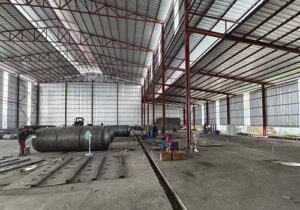
Discussion about waste oil distillation would be incomplete without mentioning pyrolysis, since these two processes go hand in hand.
Pyrolysis refers to the transformation of solid waste such as tires, rubber, and assorted plastics into oil. The process may seem complicated, yet the principle behind it is rather simple – the tires are placed in a heated reactor in an oxygen-free environment. Without any oxygen present, tires do not burn, but simply melt and evaporate into a vapor which cools into a liquid, called tire pyrolysis oil.
Another advantage of the pyrolysis process is its convenience which plays a major role in the development of this branch. In former days, the equipment was bulky, malodorous, and difficult to control. Monitoring the temperature required constant vigilance from professional engineers. Modern technology, on the other hand, has made it extremely easy to use.
Automation: The new machines have automatic feeding. There is no need to drop the tires manually. The machine will grab them, shred them, and then put them inside the reactor.
Safety: The latest designs have automatic pressure release valves and fully sealed reactors. No smoke leaks – it goes back into the reactor for heating. This way, you save some money on your heating source.
Non-stop Work Process: Previous designs were based on batch technology, which meant that you would start heating one batch of waste, cool it down, clean it up, and then repeat again. It was very ineffective. New continuous pyrolysis systems work around the clock without stops.
With such an effective technology, there is almost no downtime during the production process. Nevertheless, tire pyrolysis oil is very dense and contains lots of impurities. It is not possible to transport such products. That’s why we have distillation.
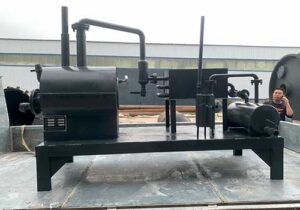
Let’s take it to the ground and consider the math. For the sake of simplicity, let’s consider a standard plant processing 10 tons of waste engine oil per day.
Inputs (Costs):
Raw Materials: If you have a pyrolysis plant, the input costs are not high (cost of running the machinery). Otherwise, let’s assume that your cost of raw materials is around $300 per ton of waste engine oil on average.
Cost for 10 tons of raw material: $3,000
Energy: This process requires energy to heat the oil. Most machines are easy in terms of energy consumption because they use non-condensable gas for heating. Nevertheless, fuel and electricity are necessary as well. Assuming you spend $200 a day on energy costs.
Chemicals: Catalysts required in order to neutralize contaminants and unpleasant smell cost around $150 a day.
Labor: Thanks to modern technologies and automation, you need no many employees – two per shift will be enough. Labor costs can be estimated at $200 a day.
Total Daily Operating Costs: $3,550.
Outputs (Revenue):
For efficient operation, a decent machine should produce diesel fuel from the waste oil with an effectiveness level of 85% and asphalt (bitumen) with the effectiveness level of 10%.
Diesel: 8.5 tons of diesel can be gained from 10 tons of waste oil. The price of nonstandard diesel at the current moment is $800 per ton.
Income from Selling Diesel: $6,800.
Asphalt: From 10 tons of waste oil we can obtain 1 ton of asphalt which can be sold to waterproofing companies or construction crews laying roads. Its selling price will not be high, around $100 per ton.
Income from Selling Asphalt: $100.
Total Daily Income: $6,900.
Profitability:
$6,900 – $3,550 = $3,350 Net Profit per day.
This means that by operating your device for 25 days per month you will have a monthly income of more than $80,000. Even with increased prices for materials or lowered prices for diesel fuel, there is huge buffer here.
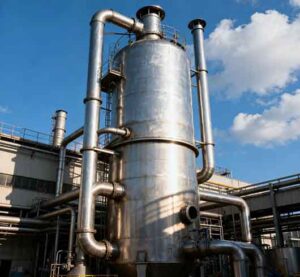
This may seem very basic and realistic; therefore, we should discuss the risks. There are no businesses without risks.
The “Not Quite Diesel” Problem: The diesel that you create may be classified as “non-standard.” The fuel can be used in construction, heating systems, generators, and even in some off-road vehicles such as mining trucks and farm tractors. On the other hand, the fuel is not designed to run in a brand new Mercedes Benz or a highway vehicle. This means that you have to target industrial companies rather than regular local stations.
Price Volatility: It goes without saying that you are affected by crude oil price movements. Therefore, when there is a significant decline in the global crude price, the diesel prices will also fall, and your profit margins will diminish. However, prices on waste oil will most likely fall as well, and the difference in costs will remain the same, yet your cash flows may reduce.
Regulations: Even though your machinery is eco-friendly, there are still serious legal regulations when it comes to hazardous waste storage. You must check whether you are allowed to do this kind of business in the area you have chosen and obtain proper permits to store such hazardous material.

Table of Contents How Much Does It Cost to Start
Table of Contents 3 Types of Pyrolysis Furnace Insulation Shells
Table of Contents The Charcoal Making Process, Step by Step: