
Planning to launch a waste-to-oil pyrolysis business? Get a full breakdown of equipment costs, operating expenses, product yields, permit requirements and realistic ROI calculations for tire, plastic and oil sludge pyrolysis plants.

Mr. Xu, CEO&Engineer ·Technical Director·Engineer
We have accumulated 23 years of experience in the pyrolysis industry, spanning from 2003 to the present.
Mechanical & Oil Engineer PyrolysisUnit Chef Engineer Technical Advisor, China Recycling Association
Is a pyrolysis plant profitable? It can be, but profitability depends on the relationship between feedstock cost, saleable product revenue, operating expenses, capital investment, and the requirements of the local market. A plant that produces a large quantity of oil or solid material is not automatically a profitable business.
The most useful way to evaluate a project is to determine how much contribution it generates per tonne of feedstock, how much material it can process reliably, and whether the resulting cash flow can cover fixed costs, financing and the initial investment.
This guide explains how to assess pyrolysis plant profitability, identify the variables that can change the financial result, calculate break-even throughput, and build a realistic project model before purchasing equipment.
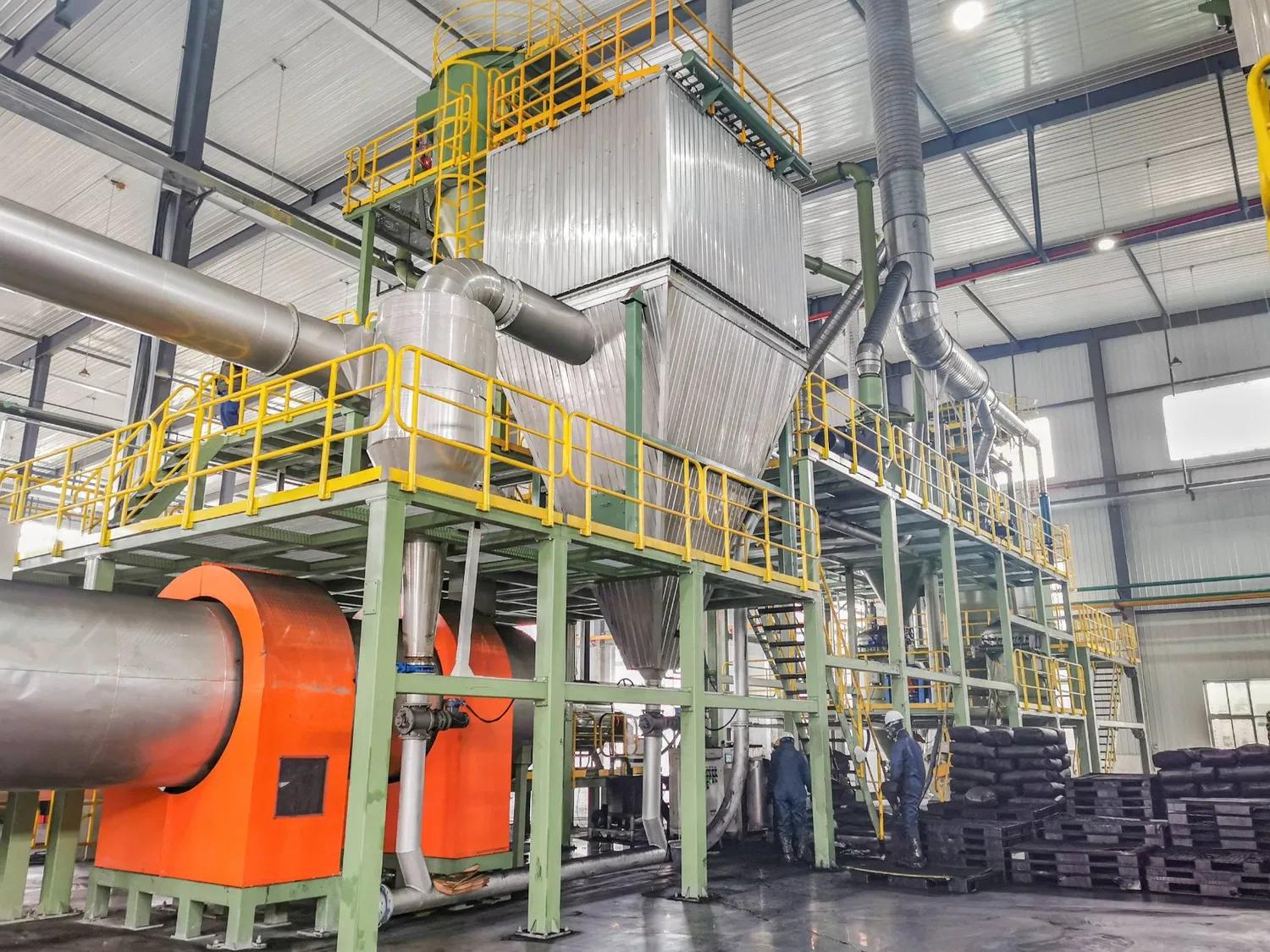
Is a Pyrolysis Plant Profitable?
A pyrolysis plant may be commercially viable when it has a reliable supply of suitable feedstock, a process that produces accepted products consistently, and customers willing to pay enough to cover the complete cost of recovery.
However, profitability varies widely between projects. Tire, plastic and biomass feedstocks can have different preparation requirements, product distributions, processing costs and market opportunities. Even two facilities processing similar material may obtain different results because of differences in location, operating performance, product quality and customer contracts.
Before deciding whether a plant is worth the investment, evaluate five questions:
- Can the facility obtain enough suitable feedstock at a sustainable delivered cost?
- Are the expected products accepted by real buyers at documented prices?
- Can the plant achieve the assumed operating rate after maintenance and downtime?
- Do product revenues cover variable costs and allocated fixed costs?
- Can the project’s cash flow repay the total investment while meeting financing and compliance obligations?
If any of these assumptions remains unverified, the project should be treated as a preliminary opportunity rather than a confirmed profitable investment.
How a Pyrolysis Plant Generates Revenue
A financial model should include only income streams that the project can reasonably demonstrate. Potential revenue depends on the feedstock, the recovered products, product quality and the markets available to the facility.
| Potential revenue source | What determines its value | What needs to be verified |
|---|---|---|
| Pyrolysis oil | Saleable quantity, quality, local demand, treatment requirements and delivery costs | Representative product testing, a credible buyer and a realistic net delivered price |
| Recovered carbonaceous material | Material properties, post-processing, consistency and the buyer’s specification | Whether the material can actually be sold at the assumed grade and price |
| Recovered steel from tires | Separation quality, contamination, scrap-market conditions and logistics | Accepted metal quantity and the buyer’s net price after handling and transport |
| Other recovered products | Feedstock composition and the suitability of the process for recovering those materials | Measured quantity, quality, processing cost and a defined market |
| Verified waste-service income | Contractual gate fees or other agreed waste-management payments | A signed or otherwise credible commercial arrangement, not an assumed payment |
| Energy cost savings | Useful process gas or recovered heat that displaces purchased energy | Measured or validated net energy savings without double-counting internally used gas |
Not every plant can obtain every revenue stream. Product income should be calculated using saleable quantity and net realized selling price, not the theoretical amount of material produced multiplied by an optimistic market quote.
For example, recovered carbonaceous material from tires should not automatically be priced as a high-grade recovered carbon black. Similarly, crude pyrolysis oil should not be valued as specification-compliant diesel unless the required processing and product qualification have been demonstrated.
For a detailed discussion of downstream oil markets, see Pyrolysis Oil Uses.
Ready to run your own numbers? Use our free pyrolysis plant ROI calculator to estimate payback based on your local feedstock and product prices.
How to Calculate Profit per Tonne of Feedstock
Before calculating annual profit, determine the economics of processing one tonne of incoming material. This helps separate the economics of the production process from the effects of plant size.
Contribution per tonne = Net product revenue per tonne of feedstock − Variable cost per tonne of feedstock
Net product revenue can include the proceeds from accepted products and any verified waste-service income. Variable costs may include feedstock purchase, transport, preparation, utilities, consumables, product delivery, treatment of residues and other expenses that change with throughput.
A simple model should keep the calculation on a consistent feedstock basis. If oil yield is measured as a percentage of incoming feed by mass, use the same mass basis for the resulting quantity and selling price. Do not mix volume-based yields with mass-based prices without a documented conversion.
For an individual product, a basic calculation is:
Product revenue = Saleable product quantity × Net selling price per unit
In this equation, saleable quantity means the amount that meets the intended buyer’s specification. Rejected or downgraded material should not receive the same price as a qualified product.
Equipment choice drives most of the capital side: our batch pyrolysis plant page explains typical investment ranges for small and mid-scale projects.
Which Costs Have the Biggest Impact?
A reliable project model must include both variable and fixed costs. The amount of detail required depends on the stage of development, but a serious investment assessment should not be based on equipment price and a short list of daily expenses alone.
Feedstock and Logistics
Feedstock is often a major economic driver. The project must account for the actual price of the material, collection or gate-fee arrangements, transport, loading, unloading, inspection, sorting and preparation.
Material that appears inexpensive at the collection point may become costly after transport and preparation. Conversely, a well-located facility with an established supply agreement may have an advantage over a plant that depends on inconsistent spot deliveries.
Operating Labour and Utilities
Labour requirements depend on the operating schedule, level of automation, feed handling, product discharge and maintenance arrangements. Utilities should be estimated from the complete process line, not just the reactor’s nominal electrical demand.
Account for external fuel, electricity, water where applicable, internal gas use, start-up energy, cooling, pumping, conveying and feed preparation. Energy recovered within the plant should be recorded consistently so that the same benefit is not counted twice.
Maintenance and Equipment Availability
Wear parts, seals, bearings, refractory or insulation repairs, cleaning, environmental consumables and scheduled inspections all affect operating cost and plant availability.
A financial model should include planned downtime as well as a reasonable allowance for unplanned interruptions. A plant that achieves its nameplate capacity only during ideal operating conditions cannot be modelled as though it runs at that capacity every day of the year.
Environmental and Regulatory Costs
Depending on the project, costs may include permit applications, emissions controls, monitoring, fire protection, waste handling, laboratory testing, insurance, site development and environmental reporting.
These are site-specific obligations. A vendor’s equipment price should not be treated as the complete installed cost unless the quotation clearly defines which auxiliary systems, civil works, installation services and environmental controls are included.
Capital Costs and Working Capital
The initial investment can include the reactor and auxiliary equipment, feed preparation, product recovery, installation, buildings, utilities, commissioning and required environmental systems.
Working capital is also important. A facility may need to pay for feedstock and wages before receiving payment for its products. Inventory, customer payment terms and delayed commissioning can increase the amount of cash required even when the long-term business model appears attractive.
For a complete cost breakdown, read How Much Does It Cost to Start a Pyrolysis Plant?. That article should provide the detailed capital and operating cost categories, while this guide focuses on how those figures affect profitability.
How to Calculate Break-Even Throughput
Break-even throughput is the amount of feedstock the facility needs to process to cover the relevant costs under a defined set of assumptions. It is a useful way to evaluate whether the local supply is large enough to support the proposed plant.
A simplified operating break-even formula is:
Break-even annual throughput = Annual fixed operating costs ÷ Contribution per tonne
This formula is meaningful only when contribution per tonne is positive and the fixed-cost and contribution figures use a consistent period and accounting basis.
Operating break-even is not the same as investment break-even. A plant may cover its day-to-day operating expenses while still failing to generate enough cash to repay the initial capital, service debt, pay tax or fund replacement equipment.
For an investment decision, calculate the annual free cash flow after operating costs, taxes, working-capital requirements, sustaining capital expenditure and financing effects where relevant. Then evaluate whether the project meets the investor’s required return.
Calculate Payback, Net Present Value and IRR Separately
Different profitability measures answer different questions. They should not be treated as interchangeable.
| Metric | Question it answers | Important limitation |
|---|---|---|
| Operating contribution | Does each tonne processed generate more revenue than its variable cost? | Does not include all fixed costs or the initial investment. |
| EBITDA | Does the operation generate earnings before interest, taxes, depreciation and amortization? | It is not net profit or free cash flow. |
| Simple payback | How long would it take to recover the initial investment from the assumed annual cash flow? | Usually ignores the time value of money and cash flows after payback. |
| Net present value (NPV) | Does the project’s discounted cash flow exceed the initial investment at the selected discount rate? | Depends on assumptions about project life, discount rate and future cash flows. |
| Internal rate of return (IRR) | What discount rate makes the project’s NPV equal to zero under the modelled cash flows? | Should be assessed alongside NPV and the project’s financing and risk profile. |
A payback calculation that divides capital investment by an incomplete operating-margin estimate can give a highly misleading result. Before using payback to make a purchase decision, establish whether the numerator includes the full installed project cost and whether the denominator is genuine annual cash flow after the relevant expenses.
Build Three Financial Scenarios Before Investing
Pyrolysis project economics can change materially when feedstock costs, saleable yields, product prices or plant utilization differ from the base case. A single forecast does not show how exposed the project is to these changes.
| Scenario | Assumptions to test | What to learn |
|---|---|---|
| Downside | Lower plant utilization, weaker net product prices, higher delivered feedstock costs, more off-specification material, and higher treatment or maintenance costs | Whether the project can still cover its operating obligations and remain solvent. |
| Base case | Realistic operating days, documented supplier and buyer terms, validated saleable yields and fully loaded operating costs | Whether the expected return meets the investor’s required threshold. |
| Upside | Higher verified utilization, better product acceptance, improved logistics or signed contracts that support stronger net pricing | The potential return if specific favorable conditions are achieved. |
The upside case should not depend on unverified carbon-credit income, assumed subsidies, premium product prices without buyer confirmation, or perfect plant operation. Similarly, the downside case should be severe enough to reveal whether the project can tolerate realistic setbacks.
The Variables That Usually Matter Most
Feedstock Cost and Consistency
If a plant must buy feedstock, every increase in delivered cost reduces the contribution per tonne. If supply volume falls below the planned throughput, fixed costs are spread across fewer tonnes. These two effects can combine to reduce margins rapidly.
Long-term supply agreements can improve planning, but their value depends on the agreed material quality, quantity, pricing formula, delivery obligations and conditions for termination or rejection.
Saleable Product Yield and Net Price
Gross production is not the same as saleable production. If an output fails the customer’s specification, it may need further treatment, receive a lower price or become a residue requiring additional handling.
Likewise, a quoted market price is not necessarily the amount received by the plant. Freight, packaging, handling, testing, treatment, discounts and payment terms can change the net price realized.
Plant Utilization and Downtime
Annual revenue depends on the amount of material processed, not just on the daily nameplate capacity. Scheduled maintenance, feedstock shortages, unplanned shutdowns and product-handling limitations can reduce throughput.
Use a realistic operating schedule and clarify whether a supplier’s capacity claim refers to feedstock input, product output, a full production cycle or a specific set of trial conditions.
Upgrading and Product Qualification Costs
Additional treatment may open access to a different product market, but it can also increase capital investment, utilities, consumables, maintenance and product losses.
Before adding a distillation or upgrading unit, compare the additional net sales value with the full incremental costs and confirm that the proposed treatment can actually meet the receiving buyer’s requirements.
Why Generic Payback Claims Are Not a Reliable Investment Basis
Published project examples can help identify the variables that affect profitability, but a reported payback period cannot be transferred automatically to another plant.
Projects may use different assumptions about feedstock price, operating days, product yields, product grade, installation scope, labor, environmental controls, financing and working capital. A small demonstration installation and a fully integrated commercial plant also have different investment and operating requirements.
A peer-reviewed 2026 systematic review of techno-economic studies for lignocellulosic pyrolysis fuels found substantial variability in minimum selling prices and identified feedstock cost, fuel yield and upgrading intensity as important economic drivers. Because the review addresses biomass-derived fuel pathways, its reported price values should not be used directly as a benchmark for tire or plastic pyrolysis.
See the 2026 review of pyrolysis fuel techno-economic assessments for the underlying analysis. Its broader lesson is that process economics require a defined feedstock, product pathway and cost boundary.
How to Assess Whether a Plant Is Ready for Investment
Before committing to an equipment order, prepare a feasibility package containing the information needed to support both the technical design and the financial model.
- Feedstock evidence: Representative material data, a realistic annual supply estimate, delivered-cost information and the proposed supply arrangements.
- Product evidence: Representative test data, intended product specifications, buyer acceptance criteria and realistic net sales prices.
- Process evidence: A defined plant configuration, a consistent mass balance, utility requirements, expected operating schedule and the basis for any performance claims.
- Cost evidence: A complete equipment and installation quotation, site costs, environmental controls, labor, maintenance, consumables and working capital.
- Regulatory evidence: The applicable permits, expected compliance costs, operating limits and the planned management of emissions and residues.
- Financial evidence: A base case, a downside case, a sensitivity analysis, cash-flow projections and an investment decision based on the required return.
To estimate a project’s potential under different inputs, use the Pyrolysis Plant ROI Calculator. Treat calculator outputs as preliminary estimates until the feedstock assumptions, product prices, complete cost basis and operating results have been independently verified.
Frequently Asked Questions About Pyrolysis Plant Profitability
1. Can a Small Pyrolysis Plant Be Profitable?
It can be, but smaller capacity alone does not guarantee a better return. The result depends on contribution per tonne, fixed costs, plant utilization, the full installed investment, product acceptance and the reliability of feedstock supply.
2. What Is the Most Important Factor in Pyrolysis Plant Profitability?
There is no universal single factor. Delivered feedstock cost, saleable product yield, net product prices, plant availability and total processing cost can all materially affect the result. The most important variable is the one that has the greatest effect on the specific project’s margin and cash flow.
3. How Long Does It Take for a Pyrolysis Plant to Pay Back Its Investment?
There is no defensible universal payback period for all plants. A meaningful estimate requires the complete installed cost, realistic annual throughput, net product revenue, operating expenses, working capital and a defined cash-flow basis. A short payback claim should be supported by transparent assumptions and verified operating evidence.
4. Is Revenue the Same as Profit?
No. Revenue is the money earned from product sales and other recognized income. Profit depends on the costs deducted and the accounting measure being used. EBITDA excludes interest, taxes, depreciation and amortization, while net profit and free cash flow account for different additional items.
5. Should I Buy Equipment Before Signing Feedstock and Product Agreements?
It is generally safer to confirm the likely feedstock supply, product specifications, buyer acceptance and regulatory pathway before committing to major capital expenditure. The project can then compare equipment options against the requirements that have actually been established.
Conclusion: Profitability Must Be Demonstrated, Not Assumed
A pyrolysis plant is potentially profitable when it can process suitable feedstock consistently, sell or use accepted products, control its total operating costs and generate sufficient cash flow to justify the investment.
The most reliable assessment uses project-specific feedstock and buyer information, a complete cost basis, validated product assumptions, realistic utilization, and downside scenarios. Equipment capacity and theoretical yields are useful design inputs, but they are not substitutes for a defensible financial model.
For a detailed breakdown of investment costs, read How Much Does It Cost to Start a Pyrolysis Plant?. To compare equipment options, visit the PyrolysisUnit product catalog.

Planning to launch a waste-to-oil pyrolysis business? Get a full
Refractory cement cast, ceramic fiber module, or blanket flat-lay —
If you’re looking at pyrolysis machines for the first time,