Does Pyrolysis Produce CO2?
If you’re thinking about setting up a pyrolysis plant, you’ve probably run into this question more than once: does pyrolysis produce CO2? One article calls the process “clean.” Another calls it a climate risk. That mix of messages makes it hard to plan your business with any confidence.
I’ll walk you through what actually happens inside a pyrolysis reactor, where the CO2 comes from, how much you should expect, and what it means for your equipment choices and your paperwork. No hype. Just what you need to make a sound decision.
What Pyrolysis Actually Does
Before we get to CO2, let’s make sure we’re on the same page.
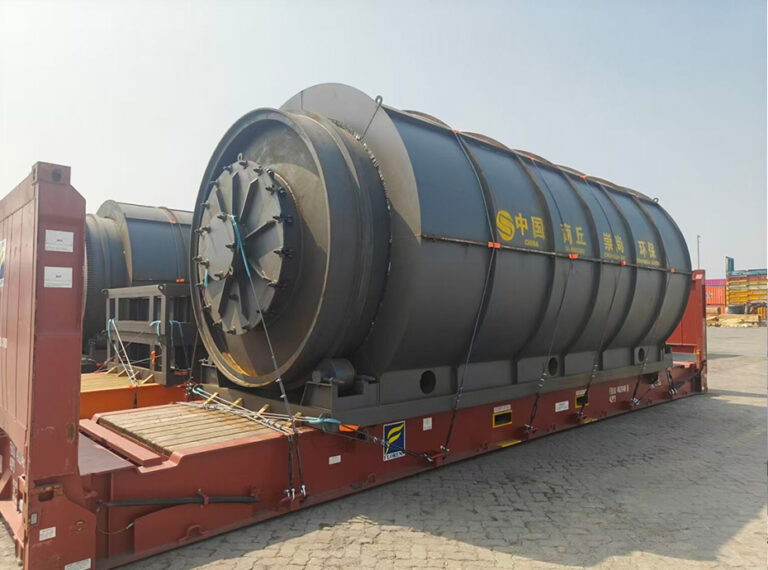
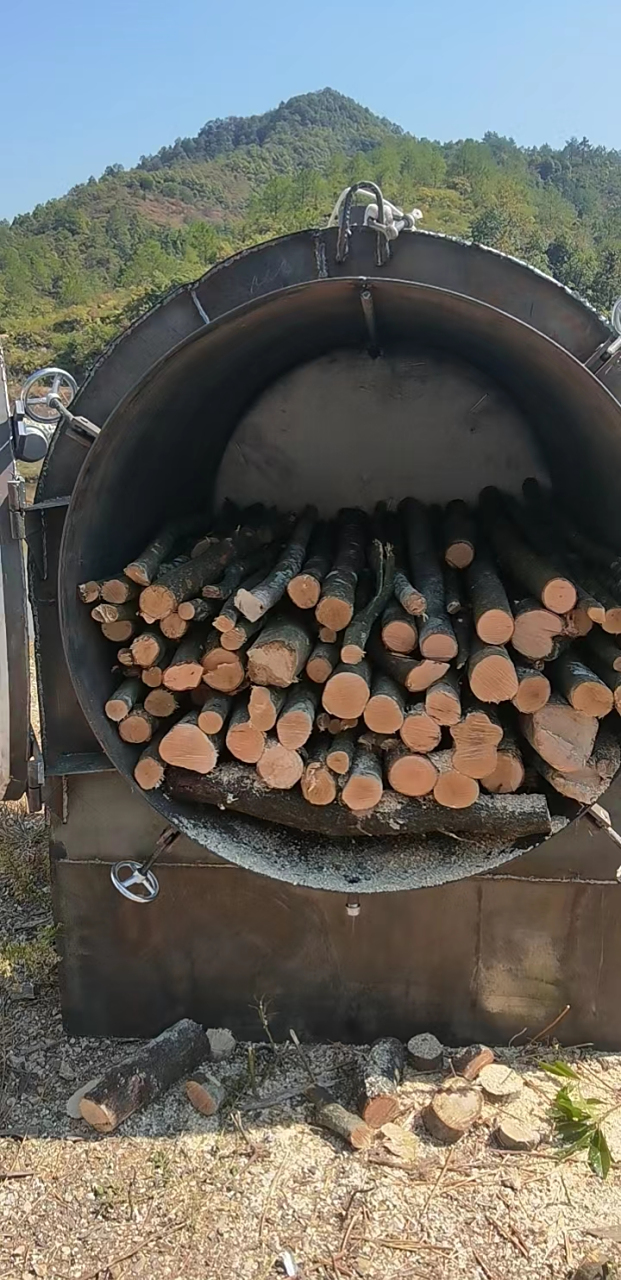
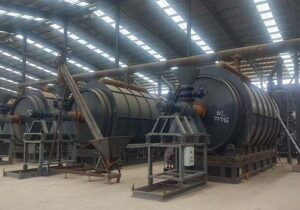
Pyrolysis heats material, such as plastic, tires, biomass, or sludge, inside a sealed reactor with little or no oxygen present. Because oxygen is absent, the material doesn’t burn in the normal sense. Instead, heat breaks the chemical bonds apart. That’s different from incineration, where oxygen is present and the material combusts directly.
This breakdown gives you three outputs:
Product | What It Is | Typical Use |
Biochar (solid) | Carbon-rich solid residue | Soil amendment, solid fuel, activated carbon |
Pyrolysis oil (liquid) | Condensed vapor, also called bio-oil | Industrial fuel, chemical feedstock |
Syngas (gas) | Mix of combustible and non-combustible gases | Heat source for the reactor itself |
Most of the CO2 conversation centers on the syngas. It isn’t one single gas. It’s a blend of hydrogen, methane, carbon monoxide, carbon dioxide, and a handful of light hydrocarbons. How much of each you get depends mainly on your feedstock and your reactor temperature.
So, Does Pyrolysis Produce CO2?
Here’s the direct answer: yes, pyrolysis does produce some CO2. Most reactors show carbon dioxide in the syngas stream, and when that syngas gets burned to heat the reactor (which is standard practice), you get additional CO2 released.
But “yes” isn’t the whole story. The better question is: how much CO2, compared to what?
Think of it like asking, “Does a stove produce heat?” Yes, obviously. But whether that matters depends on what you’re comparing it to and how well you manage it. Pyrolysis works the same way.
Where the CO2 Actually Comes From
CO2 output depends on a few variables, and the good news is you control most of them once you own the plant:
- Feedstock type.Biomass, plastics, and tires each release different amounts of CO2 and other gases.
- Higher process temperatures tend to push more carbon into the gas phase instead of staying locked in the biochar.
- Reactor design.Some systems recover and reuse heat and gas more efficiently, cutting the need for outside fuel.
- Whether syngas is captured or vented.Capturing syngas and burning it to heat the reactor is standard in most modern plants, and it changes your net emissions picture considerably.
Published estimates for biomass pyrolysis often fall somewhere in the range of 150 to 300 kilograms of CO2 per ton of feedstock, though the exact figure shifts with moisture content and process conditions. That’s a wide range, and it tells you something important: your specific setup matters more than any single “pyrolysis” number you’ll find online.
Not All CO2 Counts the Same Way
Here’s something that trips a lot of people up, and it should factor into how you think about your own numbers.
When you pyrolyze biomass, such as wood chips or crop residue, the carbon in that material came from the atmosphere recently, through photosynthesis. When it’s released again as CO2, it’s generally treated as part of a short carbon cycle rather than adding new carbon to the atmosphere. This is usually called biogenic carbon.
Fossil-based feedstocks, like plastic, work differently. Plastic is made from petroleum, which stored carbon underground for millions of years. Pyrolyzing plastic and releasing that carbon as CO2 generally does add to the atmosphere in a way biomass processing does not.
So if you’re processing plastic waste, your CO2 accounting looks different than if you’re processing agricultural residue, even when the raw reactor numbers look similar.
How Pyrolysis Compares to the Alternatives
You’re probably not choosing between pyrolysis and doing nothing. You’re choosing between pyrolysis and whatever your feedstock would otherwise do: sit in a landfill, get incinerated, or get processed a different way.
Disposal Method | What Happens to the Carbon | Trade-off |
Landfill | Organic waste breaks down slowly, often releasing methane, a gas with a much stronger short-term warming effect than CO2 | Slow, ongoing emissions over years |
Open incineration | Full combustion releases CO2 quickly, along with more particulate matter | High emissions, little resource recovery |
Pyrolysis | Releases some CO2, but recovers carbon as biochar and captures energy as oil and gas | Needs proper emission controls to manage other byproducts |
It’s worth being honest here rather than picking the most flattering number: results vary a lot by facility. A 2023 peer-reviewed study covered in Chemical & Engineering News, the American Chemical Society’s publication, found that plastic pyrolysis can produce anywhere from about 28 percent less to 30 percent more greenhouse gas emissions than making plastic from virgin fossil fuels, depending on plant efficiency and how emissions are measured. That’s a real range, not a marketing claim, and it tells you that equipment quality and process design decide which end of that range you land on.
Compared to landfilling organic waste, pyrolysis generally looks more favorable, mainly because it avoids the methane that decomposing waste produces over time. Compared to incineration or virgin plastic production, the picture depends heavily on your specific setup.
A Real-World Example
FrieslandCampina’s milk powder plant in Borculo, Netherlands, replaced part of its natural gas use with pyrolysis oil supplied by the nearby Empyro facility. According to a case study on this project, the switch cut the site’s direct carbon emissions by roughly 50 percent, largely by displacing fossil natural gas with a fuel made from renewable feedstock.
That example is useful because it shows the full picture: pyrolysis itself released some CO2 during production, but the oil it produced then avoided a larger amount of fossil CO2 downstream. Looking only at the reactor’s own emissions, without accounting for what it displaces, misses half the story.
What This Means for Your Permits
If you’re setting up a plant, CO2 and other emissions aren’t only an environmental question. They’re a paperwork question, and the rules are not fixed in stone.
In the United States, for example, pyrolysis and gasification units have been regulated under the Clean Air Act similarly to incinerators since 1995, which brings stricter emissions monitoring and permitting requirements. That classification is currently under active debate.
Period | What Happened |
Since 1995 | Pyrolysis and gasification units generally regulated as a form of waste combustion under the Clean Air Act |
2020 | A proposed rule considered exempting some pyrolysis units from combustion-based rules |
Dec 2024 | That proposal was formally withdrawn |
March 2026 | A new proposal to redefine certain pyrolysis units as manufacturing rather than incineration opened for public comment |
Mid-2026 | Comment period closed; a final decision and a dedicated advanced-recycling rule are still pending |
Industry groups generally support reclassification, arguing it would reduce compliance costs. Environmental groups generally oppose it, arguing it would weaken pollution monitoring. I won’t tell you which way this lands, because I don’t know, and it depends on where you’re building and what feedstock you’re using. What I will tell you is this: before you commit to equipment, check with your local environmental agency about how your specific plant and feedstock will be classified.
That single detail affects your permitting timeline, your monitoring costs, and your allowed emissions levels. Rules outside the US vary just as much, so treat this as an example of the kind of question to ask, not a global standard.
How Plant Design Lowers CO2 Output
You have more control over your plant’s CO2 output than most marketing materials let on. A few design choices tend to help:
- Self-heating (autothermal) reactors.These recycle syngas to heat the reactor, cutting outside fuel use.
- Multi-stage condensers.These recover more liquid oil from the vapor stream, leaving less gas to burn off unnecessarily.
- Gas scrubbers and filters.These don’t reduce CO2 directly, but they clean up other pollutants like particulate matter and nitrogen oxides, which matters for your permit compliance. A systematic review of pyrolysis plant emissions found that scrubbers and filtration systems are the most common mitigation approach across studied facilities.
- Feedstock sorting.Removing contaminants and separating waste streams by type tends to give more predictable, lower emissions.
- Biochar use.Selling or applying biochar to soil locks carbon away for a long time instead of letting it re-enter the atmosphere quickly. Some studies suggest this storage can last for centuries under favorable soil conditions, though the exact duration depends on soil type and climate.
None of these choices make a pyrolysis plant emission-free. They give you meaningful control over how much CO2 leaves your facility, which is the part of this conversation that actually matters once you’re the one operating the equipment.
Q&A: Quick Answers
Does pyrolysis produce CO2? Yes. Most pyrolysis reactors release some CO2, mainly through the syngas stream. The amount depends on feedstock, temperature, and equipment design.
Is pyrolysis CO2 worse than incineration? Generally not, though results vary. Research suggests pyrolysis often produces less CO2 per ton of material than open incineration, mainly because it recovers fuel and carbon rather than burning everything at once. Some studies show outcomes on both sides of that comparison, so equipment quality matters.
Does biomass pyrolysis count the same as plastic pyrolysis for CO2? Not exactly. Biomass carbon is usually treated as part of a short, biogenic carbon cycle. Plastic carbon comes from fossil sources, so its release is generally treated as a net addition to atmospheric CO2.
Can I reduce CO2 output from my plant? Yes, to a meaningful degree. Reactor design, syngas recovery, feedstock sorting, and biochar use all influence your net emissions. No design eliminates CO2 completely.
Will my plant be regulated as an incinerator? It depends on your location and feedstock, and the rules are actively changing in some countries. Check with your local environmental agency before finalizing your equipment plans.
Where This Leaves You
Pyrolysis does produce CO2. That’s a fact, not something to spin. What matters for your business is understanding where that CO2 comes from, how it compares to your realistic alternatives, and which equipment and process choices actually bring it down.
If you’re comparing feedstocks, reactor types, or emission control systems for your own plant, look at your specific numbers rather than leaning on a single industry-wide claim. The details of your setup will tell you more than any general answer can.