
Table of Contents How Much Does It Cost to Start
Plastic pyrolysis is usually the easiest to explain, but not always the easiest to run. The reason is simple: plastic is a wide category. Clean polyolefin waste is very different from mixed plastic with PVC, dirt, labels, food residue, and moisture.
In one recent feasibility study for Qatar, the project looked at processing 30% of municipal plastic waste at a plant scale of 114 tons per day, with a total capital investment of 115 million USD. The same study also showed that economics can be modest, with an ROI of 12.95% and an IRR of 6%. That tells you the project may be technically possible, but scale, supply, and market timing still matter a lot.
A plastic pyrolysis plant usually makes oil, gas, and sometimes wax or other hydrocarbon products. Reviews of plastic pyrolysis also describe it as a route to fuels, chemicals, and building blocks, which is why the market side is so important. If you only look at reactor performance and ignore what the buyer wants, the project can stall fast.
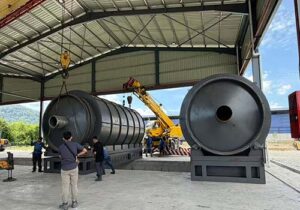
From a practical point of view, I would treat plastic pyrolysis as feasible when three things are true. First, the feedstock must be steady. Second, sorting must be good enough to keep chlorine and other problem materials low. Third, you must already know where the oil or other products will go. The Port Townsend feasibility study focused on these exact points: feedstocks, technology choice, and offtake market.
Plastic pyrolysis is also a project where policy and permitting can change the result. The technology itself may work, but the local air rules, land use rules, and waste handling rules can still change the final answer. That is why a site-specific study matters more than a generic promise.
Tire pyrolysis is often attractive because tires already contain a lot of recoverable material. In one project report, the output mix was shown as about 40% tire oil, 38% carbon black, 15% steel wire, and 7% non-condensible gas. The same report showed a model using 70 tons per day of tires and described heating to about 260°C before the gas is condensed into oil. That makes tire pyrolysis look strong on paper, especially when there is a market for oil, char, and steel.
Another feasibility study from UC Davis said tire pyrolysis was technologically feasible and financially marketable, but California’s strict air emissions rules made a pilot project hard to launch there. That is a useful lesson. A tire project can look good in the lab and still fail at the permit stage.
The Idaho National Laboratory approach also shows how serious feasibility work should be done. It looked at the full value chain: tire collection, transport, pyrolysis processing, product sales, financial modeling, logistics, and SWOT analysis. It also noted the need to think about air quality and room for future capacity growth. That is the right mindset. A tire project should not be treated as just a machine purchase. It is a supply chain and sales project too.
One more useful point: a pre-feasibility study is not just for engineers. It helps investors and lenders decide whether to move forward. It also helps define the plant concept for a specific location. For tire pyrolysis, that location detail matters because tire supply, transport cost, char sales, and emissions rules are all local.
Oil sludge is a different case. It can be a good feedstock, but only when you deal with moisture, contamination, and uneven composition. The biggest problem is water. A study on pit latrine sludge found that net energy recovery from the produced bio-oil was achievable when the sludge water content was about 55% or lower. When both bio-oil and char were used, feasibility extended to about 65% water content. The same study also said the main barriers were heterogeneous composition and the difficulty of collecting high-viscosity sludge.
That is why I would never judge oil sludge pyrolysis by oil content alone. You also need to ask how much dewatering is required, how much drying energy is needed, and what the char or solid residue will look like. If the sludge is too wet, the energy balance can collapse. That is not theory. That is what the feasibility work is warning you about.
A 2025 review on oily sludge pyrolysis also points to pollutant release and resource recovery as key issues. It says the process must deal with nitrogen- and sulfur-containing emissions, with most emissions appearing below 400°C. That means the process design needs proper gas treatment, not just a reactor and a condenser.
For oil sludge projects, I would put the feasibility line this way: the project is strongest when the sludge has high hydrocarbon content, the moisture can be reduced at a reasonable cost, and the plant has a clear plan for emissions control and residue handling. That is the real test.


Table of Contents How Much Does It Cost to Start
Table of Contents 3 Types of Pyrolysis Furnace Insulation Shells
Table of Contents The Charcoal Making Process, Step by Step: