
Table of Contents How Much Does It Cost to Start
When you invest in a pyrolysis project—whether for plastic, waste tire, or oil sludge recycling—your long-term profitability depends on more than just the initial equipment cost. Ongoing operational expenses (maintenance, energy, labor) and easy-to-overlook hidden costs (infrastructure, raw material pretreatment) directly affect your bottom line. These costs accumulate over your plant’s 8-10 year lifespan, making cost control even more critical than minimizing upfront equipment spending.
Many investors overlook key cost factors during planning, leading to unexpected budget overruns and reduced profits. This guide breaks down all critical pyrolysis costs, including your specific requirements and frequently asked questions from global investors. By the end, you’ll have a clear plan to control costs—and learn how we can customize a cost-effective solution for your project.
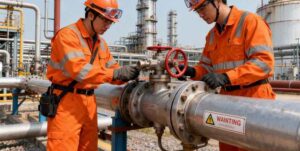
Below are the non-negotiable costs that shape your project’s ongoing expenses. We focus on the three key areas in our title, plus your specified details and other high-priority costs for accurate budgeting.
1.1 Labor Requirement Cost: Continuous vs Batch Plants
Labor is one of the largest ongoing expenses, and costs vary dramatically between continuous and batch plants—especially for 24-hour operation (the most profitable model):
- Batch Pyrolysis Plants: To run 24/7, you need a two-shift system. Each shift requires 2-3 skilled workers to handle the full cycle: loading waste, monitoring temperature/pressure, overseeing cooling, and discharging products. Batch plants operate in discrete cycles—after one furnace is pyrolyzed, the system pauses to cool, unload, and reload. This means round-the-clock workers to avoid production delays.
- Continuous Pyrolysis Plants: No two-shift system is needed for 24/7 operation. These plants run non-stop (continuous feeding, pyrolysis, discharging) via an intelligent automated system. You only need 2-3 total workers per day to supervise equipment, check for abnormalities, and make minor adjustments. This cuts labor costs by 50% or more—ideal for regions with high labor rates.
Pro Tip: For batch plant investors, we offer optional budget-friendly automatic feeding devices. This reduces labor needs by 1 worker per shift, lowering long-term costs and human error.
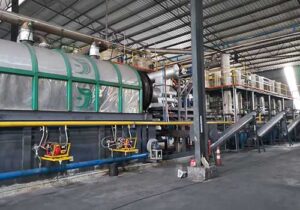
1.2 Energy Consumption Cost: Minimal with Syngas Recycling
Energy costs are a top concern, but our pyrolysis plants are designed to keep this expense low. Here’s a detailed breakdown:
- Syngas Recycling (Core Cost-Saver): Our engineering team designs heating systems based on your needs (waste type, output target, local energy availability). All plants feature syngas recycling: syngas (a by-product of waste decomposition) is purified and reused to heat the furnace. This eliminates the need for expensive external fuels (natural gas, coal, diesel).
- Low Power Requirement: With syngas covering most heating needs, total electrical power consumption is only 15-35kW. Smaller batch plants use 15-25kW; larger continuous plants use 25-35kW. This translates to minimal electricity bills—even for 24-hour operation.
- Example: A 20kW continuous plant uses 480kWh/day. At an average $0.15/kWh, this is just $72/day in energy costs—far less than similar industrial equipment. Batch plants use even less energy per cycle (no power during cooling/discharging).
1.3 Maintenance Cost: Low Long-Term Durability
Maintenance costs are often overestimated. Our plants are built for longevity and minimal upkeep:
- Long Service Life: Made with high-quality, heat/corrosion-resistant materials (alloy steel for furnaces), our equipment lasts 8-10 years with proper maintenance. This avoids costly plant replacement for nearly a decade.
- Minimal Upkeep: Over 8-10 years, you only need to replace small wear-and-tear parts (gaskets, filters, heating elements). These parts are affordable, easy to source (we keep stock), and quick to replace (under 1 hour per part). No expensive downtime or specialized technicians—your on-site team can be trained for basic maintenance.
- Cost Estimate: Annual maintenance is only 2-3% of initial equipment investment. For a $100,000 plant, this is $2,000-$3,000/year—insignificant compared to annual revenue. We also offer optional maintenance packages for added peace of mind.
1.4 Infrastructure Cost: Simple, Low-Cost Storage & Workshop
Basic infrastructure is required for storage—but it’s a one-time, affordable expense:
- Workshop Requirement: A simple open/semi-enclosed workshop protects waste, products, and equipment from harsh weather. No complex construction is needed—even prefabricated steel structures work.
- Storage Details:
- Waste Storage: A covered area to keep waste dry (wet waste increases energy use).
- Oil & Charcoal Storage: Sealed steel drums for pyrolysis oil (prevents spills/evaporation) and a covered pile for charcoal black (keeps dry/dust-free).
- Steel Wire Storage: A small separate area only for continuous tire plants—recycled steel wire is a sellable by-product; a metal bin keeps it clean and marketable.
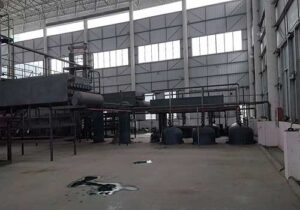
- Cost Tip: Workshop size is customizable to avoid overbuilding. Small batch plants (5-10 tons/day) need 50-100㎡; large continuous plants (30+ tons/day) need 200-300㎡. We help design budget-friendly layouts for your region.
1.5 Key Additional Costs (Frequently Asked)
Below are two hidden costs investors often ask about—critical for accurate budgeting, especially for tire recycling:
1.5.1 Raw Material Pretreatment Cost (Tire Recycling Focus)
Pretreatment differs completely between continuous and batch plants for tire recycling—directly impacting upfront/operating costs:
- Continuous Pyrolysis Plants (Tire Recycling): Wire drawing is requiredto remove all steel wire before feeding. Continuous systems need uniform, impurity-free waste to avoid feeding blockages. A wire drawing machine costs $5,000–$15,000 (one-time). Recycled steel wire sales offset part of this cost. We can also help source local outsourced wire drawing if you prefer not to buy equipment.
- Batch Pyrolysis Plants (Tire Recycling): No wire drawing is needed. Simply cut whole tires into small pieces (simple cutting machine: $2,000–$6,000 one-time). Steel wire remains in tire blocks, is discharged with charcoal black after pyrolysis, and is separated manually or with a simple magnetic separator. This simplifies workflow, lowers investment, and saves time— a major batch plant advantage for tires.
- Plastic/Oil Sludge Pretreatment: Minimal costs apply. Continuous plastic plants may need a crusher ($3,000–$8,000 one-time) for uniform powder. Oil sludge needs simple filtering ($2,000–$5,000 one-time) to remove impurities. These costs are offset by better product quality and efficiency.
1.5.2 Environmental Compliance Cost
Avoid costly environmental fines with our built-in compliance features:
- All plants include a multi-stage gas purification/dust removal system, meeting EU EAC, US EPA, and local regulations. No extra emission control investment is needed.
- This eliminates fines, retrofits, or shutdowns. It also ensures legal, sustainable operation—helping you secure local permits and build a positive reputation.

Table of Contents How Much Does It Cost to Start
Table of Contents 3 Types of Pyrolysis Furnace Insulation Shells
Table of Contents The Charcoal Making Process, Step by Step: