
Planning to launch a waste-to-oil pyrolysis business? Get a full breakdown of equipment costs, operating expenses, product yields, permit requirements and realistic ROI calculations for tire, plastic and oil sludge pyrolysis plants.

Mr. Xu, CEO&Engineer ·Technical Director·Engineer
We have accumulated 23 years of experience in the pyrolysis industry, spanning from 2003 to the present.
Mechanical & Oil Engineer PyrolysisUnit Chef Engineer Technical Advisor, China Recycling Association
Selecting a pyrolysis reactor requires more than matching a machine to a feedstock or choosing a nominal processing capacity. The reactor must provide suitable heat transfer, controlled material movement, consistent reaction conditions, effective vapor handling, and a practical method for removing processed solids.
These requirements affect daily operating performance, maintenance needs, product consistency, and the integration of the reactor with the rest of the plant. A suitable configuration should therefore be selected according to the project’s operating schedule, material characteristics, production target, available utilities, and site requirements.
This guide compares the main operating configurations and explains the engineering questions buyers should address before requesting a quotation.
Pyrolysis Reactor Configurations: What Is the Difference?
Two separate design decisions are often described using the same terminology: how the system operates over time and how material moves through the reaction chamber. These are related, but they are not interchangeable.
Batch, Semi-Continuous, and Continuous Operation
| Configuration | Operating arrangement | Main design consideration |
|---|---|---|
| Batch | A charge is loaded, processed through a cycle, cooled or otherwise prepared for discharge, and removed before the next cycle. | Cycle duration, loading and unloading arrangements, heating consistency, and turnaround time. |
| Semi-continuous | Some operations are automated or performed continuously while other stages remain intermittent. The exact arrangement depends on the equipment design. | Coordination between feeding, reaction, discharge, and the stages that require pauses or isolation. |
| Continuous | Designed to maintain ongoing material movement through the processing system during operation. | Reliable feeding and discharge, stable heat transfer, control-system integration, and maintenance access. |
Continuous operation can reduce repeated loading and unloading interruptions, but it does not automatically guarantee higher product quality or a lower cost per tonne. Feed preparation, downtime, equipment utilization, energy consumption, and maintenance must be considered together.
For equipment configurations offered by PyrolysisUnit, see the batch pyrolysis plant, semi-continuous pyrolysis plant, and continuous pyrolysis plant pages.
Common Pyrolysis Reactor Designs
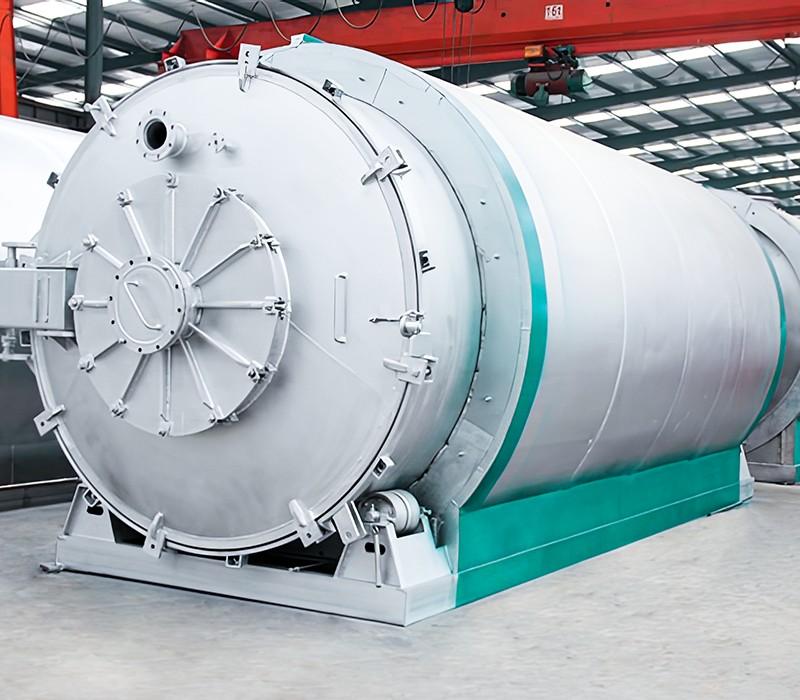
Reactor geometry determines how the material moves, how heat reaches it, and how vapors and solid residues leave the reaction zone. The following designs are common across pyrolysis research and industrial applications, but not every geometry is available from every equipment supplier.
Fixed-Bed Reactors
In a fixed-bed arrangement, the material remains largely stationary during the reaction. Heat is transferred through the feedstock and from the surrounding heated surfaces. The practical design challenge is maintaining an appropriate temperature profile throughout the material.
Fixed-bed systems can be useful where batch operation and relatively simple material handling suit the project. However, heating uniformity, the time required for loading and discharge, and the difficulty of removing solid residue need to be evaluated for the actual feedstock and reactor dimensions.
Rotary Kiln Reactors
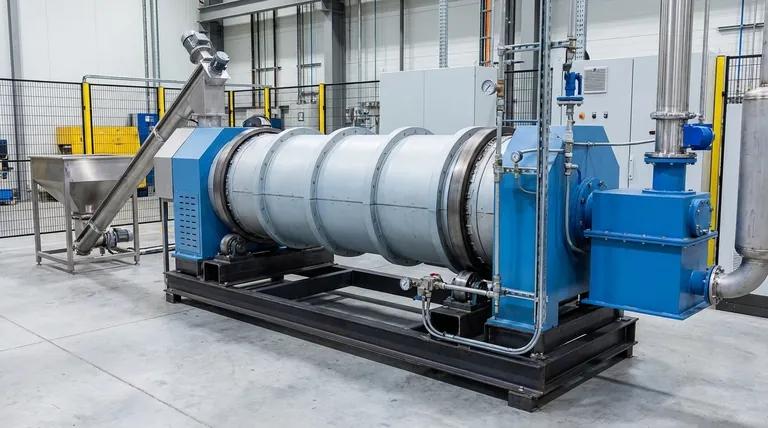
A rotary kiln moves material through a rotating cylindrical chamber. Rotation promotes material movement and mixing, while the reactor geometry determines the path and time spent in the heated zone.
For engineering evaluation, buyers should examine the drive system, sealing arrangements, internal wear, thermal expansion, material retention time, and access for inspection. The amount of mixing and the uniformity of heating depend on the design and the properties of the processed material.
Screw or Auger Reactors
A screw reactor uses a rotating screw or auger to convey material through a heated chamber. This arrangement can provide controlled material movement in a compact processing system.
Important design questions include screw speed, heating-surface contact, torque requirements, the behavior of sticky or irregular material, and wear on moving components. Feed consistency and the ability to remove accumulated material also affect long-term reliability.
Fluidized-Bed Reactors
Fluidized-bed designs use a gas flow to suspend and mix small particles within a hot bed material. They can provide strong heat transfer and relatively uniform thermal conditions under suitable operating conditions.
These systems require careful control of particle size, gas velocity, solids separation, and downstream equipment. Their operating principles and process requirements differ from those of many batch or mechanically conveyed reactors.
For a deeper technical discussion, see the research review Recent Advancements of CFD and Heat Transfer Studies in Pyrolysis.
Five Engineering Factors That Influence Reactor Performance
1. Heat Transfer and Temperature Distribution
The reactor must transfer enough heat to support the intended conversion without creating uncontrolled temperature differences. The heat source, reactor walls, internal mixing, material movement, and insulation all influence the temperature profile.
A single temperature reading does not necessarily represent the conditions throughout the reaction chamber. When comparing designs, ask how temperatures are measured, where sensors are positioned, and how the system responds to changes in feed rate or material properties.
2. Solid Residence Time and Vapor Residence Time
Solid residence time describes how long the feedstock remains in the heated reaction zone. Vapor residence time describes how long released vapors remain at elevated temperatures before they are removed or cooled.
These variables influence different parts of the process and should not be treated as the same measurement. Reactor geometry, feed movement, gas flow, and vapor-line arrangement all affect residence-time behavior.
Research on pyrolysis reactor design examines how residence time and heat transfer influence reaction pathways and product distribution. See the review Pyrolysis Process, Reactors, Products, and Applications.
3. Feeding and Material Movement
The feeding system needs to deliver material at a rate and in a form that the reactor can handle. Irregular particle size, changing bulk density, or inconsistent material flow can disturb operating conditions.
Review the hopper, metering system, conveyor or screw arrangement, inlet isolation, and provisions for removing unwanted material. The feeding mechanism should be compatible with the reactor’s operating mode rather than selected separately from it.
4. Vapor Outlet and Downstream Connections
The reactor is only one component of the complete processing line. Vapor outlets, transfer pipes, condensers, gas-handling equipment, and pressure or flow controls must be designed as a connected system.
Restricted flow, unsuitable pipework, inadequate access for cleaning, or poorly coordinated controls can undermine overall performance even when the reactor chamber itself is correctly sized.
Buyers should ask for a process-flow diagram showing the reactor and the relevant downstream connections. The diagram should identify the main process streams, control points, and equipment included in the proposed supply.
5. Construction, Sealing, and Maintenance Access
Thermal expansion, cyclic heating, abrasion, corrosion, and repeated operation can affect reactor components and seals. Their significance depends on temperature, material composition, mechanical loading, and the design of the equipment.
The supplier should explain the construction materials used in relevant components, how sealing is maintained, which parts are expected to require periodic inspection, and how worn or damaged components can be serviced.
Maintenance access is particularly important for equipment operating over long schedules. A design that is difficult to inspect or clean may cause extended downtime even if its nominal processing capacity is sufficient.
How to Compare Pyrolysis Reactor Capacity
A quoted capacity should be interpreted in the context of the operating schedule and the whole processing line. The same daily throughput figure can mean different things depending on whether the system processes discrete batches or maintains continuous operation.
| Capacity question | What to confirm |
|---|---|
| What is the capacity basis? | Confirm whether the figure represents feedstock input, processed output, or another defined measurement. |
| What operating period is assumed? | Establish whether the quotation refers to a batch cycle, scheduled shift, or a defined operating day. |
| What affects actual throughput? | Review feed properties, loading time, heating and cooling cycles, discharge, cleaning, and planned downtime. |
| What supporting equipment is included? | Confirm that feeding, vapor handling, condensation, gas treatment, and residue discharge can support the stated operating rate. |
| What performance evidence is available? | Request the conditions and measurement basis behind any capacity or performance figures. |
For this reason, nominal reactor size should not be used as the sole basis for comparing quotations. A fair comparison should use the same feedstock assumptions, operating schedule, supply boundary, and performance measurement.
What Information Should You Send a Reactor Supplier?
A useful equipment inquiry gives the engineering team enough information to assess the project before proposing a configuration.
- Feedstock information: State the material type, physical form, expected variability, contamination, moisture where relevant, and any preparation already completed.
- Target throughput: Specify tonnes per day or another appropriate unit, the intended operating schedule, and the expected number of operating days per year.
- Operating preferences: Indicate whether the project requires batch, semi-continuous, or continuous operation, and explain any limits on staffing or site availability.
- Site conditions: Provide available space, utility supply, site constraints, local environmental requirements, and other engineering limitations.
- Project boundaries: Clarify which equipment should be included, such as feed preparation, heating, condensation, gas treatment, storage, and auxiliary systems.
- Performance requirements: Define the performance measures that matter and ask how they will be verified under agreed operating conditions.
The quotation should identify assumptions, exclusions, utilities, expected maintenance requirements, and the limits of any performance commitments. This helps avoid comparing proposals that appear similar but include different equipment or operating responsibilities.
Common Mistakes When Selecting a Pyrolysis Reactor
- Choosing by capacity alone: A larger stated capacity is not necessarily the best match for the feedstock, operating schedule, or project constraints.
- Confusing operating mode with reactor geometry: Batch and continuous describe how a system operates, whereas rotary kiln, screw, and fluidized-bed describe different reactor configurations.
- Ignoring the rest of the process line: Reactor performance depends on how feeding, vapor handling, condensation, gas treatment, and residue discharge work together.
- Assuming all feedstocks behave alike: Material characteristics can change heat transfer, movement, wear, and operating requirements.
- Comparing quotations with different boundaries: Two suppliers may include different auxiliary equipment, commissioning services, controls, or environmental systems.
Explore Pyrolysis Reactor Systems
PyrolysisUnit offers several operating configurations for projects involving selected waste feedstocks. The appropriate option depends on the material to be processed, the planned throughput, the operating schedule, and the required equipment scope.
- Small pyrolysis machine — review the compact equipment option and its stated operating scope.
- Batch pyrolysis plant — review the charge-based operating configuration.
- Semi-continuous pyrolysis plant — review the equipment option between batch and continuous operation.
- Continuous pyrolysis plant — review the configuration designed for ongoing material processing.
For the complete equipment range, visit the PyrolysisUnit product catalog. For a more detailed discussion of reactor design and operating behavior, see Pyrolysis Reactor Technology and Applications.
Frequently Asked Questions About Pyrolysis Reactors
1. What Is the Difference Between a Pyrolysis Reactor and a Complete Pyrolysis Plant?
The reactor is the core unit where the material undergoes thermal conversion. A complete plant may also include feed handling, heating, vapor transfer, condensation, gas treatment, controls, storage, residue handling, and other supporting equipment. When comparing suppliers, confirm whether the quotation covers only the reactor or the complete processing line.
2. Is a Continuous Reactor Always Better Than a Batch Reactor?
No. Continuous operation can suit projects with reliable feed supply and a need for ongoing processing, while batch operation may better fit projects where discrete cycles are acceptable. The choice depends on the operating schedule, material handling, required throughput, maintenance plan, and investment constraints.
3. Does Reactor Design Affect Product Quality?
Yes. Heat transfer, temperature distribution, solid and vapor residence times, and material movement can influence the reactions that occur and the composition of recovered products. The effect depends on the feedstock and the specific process conditions.
4. Can One Reactor Configuration Process Every Type of Waste?
No universal configuration should be assumed suitable for every material. Feedstock characteristics, pretreatment needs, process conditions, equipment wear, and the required environmental controls all influence suitability. The supplier should confirm compatibility with the actual material and proposed operating conditions.
5. What Should I Ask for Before Purchasing a Pyrolysis Reactor?
Request the technical data sheet, process-flow diagram, capacity basis, operating assumptions, construction and maintenance information, included auxiliary equipment, utility requirements, environmental-control scope, and details of any performance commitments. These documents make it easier to compare proposals on a consistent basis.
Conclusion
A well-selected pyrolysis reactor needs to match the project’s operating mode, material movement, heat-transfer requirements, vapor-handling system, and maintenance conditions. Nominal capacity is only one part of that decision.
Before choosing a configuration, define the feedstock and operating schedule, document the required process boundaries, and compare suppliers using the same technical assumptions. This creates a more reliable basis for equipment selection than relying on generalized claims about efficiency, throughput, or product yield.
To compare available equipment options or discuss a project-specific configuration, visit the PyrolysisUnit equipment catalog.

Planning to launch a waste-to-oil pyrolysis business? Get a full
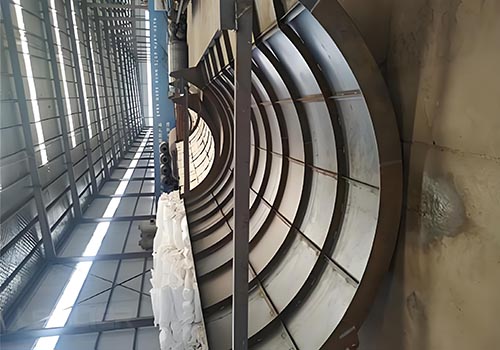
Refractory cement cast, ceramic fiber module, or blanket flat-lay —
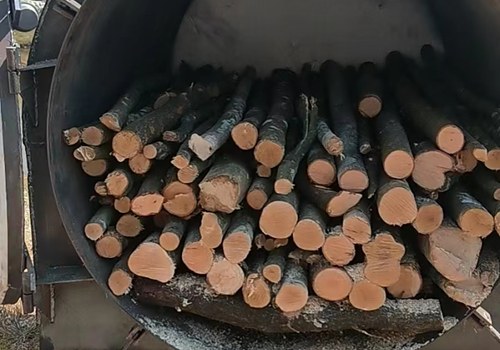
If you’re looking at pyrolysis machines for the first time,