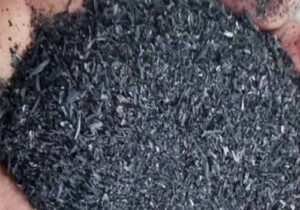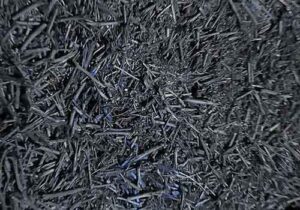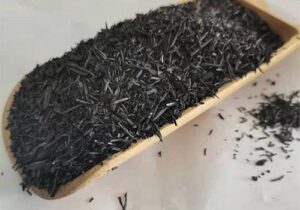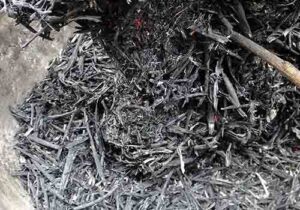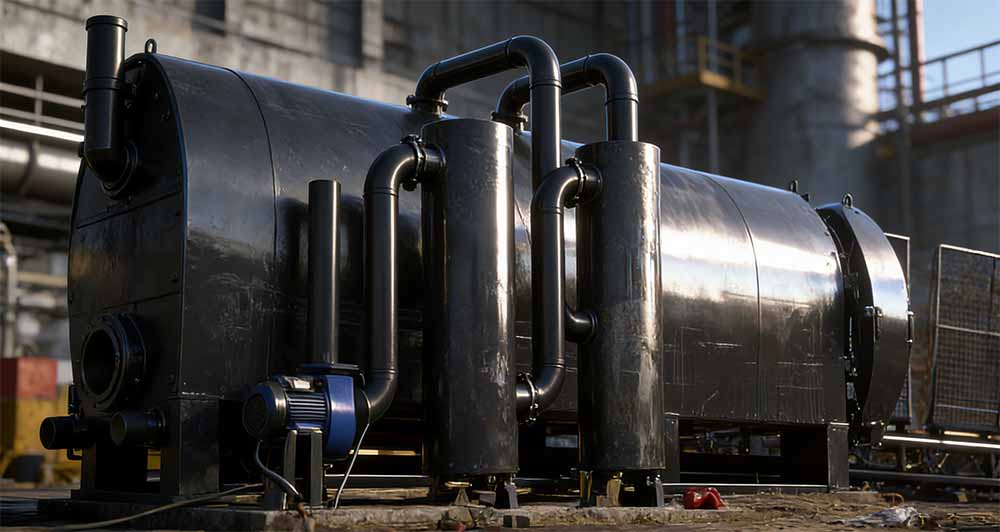

Convert Agricultural Straw into High-Value Charcoal with Efficient Carbonization Technology
Why Straw Is Suitable for Charcoal Production
For those exploring biomass waste recycling and charcoal production projects, a common question is: “Can straw be used to make charcoal?” The answer is a definite yes. Straw is not only a feasible raw material for charcoal production but also an ideal choice with significant environmental and economic value. This is precisely why our page focuses on providing comprehensive straw carbonization solutions. The core reasons lie in three key aspects:
1. Straw Is an Abundant Agricultural Waste
Straw is a natural by-product of grain cultivation, including wheat straw, rice straw, corn stalks, and other common types. As a global staple food, grain planting is widespread, resulting in the production of tens of millions of tons of straw every year in major grain-producing regions. This massive and renewable supply makes straw a low-cost, easily accessible raw material source for charcoal production, eliminating the worry of raw material shortage for large-scale or long-term operations.
2. Open Burning of Straw Causes Pollution and Is Restricted
Traditionally, straw is often disposed of by open burning, which releases a large amount of harmful gases (such as carbon monoxide, nitrogen oxides) and particulate matter into the air, seriously deteriorating air quality and posing health risks. To address this environmental problem, many countries and regions have issued strict bans or restrictions on open straw burning. This makes straw disposal an urgent challenge for farmers and agricultural enterprises, creating a strong demand for sustainable straw recycling solutions.
3. Carbonization Turns Straw into Usable High-Value Charcoal
The carbonization process effectively solves the straw disposal problem while realizing resource recycling. Through controlled oxygen-limited pyrolysis, straw is converted into high-quality straw charcoal—an efficient, clean biomass fuel. Straw charcoal can be widely used in daily heating, BBQ, industrial boilers, and other scenarios; it can also be processed into a soil amendment to improve soil fertility. This “waste-to-treasure” transformation not only eliminates environmental pollution but also creates considerable economic benefits for investors.
In summary, the abundance of straw, the urgency of its environmentally friendly disposal, and the high value of its carbonization products jointly determine that straw is highly suitable for charcoal production. Our page is dedicated to providing professional straw carbonization solutions, covering raw material pretreatment, production processes, equipment selection, and other full-link guidance to help you efficiently convert straw into valuable charcoal.


What Is a Straw Charcoal Making Machine?
A straw charcoal making machine is a specialized industrial equipment designed to convert straw and other crop residues into high-quality charcoal through the process of oxygen-free (anaerobic) carbonization. It is a core device for straw recycling and biomass energy utilization, integrating environmental protection and resource reuse, and is widely used in agricultural and biomass energy industries.
What Problems Does It Solve?
It directly addresses the long-standing challenges of straw disposal and environmental pollution: On one hand, it solves the problem that straw (a large amount of agricultural waste) is difficult to dispose of—avoiding air pollution and health risks caused by open burning, which is banned or restricted in most regions. On the other hand, it realizes the “waste-to-treasure” transformation of low-value straw, turning it into marketable charcoal products, creating economic benefits for farmers, agricultural enterprises, and investors.
Core Components: Input, Process & Output
1. Input: Straw & Crop Residues
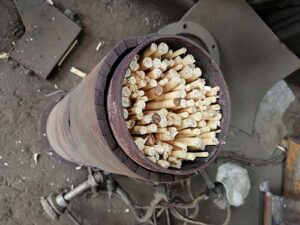
The main raw materials it processes include various straw and crop residues, such as wheat straw, rice straw, corn stalks, sorghum straw, and peanut vines. These raw materials are abundant, renewable, and low-cost (even free in most agricultural regions), which lays a foundation for low-threshold and high-profit production.
2. Core Process: Oxygen-Free Carbonization
The core working principle is oxygen-free pyrolysis: After simple pretreatment (drying, crushing to uniform particles), the straw is sent into a sealed carbonization chamber. Under the condition of isolating oxygen and controlling the temperature (usually 400–550℃), the organic components in the straw are thermally decomposed. This process avoids straw combustion and ensures that the carbon components are retained to form charcoal.
3. Output: Charcoal + Syngas
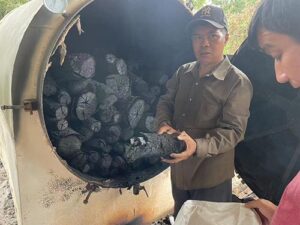
The primary output is high-quality straw charcoal, which has stable combustion performance, low ash content, and can be used as fuel (for heating, BBQ, industrial boilers), soil amendment (to improve soil fertility and water retention), or raw material for charcoal briquettes. Meanwhile, a by-product—combustible syngas (mainly composed of hydrogen, methane, and carbon monoxide)—is generated during carbonization. Advanced straw charcoal making machines are equipped with gas recycling systems to reuse this syngas for heating the carbonization chamber or dryer, reducing external energy consumption and improving environmental friendliness.
In essence, a straw charcoal making machine is not only a piece of production equipment but also a key solution to straw pollution and a driver of agricultural waste recycling. It bridges the gap between agricultural waste disposal and biomass energy utilization, providing a sustainable development path for both the environment and the economy.
How to Make Charcoal from Straw
Making charcoal from straw is a mature and sustainable biomass waste recycling process. It converts low-value agricultural straw into high-quality charcoal through a series of controlled physical and thermal treatments, while realizing energy reuse. The whole process is safe, efficient, and environmentally friendly, with clear operational steps as follows:
1. Straw Collection & Drying
First, collect fresh straw raw materials (including wheat straw, rice straw, corn stalks, sorghum straw, etc.) and remove impurities such as soil, stones, and metal debris—impurities will affect the quality of finished charcoal and may damage subsequent processing links. The core goal of this step is to reduce the moisture content of straw: spread the collected straw in a well-ventilated and sunny area for natural air-drying, or use a drying device for rapid dehydration. The ideal moisture content after drying is below 15%—excessive moisture will prolong the carbonization time, increase energy consumption, and easily lead to incomplete carbonization.
2. Size Reduction (Baling / Crushing)
Process the dried straw through size reduction to ensure uniform material specifications, which helps with even heating during carbonization. There are two common ways:
- ① Baling: Compress loose straw into dense bales (usually 30×20×15cm) for easy transportation and feeding, suitable for large-scale continuous production;
- ② Crushing: Grind the straw into fine particles (particle size 3-5mm) using a crushing device, which is more conducive to full contact with heat and improves carbonization efficiency.
The choice of method depends on the subsequent carbonization scale and process requirements.
3. Carbonization at Controlled Temperature
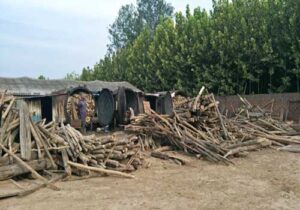
This is the core step of straw charcoal production, requiring strict control of temperature and oxygen content. Put the processed straw into a sealed carbonization environment, and gradually raise the temperature to 400–550℃ under oxygen-limited conditions. In the initial stage (200–300℃), the remaining moisture and volatile matter in the straw are continuously volatilized; when the temperature reaches 400℃ or above, the organic components (cellulose, hemicellulose) in the straw undergo thermal decomposition, and non-carbon components are separated, leaving solid carbon-rich products. During the whole process, it is necessary to maintain a stable sealed state to avoid excessive oxygen entering, which would cause the straw to burn instead of carbonizing.
4. Cooling & Discharging
After the carbonization process is completed, the straw charcoal is in a high-temperature state (above 300℃). Direct contact with air at this time will cause re-oxidation, leading to charcoal burning and yield reduction. Therefore, it is necessary to transfer the high-temperature charcoal to a sealed cooling environment for cooling until it drops to room temperature. Common cooling methods include natural cooling and water-cooled cooling—both need to ensure isolation from air. After cooling, open the discharge port to collect the charcoal, and conduct simple sorting to remove a small amount of uncarbonized straw residues, obtaining high-quality finished straw charcoal.
5. Gas Reuse for Heating
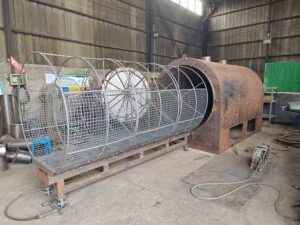
During the straw carbonization process, a large amount of combustible syngas (mainly composed of hydrogen, methane, and carbon monoxide) will be generated as a by-product. This syngas can be recycled through a gas collection system: after simple purification to remove tar and impurities, it is transported to the heating device of the carbonization process or the drying link of the initial straw. Reusing syngas not only reduces the dependence on external energy sources (such as electricity and coal) and lowers production costs but also avoids environmental pollution caused by direct emission of syngas, realizing the recycling of energy in the whole process.
The finished straw charcoal obtained through the above steps has stable combustion performance and can be widely used in daily heating, BBQ, industrial fuel, and soil improvement. This process not only solves the problem of straw disposal but also realizes the “waste-to-treasure” transformation, which is in line with the global trend of environmental protection and sustainable development.
Straw Charcoal vs Wood and Rice Husk Charcoal
When choosing raw materials for charcoal production, understanding the differences between straw charcoal, wood charcoal, and rice husk charcoal is crucial for investors to match production needs, control costs, and open up markets. Below is a professional comparison of the four core dimensions (bulk density, charcoal yield, ash content, and typical applications) to help you make informed decisions—this detailed analysis also reflects the professional depth of straw charcoal production solutions.
1. Bulk Density
Bulk density directly affects the storage, transportation cost, and combustion efficiency of charcoal. There are significant differences between the three:
- Straw Charcoal: Bulk density is relatively low, ranging from 120–180 kg/m³. Due to the loose structure of straw raw materials, the finished charcoal is light and porous. This makes it easy to transport (low weight per unit volume) but requires compression packaging if long-distance transportation is needed to reduce logistics costs.
- Wood Charcoal: Bulk density is the highest, at 250–350 kg/m³. Wood has a dense fiber structure, and the charcoal formed after carbonization retains a relatively compact texture. It has high combustion calorific value per unit volume and is easy to store without special packaging.
- Rice Husk Charcoal: Bulk density is the lowest, only 80–120 kg/m³. Rice husk itself is light and has a high silica content, resulting in finished charcoal that is extremely light and porous. It is suitable for scenarios requiring low density and high adsorption, but needs special packaging to avoid breakage during transportation.
2. Charcoal Yield
Charcoal yield (the ratio of finished charcoal to raw materials) is a key factor affecting production profitability. The yield difference is mainly determined by the carbon content of the raw materials:
- Straw Charcoal: Yield is medium-low, typically 22–28%. Straw has a lower carbon content and higher volatile matter, so more non-carbon components are volatilized during carbonization. However, the near-zero cost of straw raw materials can offset the yield disadvantage.
- Wood Charcoal: Yield is the highest, at 33–40%. Wood (especially hard wood) has a high natural carbon content and low ash content. Under standard carbonization conditions, the carbon retention rate is high, making it a high-yield raw material—but the cost of wood raw materials is significantly higher.
- Rice Husk Charcoal: Yield is low, about 20–25%. Rice husk has a high silica content (ash content), which accounts for a large proportion of the raw material weight. After carbonization, the ash remains, resulting in a lower effective charcoal yield. Similar to straw charcoal, its advantage lies in ultra-low raw material costs.
3. Ash Content
Ash content affects the quality of charcoal (especially combustion cleanliness) and subsequent ash disposal costs. The three types of charcoal differ greatly in this dimension:
- Straw Charcoal: Ash content is medium, ranging from 8–15%. Straw absorbs minerals from the soil during growth, and these minerals form ash after carbonization. It is suitable for scenarios with low requirements for ash content, such as industrial fuel.
- Wood Charcoal: Ash content is the lowest, only 2–5%. Wood has a low mineral content, so the ash generated after combustion is small. This makes it clean and smokeless during combustion, which is the preferred choice for high-end scenarios such as BBQ and shisha.
- Rice Husk Charcoal: Ash content is the highest, at 15–22%. Rice husk is rich in silica, which is difficult to decompose during carbonization and remains in the charcoal. However, the high-silica ash can be recycled as a soil amendment or building material, reducing waste.
4. Typical Applications
The application scenarios of the three charcoals are clearly differentiated based on their physical and chemical properties:
- Straw Charcoal:
- Industrial fuel: Used in boilers, foundries, and biomass power generation (low cost and stable supply);
- Soil improvement: Used as a biochar additive to improve soil aeration and water retention (suitable for large-scale agricultural applications);
- Charcoal briquettes raw material: Compressed into briquettes to increase bulk density, expanding application scenarios.
- Wood Charcoal:
- Daily life: BBQ, indoor heating, and shisha (clean combustion, no obvious smoke);
- Food processing: Used for smoking food (such as bacon, sausage) to improve flavor;
- High-end fuel: Applied in camping, outdoor activities, and high-end catering due to its high calorific value and cleanliness.
- Rice Husk Charcoal:
- Filtration field: Used as a filter material for wastewater treatment, drinking water purification, and air filtration (high porosity and strong adsorption);
- Soil improvement: Suitable for acid soil remediation (high pH value) and seedling cultivation;
- Low-grade fuel: Used in rural cooking and small-scale heating (local raw material supply advantage).
Summary: Straw charcoal has obvious advantages in cost control and large-scale agricultural/industrial applications; wood charcoal is suitable for high-value daily and food scenarios; rice husk charcoal excels in filtration and specific soil improvement scenarios. For investors with access to abundant straw resources, straw charcoal production is a low-risk, high-potential project due to its ultra-low raw material cost and diverse application channels.
Straw Charcoal Yield and Production Capacity
For investors engaged in straw charcoal production, straw charcoal yield and production capacity are the two core indicators directly determining project profitability. Clarifying the specific yield data, raw material-to-product conversion ratio, and key influencing factors can help you accurately calculate costs, formulate production plans, and avoid investment risks. Below is a professional and detailed explanation based on industry practical experience:
1. Typical Straw Charcoal Yield Percentage
Under standard production conditions (qualified straw raw materials, professional oxygen-limited carbonization equipment, and standardized operation), the typical yield percentage of straw charcoal is 22% to 28%. This yield range is a consensus in the biomass carbonization industry, and its stability depends on the control of multiple production links. It should be noted that the yield here refers to the ratio of finished straw charcoal (moisture content ≤ 8%) to dried straw raw materials (moisture content ≤ 15%), which is the core reference standard for investment profit calculation.
2. How Much Charcoal Can 1 Ton of Straw Produce?
Combined with the typical yield percentage, the conversion ratio of straw to charcoal is clear: 1 ton of dried straw (moisture content 10%-15%) can produce 0.22 to 0.28 tons of finished straw charcoal. In other words, to obtain 1 ton of high-quality straw charcoal, you need about 3.6 to 4.5 tons of dried straw. If the raw straw is fresh (moisture content 30%-40%), it needs to be dried first—usually 2 tons of fresh straw can be dried into 1 ton of qualified dried straw, which means 7.2 to 9 tons of fresh straw are required to produce 1 ton of finished charcoal. This conversion ratio is crucial for investors to calculate raw material reserves and procurement costs.
3. Key Factors Affecting Straw Charcoal Yield
The actual yield of straw charcoal is not fixed; it is mainly affected by three core factors. Mastering these factors can help you effectively improve yield and reduce losses:
- Moisture Content of Straw: Excessive moisture in straw is the main reason for low yield. If the moisture content of raw straw exceeds 15%, it will take more energy to evaporate water during carbonization, and the prolonged heating process may lead to incomplete carbonization of straw. On the contrary, if the straw is over-dried (moisture content below 5%), it will easily burn partially during carbonization, also reducing yield. The optimal moisture content of straw for carbonization is 10%-15%.
- Straw Compression Degree: Straw has a loose structure. Proper compression (such as baling or briquetting) before carbonization can increase the density of the material, make the heat transfer more uniform during carbonization, and avoid local uncarbonized areas caused by loose stacking. However, excessive compression will block the volatilization of gas generated during carbonization, leading to incomplete pyrolysis. The recommended compression density for straw is 120-180 kg/m³.
- Carbonization Temperature Control: The optimal carbonization temperature for straw is 400℃-550℃. If the temperature is lower than 400℃, the organic components in the straw cannot be fully decomposed, resulting in low carbon content and low yield of finished charcoal; if the temperature exceeds 550℃, the carbon components in the straw will be excessively burned, reducing the yield while increasing energy consumption. In addition, maintaining stable temperature and oxygen-limited conditions during carbonization is also a key guarantee for high yield.
In summary, the straw charcoal yield is controllable through scientific raw material pretreatment and standardized production operation. For investors, on the one hand, it is necessary to accurately grasp the conversion ratio of straw to charcoal to calculate profits; on the other hand, it is necessary to optimize the three key influencing factors to ensure stable yield. Matching the appropriate production capacity with the yield level can maximize the investment return of the straw charcoal project.
Types of Straw Charcoal Making Machines
Small hoisting Charcoal Making Machine
The small hoisting type adopts a suspended sealing design, which ensures excellent airtightness, stable pyrolysis performance, compact footprint and simple operation.
Parameter
- Power:4-11.5KW
- Carbon extraction rate 80%-70%
- It can process 100-500kg of tires in 24 hours.
Small horizontal Charcoal Making Machine
Horizontal Carbonization Furnace is a biomass carbonization system installed in a horizontal configuration. It converts biomass materials into charcoal (or biochar) through high-temperature pyrolysis under oxygen-limited conditions.
Parameter
- Power:4-11.5KW
- Carbon extraction rate 80%-70%
- It can process 1-2 tons of tires in 24 hours.
The equipment is covered by a 12-month warranty, excluding damage caused by human error and consumable parts.
Carbonization Furnace Technical Parameters
| Parameter | PUTHL-1 | PUTHL-2 | PUTHL-3 | PUTHL-4 |
|---|---|---|---|---|
| Diameter (mm) | 800 × 1000 | 1000 × 1200 | 1200 × 1200 | 1500 × 1000 |
| Yield (kg/h) | 300 | 600 | 800 | 1000 |
| Liquefied Gas Burner | 5 | 6 | 9 | 12 |
| Carbonization Temperature (℃) | 350 – 850 | 350 – 850 | 350 – 850 | 350 – 850 |
| Fan | 15 | 22 | 30 | 35 |
| Main Burner | 1 | 1 | 1 | 1 |
| Main Unit Power (kW) | 4 | 5.5 | 7.5 | 11.5 |
Is Straw Charcoal Production Profitable?
For investors engaged in straw charcoal production, straw charcoal yield and production capacity are the two core indicators directly determining project profitability. Clarifying the specific yield data, raw material-to-product conversion ratio, and key influencing factors can help you accurately calculate costs, formulate production plans, and avoid investment risks. Below is a professional and detailed explanation based on industry practical experience:
1. Typical Straw Charcoal Yield Percentage
Under standard production conditions (qualified straw raw materials, professional oxygen-limited carbonization equipment, and standardized operation), the typical yield percentage of straw charcoal is 22% to 28%. This yield range is a consensus in the biomass carbonization industry, and its stability depends on the control of multiple production links. It should be noted that the yield here refers to the ratio of finished straw charcoal (moisture content ≤ 8%) to dried straw raw materials (moisture content ≤ 15%), which is the core reference standard for investment profit calculation.
2. How Much Charcoal Can 1 Ton of Straw Produce?
Combined with the typical yield percentage, the conversion ratio of straw to charcoal is clear: 1 ton of dried straw (moisture content 10%-15%) can produce 0.22 to 0.28 tons of finished straw charcoal. In other words, to obtain 1 ton of high-quality straw charcoal, you need about 3.6 to 4.5 tons of dried straw. If the raw straw is fresh (moisture content 30%-40%), it needs to be dried first—usually 2 tons of fresh straw can be dried into 1 ton of qualified dried straw, which means 7.2 to 9 tons of fresh straw are required to produce 1 ton of finished charcoal. This conversion ratio is crucial for investors to calculate raw material reserves and procurement costs.
3. Key Factors Affecting Straw Charcoal Yield
The actual yield of straw charcoal is not fixed; it is mainly affected by three core factors. Mastering these factors can help you effectively improve yield and reduce losses:
- Moisture Content of Straw: Excessive moisture in straw is the main reason for low yield. If the moisture content of raw straw exceeds 15%, it will take more energy to evaporate water during carbonization, and the prolonged heating process may lead to incomplete carbonization of straw. On the contrary, if the straw is over-dried (moisture content below 5%), it will easily burn partially during carbonization, also reducing yield. The optimal moisture content of straw for carbonization is 10%-15%.
- Straw Compression Degree: Straw has a loose structure. Proper compression (such as baling or briquetting) before carbonization can increase the density of the material, make the heat transfer more uniform during carbonization, and avoid local uncarbonized areas caused by loose stacking. However, excessive compression will block the volatilization of gas generated during carbonization, leading to incomplete pyrolysis. The recommended compression density for straw is 120-180 kg/m³.
- Carbonization Temperature Control: The optimal carbonization temperature for straw is 400℃-550℃. If the temperature is lower than 400℃, the organic components in the straw cannot be fully decomposed, resulting in low carbon content and low yield of finished charcoal; if the temperature exceeds 550℃, the carbon components in the straw will be excessively burned, reducing the yield while increasing energy consumption. In addition, maintaining stable temperature and oxygen-limited conditions during carbonization is also a key guarantee for high yield.
In summary, the straw charcoal yield is controllable through scientific raw material pretreatment and standardized production operation. For investors, on the one hand, it is necessary to accurately grasp the conversion ratio of straw to charcoal to calculate profits; on the other hand, it is necessary to optimize the three key influencing factors to ensure stable yield. Matching the appropriate production capacity with the yield level can maximize the investment return of the straw charcoal project.
Straw Charcoal Yield and Production Capacity
Table of Contents
Part 1: Straw Charcoal Yield and Production Capacity
For investors engaged in straw charcoal production, straw charcoal yield and production capacity are the two core indicators directly determining project profitability. Clarifying the specific yield data, raw material-to-product conversion ratio, and key influencing factors can help you accurately calculate costs, formulate production plans, and avoid investment risks. Below is a professional and detailed explanation based on industry practical experience:
1. Typical Straw Charcoal Yield Percentage
Under standard production conditions (qualified straw raw materials, professional oxygen-limited carbonization equipment, and standardized operation), the typical yield percentage of straw charcoal is 22% to 28%. This yield range is a consensus in the biomass carbonization industry, and its stability depends on the control of multiple production links. It should be noted that the yield here refers to the ratio of finished straw charcoal (moisture content ≤ 8%) to dried straw raw materials (moisture content ≤ 15%), which is the core reference standard for investment profit calculation.
2. How Much Charcoal Can 1 Ton of Straw Produce?
Combined with the typical yield percentage, the conversion ratio of straw to charcoal is clear: 1 ton of dried straw (moisture content 10%-15%) can produce 0.22 to 0.28 tons of finished straw charcoal. In other words, to obtain 1 ton of high-quality straw charcoal, you need about 3.6 to 4.5 tons of dried straw. If the raw straw is fresh (moisture content 30%-40%), it needs to be dried first—usually 2 tons of fresh straw can be dried into 1 ton of qualified dried straw, which means 7.2 to 9 tons of fresh straw are required to produce 1 ton of finished charcoal. This conversion ratio is crucial for investors to calculate raw material reserves and procurement costs.
3. Key Factors Affecting Straw Charcoal Yield
The actual yield of straw charcoal is not fixed; it is mainly affected by three core factors. Mastering these factors can help you effectively improve yield and reduce losses:
- Moisture Content of Straw: Excessive moisture in straw is the main reason for low yield. If the moisture content of raw straw exceeds 15%, it will take more energy to evaporate water during carbonization, and the prolonged heating process may lead to incomplete carbonization of straw. On the contrary, if the straw is over-dried (moisture content below 5%), it will easily burn partially during carbonization, also reducing yield. The optimal moisture content of straw for carbonization is 10%-15%.
- Straw Compression Degree: Straw has a loose structure. Proper compression (such as baling or briquetting) before carbonization can increase the density of the material, make the heat transfer more uniform during carbonization, and avoid local uncarbonized areas caused by loose stacking. However, excessive compression will block the volatilization of gas generated during carbonization, leading to incomplete pyrolysis. The recommended compression density for straw is 120-180 kg/m³.
- Carbonization Temperature Control: The optimal carbonization temperature for straw is 400℃-550℃. If the temperature is lower than 400℃, the organic components in the straw cannot be fully decomposed, resulting in low carbon content and low yield of finished charcoal; if the temperature exceeds 550℃, the carbon components in the straw will be excessively burned, reducing the yield while increasing energy consumption. In addition, maintaining stable temperature and oxygen-limited conditions during carbonization is also a key guarantee for high yield.
In summary, the straw charcoal yield is controllable through scientific raw material pretreatment and standardized production operation. For investors, on the one hand, it is necessary to accurately grasp the conversion ratio of straw to charcoal to calculate profits; on the other hand, it is necessary to optimize the three key influencing factors to ensure stable yield. Matching the appropriate production capacity with the yield level can maximize the investment return of the straw charcoal project.
Part 2: Is Straw Charcoal Production Profitable?
After clarifying the yield and production capacity of straw charcoal, the most concerned question for investors is undoubtedly its profitability. The answer is a definite yes. Straw charcoal production has obvious profit advantages driven by ultra-low raw material costs and stable market demand, and its profit logic is simple and easy to understand—this is also why it is favored by small and medium-sized investors globally.
1. Straw Cost: Almost Zero or Extremely Low
Straw is a natural by-product of agricultural production (such as wheat, rice, and corn planting). For most farmers and agricultural cooperatives, straw disposal is a burden that requires additional costs. As a result, straw is often available for free or at an ultra-low price (usually $10–$30 per ton) in major grain-producing regions. In some areas, local governments even provide subsidies for straw recycling to promote environmental protection. This near-zero raw material cost directly lowers the profit threshold of the project, laying a solid foundation for stable profitability.
2. Stable and Growing Straw Charcoal Selling Market
Straw charcoal has a diverse and expanding market demand, supported by global energy transition and environmental protection policies:
- Industrial Field: It is widely used as a reducing agent in metallurgy and a fuel in industrial boilers. The global industrial charcoal demand grows at an annual rate of 8%, with the steel industry being the main driver. Straw charcoal, with its cost advantage, is highly competitive in this segment.
- Agricultural Field: As a high-quality soil amendment, straw charcoal can improve soil aeration, water retention, and fertility. The global agricultural biochar market is expected to expand rapidly, with the Asian market leading the growth due to the large-scale development of ecological agriculture.
- Civil Field: In regions with insufficient electricity supply (such as parts of Southeast Asia and Africa), straw charcoal is a cost-effective daily fuel for cooking and heating. Meanwhile, with the popularity of outdoor camping and barbecue culture, the demand for affordable biomass charcoal is also rising steadily.
3. Simple ROI Explanation
The profitability of straw charcoal production lies in the huge “cost-income gap”: On the cost side, the main expenses are minimal raw material procurement (or free acquisition), a small amount of electricity for production, and labor costs—these are far lower than the costs of wood or other raw materials. On the income side, the selling price of straw charcoal is stable (usually $200–$400 per ton, varying by region and application). Even considering the medium yield (22%–28%), the profit margin per ton of finished charcoal is still considerable. Additionally, the combustible syngas by-produced during carbonization can be recycled for heating, further reducing energy costs and shortening the investment return cycle. For small-scale projects with daily output of 0.5–1 ton, the investment can usually be recovered within 6–12 months with stable raw material supply and sales channels.
In conclusion, straw charcoal production is a low-risk, high-potential profitable project, especially suitable for investors with access to abundant straw resources, such as farmers, agricultural enterprises, and small-scale biomass energy investors. Its profitability is not only supported by economic logic but also aligned with global environmental protection trends, ensuring long-term market vitality.
Part 3: Why Choose Our Straw Charcoal Making Machine
To ensure the stable profitability of your straw charcoal production project, selecting a reliable and high-performance charcoal making machine is crucial. Our straw charcoal making machine stands out in the industry with four core advantages, providing solid support for your large-scale and long-term operations:
1. Excellent Carbonization Efficiency
Equipped with an advanced intelligent temperature control system, our machine can accurately maintain the optimal carbonization temperature (400℃-550℃) for straw. It effectively improves the completeness of straw pyrolysis, making the charcoal yield stably reach 26%-28% (higher than the industry average of 22%-25%). Meanwhile, the optimized material feeding and heat transfer structure shortens the single carbonization cycle by 15%-20%, significantly enhancing production efficiency under the same energy consumption.
2. Stable and Durable Operation
The core components (carbonization chamber, heating tube, etc.) are made of high-temperature resistant and corrosion-resistant alloy materials, which have undergone strict high-temperature and fatigue tests. The machine can operate continuously for 24 hours with a failure rate lower than 3% per year, avoiding production losses caused by frequent shutdowns. In addition, the simplified transmission structure reduces daily maintenance difficulty, making it easy for operators to master.
3. Strict Emission Control Compliance
We have equipped the machine with a multi-stage gas purification and dust removal system. The combustible syngas generated during carbonization is fully recycled after tar and impurity removal, and used for heating the carbonization chamber and dryer, realizing energy recycling. The treated exhaust gas meets international environmental protection standards (such as EU EAC and US EPA certification), with particulate matter and harmful gas emissions far below the limit values, allowing you to operate with confidence in various regions without environmental risks.
4. Comprehensive After-Sales Support
We provide a full-process after-sales service system to solve your worries: professional technicians will be dispatched for on-site installation and commissioning; systematic operation training will be provided for your staff to ensure standard operation; a 24-hour after-sales hotline is available, and spare parts can be delivered within 48 hours for key regions. We also offer long-term technical consulting services to help you optimize production
Part 4: FAQ About Straw Charcoal Making Machine
Can wet straw be used?
Wet straw cannot be carbonized directly in a straw charcoal making machine. High moisture content will:
Consume extra heat to evaporate water
Lower carbonization efficiency
Reduce charcoal yield and quality
Cause unstable furnace temperature and incomplete carbonization
For efficient charcoal production, straw moisture content should be reduced to about 10–15% before feeding.
How to Handle Wet Straw
Natural drying: Sun-dry straw in the field or storage area (low cost, weather-dependent)
Pre-drying system: Use a rotary dryer or hot-air dryer for continuous production
Heat recovery drying: Utilize pyrolysis gas or waste heat to dry straw and reduce fuel consumption
Why Proper Drying Matters
Well-dried straw:
Improves carbonization stability
Increases charcoal yield
Produces more uniform, higher-quality straw charcoal
Reduces overall operating cost
What straw types are suitable?
Yes — several straw types are suitable for charcoal production
Suitable Straw Types
Rice straw – very common, stable yield
Wheat straw – good carbon content
Corn (maize) straw / stalks – widely available
Barley straw
Oat straw
Rye straw
Rapeseed / canola straw
Key Requirements (Important)
Moisture content: ideally ≤15–20%
(Wet straw must be dried before pyrolysis)No heavy contamination: avoid mud, stones, excessive sand
Chopped length: usually 30–100 mm for smooth feeding
Not Recommended
Straw mixed with plastic film or rope
Straw heavily moldy or fermented
Straw with high soil content
Resulting Charcoal Uses
Fuel briquettes
BBQ charcoal (after further processing)
Biochar (soil improvement)
Industrial fuel
Is straw charcoal different from biochar?
Yes — straw charcoal and biochar are related, but not the same.
1. Straw Charcoal
Main purpose: Fuel / industrial use
Key features:
Produced by pyrolysis or carbonization of straw
Higher fixed carbon
Higher calorific value
Usually crushed or briquetted
Typical uses:
Biomass fuel
BBQ charcoal (after processing)
Industrial boilers
Charcoal briquettes
2. Biochar
Main purpose: Soil improvement / carbon sequestration
Key features:
Produced under controlled pyrolysis
Optimized porosity & surface area
Lower ash solubility
Stable carbon (long-term in soil)
Typical uses:
Soil amendment
Water & air filtration
Carbon credits / environmental projects
Animal feed additive (after activation)
Key Differences at a Glance
| Item | Straw Charcoal | Biochar |
|---|---|---|
| Primary goal | Energy | Soil & environment |
| Pyrolysis temp | Higher | Lower–medium |
| Carbon structure | Dense | Highly porous |
| Calorific value | Higher | Lower |
| Market | Fuel / industry | Agriculture / ESG |
Power consumption?
For a Straw Charcoal Making Machine, power consumption is low because the main heat comes from syngas generated during pyrolysis, not electricity.
Typical Power Consumption
Small / semi-automatic line: 4–7.5 kW
Medium automatic line: 7.5–11 kW
Continuous industrial line: 11–15 kW
What Electricity Is Used For
Electricity mainly powers:
Feeding system
Rotation / drive motors
Exhaust & cooling fans
Control cabinet (PLC)
Heating is not electric — after startup, the machine runs on self-generated gas, which keeps operating costs low.
Cost Perspective (ROI Angle)
Electricity cost usually accounts for <5% of total operating cost
Much lower than electric furnaces or dryers
Suitable for areas with unstable power supply